Gold Trading Alert: Helicopter Shot Down, US Retaliates Against Iran Late at Night! Gold Prices Continue to Fall, Approaching $4200! US CPI Still Needs Attention
2026-06-10 07:47:51
On Wednesday (June 10) in early Asian trading, spot gold continued its decline from the previous day, falling more than 1% to around $4211.56 per ounce by 7:45 AM, its lowest level since March 23. This sharp drop was not an isolated event, but rather an inevitable result of the combined pressure from escalating geopolitical conflicts and expectations regarding US macroeconomic policies. Although the situation in the Middle East has reignited market anxiety, gold, a traditional safe-haven asset, continues to be under pressure, highlighting the market's extreme sensitivity to the Federal Reserve's monetary policy path.

The core trigger for the incident stemmed from direct military friction between the United States and Iran. US President Trump publicly stated that Iran shot down a US Apache helicopter on patrol near the Strait of Hormuz; although the two pilots were successfully rescued by a drone, the incident was serious. Trump immediately vowed that the US must respond, and the US Central Command acted swiftly, launching "self-defense" strikes against multiple targets in southern Iran at approximately 5:00 PM Eastern Time on Tuesday (5:00 AM Beijing Time on 6:10 AM).
According to reports, the initial and subsequent US strikes primarily targeted air defense systems, radar facilities, naval bases, and related military positions along Iran's southern coast, including the port of Jask, the Sirik region, the area surrounding Bandar Abbas, and Qeshm Island. Iran stated that the US attack damaged some of Sirik's water storage systems, causing a brief disruption to the local drinking water supply. The Iranian Revolutionary Guard subsequently announced a response, launching missiles and drones at US targets in the region, but the overall conflict remains limited in scale. Israel also launched an attack on the port of Tyre in southern Lebanon, causing casualties and further destabilizing the region.
Despite the Strait of Hormuz, a vital global oil shipping route, once again becoming a focal point, and the Trump administration's push for a peace agreement with Iran, the market did not view the conflict as a major boon for gold as it typically does. Instead, gold prices continued to decline after the news broke. A key reason for this is that Trump and US officials repeatedly emphasized that the strikes would be "moderate in scale and limited in scope," intended as a warning rather than a full-blown escalation of war. Meanwhile, Iran and Israel, under Trump's mediation, announced a cessation of direct attacks on each other, causing oil prices to fall to multi-week lows. This market narrative of a "controllable conflict" weakened gold's traditional safe-haven appeal.
Beyond geopolitical factors, the core force suppressing gold prices is the US domestic macroeconomic environment. Following the stronger-than-expected US May jobs data released last Friday, market focus quickly shifted to this week's key inflation data. The May Consumer Price Index (CPI) to be released on Wednesday and the Producer Price Index (PPI) on Thursday will be crucial windows for judging the Federal Reserve's next move.
According to the CME Group's FedWatch tool, traders now expect a 74.2% probability of a Federal Reserve rate hike in December. In a high-interest-rate environment, the opportunity cost of holding non-interest-bearing gold has increased significantly, directly suppressing gold prices. Bob Haberkorn, senior market strategist at RJO Futures, pointed out that traders are nervous about the current market, with various assets entering a safe-haven mode, but gold continues to be pressured due to the uncertainty surrounding Fed guidance. The simultaneous drop of the S&P 500 and Nasdaq indices to more than one-month lows also reflects a broader spread of risk aversion in the market.
Furthermore, following India's significant increase in import tariffs on gold, smuggling activities have resurfaced, with smuggling volumes potentially exceeding 100 tons this year. This further increases supply pressure in the legitimate market, exerting additional downward pressure on gold prices from the perspective of real demand.
International oil prices fell about 3% on Tuesday, with Brent crude and U.S. crude futures both hitting multi-week lows. This was directly related to news of a ceasefire between Iran and Israel, while a sharp 29% drop in China's crude oil imports in May also dampened global demand. The U.S. Energy Information Administration (EIA) predicts that global oil supply and demand will contract in 2026 due to the conflict in Iran, but signs of inventory depletion and transportation recovery in the short term have eased market fears of supply disruptions.
In the US bond market, Treasury yields generally declined as traders awaited inflation data, while concerns about the fiscal outlook also prompted some funds to flow into the bond market. The US dollar index fell slightly but remained in a high range. In this environment, gold, with its "dual currency" attributes (both a commodity and a safe-haven asset), exhibited a somewhat conflicted performance: geopolitical risks boosted safe-haven demand, but a strong dollar and expectations of interest rate hikes posed significant resistance.
In summary, the gold market is currently caught between the resolution of geopolitical conflicts and expectations of tighter Federal Reserve policy. In the short term, if US inflation data remains strong this week, gold prices may continue to face downside risks, even testing lower support levels. However, if there are signs of an unexpected easing of tensions, or if inflation data falls short of expectations, reducing the probability of an interest rate hike, gold could still rebound quickly.
From a medium- to long-term perspective, global geopolitical uncertainties have not been fundamentally eliminated, the resumption of shipping in the Strait of Hormuz will still take time, and the gold-buying trends of central banks and potential systemic risks will continue to provide solid support for gold. Investors need to closely monitor statements from Federal Reserve officials, progress in US-Iran negotiations, and US oil inventory data, as these factors will jointly determine the direction of gold prices in the next stage.
This round of adjustment in gold prices reflects both the market's digestion of multiple uncertainties and the inevitable fluctuations driven by policy expectations. In the current environment where risks and opportunities coexist, a rational view of short-term volatility and a focus on medium- to long-term trends may be the right approach for gold investors.
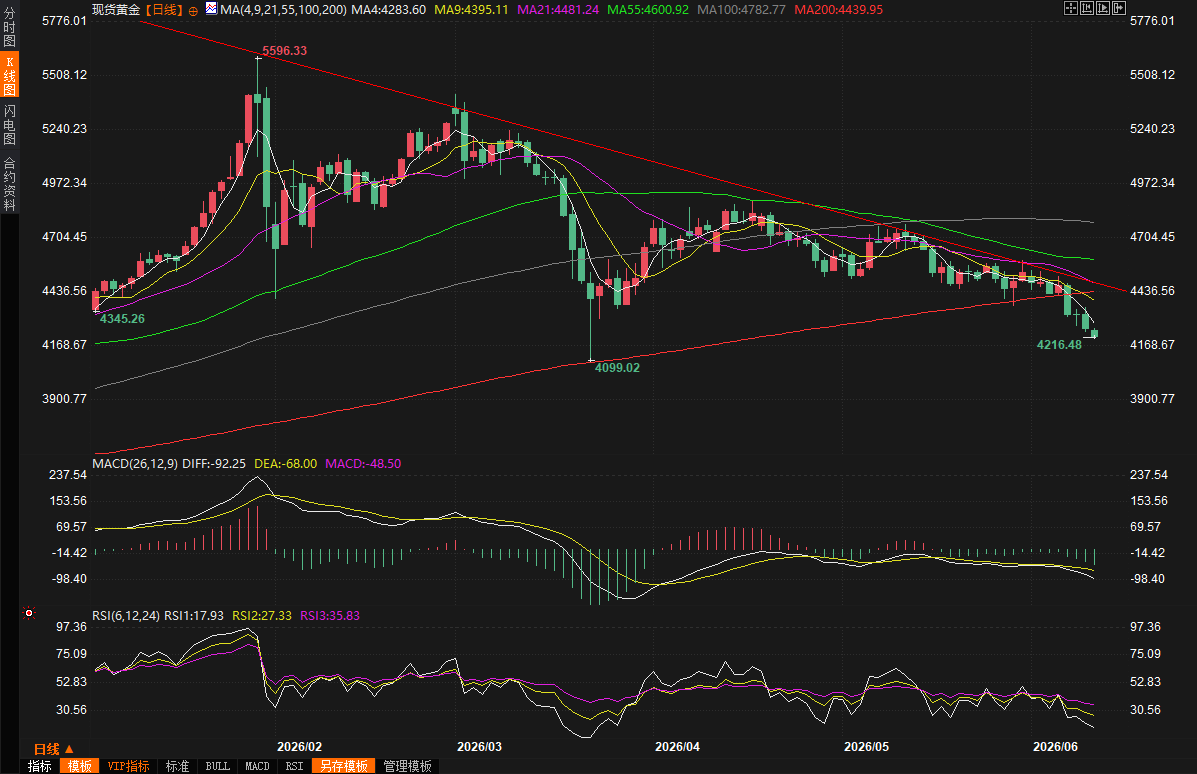
(Spot gold daily chart, source: FX678)
At 07:45 Beijing time, spot gold was trading at $4217.56 per ounce.
Geopolitical conflict reignites: US airstrikes in southern Iran, why does the safe-haven logic for gold fail?
The core trigger for the incident stemmed from direct military friction between the United States and Iran. US President Trump publicly stated that Iran shot down a US Apache helicopter on patrol near the Strait of Hormuz; although the two pilots were successfully rescued by a drone, the incident was serious. Trump immediately vowed that the US must respond, and the US Central Command acted swiftly, launching "self-defense" strikes against multiple targets in southern Iran at approximately 5:00 PM Eastern Time on Tuesday (5:00 AM Beijing Time on 6:10 AM).
According to reports, the initial and subsequent US strikes primarily targeted air defense systems, radar facilities, naval bases, and related military positions along Iran's southern coast, including the port of Jask, the Sirik region, the area surrounding Bandar Abbas, and Qeshm Island. Iran stated that the US attack damaged some of Sirik's water storage systems, causing a brief disruption to the local drinking water supply. The Iranian Revolutionary Guard subsequently announced a response, launching missiles and drones at US targets in the region, but the overall conflict remains limited in scale. Israel also launched an attack on the port of Tyre in southern Lebanon, causing casualties and further destabilizing the region.
Despite the Strait of Hormuz, a vital global oil shipping route, once again becoming a focal point, and the Trump administration's push for a peace agreement with Iran, the market did not view the conflict as a major boon for gold as it typically does. Instead, gold prices continued to decline after the news broke. A key reason for this is that Trump and US officials repeatedly emphasized that the strikes would be "moderate in scale and limited in scope," intended as a warning rather than a full-blown escalation of war. Meanwhile, Iran and Israel, under Trump's mediation, announced a cessation of direct attacks on each other, causing oil prices to fall to multi-week lows. This market narrative of a "controllable conflict" weakened gold's traditional safe-haven appeal.
Macroeconomic data casts a shadow: Rising US inflation expectations raise the probability of a Fed rate hike to 70%.
Beyond geopolitical factors, the core force suppressing gold prices is the US domestic macroeconomic environment. Following the stronger-than-expected US May jobs data released last Friday, market focus quickly shifted to this week's key inflation data. The May Consumer Price Index (CPI) to be released on Wednesday and the Producer Price Index (PPI) on Thursday will be crucial windows for judging the Federal Reserve's next move.
According to the CME Group's FedWatch tool, traders now expect a 74.2% probability of a Federal Reserve rate hike in December. In a high-interest-rate environment, the opportunity cost of holding non-interest-bearing gold has increased significantly, directly suppressing gold prices. Bob Haberkorn, senior market strategist at RJO Futures, pointed out that traders are nervous about the current market, with various assets entering a safe-haven mode, but gold continues to be pressured due to the uncertainty surrounding Fed guidance. The simultaneous drop of the S&P 500 and Nasdaq indices to more than one-month lows also reflects a broader spread of risk aversion in the market.
Furthermore, following India's significant increase in import tariffs on gold, smuggling activities have resurfaced, with smuggling volumes potentially exceeding 100 tons this year. This further increases supply pressure in the legitimate market, exerting additional downward pressure on gold prices from the perspective of real demand.
Oil Market Linkage and Bond Market Reaction: A Blend of Risk Appetite and Policy Expectations
International oil prices fell about 3% on Tuesday, with Brent crude and U.S. crude futures both hitting multi-week lows. This was directly related to news of a ceasefire between Iran and Israel, while a sharp 29% drop in China's crude oil imports in May also dampened global demand. The U.S. Energy Information Administration (EIA) predicts that global oil supply and demand will contract in 2026 due to the conflict in Iran, but signs of inventory depletion and transportation recovery in the short term have eased market fears of supply disruptions.
In the US bond market, Treasury yields generally declined as traders awaited inflation data, while concerns about the fiscal outlook also prompted some funds to flow into the bond market. The US dollar index fell slightly but remained in a high range. In this environment, gold, with its "dual currency" attributes (both a commodity and a safe-haven asset), exhibited a somewhat conflicted performance: geopolitical risks boosted safe-haven demand, but a strong dollar and expectations of interest rate hikes posed significant resistance.
Looking ahead: Short-term pressure is unlikely to change, but support remains in the medium to long term.
In summary, the gold market is currently caught between the resolution of geopolitical conflicts and expectations of tighter Federal Reserve policy. In the short term, if US inflation data remains strong this week, gold prices may continue to face downside risks, even testing lower support levels. However, if there are signs of an unexpected easing of tensions, or if inflation data falls short of expectations, reducing the probability of an interest rate hike, gold could still rebound quickly.
From a medium- to long-term perspective, global geopolitical uncertainties have not been fundamentally eliminated, the resumption of shipping in the Strait of Hormuz will still take time, and the gold-buying trends of central banks and potential systemic risks will continue to provide solid support for gold. Investors need to closely monitor statements from Federal Reserve officials, progress in US-Iran negotiations, and US oil inventory data, as these factors will jointly determine the direction of gold prices in the next stage.
This round of adjustment in gold prices reflects both the market's digestion of multiple uncertainties and the inevitable fluctuations driven by policy expectations. In the current environment where risks and opportunities coexist, a rational view of short-term volatility and a focus on medium- to long-term trends may be the right approach for gold investors.
(Spot gold daily chart, source: FX678)
At 07:45 Beijing time, spot gold was trading at $4217.56 per ounce.
- Risk Warning and Disclaimer
- The market involves risk, and trading may not be suitable for all investors. This article is for reference only and does not constitute personal investment advice, nor does it take into account certain users’ specific investment objectives, financial situation, or other needs. Any investment decisions made based on this information are at your own risk.