The fluctuating prospects for a US-Iran deal supported the US dollar, while the pound fell slightly against the dollar ahead of key UK economic data releases.
2026-06-12 10:54:57
The British pound traded under pressure against the US dollar in Asian trading on Friday, falling back to around 1.3400. Previously, a rapid improvement in global risk appetite, fueled by market expectations of an imminent final agreement between the US and Iran, weakened the safe-haven demand for the dollar, driving a rebound of over 100 pips in the pound against the dollar. However, as Iran stated that no final decision had been made on the agreement, market optimism cooled, and the dollar regained some buying support after its previous sharp correction.
Currently, several key issues remain unresolved in the US-Iran negotiations, including shipping arrangements in the Strait of Hormuz and frozen funds. Furthermore, Iran's restrictions on oil tankers passing through uncoordinated strategic waterways indicate significant uncertainty in the region. This has prevented a complete subsidence of market demand for safe-haven assets, providing some support for the US dollar as a traditional safe-haven asset and thus limiting further appreciation of the pound against the dollar.
Meanwhile, the latest U.S. inflation data continued to strengthen market expectations that the Federal Reserve would maintain a hawkish policy. Strong May's U.S. producer price index further reinforced investor bets that the Fed might raise interest rates again this year. Higher interest rate expectations increased the attractiveness of dollar assets, putting additional pressure on the pound against the dollar.
In the UK, investors are awaiting a series of key economic data, including the monthly GDP report, to assess the latest performance of the UK economy and the Bank of England's future policy path. Strong economic data could strengthen market expectations that the Bank of England will maintain a tight policy stance, thus providing support for the pound; conversely, weaker-than-expected data could exacerbate short-term downward pressure on the pound.
Despite short-term impacts from the dollar's rebound, the pound is still expected to see a significant rise against the dollar this week, indicating that the market retains some confidence in the UK's economic outlook and the Bank of England's policies. Future exchange rate movements will depend on the final outcome of the US-Iran situation, the Federal Reserve's interest rate path, and the performance of UK economic data.
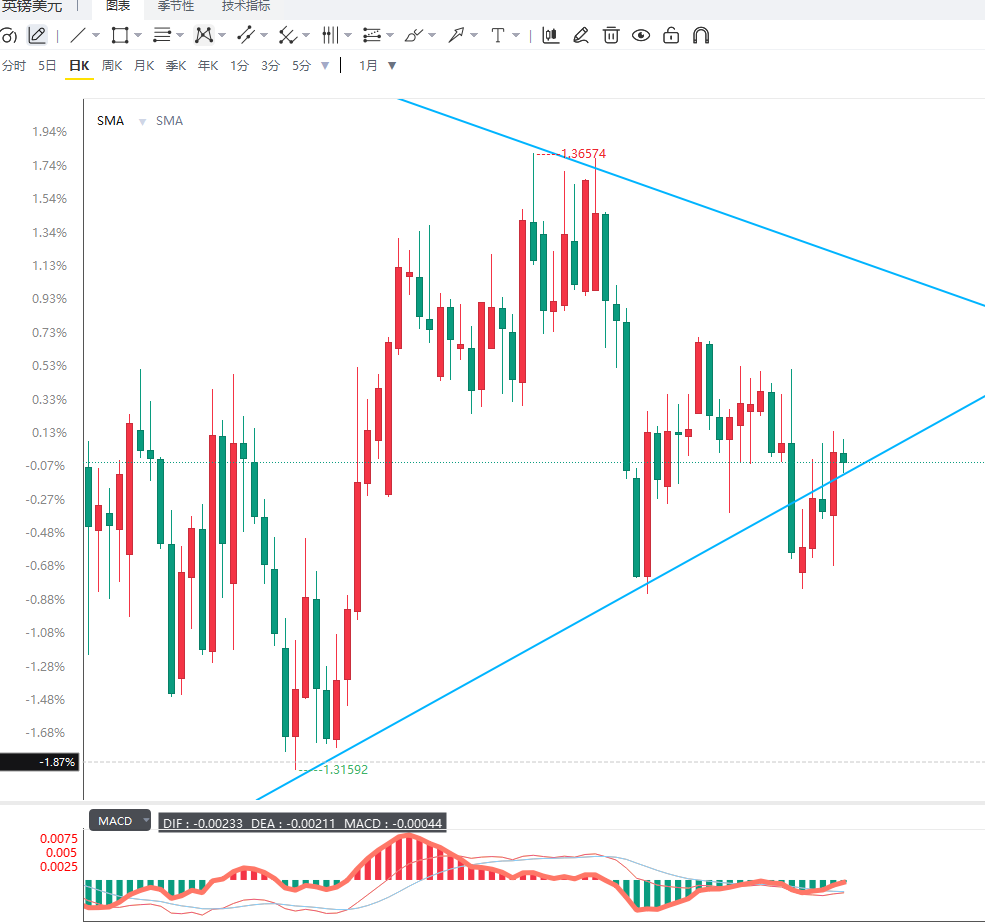
From a daily chart perspective, the GBP/USD pair has entered a consolidation phase after its previous rise, maintaining an overall bullish structure. However, significant resistance exists in the 1.3450-1.3500 area, limiting further short-term gains. If the exchange rate can effectively break through this area, the bulls may retest higher levels. On the downside, key support levels to watch are 1.3350 and 1.3300; a break below these levels could trigger a deeper technical correction.
From a 4-hour chart perspective, the GBP/USD pair has seen its momentum slow after a significant rebound, entering a short-term consolidation phase. The price is currently fluctuating around the short-term moving average, with the market awaiting new fundamental factors to guide its direction. If it regains a foothold above 1.3430, the exchange rate has a chance to retest the 1.3450-1.3500 resistance zone; however, if it breaks below the 1.3350 support, the bears may extend their losses further and test the 1.3300 area.
Editor's Summary : The short-term movement of the British pound against the US dollar is influenced by the Middle East situation, safe-haven demand for the dollar, and expectations regarding monetary policy in Europe and the US. The fluctuating prospects for a US-Iran agreement have provided some support for the dollar after its previous sharp decline, while persistently high US inflationary pressures have strengthened market expectations for further tightening by the Federal Reserve. In the short term, key data such as UK GDP will be important factors influencing the pound's direction. Before the data release, GBP/USD may remain range-bound between 1.3350 and 1.3500.
Currently, several key issues remain unresolved in the US-Iran negotiations, including shipping arrangements in the Strait of Hormuz and frozen funds. Furthermore, Iran's restrictions on oil tankers passing through uncoordinated strategic waterways indicate significant uncertainty in the region. This has prevented a complete subsidence of market demand for safe-haven assets, providing some support for the US dollar as a traditional safe-haven asset and thus limiting further appreciation of the pound against the dollar.
Meanwhile, the latest U.S. inflation data continued to strengthen market expectations that the Federal Reserve would maintain a hawkish policy. Strong May's U.S. producer price index further reinforced investor bets that the Fed might raise interest rates again this year. Higher interest rate expectations increased the attractiveness of dollar assets, putting additional pressure on the pound against the dollar.
In the UK, investors are awaiting a series of key economic data, including the monthly GDP report, to assess the latest performance of the UK economy and the Bank of England's future policy path. Strong economic data could strengthen market expectations that the Bank of England will maintain a tight policy stance, thus providing support for the pound; conversely, weaker-than-expected data could exacerbate short-term downward pressure on the pound.
Despite short-term impacts from the dollar's rebound, the pound is still expected to see a significant rise against the dollar this week, indicating that the market retains some confidence in the UK's economic outlook and the Bank of England's policies. Future exchange rate movements will depend on the final outcome of the US-Iran situation, the Federal Reserve's interest rate path, and the performance of UK economic data.
From a daily chart perspective, the GBP/USD pair has entered a consolidation phase after its previous rise, maintaining an overall bullish structure. However, significant resistance exists in the 1.3450-1.3500 area, limiting further short-term gains. If the exchange rate can effectively break through this area, the bulls may retest higher levels. On the downside, key support levels to watch are 1.3350 and 1.3300; a break below these levels could trigger a deeper technical correction.
From a 4-hour chart perspective, the GBP/USD pair has seen its momentum slow after a significant rebound, entering a short-term consolidation phase. The price is currently fluctuating around the short-term moving average, with the market awaiting new fundamental factors to guide its direction. If it regains a foothold above 1.3430, the exchange rate has a chance to retest the 1.3450-1.3500 resistance zone; however, if it breaks below the 1.3350 support, the bears may extend their losses further and test the 1.3300 area.
Editor's Summary : The short-term movement of the British pound against the US dollar is influenced by the Middle East situation, safe-haven demand for the dollar, and expectations regarding monetary policy in Europe and the US. The fluctuating prospects for a US-Iran agreement have provided some support for the dollar after its previous sharp decline, while persistently high US inflationary pressures have strengthened market expectations for further tightening by the Federal Reserve. In the short term, key data such as UK GDP will be important factors influencing the pound's direction. Before the data release, GBP/USD may remain range-bound between 1.3350 and 1.3500.
- Risk Warning and Disclaimer
- The market involves risk, and trading may not be suitable for all investors. This article is for reference only and does not constitute personal investment advice, nor does it take into account certain users’ specific investment objectives, financial situation, or other needs. Any investment decisions made based on this information are at your own risk.