June 15th Financial Breakfast: US and Iran reach memorandum of understanding; gold prices rise above $4300; US oil hits near two-month low.
2026-06-15 07:25:19
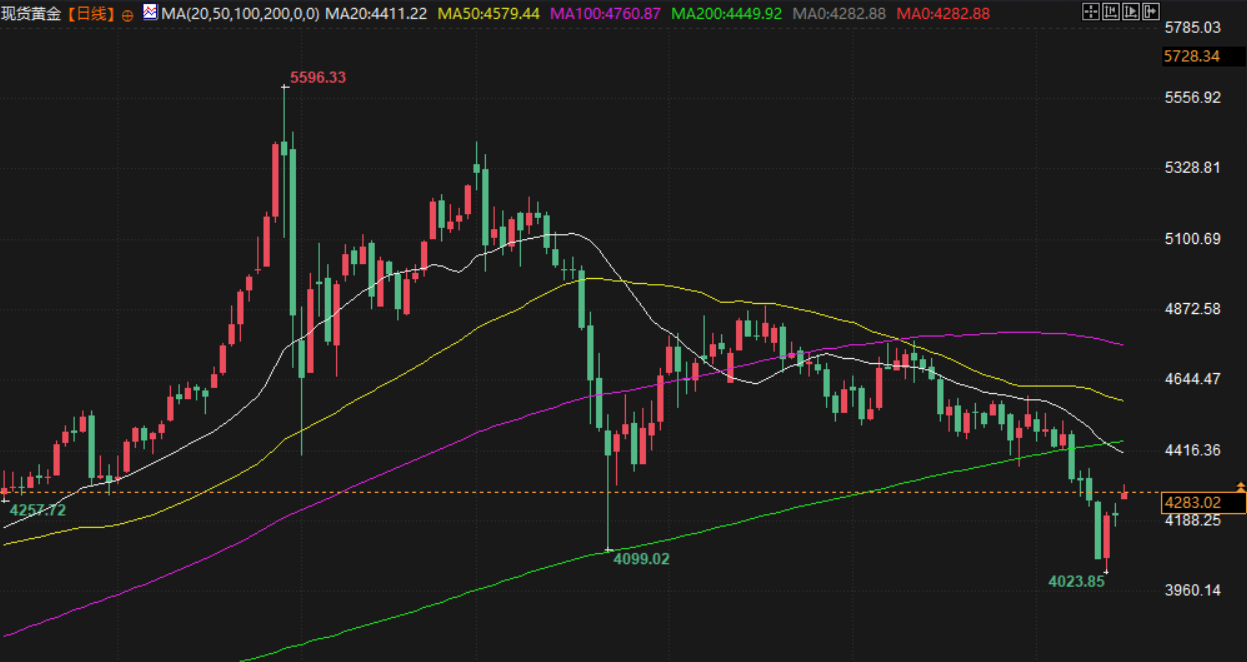
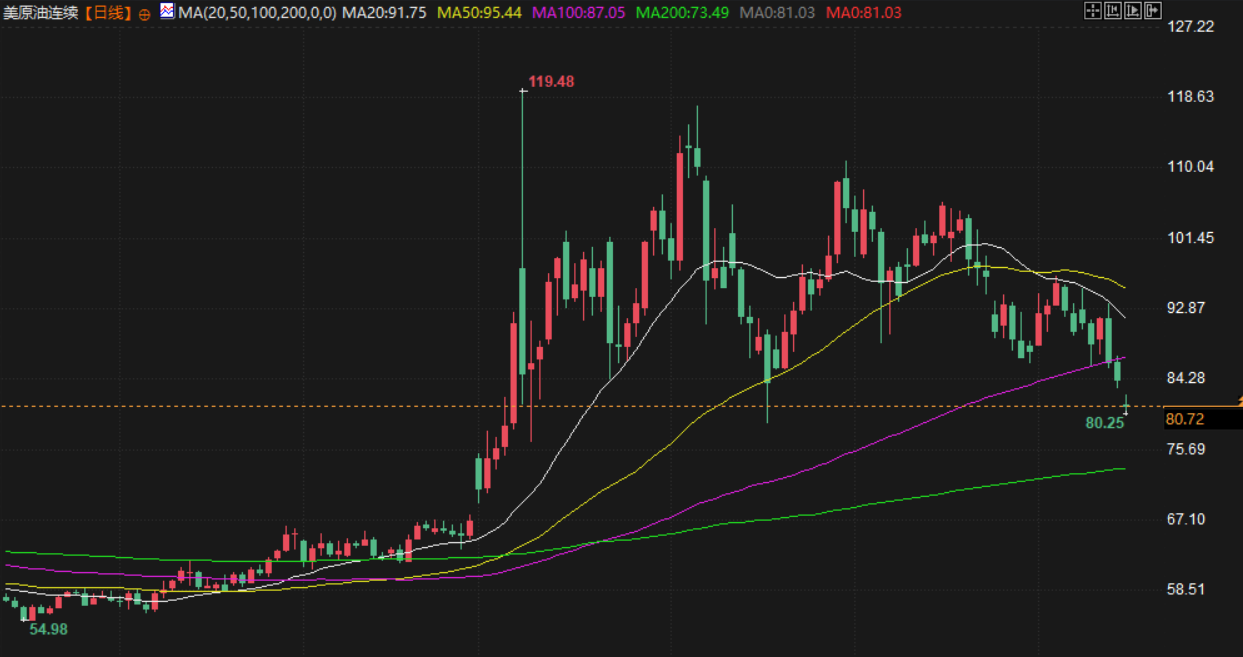
On Monday (June 15, Beijing time) in early Asian trading, spot gold opened more than 1% higher, reaching a high of over $4,300 per ounce, and is currently trading around $4,281 per ounce, benefiting from the pressure of interest rate hike expectations as the text of the US-Iran memorandum of understanding was completed and signed on June 19. Affected by this, US crude oil gapped down more than 4%, once touching a near two-month low of $80.25 per barrel, and is currently trading around $81.10 per barrel.
 onclick=javascript:window.open(this.src); />
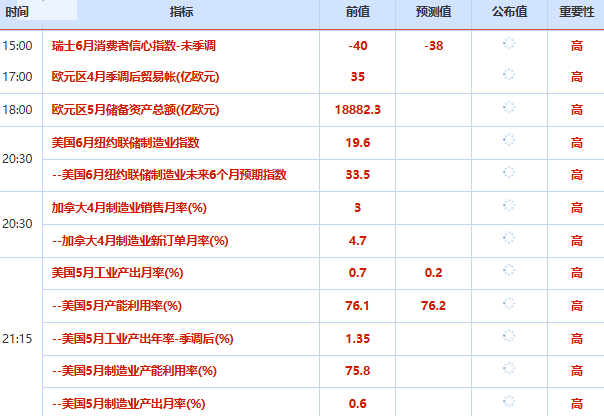
U.S. stocks closed higher on Friday, with the Dow Jones Industrial Average up 0.7%, the S&P 500 up 0.5%, and the Nasdaq Composite up 0.3%, mainly driven by investor optimism about a peace agreement between Iran and the United States.
SpaceX, owned by Elon Musk, saw its stock price surge 19.2% to $160.95 on its first day of trading, giving it a market capitalization of $2.1 trillion and making it one of the largest IPOs in Wall Street history. However, other aerospace stocks that had risen in anticipation of SpaceX's listing, such as Rocket Lab, Intuitive Machines, and Planet Labs, all fell sharply on the same day.
Adobe shares fell 6.8% following the departure of its chief financial officer. The market is also focused on this week's Federal Reserve meeting, with traders pricing in a 55% probability of a rate hike before December. Despite a combined gain of about 7% in the three major indices last week, US equity funds still experienced their first weekly net outflow in three weeks.
Gold prices rose on Friday to $4,216.83 an ounce, but fell 2.56% for the week, marking the second consecutive week of declines, pressured by expectations of interest rate hikes.
The market is focused on the situation between the US and Iran, with reports suggesting that the two sides may sign a peace memorandum as early as Sunday, but Iran has denied such speculation.
Traders expect the probability of a U.S. interest rate hike before December to rise to 57%, after data showed that U.S. producer prices rose more than expected in May and consumer inflation exceeded 4%.
This week's Federal Reserve meeting (June 16-17) will be Warsh's first, and the market widely expects interest rates to remain unchanged. UBS lowered its gold price forecast, warning that the Fed's delay in cutting rates could cause gold prices to fall to the $3,850-$4,000 per ounce range in the short term.
In other precious metals, spot silver rose 1.2% to $68.14, and palladium rose 0.7%, both poised for weekly gains; platinum fell 0.8% to $1706.90, marking a weekly decline.
Oil prices fell on Friday, with Brent crude down 2.64% to $86.74 a barrel, its lowest level since early March; WTI crude down 2.46% to $84.29 a barrel.
The market is buoyed by traders' growing expectations of an imminent peace agreement between the US and Iran. A Western source said a memorandum of understanding aimed at ending the Gulf War could be signed as early as Sunday, with Geneva being a possible location. However, the Iranian foreign minister stated that the memorandum has not yet been signed and its contents are still subject to change.
US President Trump withdrew his airstrike threat against Iran last Thursday, and negotiations will focus on nuclear and economic issues. Goldman Sachs lowered its 2027 Brent crude oil average price forecast to $80 per barrel due to increased supply and decreased demand, but expects oil prices to exceed the 2025 average.
The Organization of the Petroleum Exporting Countries (OPEC) has lowered its 2026 global oil demand growth forecast for the second consecutive time to 970,000 barrels per day, while raising its 2027 demand growth forecast to 1.73 million barrels per day.
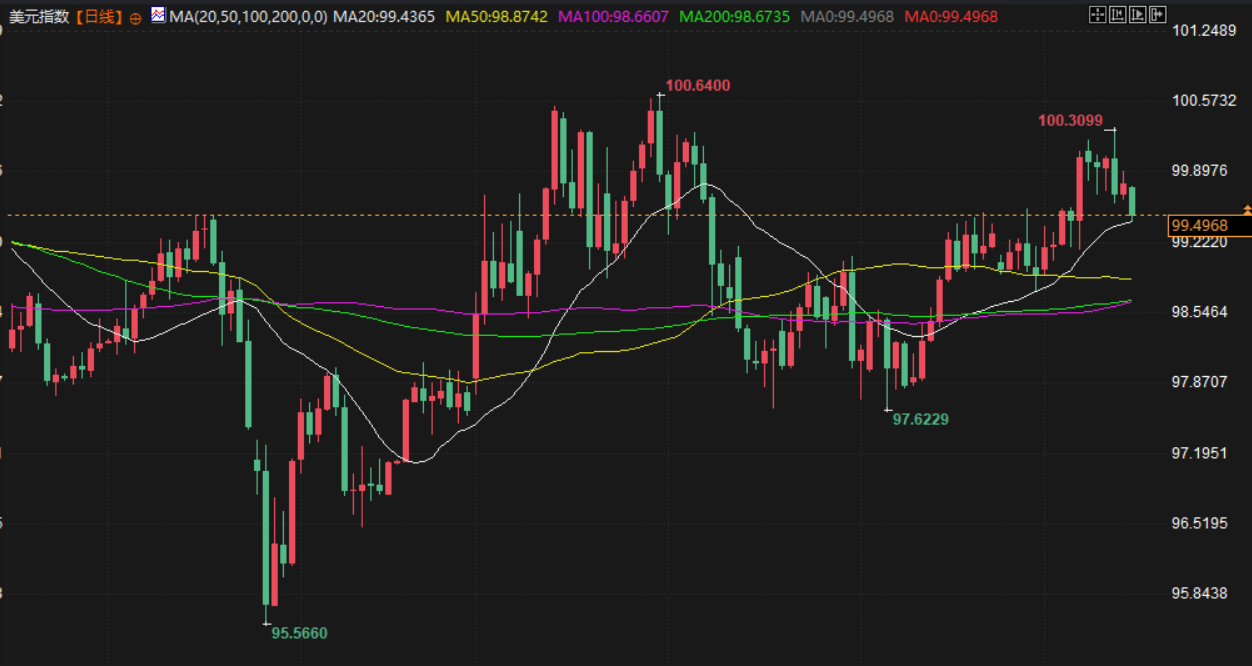
The US dollar index held steady at 99.75 on Friday, but still recorded a weekly decline, with the market closely watching the US-Iran negotiations that could end the Middle East conflict.
The euro was essentially flat at $1.15725, hovering near a one-week high and poised for a weekly gain, after the European Central Bank announced its first interest rate hike in three years.
The dollar rose 0.18% against the yen to 160.225 yen, remaining near a key level that could trigger intervention by the Bank of Japan.
The pound held steady at $1.34145, with market focus on the Iran nuclear negotiations. Traders expect the Federal Reserve to keep interest rates unchanged at 3.5%-3.75% this week, but believe there is a greater than 50% chance of a rate hike before the end of the year.
Furthermore, SpaceX's record-breaking IPO also impacted fund flows and market sentiment. When tensions with Iran rise, investors tend to buy the safe-haven dollar, while when peace talks make progress, they sell the dollar and shift towards riskier assets such as stocks.
Iran's National Security Council: The text of the US-Iran memorandum of understanding has been completed and will be signed on June 19.
Iran's National Security Council announced that the text of a memorandum of understanding between Iran and the United States has been finalized. The council stated that the two sides will formally sign the memorandum on June 19. Starting from the evening of June 15, all fighting and military operations on all fronts (including Lebanon) will immediately and permanently cease. The naval blockade against Iran will also be lifted immediately. The council further noted that negotiations for a final agreement will only begin after the other party has fully implemented the commitments contained in the memorandum.
Core terms of the draft Memorandum of Understanding between the US and Iran revealed
A permanent ceasefire will be implemented immediately on all fronts, including the Lebanese front; the United States pledges not to interfere in Iran's internal affairs and to respect the national sovereignty of the Islamic Republic of Iran; the United States will fully lift its naval blockade against Iran within 30 days; the United States pledges to withdraw its military forces deployed in the region surrounding Iran; the Strait of Hormuz will be placed under Iranian control and will be reopened to navigation within 30 days; sanctions against Iranian oil, petrochemical products, and related derivatives will be suspended, allowing Iran to fully utilize its frozen funds and assets; the United States and its allies must submit a reconstruction aid package to Iran totaling no less than $300 billion; the two sides will conduct 60 days of negotiations to finalize an agreement on the nuclear issue and fully lift US sanctions against Iran. The agreement outlines three key areas: Iran's primary and secondary sanctions, as well as sanctions under relevant resolutions of the UN Security Council and the Board of Governors of the International Atomic Energy Agency; Iran reiterates its commitment to the Treaty on the Non-Proliferation of Nuclear Weapons and pledges not to develop nuclear weapons; during the 60-day negotiation period, the US promises not to increase troop deployments to the region or introduce new sanctions; within the 60-day negotiation period, $24 billion of Iran's frozen assets will be unfrozen, with half of the funds to be transferred to Iran before the start of negotiations; both sides will establish a dedicated agreement implementation monitoring mechanism; the final agreement requires confirmation by a UN Security Council resolution; and the preconditions for initiating final negotiations are: half of Iran's frozen assets have been unfrozen, oil-related sanctions have been suspended, and the maritime blockade has been lifted. The final agreement only addresses three main areas: the disposal of enriched materials and uranium enrichment activities, the lifting of sanctions, and an economic reconstruction plan for Iran. Issues such as Iran's missile program and support for resistance groups are completely excluded from the negotiation agenda.
Iran unfreezes $25 billion, reopens the Strait of Hormuz
A senior Iranian official stated that, according to a draft memorandum, Tehran agreed not to develop or acquire nuclear weapons, and the United States agreed to unfreeze $25 billion in Iranian assets through methods including direct cash transfers, regional cooperation, and the establishment of a financial credit line. The official said the U.S. had agreed in the draft memorandum to Iran diluting its highly enriched uranium stockpile within its borders; the specific mechanism would be discussed within the next 60 days. The U.S. would also lift oil sanctions on Iran for a specific period, allowing Iran to sell oil and receive the revenue. According to the draft memorandum, Iran would immediately reopen the Strait of Hormuz to all merchant ships, and the U.S. would lift its maritime blockade.
Israeli official: US-Iran memorandum of understanding will "jeopardize Israel's security interests"
Israel's Channel 12 television, citing multiple anonymous senior Israeli officials, reported on the 13th that a potential memorandum of understanding between the United States and Iran would "jeopardize Israel's security interests." The report quoted these officials as saying that the imminent agreement between the US and Iran indicates that the US has agreed to Iran's "main conditions," and that Iran "would not agree to this agreement without a reason." The report stated that senior Israeli officials and some experts believe the terms of the memorandum of understanding will "jeopardize Israel's security interests." These officials also pointed out that, based on the framework of the memorandum of understanding, Iran only agrees to begin discussing its nuclear program after the formal end of the war and the fulfillment of a series of other conditions, including the unfreezing of frozen Iranian funds. (Xinhua)
Iranian Foreign Ministry: Potential Understanding Between Iran and the US is Only for Continued Dialogue, Not a Final Agreement
Iranian Foreign Ministry spokesman Baghae said on the 13th that any possible understanding between Iran and the United States is merely to promote continued dialogue, not a final agreement; unfreezing Iranian assets would be an indispensable part of any Iran-US understanding. According to the Iranian Students' News Agency, Baghae said during a meeting with media representatives that Iran's current focus is on ending fighting on all fronts and regional tensions, and that it will not delve into the details of the nuclear issue at this stage. He said the only way to achieve regional security is to end the presence of foreign military forces in the region. (Xinhua)
US President Trump: Strait of Hormuz to Open After Agreement Signed on Friday <br />US President Trump stated that this major agreement will bring peace and security to the entire region. He pointed out that previous US presidents had attempted to reach a peace agreement with Iran, but all had failed; all attempts before his had ended in failure. Trump said that now, for the first time, the region's leaders have found a president who can help them achieve true peace. He also announced that after the agreement is signed on Friday, the Strait of Hormuz will be open for oil transport, and oil and gas will once again flow to the region and the world.
South Korea and Saudi Arabia signed an agreement to cooperate in the energy sector.
South Korea's Ministry of Trade, Industry and Energy announced on Sunday that, amid recent global supply chain disruptions, South Korea and Saudi Arabia have signed an agreement to cooperate on energy resources, including crude oil and natural gas. South Korean Trade Minister Kim Jong-kwan departed for a two-day visit to Saudi Arabia on Saturday, during which he signed a memorandum of understanding with Saudi Energy Minister Abdulaziz bin Salman, establishing a framework for long-term cooperation on the supply of key energy resources. The Ministry stated that the cooperation agreement covers multiple areas, including crude oil reserves, pipeline infrastructure construction, and the use of artificial intelligence and digital technologies to promote innovation in the energy industry.
SK Hynix plans to triple its chip wafer production capacity.
Last week, SK Group Chairman Chey Tae-won revealed that its memory chip subsidiary, SK Hynix, plans to triple its chip wafer production capacity by 2034 to meet the booming demand driven by the development of artificial intelligence. While expressing confidence in AI demand and related investments, he also acknowledged that stock market volatility may persist for some time. SK Hynix's stock price has recently experienced significant fluctuations: it plunged approximately 7.5% on the 10th (local time), after surging over 15% the previous day. Furthermore, SK Hynix has confirmed its plan to issue American Depositary Receipts (ADRs) this year for a potential US listing. Analysts believe the company hopes to leverage the AI boom to broaden its investor base. (CCTV Finance)
Yiwu's trendy Chinese fashion items are selling like hotcakes.
Recently, Dragon Boat Festival supplies have been selling like hotcakes at the Yiwu International Trade City, with traditional seasonal items such as colorful ropes and sachets enjoying brisk sales. Merchants report that Dragon Boat Festival-themed small commodities typically begin their peak sales season in early May, with customer traffic and order volumes steadily increasing. Compared to traditional styles from previous years, many Dragon Boat Festival products this year feature a distinct national trend and intangible cultural heritage characteristics. In one store, a series of products incorporating the national intangible cultural heritage technique of Song brocade has become a bestseller. One merchant stated that the Song brocade elements, though only recently introduced, have already sold over 100,000 pieces. CCTV Finance reporters learned that Yiwu's Dragon Boat Festival small commodities have long since moved beyond the single-time sales model of a festival. Diverse national style and auspicious designs cater to all consumer needs, achieving a shift from "seasonal hot sales" to "normalized popularity." Merchants are also continuously enriching their product categories and innovating designs to allow traditional folk culture to reach international markets through these small commodities. (CCTV Finance)
Cui Dongshu: In May, my country's total output of power and other batteries reached 192 GWh, a year-on-year increase of 38%.
According to Cui Dongshu of the China Passenger Car Association (CPCA), in May, my country's total output of power and other batteries reached 192 GWh, a year-on-year increase of 38%; from January to May, the total output of power and other batteries reached 863 GWh, a year-on-year increase of 30%. This year, the battery growth rate has dropped from over 69% to 30%, due to sluggish demand for power batteries, leading to a gradual slowdown in battery demand. In May 2026, lithium battery installations reached 72 GWh, a year-on-year increase of 26%. From January to May 2026, lithium battery installations reached 259 GWh, a year-on-year increase of 7%. In 2025, the proportion of power batteries produced for vehicle installations remained at 44%, but in May 2026, this proportion dropped to 38%, with ternary lithium batteries accounting for 38% and lithium iron phosphate batteries for 37%. Currently, the main battery energy density range for pure electric vehicles is between 125 and 160 mAh. Particularly noteworthy is the performance in April and May 2026, where batteries with an energy density of 140-160 mAh accounted for 46%, a year-on-year increase of 14 percentage points.
The high-end marine steel market is booming, with domestic marine steel orders booked until 2028.
In recent years, my country's automobile exports have grown rapidly, leading to a continuous increase in demand for automobile transport ships. These high-end ship types require higher precision steel, necessitating the use of ultra-thin plates to strictly control the ship's center of gravity and ensure navigational stability. An executive from a Nanjing-based steel company told reporters that this year's production of marine steel, including crack-arresting steel, wide and thin plates for cruise ships, high-strength ship plates, and polar cryogenic ship plates, is expected to exceed 2 million tons, with long-term orders already scheduled until 2028. Strong downstream demand has driven up the price of high-end steel, with the average market price for ship plates rising from 4,100 yuan per ton to around 4,300 yuan. To mitigate fluctuations in raw material prices, shipbuilding companies often adopt a price-locking model. While high-end steel is used in large quantities and has high added value, profit margins remain considerable. Industry experts told reporters that in recent years, Chinese steel companies have developed various types of steel for different applications, with quality indicators such as steel stability, uniformity, and thickness tolerance reaching international leading levels, contributing to the transformation and upgrading of my country's shipbuilding equipment. (CCTV Finance)
onclick=javascript:window.open(this.src); />Key Focus Today
stock market
U.S. stocks closed higher on Friday, with the Dow Jones Industrial Average up 0.7%, the S&P 500 up 0.5%, and the Nasdaq Composite up 0.3%, mainly driven by investor optimism about a peace agreement between Iran and the United States.
SpaceX, owned by Elon Musk, saw its stock price surge 19.2% to $160.95 on its first day of trading, giving it a market capitalization of $2.1 trillion and making it one of the largest IPOs in Wall Street history. However, other aerospace stocks that had risen in anticipation of SpaceX's listing, such as Rocket Lab, Intuitive Machines, and Planet Labs, all fell sharply on the same day.
Adobe shares fell 6.8% following the departure of its chief financial officer. The market is also focused on this week's Federal Reserve meeting, with traders pricing in a 55% probability of a rate hike before December. Despite a combined gain of about 7% in the three major indices last week, US equity funds still experienced their first weekly net outflow in three weeks.
Gold Market
Gold prices rose on Friday to $4,216.83 an ounce, but fell 2.56% for the week, marking the second consecutive week of declines, pressured by expectations of interest rate hikes.
The market is focused on the situation between the US and Iran, with reports suggesting that the two sides may sign a peace memorandum as early as Sunday, but Iran has denied such speculation.
Traders expect the probability of a U.S. interest rate hike before December to rise to 57%, after data showed that U.S. producer prices rose more than expected in May and consumer inflation exceeded 4%.
This week's Federal Reserve meeting (June 16-17) will be Warsh's first, and the market widely expects interest rates to remain unchanged. UBS lowered its gold price forecast, warning that the Fed's delay in cutting rates could cause gold prices to fall to the $3,850-$4,000 per ounce range in the short term.
In other precious metals, spot silver rose 1.2% to $68.14, and palladium rose 0.7%, both poised for weekly gains; platinum fell 0.8% to $1706.90, marking a weekly decline.
oil market
Oil prices fell on Friday, with Brent crude down 2.64% to $86.74 a barrel, its lowest level since early March; WTI crude down 2.46% to $84.29 a barrel.
The market is buoyed by traders' growing expectations of an imminent peace agreement between the US and Iran. A Western source said a memorandum of understanding aimed at ending the Gulf War could be signed as early as Sunday, with Geneva being a possible location. However, the Iranian foreign minister stated that the memorandum has not yet been signed and its contents are still subject to change.
US President Trump withdrew his airstrike threat against Iran last Thursday, and negotiations will focus on nuclear and economic issues. Goldman Sachs lowered its 2027 Brent crude oil average price forecast to $80 per barrel due to increased supply and decreased demand, but expects oil prices to exceed the 2025 average.
The Organization of the Petroleum Exporting Countries (OPEC) has lowered its 2026 global oil demand growth forecast for the second consecutive time to 970,000 barrels per day, while raising its 2027 demand growth forecast to 1.73 million barrels per day.
Foreign exchange market
The US dollar index held steady at 99.75 on Friday, but still recorded a weekly decline, with the market closely watching the US-Iran negotiations that could end the Middle East conflict.
The euro was essentially flat at $1.15725, hovering near a one-week high and poised for a weekly gain, after the European Central Bank announced its first interest rate hike in three years.
The dollar rose 0.18% against the yen to 160.225 yen, remaining near a key level that could trigger intervention by the Bank of Japan.
The pound held steady at $1.34145, with market focus on the Iran nuclear negotiations. Traders expect the Federal Reserve to keep interest rates unchanged at 3.5%-3.75% this week, but believe there is a greater than 50% chance of a rate hike before the end of the year.
Furthermore, SpaceX's record-breaking IPO also impacted fund flows and market sentiment. When tensions with Iran rise, investors tend to buy the safe-haven dollar, while when peace talks make progress, they sell the dollar and shift towards riskier assets such as stocks.
International News
Iran's National Security Council: The text of the US-Iran memorandum of understanding has been completed and will be signed on June 19.
Iran's National Security Council announced that the text of a memorandum of understanding between Iran and the United States has been finalized. The council stated that the two sides will formally sign the memorandum on June 19. Starting from the evening of June 15, all fighting and military operations on all fronts (including Lebanon) will immediately and permanently cease. The naval blockade against Iran will also be lifted immediately. The council further noted that negotiations for a final agreement will only begin after the other party has fully implemented the commitments contained in the memorandum.
Core terms of the draft Memorandum of Understanding between the US and Iran revealed
A permanent ceasefire will be implemented immediately on all fronts, including the Lebanese front; the United States pledges not to interfere in Iran's internal affairs and to respect the national sovereignty of the Islamic Republic of Iran; the United States will fully lift its naval blockade against Iran within 30 days; the United States pledges to withdraw its military forces deployed in the region surrounding Iran; the Strait of Hormuz will be placed under Iranian control and will be reopened to navigation within 30 days; sanctions against Iranian oil, petrochemical products, and related derivatives will be suspended, allowing Iran to fully utilize its frozen funds and assets; the United States and its allies must submit a reconstruction aid package to Iran totaling no less than $300 billion; the two sides will conduct 60 days of negotiations to finalize an agreement on the nuclear issue and fully lift US sanctions against Iran. The agreement outlines three key areas: Iran's primary and secondary sanctions, as well as sanctions under relevant resolutions of the UN Security Council and the Board of Governors of the International Atomic Energy Agency; Iran reiterates its commitment to the Treaty on the Non-Proliferation of Nuclear Weapons and pledges not to develop nuclear weapons; during the 60-day negotiation period, the US promises not to increase troop deployments to the region or introduce new sanctions; within the 60-day negotiation period, $24 billion of Iran's frozen assets will be unfrozen, with half of the funds to be transferred to Iran before the start of negotiations; both sides will establish a dedicated agreement implementation monitoring mechanism; the final agreement requires confirmation by a UN Security Council resolution; and the preconditions for initiating final negotiations are: half of Iran's frozen assets have been unfrozen, oil-related sanctions have been suspended, and the maritime blockade has been lifted. The final agreement only addresses three main areas: the disposal of enriched materials and uranium enrichment activities, the lifting of sanctions, and an economic reconstruction plan for Iran. Issues such as Iran's missile program and support for resistance groups are completely excluded from the negotiation agenda.
Iran unfreezes $25 billion, reopens the Strait of Hormuz
A senior Iranian official stated that, according to a draft memorandum, Tehran agreed not to develop or acquire nuclear weapons, and the United States agreed to unfreeze $25 billion in Iranian assets through methods including direct cash transfers, regional cooperation, and the establishment of a financial credit line. The official said the U.S. had agreed in the draft memorandum to Iran diluting its highly enriched uranium stockpile within its borders; the specific mechanism would be discussed within the next 60 days. The U.S. would also lift oil sanctions on Iran for a specific period, allowing Iran to sell oil and receive the revenue. According to the draft memorandum, Iran would immediately reopen the Strait of Hormuz to all merchant ships, and the U.S. would lift its maritime blockade.
Israeli official: US-Iran memorandum of understanding will "jeopardize Israel's security interests"
Israel's Channel 12 television, citing multiple anonymous senior Israeli officials, reported on the 13th that a potential memorandum of understanding between the United States and Iran would "jeopardize Israel's security interests." The report quoted these officials as saying that the imminent agreement between the US and Iran indicates that the US has agreed to Iran's "main conditions," and that Iran "would not agree to this agreement without a reason." The report stated that senior Israeli officials and some experts believe the terms of the memorandum of understanding will "jeopardize Israel's security interests." These officials also pointed out that, based on the framework of the memorandum of understanding, Iran only agrees to begin discussing its nuclear program after the formal end of the war and the fulfillment of a series of other conditions, including the unfreezing of frozen Iranian funds. (Xinhua)
Iranian Foreign Ministry: Potential Understanding Between Iran and the US is Only for Continued Dialogue, Not a Final Agreement
Iranian Foreign Ministry spokesman Baghae said on the 13th that any possible understanding between Iran and the United States is merely to promote continued dialogue, not a final agreement; unfreezing Iranian assets would be an indispensable part of any Iran-US understanding. According to the Iranian Students' News Agency, Baghae said during a meeting with media representatives that Iran's current focus is on ending fighting on all fronts and regional tensions, and that it will not delve into the details of the nuclear issue at this stage. He said the only way to achieve regional security is to end the presence of foreign military forces in the region. (Xinhua)
US President Trump: Strait of Hormuz to Open After Agreement Signed on Friday <br />US President Trump stated that this major agreement will bring peace and security to the entire region. He pointed out that previous US presidents had attempted to reach a peace agreement with Iran, but all had failed; all attempts before his had ended in failure. Trump said that now, for the first time, the region's leaders have found a president who can help them achieve true peace. He also announced that after the agreement is signed on Friday, the Strait of Hormuz will be open for oil transport, and oil and gas will once again flow to the region and the world.
South Korea and Saudi Arabia signed an agreement to cooperate in the energy sector.
South Korea's Ministry of Trade, Industry and Energy announced on Sunday that, amid recent global supply chain disruptions, South Korea and Saudi Arabia have signed an agreement to cooperate on energy resources, including crude oil and natural gas. South Korean Trade Minister Kim Jong-kwan departed for a two-day visit to Saudi Arabia on Saturday, during which he signed a memorandum of understanding with Saudi Energy Minister Abdulaziz bin Salman, establishing a framework for long-term cooperation on the supply of key energy resources. The Ministry stated that the cooperation agreement covers multiple areas, including crude oil reserves, pipeline infrastructure construction, and the use of artificial intelligence and digital technologies to promote innovation in the energy industry.
SK Hynix plans to triple its chip wafer production capacity.
Last week, SK Group Chairman Chey Tae-won revealed that its memory chip subsidiary, SK Hynix, plans to triple its chip wafer production capacity by 2034 to meet the booming demand driven by the development of artificial intelligence. While expressing confidence in AI demand and related investments, he also acknowledged that stock market volatility may persist for some time. SK Hynix's stock price has recently experienced significant fluctuations: it plunged approximately 7.5% on the 10th (local time), after surging over 15% the previous day. Furthermore, SK Hynix has confirmed its plan to issue American Depositary Receipts (ADRs) this year for a potential US listing. Analysts believe the company hopes to leverage the AI boom to broaden its investor base. (CCTV Finance)
Domestic News
Yiwu's trendy Chinese fashion items are selling like hotcakes.
Recently, Dragon Boat Festival supplies have been selling like hotcakes at the Yiwu International Trade City, with traditional seasonal items such as colorful ropes and sachets enjoying brisk sales. Merchants report that Dragon Boat Festival-themed small commodities typically begin their peak sales season in early May, with customer traffic and order volumes steadily increasing. Compared to traditional styles from previous years, many Dragon Boat Festival products this year feature a distinct national trend and intangible cultural heritage characteristics. In one store, a series of products incorporating the national intangible cultural heritage technique of Song brocade has become a bestseller. One merchant stated that the Song brocade elements, though only recently introduced, have already sold over 100,000 pieces. CCTV Finance reporters learned that Yiwu's Dragon Boat Festival small commodities have long since moved beyond the single-time sales model of a festival. Diverse national style and auspicious designs cater to all consumer needs, achieving a shift from "seasonal hot sales" to "normalized popularity." Merchants are also continuously enriching their product categories and innovating designs to allow traditional folk culture to reach international markets through these small commodities. (CCTV Finance)
Cui Dongshu: In May, my country's total output of power and other batteries reached 192 GWh, a year-on-year increase of 38%.
According to Cui Dongshu of the China Passenger Car Association (CPCA), in May, my country's total output of power and other batteries reached 192 GWh, a year-on-year increase of 38%; from January to May, the total output of power and other batteries reached 863 GWh, a year-on-year increase of 30%. This year, the battery growth rate has dropped from over 69% to 30%, due to sluggish demand for power batteries, leading to a gradual slowdown in battery demand. In May 2026, lithium battery installations reached 72 GWh, a year-on-year increase of 26%. From January to May 2026, lithium battery installations reached 259 GWh, a year-on-year increase of 7%. In 2025, the proportion of power batteries produced for vehicle installations remained at 44%, but in May 2026, this proportion dropped to 38%, with ternary lithium batteries accounting for 38% and lithium iron phosphate batteries for 37%. Currently, the main battery energy density range for pure electric vehicles is between 125 and 160 mAh. Particularly noteworthy is the performance in April and May 2026, where batteries with an energy density of 140-160 mAh accounted for 46%, a year-on-year increase of 14 percentage points.
The high-end marine steel market is booming, with domestic marine steel orders booked until 2028.
In recent years, my country's automobile exports have grown rapidly, leading to a continuous increase in demand for automobile transport ships. These high-end ship types require higher precision steel, necessitating the use of ultra-thin plates to strictly control the ship's center of gravity and ensure navigational stability. An executive from a Nanjing-based steel company told reporters that this year's production of marine steel, including crack-arresting steel, wide and thin plates for cruise ships, high-strength ship plates, and polar cryogenic ship plates, is expected to exceed 2 million tons, with long-term orders already scheduled until 2028. Strong downstream demand has driven up the price of high-end steel, with the average market price for ship plates rising from 4,100 yuan per ton to around 4,300 yuan. To mitigate fluctuations in raw material prices, shipbuilding companies often adopt a price-locking model. While high-end steel is used in large quantities and has high added value, profit margins remain considerable. Industry experts told reporters that in recent years, Chinese steel companies have developed various types of steel for different applications, with quality indicators such as steel stability, uniformity, and thickness tolerance reaching international leading levels, contributing to the transformation and upgrading of my country's shipbuilding equipment. (CCTV Finance)
- Risk Warning and Disclaimer
- The market involves risk, and trading may not be suitable for all investors. This article is for reference only and does not constitute personal investment advice, nor does it take into account certain users’ specific investment objectives, financial situation, or other needs. Any investment decisions made based on this information are at your own risk.