The USD/CAD pair rose and then fell back, but the bullish trend remains intact.
2026-06-15 11:24:00
On Monday during Asian trading hours, the US dollar reversed its two-day winning streak against the Canadian dollar, falling back to around 1.3970. With the US and Iran reaching a comprehensive peace agreement, signs of easing in the nearly four-month-long military conflict in the Middle East emerged, significantly improving market risk appetite. Investors reduced their allocation to safe-haven assets in the US dollar, putting overall pressure on the US dollar index and dragging the USD/CAD pair lower.
Pakistani Prime Minister Shebaz Sharif stated that the United States and Iran have agreed to an immediate and permanent cessation of military operations on all fronts, including in Lebanon. Subsequently, US President Donald Trump also stated that the agreement reached will ensure the long-term restoration of freedom of navigation in the Strait of Hormuz and the lifting of the previous maritime blockade against Iran.
The easing of tensions in the Middle East quickly reduced the risk of global oil supply disruptions, leading to a significant adjustment in international oil prices. West Texas Intermediate (WTI) crude oil in the United States fell by more than 4% in a single day, retreating to around $80 per barrel. As Canada is a major exporter of US crude oil, the Canadian dollar typically maintains a strong correlation with international oil prices. Therefore, the decline in oil prices weakened the upward momentum of the Canadian dollar, limiting the decline in the USD/CAD exchange rate.
However, while Iran confirmed the ceasefire agreement, it emphasized that final negotiations still depend on the United States fulfilling its commitments, including ending the naval blockade, ceasing military operations, and releasing frozen funds. This means that the current situation remains somewhat uncertain. If tensions in the Middle East escalate again, international oil prices may regain a risk premium, thereby affecting the strength of the Canadian dollar against the US dollar.
For the USD/CAD pair, future movements will be primarily influenced by both safe-haven demand for the US dollar and volatility in oil prices. If global risk sentiment continues to improve, the US dollar may continue to face downward pressure; however, if further declines in oil prices lead to a weaker Canadian dollar, this could offset the impact of a weaker US dollar, allowing the exchange rate to remain volatile.
From a daily chart perspective, the USD/CAD pair rebounded after finding support in the 1.3800 area and is currently approaching the 1.4000 level again, but remains within a medium-term trading range. In the short term, attention should be paid to the resistance level in the 1.4000-1.4050 area; failure to break through this level could lead to a retest of lower support levels. On the downside, the 1.3900 and 1.3800 areas remain important defensive positions for the bulls; only a break below these areas could open up further downside potential.
From a 4-hour chart perspective, the USD/CAD pair has retreated after a short-term surge, indicating strong selling pressure around 1.4000. Short-term momentum indicators are weakening, suggesting the exchange rate may be entering a consolidation phase. If it breaks below the key support level of 1.3950, it may fall further to around 1.3900 in the short term; conversely, if it regains a foothold above 1.4000, it could potentially challenge the resistance zone of 1.4050 or even higher.
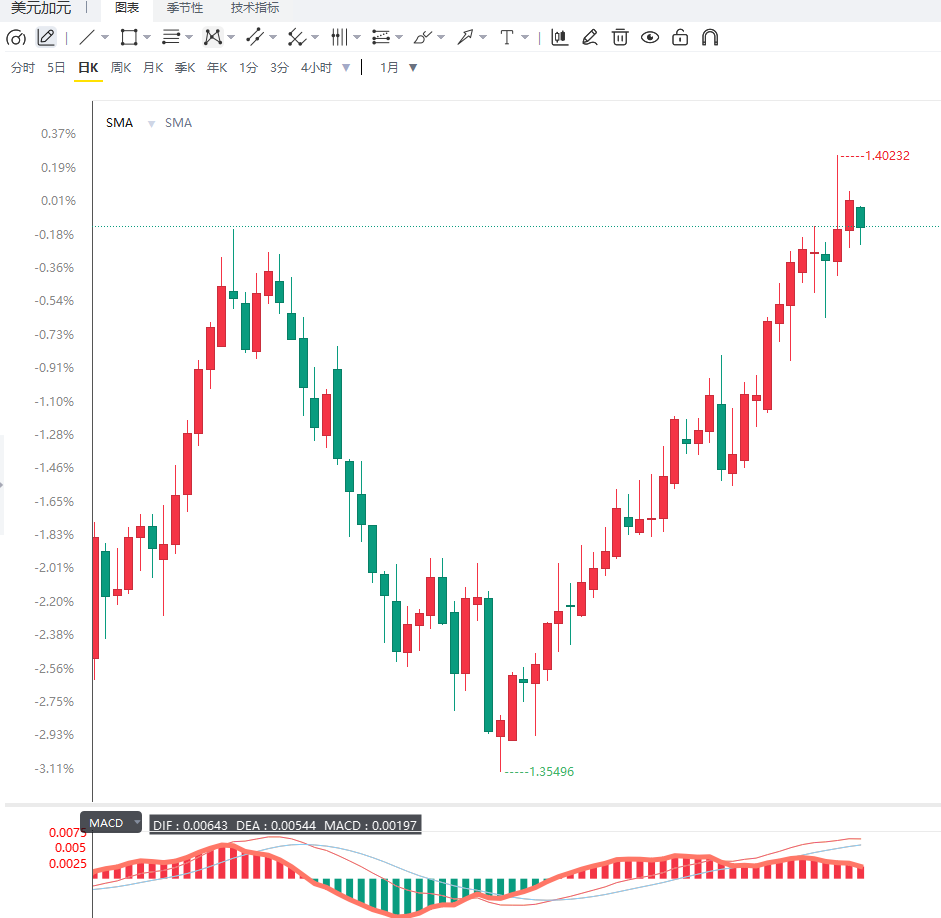
Editor's Summary : The US-Iran peace agreement weakened demand for the US dollar as a safe haven, putting short-term pressure on the USD/CAD pair. However, reduced supply risks in the Middle East led to a significant drop in international oil prices, putting pressure on the Canadian economy, which is highly dependent on energy exports, and limiting the Canadian dollar's appreciation potential. In the short term, the market will continue to assess the implementation of the peace agreement, while also paying attention to international oil price trends and the overall performance of the US dollar. Technically, the USD/CAD pair remains at a critical juncture, and a breakout from the 1.3900-1.4000 range will be a crucial signal for determining the next trend.
Pakistani Prime Minister Shebaz Sharif stated that the United States and Iran have agreed to an immediate and permanent cessation of military operations on all fronts, including in Lebanon. Subsequently, US President Donald Trump also stated that the agreement reached will ensure the long-term restoration of freedom of navigation in the Strait of Hormuz and the lifting of the previous maritime blockade against Iran.
The easing of tensions in the Middle East quickly reduced the risk of global oil supply disruptions, leading to a significant adjustment in international oil prices. West Texas Intermediate (WTI) crude oil in the United States fell by more than 4% in a single day, retreating to around $80 per barrel. As Canada is a major exporter of US crude oil, the Canadian dollar typically maintains a strong correlation with international oil prices. Therefore, the decline in oil prices weakened the upward momentum of the Canadian dollar, limiting the decline in the USD/CAD exchange rate.
However, while Iran confirmed the ceasefire agreement, it emphasized that final negotiations still depend on the United States fulfilling its commitments, including ending the naval blockade, ceasing military operations, and releasing frozen funds. This means that the current situation remains somewhat uncertain. If tensions in the Middle East escalate again, international oil prices may regain a risk premium, thereby affecting the strength of the Canadian dollar against the US dollar.
For the USD/CAD pair, future movements will be primarily influenced by both safe-haven demand for the US dollar and volatility in oil prices. If global risk sentiment continues to improve, the US dollar may continue to face downward pressure; however, if further declines in oil prices lead to a weaker Canadian dollar, this could offset the impact of a weaker US dollar, allowing the exchange rate to remain volatile.
From a daily chart perspective, the USD/CAD pair rebounded after finding support in the 1.3800 area and is currently approaching the 1.4000 level again, but remains within a medium-term trading range. In the short term, attention should be paid to the resistance level in the 1.4000-1.4050 area; failure to break through this level could lead to a retest of lower support levels. On the downside, the 1.3900 and 1.3800 areas remain important defensive positions for the bulls; only a break below these areas could open up further downside potential.
From a 4-hour chart perspective, the USD/CAD pair has retreated after a short-term surge, indicating strong selling pressure around 1.4000. Short-term momentum indicators are weakening, suggesting the exchange rate may be entering a consolidation phase. If it breaks below the key support level of 1.3950, it may fall further to around 1.3900 in the short term; conversely, if it regains a foothold above 1.4000, it could potentially challenge the resistance zone of 1.4050 or even higher.
Editor's Summary : The US-Iran peace agreement weakened demand for the US dollar as a safe haven, putting short-term pressure on the USD/CAD pair. However, reduced supply risks in the Middle East led to a significant drop in international oil prices, putting pressure on the Canadian economy, which is highly dependent on energy exports, and limiting the Canadian dollar's appreciation potential. In the short term, the market will continue to assess the implementation of the peace agreement, while also paying attention to international oil price trends and the overall performance of the US dollar. Technically, the USD/CAD pair remains at a critical juncture, and a breakout from the 1.3900-1.4000 range will be a crucial signal for determining the next trend.
- Risk Warning and Disclaimer
- The market involves risk, and trading may not be suitable for all investors. This article is for reference only and does not constitute personal investment advice, nor does it take into account certain users’ specific investment objectives, financial situation, or other needs. Any investment decisions made based on this information are at your own risk.