The US-Iran peace agreement weakened demand for the US dollar as a safe haven, causing the pound to fall back into its converging range against the dollar.
2026-06-15 09:56:30
The pound maintained its rebound against the dollar during Asian trading hours on Monday, trading around 1.3450. This followed the announcement of a peace agreement between the United States and Iran, agreeing to end nearly four months of military conflict and pushing for the reopening of the Strait of Hormuz. The easing of tensions in the Middle East reduced market concerns about energy supply disruptions, improved investor risk appetite, and led to safe-haven flows out of the dollar, providing short-term support for the pound against the dollar.
US President Donald Trump stated that the agreement reached will ensure the long-term restoration of freedom of navigation in the Strait of Hormuz. Meanwhile, Pakistani Prime Minister Shebaz Sharif revealed that the US and Iran have agreed to a permanent cessation of military operations, including in the Lebanon region. Iran's National Security Council also confirmed the ceasefire arrangement but noted that a final agreement still requires further negotiations after both sides fulfill their relevant commitments.
Improved market sentiment put some pressure on the US dollar index, but investors remain cautious because there is still uncertainty about a final nuclear agreement between the US and Iran. If subsequent negotiations encounter setbacks, safe-haven demand may return, and the dollar may regain support.
Compared to external factors, the UK's domestic economic performance has become a key variable influencing the pound's exchange rate. Latest data shows that the UK's GDP fell by 0.1% month-on-month in April, marking the first monthly economic contraction since August last year, reflecting weakening economic growth momentum. This weak economic performance has led the market to question whether the Bank of England needs to continue raising interest rates to curb inflation.
The market widely expects the Bank of England to keep interest rates unchanged at its policy meeting this week, with investors focusing on the inflation and employment data to be released in advance. If inflation remains high, it could reinforce market expectations of future policy tightening, thus supporting the pound; however, if signs of an economic slowdown strengthen further, it could increase market concerns about the UK's economic outlook, limiting the pound's upside potential.
In addition, the upcoming Mekfield by-election on June 18th is also attracting market attention. A strong performance from Labour candidate Andy Burnham could raise market expectations for future fiscal expansion policies in the UK, potentially increasing government fiscal pressure and posing new political challenges to Prime Minister Keir Starmer's economic policies. Uncertainty surrounding fiscal policy could also increase short-term volatility in the pound sterling market.
From a daily chart perspective, after retreating from its previous highs, the British pound against the US dollar has regained buying support around the 1.3400 area, maintaining an overall slightly bullish structure. If the exchange rate can continue to hold above the 1.3450-1.3500 area, it may further challenge the resistance levels of 1.3580 and 1.3650. On the downside, the 1.3400 and 1.3330 areas are key support levels; a break below these levels could indicate a breakdown in the short-term uptrend and open up further downside potential.
From a 4-hour chart perspective, the GBP/USD pair shows signs of a mild rebound in the short term, with short-term moving averages gradually flattening out and market momentum recovering somewhat. However, overall upward momentum still needs further confirmation. If the exchange rate can break through the 1.3500 level, short-term bullish sentiment may strengthen; conversely, if it continues to be resisted near this area, a retest of the 1.3400 or even lower support level cannot be ruled out.
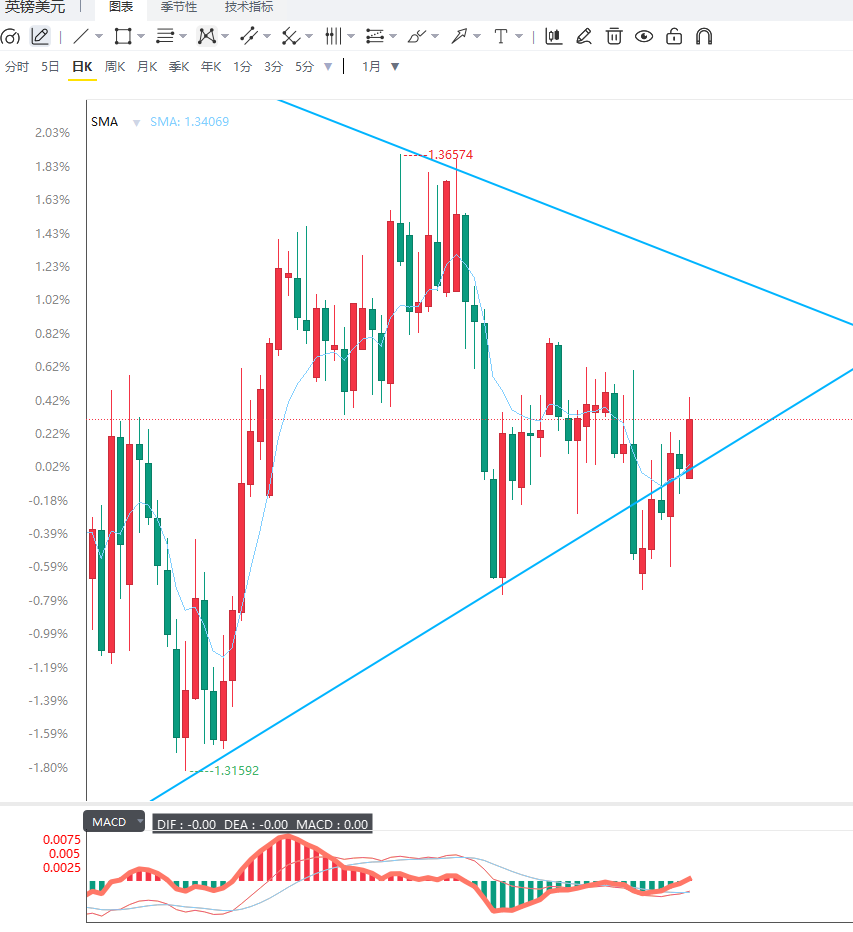
Editor's Summary : Easing tensions between the US and Iran reduced global market demand for safe-haven assets, putting short-term pressure on the US dollar and driving a technical rebound in the pound against the dollar. However, the slowdown in UK economic growth and uncertainty surrounding further tightening by the Bank of England limited the pound's upside potential. Going forward, market focus will be on UK inflation and employment data, as well as the Bank of England's policy statement, while also monitoring the progress of negotiations on the Middle East situation. In the short term, the pound/dollar exchange rate may seek a new balance between changes in risk sentiment towards the US dollar and fundamental pressures in the UK.
US President Donald Trump stated that the agreement reached will ensure the long-term restoration of freedom of navigation in the Strait of Hormuz. Meanwhile, Pakistani Prime Minister Shebaz Sharif revealed that the US and Iran have agreed to a permanent cessation of military operations, including in the Lebanon region. Iran's National Security Council also confirmed the ceasefire arrangement but noted that a final agreement still requires further negotiations after both sides fulfill their relevant commitments.
Improved market sentiment put some pressure on the US dollar index, but investors remain cautious because there is still uncertainty about a final nuclear agreement between the US and Iran. If subsequent negotiations encounter setbacks, safe-haven demand may return, and the dollar may regain support.
Compared to external factors, the UK's domestic economic performance has become a key variable influencing the pound's exchange rate. Latest data shows that the UK's GDP fell by 0.1% month-on-month in April, marking the first monthly economic contraction since August last year, reflecting weakening economic growth momentum. This weak economic performance has led the market to question whether the Bank of England needs to continue raising interest rates to curb inflation.
The market widely expects the Bank of England to keep interest rates unchanged at its policy meeting this week, with investors focusing on the inflation and employment data to be released in advance. If inflation remains high, it could reinforce market expectations of future policy tightening, thus supporting the pound; however, if signs of an economic slowdown strengthen further, it could increase market concerns about the UK's economic outlook, limiting the pound's upside potential.
In addition, the upcoming Mekfield by-election on June 18th is also attracting market attention. A strong performance from Labour candidate Andy Burnham could raise market expectations for future fiscal expansion policies in the UK, potentially increasing government fiscal pressure and posing new political challenges to Prime Minister Keir Starmer's economic policies. Uncertainty surrounding fiscal policy could also increase short-term volatility in the pound sterling market.
From a daily chart perspective, after retreating from its previous highs, the British pound against the US dollar has regained buying support around the 1.3400 area, maintaining an overall slightly bullish structure. If the exchange rate can continue to hold above the 1.3450-1.3500 area, it may further challenge the resistance levels of 1.3580 and 1.3650. On the downside, the 1.3400 and 1.3330 areas are key support levels; a break below these levels could indicate a breakdown in the short-term uptrend and open up further downside potential.
From a 4-hour chart perspective, the GBP/USD pair shows signs of a mild rebound in the short term, with short-term moving averages gradually flattening out and market momentum recovering somewhat. However, overall upward momentum still needs further confirmation. If the exchange rate can break through the 1.3500 level, short-term bullish sentiment may strengthen; conversely, if it continues to be resisted near this area, a retest of the 1.3400 or even lower support level cannot be ruled out.
Editor's Summary : Easing tensions between the US and Iran reduced global market demand for safe-haven assets, putting short-term pressure on the US dollar and driving a technical rebound in the pound against the dollar. However, the slowdown in UK economic growth and uncertainty surrounding further tightening by the Bank of England limited the pound's upside potential. Going forward, market focus will be on UK inflation and employment data, as well as the Bank of England's policy statement, while also monitoring the progress of negotiations on the Middle East situation. In the short term, the pound/dollar exchange rate may seek a new balance between changes in risk sentiment towards the US dollar and fundamental pressures in the UK.
- Risk Warning and Disclaimer
- The market involves risk, and trading may not be suitable for all investors. This article is for reference only and does not constitute personal investment advice, nor does it take into account certain users’ specific investment objectives, financial situation, or other needs. Any investment decisions made based on this information are at your own risk.