The Straits open! The unexpected signing of an electronic memorandum between the US and Iran has not yet ended the gold price rebound.
2026-06-16 15:46:35
After months of back-and-forth negotiations, the ceasefire talks between the United States and Iran have reached a crucial juncture: the two sides completed the signing of a memorandum of understanding electronically on Monday local time. US President Trump, Vice President JD Vance, and the Speaker of the Iranian Parliament have all signed and confirmed the memorandum. The significance of this signing is that some clauses can take effect immediately, such as the US military beginning to lift the blockade of the Strait of Hormuz.
The agreement, aimed at ending months of war, is scheduled for a ceremonial signing in Geneva on Friday, and Trump has said he will release the full text of the agreement at an opportune time after the formal signing.
One of the core demands of the US is to lift the maritime blockade ahead of schedule in order to promote the implementation of a ceasefire and alleviate public pressure ahead of the domestic midterm elections;
Iran, based on the United States' past history of "breach of trust and breach of contract," has established the principle of "phased reciprocity and immediate cessation of compliance" —only after the United States has actually and fully fulfilled its corresponding obligations will Iran take reciprocal measures . If any clause is not met, Iran will immediately suspend the fulfillment of the relevant obligations. In other words, if the United States wants to negotiate, it needs to lift the blockade first. The same applies to other agreements demanded by the United States: the United States must first complete the reciprocal agreement, and then Iran will complete the other half of the corresponding agreement.

One of the core outcomes of the agreement is the reopening of the Strait of Hormuz.
As a vital waterway for one-fifth of the world's oil and gas, the strait was previously brought to a near standstill due to conflict, directly triggering a surge in international energy prices and financial market turmoil.
The United States has begun to lift the maritime blockade. According to Iranian media reports on June 16, several Iranian oil tankers and cargo ships successfully crossed the blockade line in the early morning, marking a substantial improvement in navigation conditions.
According to the agreement, the Strait of Hormuz will be open to navigation for 60 days free of charge. However, the US has also made it clear that it will not immediately allocate any funds to Iran after signing the memorandum, and related economic support will be linked to Iran's subsequent compliance with the agreement.
It is worth noting that there are still safety hazards such as mines in the strait, and it is expected that it will take some time before normal shipping is fully restored.
This memorandum of understanding did not address all the core disputes, but rather laid the groundwork for subsequent negotiations.
The agreement specifies that a 60-day technical negotiation period will begin after the formal signing, focusing on issues such as the Iranian nuclear issue, the easing of sanctions, the unfreezing of frozen assets, and the establishment of a $300 billion Iranian reconstruction fund. US Vice President JD Vance will lead the US negotiations.
The core point of contention is the disposal of Iran's highly enriched uranium stockpile. The US has demanded that Iran come up with a concrete plan within 60 days, a period much shorter than the negotiation cycle of the 2015 nuclear agreement, leading the market to be cautious about substantive progress.
Furthermore, the agreement stipulates that the final comprehensive agreement must be confirmed by a legally binding resolution of the UN Security Council. Iran emphasized that unfreezing frozen assets and war reparations are two major economic priorities.
The US added a clause stating that Israel has the right to take retaliatory measures if Iran fails to restrain Hezbollah in Lebanon , which adds uncertainty to the negotiations.
As a US ally, Israel did not participate in the US-Iran agreement negotiations and completely rejected the agreement.
Senior Israeli officials revealed that the government unanimously believes the agreement is "extremely detrimental to Israel." Prime Minister Netanyahu publicly stated that Israel "will not restrict its actions in any way" to prevent Iran from acquiring nuclear weapons, and emphasized that it will not withdraw its troops from the occupied territories of Lebanon, Syria, and the Gaza Strip. As previously discussed, Israel's ability to maintain control over war-torn land and water resources through a state of war is a common tactic used by other countries. Demanding Israel withdraw its troops is tantamount to declaring the Israeli military operation a complete failure.
Israeli National Security Minister Itamar Ben-Gwer stated bluntly that the US-Iran agreement is "not binding" on Israel, and that Israel will not accept it unless Hezbollah is completely disbanded.
The differences between the US and Israel have gradually become public, with Trump previously publicly accusing Netanyahu of being "very difficult to deal with." This rift could lead to repeated local conflicts in the Middle East, casting a shadow over the implementation of the agreement.
The implementation of the US-Iran agreement has triggered a chain reaction in global financial markets, with institutions and economists offering their interpretations.
Regarding the impact of inflation, although the energy supply chain will take time to recover, the market generally believes that the worst of the US inflation phase is over.
Citigroup's chief U.S. economist, Andrew Hollenhorst, pointed out that the U.S. inflation rate rose to its highest level in more than three years in May, with energy prices being the main driver. However, oil prices have fallen since the agreement was reached, and the overall downward trend in energy prices is now quite clear.
Stephen Stanley, chief economist at Santander U.S. Capital Markets, said the market has already anticipated that inflation will return to near pre-conflict stability.
In the foreign exchange market, Nomura Securities explicitly stated that the agreement further solidified the logic of selectively shorting the US dollar.
The team of strategists stated in a report that the reopening of the Strait of Hormuz supported a strategy of shorting the US dollar, and that they would subsequently focus on relative value trading driven by domestic factors.
However, the analysis also cautions that geopolitical uncertainties could still lead to currency market volatility, and trading strategies need to be dynamically adjusted.
The signing of the US-Iran agreement has exceeded expectations, and the US dollar is expected to continue to decline, while gold prices are expected to continue to rebound. With the US-Iran agreement in place, weakening inflation expectations may open up room for the Federal Reserve to shift its policy, easing upward pressure on US Treasury real interest rates and reducing the opportunity cost of holding gold.
Meanwhile, medium- to long-term supporting factors such as global central bank gold purchases and reserve structure rebalancing remain unchanged. Institutions such as Huatai Securities suggest that gold can still be allocated as a strategic asset in the short term to cope with potential uncertainties in the implementation of the agreement.
Technical Analysis: Spot gold broke through resistance and then retraced to the middle line of the descending channel. Currently, with the release of positive news regarding improved cross-strait traffic and the Federal Reserve maintaining interest rates or even weakening its hawkish guidance, gold prices are expected to rebound further, with a potential upside of around 4430. However, caution is still advised should gold prices weaken, as the capital markets have already rebounded significantly recently.
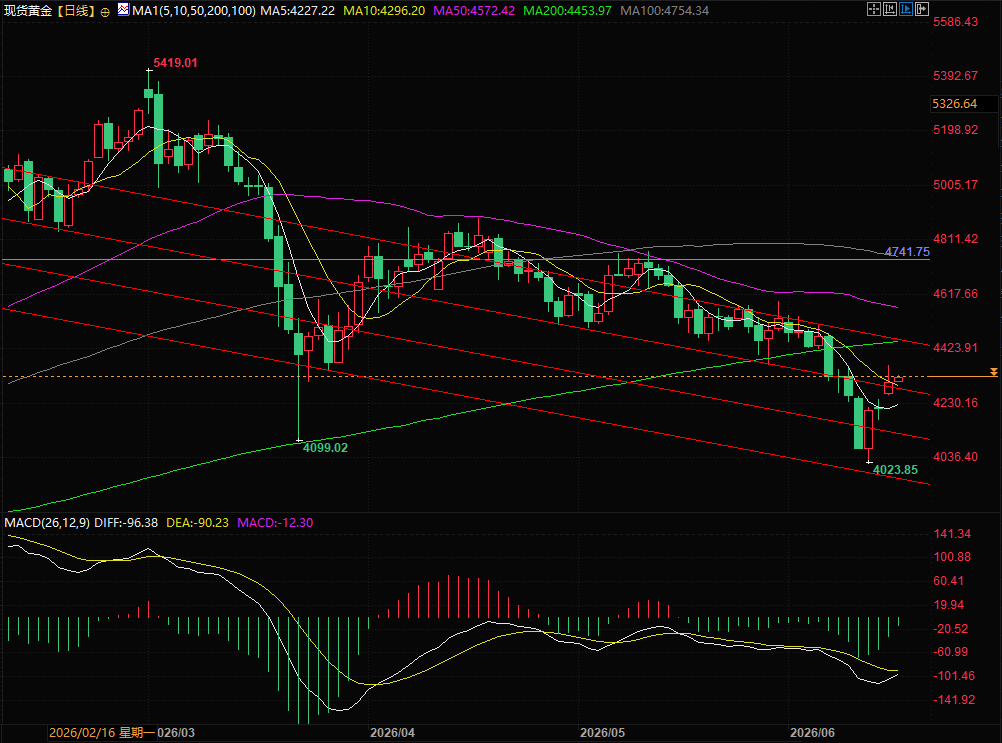
(Spot gold daily chart, source: FX678)
At 15:40 Beijing time, spot gold was trading at $4,330 per ounce.
The agreement, aimed at ending months of war, is scheduled for a ceremonial signing in Geneva on Friday, and Trump has said he will release the full text of the agreement at an opportune time after the formal signing.
One of the core demands of the US is to lift the maritime blockade ahead of schedule in order to promote the implementation of a ceasefire and alleviate public pressure ahead of the domestic midterm elections;
Iran, based on the United States' past history of "breach of trust and breach of contract," has established the principle of "phased reciprocity and immediate cessation of compliance" —only after the United States has actually and fully fulfilled its corresponding obligations will Iran take reciprocal measures . If any clause is not met, Iran will immediately suspend the fulfillment of the relevant obligations. In other words, if the United States wants to negotiate, it needs to lift the blockade first. The same applies to other agreements demanded by the United States: the United States must first complete the reciprocal agreement, and then Iran will complete the other half of the corresponding agreement.
Navigation in the Strait of Hormuz has improved significantly, and the lifting of the blockade is showing initial results.
One of the core outcomes of the agreement is the reopening of the Strait of Hormuz.
As a vital waterway for one-fifth of the world's oil and gas, the strait was previously brought to a near standstill due to conflict, directly triggering a surge in international energy prices and financial market turmoil.
The United States has begun to lift the maritime blockade. According to Iranian media reports on June 16, several Iranian oil tankers and cargo ships successfully crossed the blockade line in the early morning, marking a substantial improvement in navigation conditions.
According to the agreement, the Strait of Hormuz will be open to navigation for 60 days free of charge. However, the US has also made it clear that it will not immediately allocate any funds to Iran after signing the memorandum, and related economic support will be linked to Iran's subsequent compliance with the agreement.
It is worth noting that there are still safety hazards such as mines in the strait, and it is expected that it will take some time before normal shipping is fully restored.
Key details of the peace talks: The crucial 60-day negotiation period and multiple binding conditions
This memorandum of understanding did not address all the core disputes, but rather laid the groundwork for subsequent negotiations.
The agreement specifies that a 60-day technical negotiation period will begin after the formal signing, focusing on issues such as the Iranian nuclear issue, the easing of sanctions, the unfreezing of frozen assets, and the establishment of a $300 billion Iranian reconstruction fund. US Vice President JD Vance will lead the US negotiations.
The core point of contention is the disposal of Iran's highly enriched uranium stockpile. The US has demanded that Iran come up with a concrete plan within 60 days, a period much shorter than the negotiation cycle of the 2015 nuclear agreement, leading the market to be cautious about substantive progress.
Furthermore, the agreement stipulates that the final comprehensive agreement must be confirmed by a legally binding resolution of the UN Security Council. Iran emphasized that unfreezing frozen assets and war reparations are two major economic priorities.
The US added a clause stating that Israel has the right to take retaliatory measures if Iran fails to restrain Hezbollah in Lebanon , which adds uncertainty to the negotiations.
Israel has explicitly opposed the agreement, and geopolitical risks remain uncertain.
As a US ally, Israel did not participate in the US-Iran agreement negotiations and completely rejected the agreement.
Senior Israeli officials revealed that the government unanimously believes the agreement is "extremely detrimental to Israel." Prime Minister Netanyahu publicly stated that Israel "will not restrict its actions in any way" to prevent Iran from acquiring nuclear weapons, and emphasized that it will not withdraw its troops from the occupied territories of Lebanon, Syria, and the Gaza Strip. As previously discussed, Israel's ability to maintain control over war-torn land and water resources through a state of war is a common tactic used by other countries. Demanding Israel withdraw its troops is tantamount to declaring the Israeli military operation a complete failure.
Israeli National Security Minister Itamar Ben-Gwer stated bluntly that the US-Iran agreement is "not binding" on Israel, and that Israel will not accept it unless Hezbollah is completely disbanded.
The differences between the US and Israel have gradually become public, with Trump previously publicly accusing Netanyahu of being "very difficult to deal with." This rift could lead to repeated local conflicts in the Middle East, casting a shadow over the implementation of the agreement.
Expert opinion: Easing inflationary pressures impact the bullish logic for the US dollar.
The implementation of the US-Iran agreement has triggered a chain reaction in global financial markets, with institutions and economists offering their interpretations.
Regarding the impact of inflation, although the energy supply chain will take time to recover, the market generally believes that the worst of the US inflation phase is over.
Citigroup's chief U.S. economist, Andrew Hollenhorst, pointed out that the U.S. inflation rate rose to its highest level in more than three years in May, with energy prices being the main driver. However, oil prices have fallen since the agreement was reached, and the overall downward trend in energy prices is now quite clear.
Stephen Stanley, chief economist at Santander U.S. Capital Markets, said the market has already anticipated that inflation will return to near pre-conflict stability.
In the foreign exchange market, Nomura Securities explicitly stated that the agreement further solidified the logic of selectively shorting the US dollar.
The team of strategists stated in a report that the reopening of the Strait of Hormuz supported a strategy of shorting the US dollar, and that they would subsequently focus on relative value trading driven by domestic factors.
However, the analysis also cautions that geopolitical uncertainties could still lead to currency market volatility, and trading strategies need to be dynamically adjusted.
Summary and Technical Analysis:
The signing of the US-Iran agreement has exceeded expectations, and the US dollar is expected to continue to decline, while gold prices are expected to continue to rebound. With the US-Iran agreement in place, weakening inflation expectations may open up room for the Federal Reserve to shift its policy, easing upward pressure on US Treasury real interest rates and reducing the opportunity cost of holding gold.
Meanwhile, medium- to long-term supporting factors such as global central bank gold purchases and reserve structure rebalancing remain unchanged. Institutions such as Huatai Securities suggest that gold can still be allocated as a strategic asset in the short term to cope with potential uncertainties in the implementation of the agreement.
Technical Analysis: Spot gold broke through resistance and then retraced to the middle line of the descending channel. Currently, with the release of positive news regarding improved cross-strait traffic and the Federal Reserve maintaining interest rates or even weakening its hawkish guidance, gold prices are expected to rebound further, with a potential upside of around 4430. However, caution is still advised should gold prices weaken, as the capital markets have already rebounded significantly recently.
(Spot gold daily chart, source: FX678)
At 15:40 Beijing time, spot gold was trading at $4,330 per ounce.
- Risk Warning and Disclaimer
- The market involves risk, and trading may not be suitable for all investors. This article is for reference only and does not constitute personal investment advice, nor does it take into account certain users’ specific investment objectives, financial situation, or other needs. Any investment decisions made based on this information are at your own risk.