The US-Iran agreement has been signed and the Taiwan Strait has been opened, but why are shipping companies still standing still and waiting?
2026-06-16 17:07:20
On June 14, after the United States and Iran reached a framework agreement on reopening the Strait of Hormuz, cargo owners in Asia and Europe said it could take several weeks to rebuild confidence in passing through the strait, and that navigation operations would only resume once security was guaranteed.
US and Iranian officials are scheduled to sign a memorandum of understanding on Friday to end the conflict and reopen the Strait of Hormuz.
However, ship tracking data shows that shipping activity remains limited, with industry players generally adopting a wait-and-see attitude.
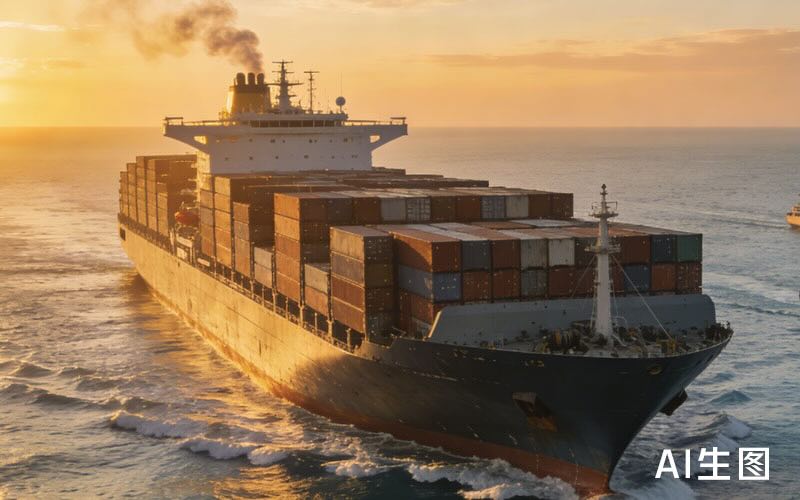
US President Trump posted on social media that ships laden with oil had begun leaving the Strait of Oman, "sailing along the perfectly safe, secure, and clean southern highway." However, ship tracking data from Monday (June 15) showed no apparent activity of oil tankers transiting the Strait, except for one liquefied natural gas carrier. For the past few weeks, ships, supported by the US military, have been "covertly" navigating along the coast of Oman, transporting crude oil.
Ship tracking data only records vessels that actively transmit their positions, and the data shows dozens of oil tankers clustered at both ends of the Strait of Hormuz. Shipping industry players welcomed the US-Iran agreement but are still awaiting more details, including mine-clearing.
Jyske Bank analyst Anjum said in a client report that no ships rushed into the Strait of Hormuz this morning, as shipping companies may want to wait until the agreement is actually in effect before taking action, since the strait had been "opened" twice before, but both times for very short periods.
The shipping association BIMCO still considers transiting the Strait of Hormuz to be extremely risky, with mines being the main concern. The next step is to reassure ship owners that passage is not only permitted but also safe.
Despite limited overall shipping activity, the Petronet LNG carrier INS Dhisa, owned by India’s Petronet, passed through the Strait of Hormuz on Monday, the only visible vessel to date, according to Kpler data.
The Baltic International Maritime Council's recognition of the agreement is good news, but based on past experience with Middle Eastern geopolitical conflicts, the numerous ceasefire declarations issued in recent months have lacked supporting implementation measures and have ultimately failed to substantially improve the navigation environment. Therefore, the industry will not immediately adjust its navigation plans.
The association analyzed that currently, neither party has disclosed the full details of the agreement. Key information such as the arrangements for minesweeping operations, ship passage safety guarantees, and shipping insurance compensation standards are all missing, creating significant uncertainty. Even if waterway clearing work is subsequently initiated, identifying potential hazards, adjusting global tanker routes, and renegotiating insurance rates will take several weeks, making it difficult to restore large-scale navigation in the short term.
The association emphasized that shipping companies will only gradually cancel detour routes once the US and Iran implement a written agreement and stable, sustained vessel traffic occurs in the Strait of Hormuz. Until then, shipowners will continue to prioritize avoiding the Strait of Hormuz, significantly prolonging the recovery period for crude oil shipping capacity.
Analysts say it could take months for traffic to fully return to normal. According to Kpler vessel tracking data, as of June 15, approximately 155 oil tankers carrying oil and chemicals were stranded in the Gulf region, a decrease from 201 at the end of May.
Oil Brokerage estimates the number at 215 vessels, stating that if navigation were unrestricted, vessel congestion at both ends of the strait could be resolved within 8 to 10 days.
Energy consultancy Rystad Energy has assessed the pace of recovery in shipping through the Strait of Hormuz, concluding that even if the US-Iran memorandum of understanding is successfully implemented, crude oil shipping through the Strait will be unlikely to return to pre-conflict levels in the short term.
The agency analyzed that waterway safety inspections and mine clearance, shipping insurance rate repricing, and global tanker route reallocation will all take several weeks to proceed, and in the short term only a small number of stranded ships can be released, making it impossible to form large-scale stable navigation.
To fully restore the pre-conflict volume of crude oil transportation, it would be earliest 2027. This conclusion restoring depends on several hard prerequisites: strict compliance by both the US and Iran with the agreement, no disagreements or conflicts during its implementation; no new geopolitical conflicts breaking out in the Middle East; and the steady resumption of shut-down crude oil production capacity in the Gulf region according to the established plan.
The agency also cautioned that the US and Iran have not yet released the full text of the agreement, and there are significant differences in their public statements. Market uncertainty remains high. If the implementation of the agreement is hindered, the shipping recovery cycle will be prolonged again, and the geopolitical risk premium in the crude oil market will continue to support oil prices, making a rapid decline in the short term unlikely.
The shipping industry's cautious attitude reflects the combined effect of multiple factors. First, historical lessons: the Straits had been "opened" twice before, but neither instance was lasting, and the industry is unwilling to become a victim of another "false dawn." Second, security concerns: mine clearance requires time and specialized expertise, and the insurance market needs to reassess risk levels before adjusting premiums. Third, a lack of information: neither the US nor Iran has released the formal text of the agreement, and details such as navigation rules and security guarantees remain unclear. Fourth, implementation risks: variables such as Israel's opposition and unresolved core differences between the US and Iran could all affect the stability of the agreement.
Due to the combined effect of the above factors, shipping operators have generally chosen to wait and see rather than immediately resume passage through the strait. As a spokesperson for the Japan Shipowners' Association stated, the risks of taking hasty action far outweigh the potential benefits until safety is confirmed and the rules are sufficiently transparent.
Despite Trump's announcement that the Strait of Hormuz has reopened and that the US and Iran will sign a memorandum of understanding on Friday, ship tracking data shows that actual shipping activity remains extremely limited, with only the Indian Petronet LNG carrier "Disa" passing through. Shipping operators remain highly cautious due to factors such as minesweeping, insurance, information transparency, and historical lessons, and a full resumption of crude oil transportation may take months or even until 2027.
Q1: What is the current shipping situation in the Strait of Hormuz?
Despite Trump's announcement that ships had begun to pass through, ship tracking data from June 15 showed that almost no oil tankers had crossed the strait, except for the Indian Petronet LNG carrier "Deesa". Dozens of tankers remained clustered at both ends of the strait, with most continuing to choose covert navigation along the Omani coast or completely detouring. The limited shipping activity reflects industry concerns about the reliability of the agreement's implementation.
Q2: Why are shipping companies taking a wait-and-see approach to the US-Iran agreement?
Industry concerns stem primarily from historical lessons (the Strait has twice been briefly "open" before being closed), security risks (mine threats), lack of information (the full text and details of the agreement have not been published), and uncertainty regarding implementation (Israeli opposition and disagreements between the US and Iran). Both BIMCO and the Baltic International Shipping Council emphasize that shipping companies will only resume operations on a large scale once they see stable and consistent examples of passage and security measures in place.
Q3: How long will it take for the Strait of Hormuz to fully resume navigation?
Analysts predict it could take months for traffic to fully return to normal. Rystad Energy points out that mine clearance, insurance repricing, and route adjustments will all take weeks, releasing only a small number of stranded vessels in the short term (currently around 155-215). A full return to pre-conflict traffic volumes is not expected until 2027 at the earliest, depending on multiple conditions including strict adherence to the agreement, the absence of new conflicts, and the resumption of production capacity.
Q4: What is the special significance of the passage of the LNG carrier "Disa"?
The "Disa" was the first publicly recorded vessel to cross the border after the agreement, indicating that some liquefied natural gas (LNG) transport has begun to resume. However, this has not led to large-scale passage of oil tankers, suggesting that the industry is still in a highly cautious initial testing phase, and crude oil transport, as the main mode of transport, still needs more safety confirmation.
Q5: What impact will the slow recovery of shipping have on the global energy market?
The tight crude oil supply situation is unlikely to ease quickly in the short term, and geopolitical risk premiums will continue to support oil prices. Although institutions such as Goldman Sachs have lowered their forecasts, a delayed actual recovery may postpone the decline in oil prices. Global cargo owners face higher transportation costs and supply chain uncertainty, with import regions in Asia and Europe being particularly affected. The pressure will not truly ease until security and insurance are restored.
US and Iranian officials are scheduled to sign a memorandum of understanding on Friday to end the conflict and reopen the Strait of Hormuz.
However, ship tracking data shows that shipping activity remains limited, with industry players generally adopting a wait-and-see attitude.
Trump announced that ships could begin passing through, but actual shipping activity remained limited.
US President Trump posted on social media that ships laden with oil had begun leaving the Strait of Oman, "sailing along the perfectly safe, secure, and clean southern highway." However, ship tracking data from Monday (June 15) showed no apparent activity of oil tankers transiting the Strait, except for one liquefied natural gas carrier. For the past few weeks, ships, supported by the US military, have been "covertly" navigating along the coast of Oman, transporting crude oil.
Ship tracking data only records vessels that actively transmit their positions, and the data shows dozens of oil tankers clustered at both ends of the Strait of Hormuz. Shipping industry players welcomed the US-Iran agreement but are still awaiting more details, including mine-clearing.
Jyske Bank analyst Anjum said in a client report that no ships rushed into the Strait of Hormuz this morning, as shipping companies may want to wait until the agreement is actually in effect before taking action, since the strait had been "opened" twice before, but both times for very short periods.
The shipping association BIMCO still considers transiting the Strait of Hormuz to be extremely risky, with mines being the main concern. The next step is to reassure ship owners that passage is not only permitted but also safe.
LNG carriers were the first to pass through, but industry players are generally waiting for more information.
Despite limited overall shipping activity, the Petronet LNG carrier INS Dhisa, owned by India’s Petronet, passed through the Strait of Hormuz on Monday, the only visible vessel to date, according to Kpler data.
The Baltic International Maritime Council's recognition of the agreement is good news, but based on past experience with Middle Eastern geopolitical conflicts, the numerous ceasefire declarations issued in recent months have lacked supporting implementation measures and have ultimately failed to substantially improve the navigation environment. Therefore, the industry will not immediately adjust its navigation plans.
The association analyzed that currently, neither party has disclosed the full details of the agreement. Key information such as the arrangements for minesweeping operations, ship passage safety guarantees, and shipping insurance compensation standards are all missing, creating significant uncertainty. Even if waterway clearing work is subsequently initiated, identifying potential hazards, adjusting global tanker routes, and renegotiating insurance rates will take several weeks, making it difficult to restore large-scale navigation in the short term.
The association emphasized that shipping companies will only gradually cancel detour routes once the US and Iran implement a written agreement and stable, sustained vessel traffic occurs in the Strait of Hormuz. Until then, shipowners will continue to prioritize avoiding the Strait of Hormuz, significantly prolonging the recovery period for crude oil shipping capacity.
Mine clearance and insurance recovery will take time; full recovery may take several months.
Analysts say it could take months for traffic to fully return to normal. According to Kpler vessel tracking data, as of June 15, approximately 155 oil tankers carrying oil and chemicals were stranded in the Gulf region, a decrease from 201 at the end of May.
Oil Brokerage estimates the number at 215 vessels, stating that if navigation were unrestricted, vessel congestion at both ends of the strait could be resolved within 8 to 10 days.
Energy consultancy Rystad Energy has assessed the pace of recovery in shipping through the Strait of Hormuz, concluding that even if the US-Iran memorandum of understanding is successfully implemented, crude oil shipping through the Strait will be unlikely to return to pre-conflict levels in the short term.
The agency analyzed that waterway safety inspections and mine clearance, shipping insurance rate repricing, and global tanker route reallocation will all take several weeks to proceed, and in the short term only a small number of stranded ships can be released, making it impossible to form large-scale stable navigation.
To fully restore the pre-conflict volume of crude oil transportation, it would be earliest 2027. This conclusion restoring depends on several hard prerequisites: strict compliance by both the US and Iran with the agreement, no disagreements or conflicts during its implementation; no new geopolitical conflicts breaking out in the Middle East; and the steady resumption of shut-down crude oil production capacity in the Gulf region according to the established plan.
The agency also cautioned that the US and Iran have not yet released the full text of the agreement, and there are significant differences in their public statements. Market uncertainty remains high. If the implementation of the agreement is hindered, the shipping recovery cycle will be prolonged again, and the geopolitical risk premium in the crude oil market will continue to support oil prices, making a rapid decline in the short term unlikely.
With multiple factors combined, rebuilding confidence in the shipping industry will still take time.
The shipping industry's cautious attitude reflects the combined effect of multiple factors. First, historical lessons: the Straits had been "opened" twice before, but neither instance was lasting, and the industry is unwilling to become a victim of another "false dawn." Second, security concerns: mine clearance requires time and specialized expertise, and the insurance market needs to reassess risk levels before adjusting premiums. Third, a lack of information: neither the US nor Iran has released the formal text of the agreement, and details such as navigation rules and security guarantees remain unclear. Fourth, implementation risks: variables such as Israel's opposition and unresolved core differences between the US and Iran could all affect the stability of the agreement.
Due to the combined effect of the above factors, shipping operators have generally chosen to wait and see rather than immediately resume passage through the strait. As a spokesperson for the Japan Shipowners' Association stated, the risks of taking hasty action far outweigh the potential benefits until safety is confirmed and the rules are sufficiently transparent.
Editor's Summary
Despite Trump's announcement that the Strait of Hormuz has reopened and that the US and Iran will sign a memorandum of understanding on Friday, ship tracking data shows that actual shipping activity remains extremely limited, with only the Indian Petronet LNG carrier "Disa" passing through. Shipping operators remain highly cautious due to factors such as minesweeping, insurance, information transparency, and historical lessons, and a full resumption of crude oil transportation may take months or even until 2027.
Frequently Asked Questions
Q1: What is the current shipping situation in the Strait of Hormuz?
Despite Trump's announcement that ships had begun to pass through, ship tracking data from June 15 showed that almost no oil tankers had crossed the strait, except for the Indian Petronet LNG carrier "Deesa". Dozens of tankers remained clustered at both ends of the strait, with most continuing to choose covert navigation along the Omani coast or completely detouring. The limited shipping activity reflects industry concerns about the reliability of the agreement's implementation.
Q2: Why are shipping companies taking a wait-and-see approach to the US-Iran agreement?
Industry concerns stem primarily from historical lessons (the Strait has twice been briefly "open" before being closed), security risks (mine threats), lack of information (the full text and details of the agreement have not been published), and uncertainty regarding implementation (Israeli opposition and disagreements between the US and Iran). Both BIMCO and the Baltic International Shipping Council emphasize that shipping companies will only resume operations on a large scale once they see stable and consistent examples of passage and security measures in place.
Q3: How long will it take for the Strait of Hormuz to fully resume navigation?
Analysts predict it could take months for traffic to fully return to normal. Rystad Energy points out that mine clearance, insurance repricing, and route adjustments will all take weeks, releasing only a small number of stranded vessels in the short term (currently around 155-215). A full return to pre-conflict traffic volumes is not expected until 2027 at the earliest, depending on multiple conditions including strict adherence to the agreement, the absence of new conflicts, and the resumption of production capacity.
Q4: What is the special significance of the passage of the LNG carrier "Disa"?
The "Disa" was the first publicly recorded vessel to cross the border after the agreement, indicating that some liquefied natural gas (LNG) transport has begun to resume. However, this has not led to large-scale passage of oil tankers, suggesting that the industry is still in a highly cautious initial testing phase, and crude oil transport, as the main mode of transport, still needs more safety confirmation.
Q5: What impact will the slow recovery of shipping have on the global energy market?
The tight crude oil supply situation is unlikely to ease quickly in the short term, and geopolitical risk premiums will continue to support oil prices. Although institutions such as Goldman Sachs have lowered their forecasts, a delayed actual recovery may postpone the decline in oil prices. Global cargo owners face higher transportation costs and supply chain uncertainty, with import regions in Asia and Europe being particularly affected. The pressure will not truly ease until security and insurance are restored.
- Risk Warning and Disclaimer
- The market involves risk, and trading may not be suitable for all investors. This article is for reference only and does not constitute personal investment advice, nor does it take into account certain users’ specific investment objectives, financial situation, or other needs. Any investment decisions made based on this information are at your own risk.