Federal Reserve Decision Preview: Will the 14-year-old "dot plot" be paused by the new Fed chief himself?
2026-06-17 07:45:12
As the Federal Reserve's policy meeting concludes on Wednesday (June 16), the iconic signal that global financial markets habitually seek out—the grid of small dots representing interest rate forecasts—may reveal a striking "gap." This is not a technical oversight, but rather a symbolic gesture intentionally made by the new Fed Chairman, Kevin Warsh.
At a time when monetary policy is crucial to the economy's survival, this leader, who has been a vocal critic of excessive central bank communication, is attempting to send a clear and strong message by refusing to submit his personal interest rate forecasts: the Federal Reserve's decision-making process needs a fundamental overhaul. If this move comes to fruition, it will not only break with nearly fourteen years of policy communication practices but also likely create ripples among his colleagues and market participants, becoming the first litmus test of the new chairman's determination to reform.
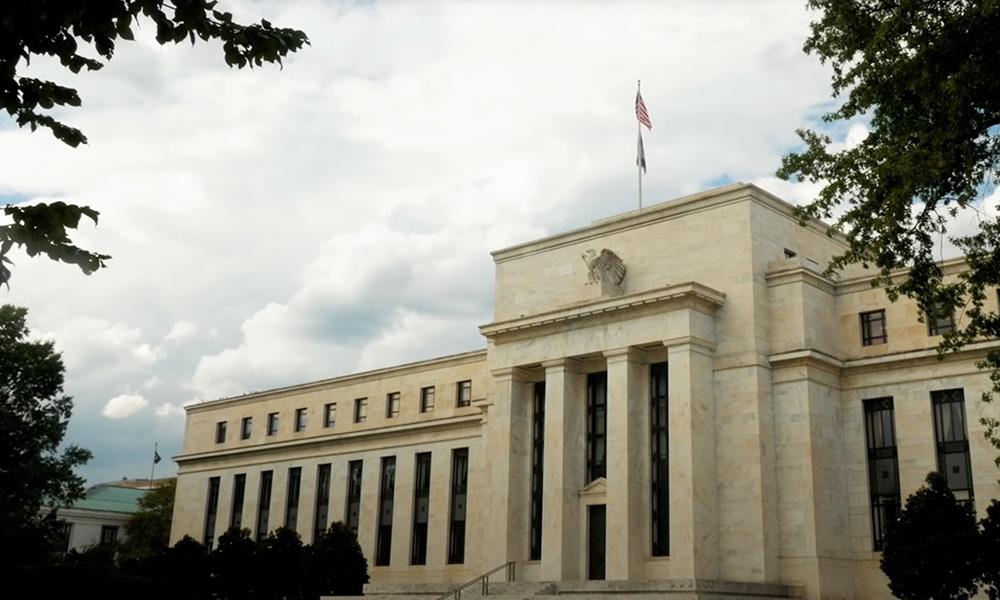
The so-called "dot plot," officially known as the interest rate projections section of the Federal Open Market Committee's quarterly summary of economic projections, is an official document released every three months. It anonymously records each participating official's personal assessment of the appropriate level of the federal funds rate over the next few years, ultimately presenting the median to the public.
Beyond interest rates themselves, the summary also includes a comprehensive outlook on unemployment, inflation, and GDP growth. Although the Federal Reserve has repeatedly emphasized that these projections are not official commitments from a collective committee decision, but merely a summary of policymakers' individual views, Wall Street analysts, asset management firms, and global central bank watchers have long regarded them as a core reference point for predicting the pace of monetary policy shifts, and their market influence is often no less than that of the policy statement itself.
Chairman Warsh's aversion to the dot plot is far from a spur-of-the-moment decision or a capricious act. During his Senate confirmation hearings in April, he made no secret of viewing the summary of economic projections as a classic example of the Federal Reserve's "over-communication" problem. He pointedly noted that the Fed's major mistake of misjudging inflation as a "temporary phenomenon" between 2021 and 2022 was partly due to officials' excessive adherence to their published projections, thus delaying adjustments to policy based on rapidly changing realities.
In his view, central bank officials are also human beings. Once they make their personal expectations public, they will unconsciously develop a psychological inertia to maintain existing judgments. This stickiness will seriously weaken the flexibility and responsiveness that monetary policy should have.
Walsh firmly believes that truly prudent decision-making should wait until each meeting, based on the latest economic realities, and be conducted through gradual deliberation, rather than being constrained by "points" drawn months ago. Therefore, refusing to submit his personal points is both a natural extension of his personal beliefs and a groundbreaking move in his vow to promote "fundamental change."
Wall Street's mainstream institutions have offered widely divergent predictions regarding Walsh's potential absence from the dot plot.
Bank of America economists explicitly predict that the new chairman will not submit his own points, while Goldman Sachs team cautiously stated in a report, "Assuming he will not submit them, we are not entirely certain," revealing uncertainty about the new leader's style of operation.
Some seasoned strategists admit that the historical accuracy of the dot plot is at best mediocre, and the market's overreaction to it is somewhat irrational. However, it does provide the only official window into the distribution of opinions within the Federal Reserve, and the market has long developed a path dependency on it.
However, warnings from academia should not be ignored. Some economists have pointed out that if Chairman Warsh chooses to withdraw from submitting forecasts, and other officials with the same stance follow suit, market investors are likely to interpret this as a deliberate "information withholding."
Specifically, traders may suspect that Warsh is attempting to conceal a brewing hawkish shift within the committee by hiding his own interest rate stance—a hardline approach that would necessitate higher interest rates to curb stubborn inflation. This "information vacuum" could, in turn, fuel more intense market speculation and volatility, making the Fed appear less confident or even complacent on inflation management, thus further damaging its hard-won policy credibility.
This meeting will therefore be a true litmus test. In addition to closely watching the "completeness" of the dot plot, the outside world will also scrutinize the wording of the post-meeting statement and whether Walsh will continue the tradition of holding a press conference after every meeting, as his predecessor did. These details together outline the prototype of a new era of communication.
In conclusion, Kevin Warsh's potential decision not to submit his personal interest rate forecasts—a seemingly "subtractive" move—is actually an "additive" challenge to the Federal Reserve's communication philosophy. It reflects both the new chairman's profound reflection on past policy mistakes and his willingness to break with convention and confront market inertia in his reform efforts.
However, changes in communication methods are always a double-edged sword—they can liberate policymakers, but they can also breed market unease due to a lack of information. This debate, centered around a single "point," is essentially about how the central bank can find a new balance between transparency and flexibility. The answer may not be fully revealed at this meeting, but it has undoubtedly laid the groundwork for a shift in future policy narratives.
Question 1: Is the Federal Reserve's "dot plot" an official policy commitment or merely a summary of forecasts for market reference?
Answer: The dot plot is by no means an official policy commitment; it is merely a collection of individual judgments by each member of the Federal Open Market Committee regarding the appropriate path for interest rates, ultimately presented as a median. The Federal Reserve has repeatedly emphasized that the actual policy direction always depends on changes in future economic data, not these static points. However, because the market has long regarded it as the most direct indicator of policy direction, its psychological influence is often amplified, and sometimes even becomes the dominant factor, a key variable influencing the bond and stock markets.
Question 2: Why does Kevin Walsh so strongly oppose the dot plot mechanism, and what is his core argument?
Answer: Warsh's objection is rooted in real-world observations from behavioral economics. He argues that when central bank officials publish their forecasts, they unconsciously develop a "commitment consistency" mentality, delaying adjustments even when subsequent data significantly deviates from the original predictions, out of a desire to save face. He specifically cites the inflation misjudgment of 2021-2022 as an example, pointing out that this excessive "loyalty" to existing forecasts caused the Federal Reserve to miss the optimal window for timely policy tightening. He advocates that decisions should be based entirely on real-time discussions at each meeting, rather than being bound by points drawn six months prior.
Question 3: If Warsh does not submit his own interest rate forecasts, will it cause the dot plot to become distorted overall, thus affecting market judgment?
Answer: Theoretically, the absence of individual officials could indeed cause a slight change in the base sample used to calculate the median. However, due to the anonymity of the dot plot, the market has no way of knowing exactly who is missing. The greater impact lies on a symbolic level—investors may question whether the new chairman is deliberately concealing his true hawkish or dovish leanings, thus casting doubt on the credibility of the overall forecast. Economists warn that this uncertainty could exacerbate market anxiety, putting tools originally intended to increase transparency in a dilemma.
Question 4: Besides the controversy over the dot matrix diagram, what other noteworthy signals of communication style change emerged at this conference?
Answer: The market will also be highly focused on two supplementary details. First, the subtle changes in the wording of the post-meeting policy statement, particularly the retention or deletion of key phrases such as "further rate hikes" or "maintaining a restrictive stance." Second, whether Warsh will continue the tradition of holding a live press conference after each regular meeting. If he chooses to cancel some of the press conferences or shorten the Q&A session, it will mean that the Fed is systematically reducing the frequency and intensity of forward guidance, which is a more substantial shift in communication than changes to the dot plot.
Question 5: What practical impact would changes to or removal of the dot plot have on ordinary investors?
Answer: In the short term, ordinary investors may feel a lack of information anchors. Previously, they could judge the interest rate range for the next one to two years based on the median of the dot plot. Now, they need to pay more attention to hard data such as inflation and employment, as well as the impromptu remarks of the Federal Reserve Chairman at press conferences. In the long term, if Warsh's reforms can force the market to reduce excessive speculation on short-term predictions, it may actually encourage investors to return to fundamental analysis and reduce excessive buying and selling caused by small fluctuations in the dot plot. However, market volatility is expected to increase during the transition period, and investors need to manage risk effectively.
At a time when monetary policy is crucial to the economy's survival, this leader, who has been a vocal critic of excessive central bank communication, is attempting to send a clear and strong message by refusing to submit his personal interest rate forecasts: the Federal Reserve's decision-making process needs a fundamental overhaul. If this move comes to fruition, it will not only break with nearly fourteen years of policy communication practices but also likely create ripples among his colleagues and market participants, becoming the first litmus test of the new chairman's determination to reform.
The Past and Present of Raster Graphics: A Communication Tool Revered by the Market
The so-called "dot plot," officially known as the interest rate projections section of the Federal Open Market Committee's quarterly summary of economic projections, is an official document released every three months. It anonymously records each participating official's personal assessment of the appropriate level of the federal funds rate over the next few years, ultimately presenting the median to the public.
Beyond interest rates themselves, the summary also includes a comprehensive outlook on unemployment, inflation, and GDP growth. Although the Federal Reserve has repeatedly emphasized that these projections are not official commitments from a collective committee decision, but merely a summary of policymakers' individual views, Wall Street analysts, asset management firms, and global central bank watchers have long regarded them as a core reference point for predicting the pace of monetary policy shifts, and their market influence is often no less than that of the policy statement itself.
The new chairman's "rebellious" logic: When human predictions shackle decision-making.
Chairman Warsh's aversion to the dot plot is far from a spur-of-the-moment decision or a capricious act. During his Senate confirmation hearings in April, he made no secret of viewing the summary of economic projections as a classic example of the Federal Reserve's "over-communication" problem. He pointedly noted that the Fed's major mistake of misjudging inflation as a "temporary phenomenon" between 2021 and 2022 was partly due to officials' excessive adherence to their published projections, thus delaying adjustments to policy based on rapidly changing realities.
In his view, central bank officials are also human beings. Once they make their personal expectations public, they will unconsciously develop a psychological inertia to maintain existing judgments. This stickiness will seriously weaken the flexibility and responsiveness that monetary policy should have.
Walsh firmly believes that truly prudent decision-making should wait until each meeting, based on the latest economic realities, and be conducted through gradual deliberation, rather than being constrained by "points" drawn months ago. Therefore, refusing to submit his personal points is both a natural extension of his personal beliefs and a groundbreaking move in his vow to promote "fundamental change."
Subtle Echoes from the Market and Academia: Is it a Good Solution for Reform or a Risk to Credibility?
Wall Street's mainstream institutions have offered widely divergent predictions regarding Walsh's potential absence from the dot plot.
Bank of America economists explicitly predict that the new chairman will not submit his own points, while Goldman Sachs team cautiously stated in a report, "Assuming he will not submit them, we are not entirely certain," revealing uncertainty about the new leader's style of operation.
Some seasoned strategists admit that the historical accuracy of the dot plot is at best mediocre, and the market's overreaction to it is somewhat irrational. However, it does provide the only official window into the distribution of opinions within the Federal Reserve, and the market has long developed a path dependency on it.
However, warnings from academia should not be ignored. Some economists have pointed out that if Chairman Warsh chooses to withdraw from submitting forecasts, and other officials with the same stance follow suit, market investors are likely to interpret this as a deliberate "information withholding."
Specifically, traders may suspect that Warsh is attempting to conceal a brewing hawkish shift within the committee by hiding his own interest rate stance—a hardline approach that would necessitate higher interest rates to curb stubborn inflation. This "information vacuum" could, in turn, fuel more intense market speculation and volatility, making the Fed appear less confident or even complacent on inflation management, thus further damaging its hard-won policy credibility.
This meeting will therefore be a true litmus test. In addition to closely watching the "completeness" of the dot plot, the outside world will also scrutinize the wording of the post-meeting statement and whether Walsh will continue the tradition of holding a press conference after every meeting, as his predecessor did. These details together outline the prototype of a new era of communication.
Summary: A thunderclap in the silence: the beginning of a game of trust.
In conclusion, Kevin Warsh's potential decision not to submit his personal interest rate forecasts—a seemingly "subtractive" move—is actually an "additive" challenge to the Federal Reserve's communication philosophy. It reflects both the new chairman's profound reflection on past policy mistakes and his willingness to break with convention and confront market inertia in his reform efforts.
However, changes in communication methods are always a double-edged sword—they can liberate policymakers, but they can also breed market unease due to a lack of information. This debate, centered around a single "point," is essentially about how the central bank can find a new balance between transparency and flexibility. The answer may not be fully revealed at this meeting, but it has undoubtedly laid the groundwork for a shift in future policy narratives.
Frequently Asked Questions
Question 1: Is the Federal Reserve's "dot plot" an official policy commitment or merely a summary of forecasts for market reference?
Answer: The dot plot is by no means an official policy commitment; it is merely a collection of individual judgments by each member of the Federal Open Market Committee regarding the appropriate path for interest rates, ultimately presented as a median. The Federal Reserve has repeatedly emphasized that the actual policy direction always depends on changes in future economic data, not these static points. However, because the market has long regarded it as the most direct indicator of policy direction, its psychological influence is often amplified, and sometimes even becomes the dominant factor, a key variable influencing the bond and stock markets.
Question 2: Why does Kevin Walsh so strongly oppose the dot plot mechanism, and what is his core argument?
Answer: Warsh's objection is rooted in real-world observations from behavioral economics. He argues that when central bank officials publish their forecasts, they unconsciously develop a "commitment consistency" mentality, delaying adjustments even when subsequent data significantly deviates from the original predictions, out of a desire to save face. He specifically cites the inflation misjudgment of 2021-2022 as an example, pointing out that this excessive "loyalty" to existing forecasts caused the Federal Reserve to miss the optimal window for timely policy tightening. He advocates that decisions should be based entirely on real-time discussions at each meeting, rather than being bound by points drawn six months prior.
Question 3: If Warsh does not submit his own interest rate forecasts, will it cause the dot plot to become distorted overall, thus affecting market judgment?
Answer: Theoretically, the absence of individual officials could indeed cause a slight change in the base sample used to calculate the median. However, due to the anonymity of the dot plot, the market has no way of knowing exactly who is missing. The greater impact lies on a symbolic level—investors may question whether the new chairman is deliberately concealing his true hawkish or dovish leanings, thus casting doubt on the credibility of the overall forecast. Economists warn that this uncertainty could exacerbate market anxiety, putting tools originally intended to increase transparency in a dilemma.
Question 4: Besides the controversy over the dot matrix diagram, what other noteworthy signals of communication style change emerged at this conference?
Answer: The market will also be highly focused on two supplementary details. First, the subtle changes in the wording of the post-meeting policy statement, particularly the retention or deletion of key phrases such as "further rate hikes" or "maintaining a restrictive stance." Second, whether Warsh will continue the tradition of holding a live press conference after each regular meeting. If he chooses to cancel some of the press conferences or shorten the Q&A session, it will mean that the Fed is systematically reducing the frequency and intensity of forward guidance, which is a more substantial shift in communication than changes to the dot plot.
Question 5: What practical impact would changes to or removal of the dot plot have on ordinary investors?
Answer: In the short term, ordinary investors may feel a lack of information anchors. Previously, they could judge the interest rate range for the next one to two years based on the median of the dot plot. Now, they need to pay more attention to hard data such as inflation and employment, as well as the impromptu remarks of the Federal Reserve Chairman at press conferences. In the long term, if Warsh's reforms can force the market to reduce excessive speculation on short-term predictions, it may actually encourage investors to return to fundamental analysis and reduce excessive buying and selling caused by small fluctuations in the dot plot. However, market volatility is expected to increase during the transition period, and investors need to manage risk effectively.
- Risk Warning and Disclaimer
- The market involves risk, and trading may not be suitable for all investors. This article is for reference only and does not constitute personal investment advice, nor does it take into account certain users’ specific investment objectives, financial situation, or other needs. Any investment decisions made based on this information are at your own risk.