The Bank of England conceded two hawkish votes, pushing the pound to the brink of a short-term "no-go zone".
2026-06-18 19:11:21
At 19:00 Beijing time on Thursday (June 18), the Bank of England announced its June monetary policy decision, maintaining the interest rate at 3.75% by a 7-2 vote, in line with expectations. Two external members, Megan Green and Chief Economist Hugh Peele, voted to raise the rate by 0.25 percentage points.

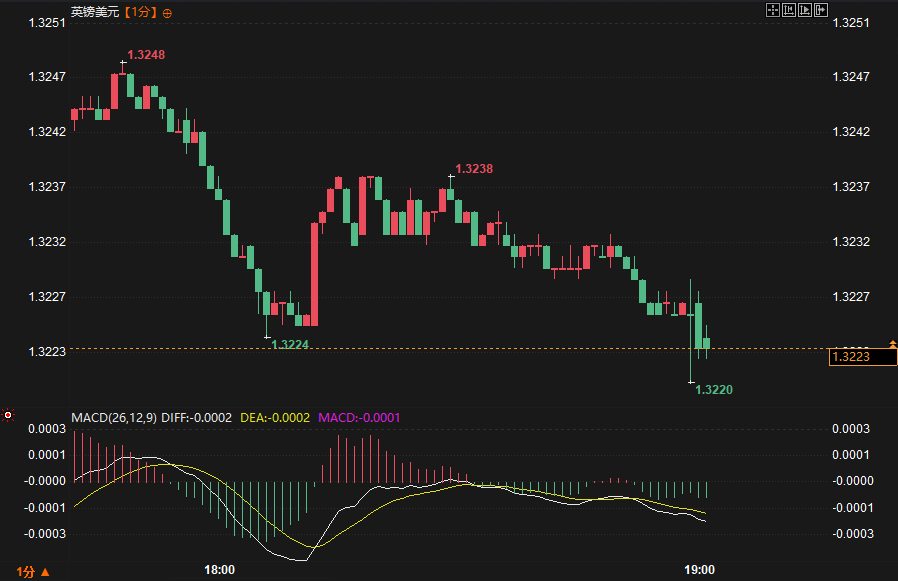
Following the announcement of the resolution, the pound fell slightly against the dollar by about 12 points in the short term, hitting a low of 1.3218.
In the current market context, major central banks around the world are showing significant policy divergence. The European Central Bank and the Bank of Japan raised interest rates last week, while the Federal Reserve, under its new chairman, has signaled a possible rate hike this year. In the UK, the May CPI remained at 2.8%, and energy prices face uncertainty due to volatility in the Middle East. Market disagreements regarding this decision primarily focused on voting ratios and adjustments to inflation expectations.
The core of the Bank of England's decision was balancing inflation risks with economic growth signals. Governor Bailey emphasized that although energy prices have recently fallen, the rise over the past four months has created some inflationary pressure, and the central bank's responsibility is to prevent it from developing into persistent inflation. The MPC lowered its fourth-quarter CPI forecast to "slightly above 3.25%", down from the 3.6%-3.7% forecast in April, while raising its potential second-quarter GDP growth forecast to 0.2%.
This adjustment reflects the majority of MPC members' view that the current tightening stance is sufficiently "aggressive" and does not require immediate tightening, but minority opinions highlight concerns about second-round inflation expectations. Green and Peel believe that proactive rate hikes help anchor household inflation expectations, which have risen to relatively high levels. Other members, such as Catherine Mann, while leaning hawkish, agreed to wait for more evidence; Vice President Claire Lombardy pointed out that the risk of energy price transmission exists, but current evidence suggests that the transmission remains within a normal path.
From a fundamental perspective and historical trends, UK inflation has been above the 2% target for most of the past five years, with the Russia-Ukraine conflict in 2022 pushing CPI to a peak of over 11%. Maintaining interest rates this time is consistent with previous decisions to "hold steady," but the voting split was wider than the 8-1 vote in April, indicating increased internal debate. Latest quotes show a slight pullback in the pound after the decision. In similar historical scenarios of "meeting expectations but with hawkish disagreements," short-term risk appetite often dominates, putting pressure on the spot exchange rate, while the long-term outlook depends on subsequent data confirmation.
From a technical perspective, GBP/USD had already pulled back due to signals from the Federal Reserve before the decision, and continued to fluctuate at low levels after the decision. In the short-term balance of power, downward pressure has a slight advantage, but if energy prices stabilize and fall, the pound may find some support.
Comparison of viewpoints before and after the event: Before the resolution was announced, institutional accounts mostly maintained their expectations unchanged, focusing on voting differences and forward guidance. They generally believed that cooling inflation and falling oil prices reduced the urgency of the situation. Retail investors' views were more divided, with some bullish on the pound due to "improved data," while others were concerned about geopolitical risks. After the announcement, institutions quickly interpreted it as "cautiously neutral," emphasizing the MPC's "ready to act" statement. Retail investors reacted more directly, with some traders discussing short-term downward pressure on the pound, but overall sentiment did not show extreme panic; the focus shifted to the data from the next meeting.
This decision, distinct from those of other central banks globally, further highlights the Bank of England's policy independence: it did not follow the interest rate hikes of the European and Japanese central banks, nor did it fully replicate the Federal Reserve's hawkish shift; its core decision remained based on assessments of UK domestic inflation dynamics and energy uncertainty. This indirectly impacts related assets such as the euro and the dollar, negatively affecting pound assets in the short term, while the long-term impact depends on whether a second round of effects emerges.
In the short term, the pound faces some adjustment pressure, and the market will digest the signal of this "hawkish stabilization." If subsequent economic data and energy prices remain stable, the downside potential may be limited. In the medium term, the MPC emphasizes an upward bias in inflation risks, and policy options are expected to remain open, supported by data. The overall market trend is data-driven; if fourth-quarter inflation is as moderate as expected, the pound may gradually stabilize; conversely, if energy prices push expectations higher again, it will face additional volatility. In the long term, the potential support of a moderate recovery in UK economic growth, combined with the global interest rate environment, will determine the exchange rate's range-bound movement.
Q: What is the significance of the Bank of England's 7-2 vote in this vote?
The vote was more divided than previous ones, indicating disagreements within the MPC regarding the assessment of inflation risks. A majority of members believed that current interest rates were sufficient to manage uncertainty, while a minority emphasized the need for proactive measures to anchor expectations. This leaves room for flexibility in future policy paths but also increases market attention to the next meeting.
Q: Why did the pound fall slightly against the dollar after the resolution?
The expected decision to maintain the current exchange rate, coupled with differing hawkish stances, led the market to either take profits or avoid uncertainty in the short term. Historically, in similar scenarios, the spot exchange rate often initially reflects disappointment from the lack of surprises, subsequently depending on the tone of speeches by officials such as Bailey. After hitting a low of 1.3218, the rate has tended to fluctuate, reflecting a balance between bulls and bears.
Q: Does the downward revision of inflation expectations mean that the Bank of England is shifting towards easing?
That's not the case. While lowering the fourth-quarter CPI forecast, the GDP growth forecast is raised, but the overall framework remains data-dependent. Bailey has clearly stated that there will be a swift response to the second-round effects, and the policy stance remains tight, focusing on preventing the transmission of energy price disturbances rather than proactively easing.
Q: What impact will the Middle East peace agreement have on the Bank of England's policy decisions?
The agreement brought a boost to energy prices, alleviating some imported inflationary pressures. However, the central bank still views the outlook as "uncertain" and has not changed its current interest rate path. This reflects that policy decisions are centered on domestic data, while geopolitical factors are considered as a risk scenario.
Q: What lessons can be learned from this resolution for the global market?
This highlights the divergent paths taken by major central banks in balancing inflation targets and growth. The UK's cautious approach offers a cautionary tale for other economies facing similar energy and forecasting challenges: a tendency to keep options open and avoid overreacting until data clearly deteriorates. UK data will continue to be a key catalyst for global macroeconomic transactions in the coming months.
Following the announcement of the resolution, the pound fell slightly against the dollar by about 12 points in the short term, hitting a low of 1.3218.
In the current market context, major central banks around the world are showing significant policy divergence. The European Central Bank and the Bank of Japan raised interest rates last week, while the Federal Reserve, under its new chairman, has signaled a possible rate hike this year. In the UK, the May CPI remained at 2.8%, and energy prices face uncertainty due to volatility in the Middle East. Market disagreements regarding this decision primarily focused on voting ratios and adjustments to inflation expectations.
Deep interconnect analysis
The core of the Bank of England's decision was balancing inflation risks with economic growth signals. Governor Bailey emphasized that although energy prices have recently fallen, the rise over the past four months has created some inflationary pressure, and the central bank's responsibility is to prevent it from developing into persistent inflation. The MPC lowered its fourth-quarter CPI forecast to "slightly above 3.25%", down from the 3.6%-3.7% forecast in April, while raising its potential second-quarter GDP growth forecast to 0.2%.
This adjustment reflects the majority of MPC members' view that the current tightening stance is sufficiently "aggressive" and does not require immediate tightening, but minority opinions highlight concerns about second-round inflation expectations. Green and Peel believe that proactive rate hikes help anchor household inflation expectations, which have risen to relatively high levels. Other members, such as Catherine Mann, while leaning hawkish, agreed to wait for more evidence; Vice President Claire Lombardy pointed out that the risk of energy price transmission exists, but current evidence suggests that the transmission remains within a normal path.
From a fundamental perspective and historical trends, UK inflation has been above the 2% target for most of the past five years, with the Russia-Ukraine conflict in 2022 pushing CPI to a peak of over 11%. Maintaining interest rates this time is consistent with previous decisions to "hold steady," but the voting split was wider than the 8-1 vote in April, indicating increased internal debate. Latest quotes show a slight pullback in the pound after the decision. In similar historical scenarios of "meeting expectations but with hawkish disagreements," short-term risk appetite often dominates, putting pressure on the spot exchange rate, while the long-term outlook depends on subsequent data confirmation.
From a technical perspective, GBP/USD had already pulled back due to signals from the Federal Reserve before the decision, and continued to fluctuate at low levels after the decision. In the short-term balance of power, downward pressure has a slight advantage, but if energy prices stabilize and fall, the pound may find some support.
Comparison of viewpoints before and after the event: Before the resolution was announced, institutional accounts mostly maintained their expectations unchanged, focusing on voting differences and forward guidance. They generally believed that cooling inflation and falling oil prices reduced the urgency of the situation. Retail investors' views were more divided, with some bullish on the pound due to "improved data," while others were concerned about geopolitical risks. After the announcement, institutions quickly interpreted it as "cautiously neutral," emphasizing the MPC's "ready to act" statement. Retail investors reacted more directly, with some traders discussing short-term downward pressure on the pound, but overall sentiment did not show extreme panic; the focus shifted to the data from the next meeting.
This decision, distinct from those of other central banks globally, further highlights the Bank of England's policy independence: it did not follow the interest rate hikes of the European and Japanese central banks, nor did it fully replicate the Federal Reserve's hawkish shift; its core decision remained based on assessments of UK domestic inflation dynamics and energy uncertainty. This indirectly impacts related assets such as the euro and the dollar, negatively affecting pound assets in the short term, while the long-term impact depends on whether a second round of effects emerges.
Trend Outlook
In the short term, the pound faces some adjustment pressure, and the market will digest the signal of this "hawkish stabilization." If subsequent economic data and energy prices remain stable, the downside potential may be limited. In the medium term, the MPC emphasizes an upward bias in inflation risks, and policy options are expected to remain open, supported by data. The overall market trend is data-driven; if fourth-quarter inflation is as moderate as expected, the pound may gradually stabilize; conversely, if energy prices push expectations higher again, it will face additional volatility. In the long term, the potential support of a moderate recovery in UK economic growth, combined with the global interest rate environment, will determine the exchange rate's range-bound movement.
Frequently Asked Questions
Q: What is the significance of the Bank of England's 7-2 vote in this vote?
The vote was more divided than previous ones, indicating disagreements within the MPC regarding the assessment of inflation risks. A majority of members believed that current interest rates were sufficient to manage uncertainty, while a minority emphasized the need for proactive measures to anchor expectations. This leaves room for flexibility in future policy paths but also increases market attention to the next meeting.
Q: Why did the pound fall slightly against the dollar after the resolution?
The expected decision to maintain the current exchange rate, coupled with differing hawkish stances, led the market to either take profits or avoid uncertainty in the short term. Historically, in similar scenarios, the spot exchange rate often initially reflects disappointment from the lack of surprises, subsequently depending on the tone of speeches by officials such as Bailey. After hitting a low of 1.3218, the rate has tended to fluctuate, reflecting a balance between bulls and bears.
Q: Does the downward revision of inflation expectations mean that the Bank of England is shifting towards easing?
That's not the case. While lowering the fourth-quarter CPI forecast, the GDP growth forecast is raised, but the overall framework remains data-dependent. Bailey has clearly stated that there will be a swift response to the second-round effects, and the policy stance remains tight, focusing on preventing the transmission of energy price disturbances rather than proactively easing.
Q: What impact will the Middle East peace agreement have on the Bank of England's policy decisions?
The agreement brought a boost to energy prices, alleviating some imported inflationary pressures. However, the central bank still views the outlook as "uncertain" and has not changed its current interest rate path. This reflects that policy decisions are centered on domestic data, while geopolitical factors are considered as a risk scenario.
Q: What lessons can be learned from this resolution for the global market?
This highlights the divergent paths taken by major central banks in balancing inflation targets and growth. The UK's cautious approach offers a cautionary tale for other economies facing similar energy and forecasting challenges: a tendency to keep options open and avoid overreacting until data clearly deteriorates. UK data will continue to be a key catalyst for global macroeconomic transactions in the coming months.
- Risk Warning and Disclaimer
- The market involves risk, and trading may not be suitable for all investors. This article is for reference only and does not constitute personal investment advice, nor does it take into account certain users’ specific investment objectives, financial situation, or other needs. Any investment decisions made based on this information are at your own risk.