Second-order reaction of risky assets begins: Who benefits from the sharp drop in oil prices? Chemical consumption boom or a second dip in cyclical commodities?
2026-06-18 20:09:22
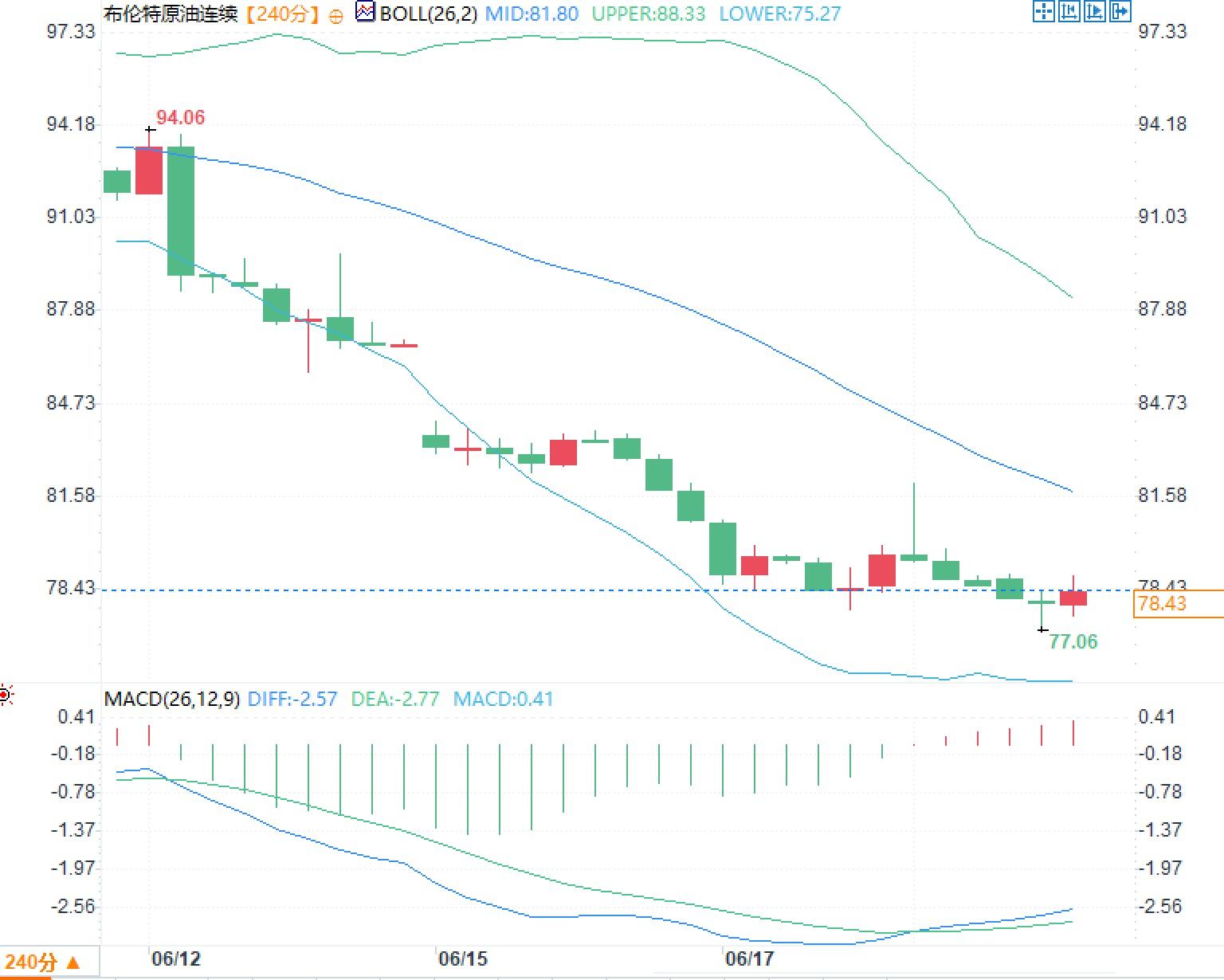
On Thursday, June 18th, the core pricing factor in the energy market shifted from the "Hormuz Strait closure premium" to the "speed of resumption of shipping and the risk of agreement implementation." Brent crude is currently fluctuating around $78.50 per barrel, a significant drop from its previous high of nearly $94 per barrel; US crude has also fallen to around $75 per barrel. This price decline does not mean the risks have been completely eliminated, but rather that the market is reassessing the probability of supply disruptions, transportation insurance costs, the path to sanctions exemptions, and the uncertainty surrounding the negotiations over the next 60 days.
Following Donald Trump's formal signing of the interim peace memorandum with Iran, the most immediate reaction from trading was to sell off conflict risk premiums. Previously, the conflict, coupled with the obstruction of the Strait of Hormuz, had caused unprecedented disruption to the Middle East's energy export chain. International Energy Agency chief Fatih Birol stated that the strait must be reopened unconditionally, emphasizing that the previous closure affected the supply of more than 14 million barrels of Middle Eastern oil per day. This statement indicates that the market had previously priced in not just ordinary geopolitical disturbances, but a structural disruption to the global energy transportation system.
From a price structure perspective, the pullback in Brent crude from its highs does not necessarily equate to a shift towards a looser economic environment. More accurately, the market is currently pricing in the "worst-case scenario." If the Straits gradually reopens, refinery restocking, shipping schedule rescheduling, and lower insurance rates will collectively reduce near-term risk premiums. However, if the resumption of shipping is slower than expected, or if shipping companies still require additional safety confirmations, the far-month curve may not weaken in tandem. Traders should focus not on the daily decline, but rather on whether the spot premium continues to narrow, whether ocean freight rates decline, and whether Middle East export shipment data can continue to recover.
The biggest variable brought about by the memorandum is the anticipated reopening of the Strait of Hormuz. Reports indicate that some oil tankers have already begun transiting the relevant waters, including large tankers carrying approximately millions of barrels of crude oil. However, the shipping and energy industries are still awaiting clearer safety information, including details regarding mine risks, navigation authorizations, insurance terms, and whether Iran will impose transit fees in the future.
This means that while oil prices have initially "resumed" trading, the actual flow of goods and services has not yet been fully confirmed. The Strait of Hormuz handles a significant proportion of global crude oil and liquefied natural gas (LNG) transport, and any changes to the rules of passage will directly impact spot discounts, shipowner risk pricing, and refinery purchasing pace. If only a small number of vessels resume passage in the coming weeks, the market will reinstate the "resumption discount"; only if large oil tankers and LNG carriers consistently pass through will the risk premium be further compressed.
It is worth noting that the agreement requires restoring cross-strait traffic to full capacity within a certain period, but the market's understanding of "full capacity" is not consistent. At the transaction level, three levels should be distinguished: vessel passage, acceptable commercial insurance, and exports returning to pre-conflict levels. Only when the third condition is verified will supply-side pressures truly be reflected in the monthly balance sheet.
The interim memorandum extends the ceasefire by 60 days and includes restrictions on Iran's nuclear program, the handling of its high-abundance uranium stockpile, sanctions waivers, and arrangements for frozen funds within the negotiation framework. The problem lies in the technical complexity of the nuclear issue, its long verification cycle, and the significant political obstacles. The 2015 agreement took approximately two years from negotiation to implementation, while this new agreement with only a 60-day window implies that it is more of a risk mitigation measure than a final solution.
This has two implications for the oil market. First, short-term supply expectations have improved. The memorandum allows Iran to resume crude oil exports and may involve the unfreezing of funds and arrangements for a reconstruction fund, naturally leading the market to lower its estimate of supply disruptions. Second, medium-term uncertainty has not disappeared. If negotiations stall on issues such as verification mechanisms, inventory disposal, missile issues, or Straits tolls, oil prices may re-induce policy risks.
Internal pressures within the United States are equally significant. Some Republicans believe the memorandum makes too many concessions to Iran, worrying that the release of funds and sanctions waivers will weaken their negotiating leverage. Trump, on the other hand, emphasizes that further military escalation could trigger an international economic recession. This divergence illustrates that implementing the agreement is not merely a diplomatic issue, but rather a rebalancing of domestic politics, energy prices, and inflation expectations within the United States.
The first key factor is the speed of supply recovery. If Iranian exports recover faster than expected, coupled with the resumption of passage through the Straits of Hormuz, the support for Brent near-term contracts will continue to weaken. However, if ports, fleets, insurance, and settlement processes remain restricted, the actual increase may be lower than the announced figures.
The second key theme is inflation expectations. Previously, when oil prices approached $94 per barrel, gasoline price pressures already impacted US consumers and increased policymakers' need to de-escalate tensions. The current drop in oil prices helps mitigate energy inflation, but if oil prices remain above $75 per barrel, the improvement in inflation may not be enough to change the cautious stance of major central banks.
The third main theme is the second-order reaction of risky assets. A sharp drop in oil prices usually benefits cost-sensitive industries such as transportation, chemicals, and consumer goods. However, if the decline comes from geopolitical easing, market risk appetite will improve accordingly. If the decline comes from disputes over the details of the agreement or concerns about demand, it may suppress the pricing of cyclical commodities.
The core reason for the decline in oil prices is not weakening demand, but rather the rapid compression of risk premiums.
Following Donald Trump's formal signing of the interim peace memorandum with Iran, the most immediate reaction from trading was to sell off conflict risk premiums. Previously, the conflict, coupled with the obstruction of the Strait of Hormuz, had caused unprecedented disruption to the Middle East's energy export chain. International Energy Agency chief Fatih Birol stated that the strait must be reopened unconditionally, emphasizing that the previous closure affected the supply of more than 14 million barrels of Middle Eastern oil per day. This statement indicates that the market had previously priced in not just ordinary geopolitical disturbances, but a structural disruption to the global energy transportation system.
From a price structure perspective, the pullback in Brent crude from its highs does not necessarily equate to a shift towards a looser economic environment. More accurately, the market is currently pricing in the "worst-case scenario." If the Straits gradually reopens, refinery restocking, shipping schedule rescheduling, and lower insurance rates will collectively reduce near-term risk premiums. However, if the resumption of shipping is slower than expected, or if shipping companies still require additional safety confirmations, the far-month curve may not weaken in tandem. Traders should focus not on the daily decline, but rather on whether the spot premium continues to narrow, whether ocean freight rates decline, and whether Middle East export shipment data can continue to recover.
The resumption of flights to and from Hormuz remains a "test question."
The biggest variable brought about by the memorandum is the anticipated reopening of the Strait of Hormuz. Reports indicate that some oil tankers have already begun transiting the relevant waters, including large tankers carrying approximately millions of barrels of crude oil. However, the shipping and energy industries are still awaiting clearer safety information, including details regarding mine risks, navigation authorizations, insurance terms, and whether Iran will impose transit fees in the future.
This means that while oil prices have initially "resumed" trading, the actual flow of goods and services has not yet been fully confirmed. The Strait of Hormuz handles a significant proportion of global crude oil and liquefied natural gas (LNG) transport, and any changes to the rules of passage will directly impact spot discounts, shipowner risk pricing, and refinery purchasing pace. If only a small number of vessels resume passage in the coming weeks, the market will reinstate the "resumption discount"; only if large oil tankers and LNG carriers consistently pass through will the risk premium be further compressed.
It is worth noting that the agreement requires restoring cross-strait traffic to full capacity within a certain period, but the market's understanding of "full capacity" is not consistent. At the transaction level, three levels should be distinguished: vessel passage, acceptable commercial insurance, and exports returning to pre-conflict levels. Only when the third condition is verified will supply-side pressures truly be reflected in the monthly balance sheet.
The 60-day negotiation window is a new source of volatility in oil prices.
The interim memorandum extends the ceasefire by 60 days and includes restrictions on Iran's nuclear program, the handling of its high-abundance uranium stockpile, sanctions waivers, and arrangements for frozen funds within the negotiation framework. The problem lies in the technical complexity of the nuclear issue, its long verification cycle, and the significant political obstacles. The 2015 agreement took approximately two years from negotiation to implementation, while this new agreement with only a 60-day window implies that it is more of a risk mitigation measure than a final solution.
This has two implications for the oil market. First, short-term supply expectations have improved. The memorandum allows Iran to resume crude oil exports and may involve the unfreezing of funds and arrangements for a reconstruction fund, naturally leading the market to lower its estimate of supply disruptions. Second, medium-term uncertainty has not disappeared. If negotiations stall on issues such as verification mechanisms, inventory disposal, missile issues, or Straits tolls, oil prices may re-induce policy risks.
Internal pressures within the United States are equally significant. Some Republicans believe the memorandum makes too many concessions to Iran, worrying that the release of funds and sanctions waivers will weaken their negotiating leverage. Trump, on the other hand, emphasizes that further military escalation could trigger an international economic recession. This divergence illustrates that implementing the agreement is not merely a diplomatic issue, but rather a rebalancing of domestic politics, energy prices, and inflation expectations within the United States.
Three main lines of energy market repricing
The first key factor is the speed of supply recovery. If Iranian exports recover faster than expected, coupled with the resumption of passage through the Straits of Hormuz, the support for Brent near-term contracts will continue to weaken. However, if ports, fleets, insurance, and settlement processes remain restricted, the actual increase may be lower than the announced figures.
The second key theme is inflation expectations. Previously, when oil prices approached $94 per barrel, gasoline price pressures already impacted US consumers and increased policymakers' need to de-escalate tensions. The current drop in oil prices helps mitigate energy inflation, but if oil prices remain above $75 per barrel, the improvement in inflation may not be enough to change the cautious stance of major central banks.
The third main theme is the second-order reaction of risky assets. A sharp drop in oil prices usually benefits cost-sensitive industries such as transportation, chemicals, and consumer goods. However, if the decline comes from geopolitical easing, market risk appetite will improve accordingly. If the decline comes from disputes over the details of the agreement or concerns about demand, it may suppress the pricing of cyclical commodities.
- Risk Warning and Disclaimer
- The market involves risk, and trading may not be suitable for all investors. This article is for reference only and does not constitute personal investment advice, nor does it take into account certain users’ specific investment objectives, financial situation, or other needs. Any investment decisions made based on this information are at your own risk.