Examining the global economic ripple effects of the US-Iran conflict from an Indian perspective
2026-06-18 21:52:55
Although the main battlefield of this geopolitical game is in the Middle East, the chain reaction of high inflation, trade imbalances, exchange rate fluctuations, and industrial pressure is borne by countries around the world. India has become the most direct example of the damage caused by the obstruction of its energy choke point, clearly reflecting the systemic damage that geopolitical conflicts cause to the global industrial chain, energy market, and financial system.
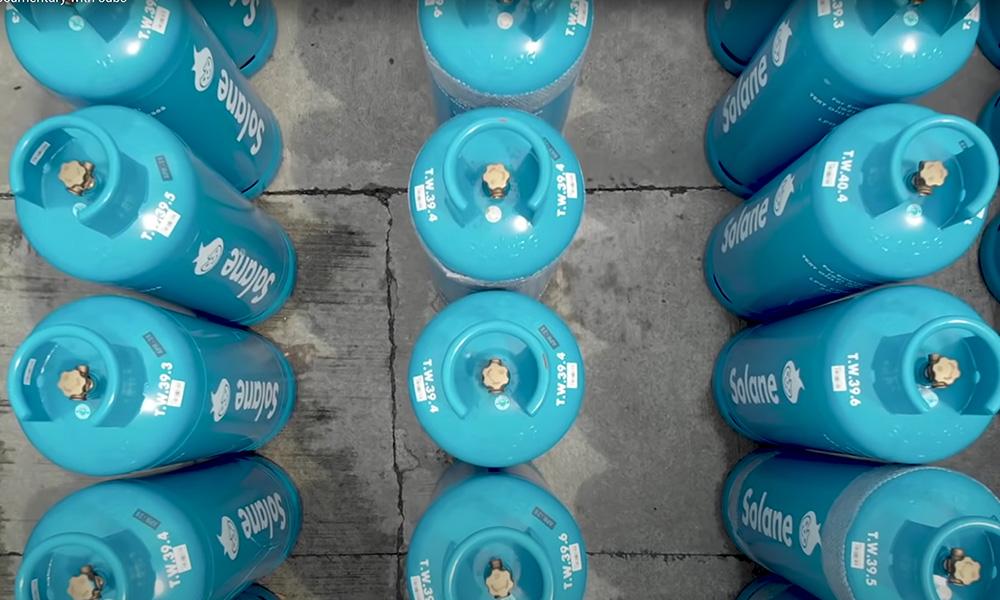
On the eve of the signing of the US-Iran peace memorandum of understanding, the Strait of Hormuz had long been restricted in its shipping lanes. The conflict directly resulted in 40 oil and gas transport ships bound for India being stranded in the strait and surrounding waters. The vast majority of these ships were fully loaded with industrial crude oil and domestic liquefied petroleum gas.
For months, shipping lanes have been blocked, disrupting the global maritime logistics chain: delivery cycles have been significantly lengthened, international crude oil prices have continued to rise, and transoceanic shipping freight rates and maritime war insurance premiums have surged, leading to a comprehensive increase in operating costs for global shipping companies.
This has been transmitted to the end-consumer market, with prices of gasoline, diesel, liquefied petroleum gas, and compressed natural gas rising in turn, resulting in a significant increase in the cost of living for residents in various countries.
When the situation reached India, the public complained bitterly about rising prices, the government faced continuous pressure from public opinion, domestic oil distribution companies were mired in long-term losses, and both domestic demand and industrial production weakened, with the downward pressure from energy imports continuing to intensify.
This phenomenon is not unique to India. Crude oil importing regions such as Europe and Southeast Asia are also experiencing rising refined oil prices and increased spending on daily necessities, with geopolitical risk premiums thoroughly permeating the global consumer market.
India's energy supply and demand structure is a key example for understanding the shortcomings of the global energy market in terms of resilience.
India consumes approximately 240 million tons of crude oil annually, while its domestic production is only 28 million tons. Its dependence on foreign crude oil is as high as 85%, and its domestic gas imports account for 60% of its total consumption. It spends more than 100 billion US dollars annually on crude oil imports alone .
Although India's oil and gas procurement channels cover nearly 40 countries worldwide, 60% of its imported fuel must be transported through the Strait of Hormuz.
This waterway carries nearly one-fifth of the world's seaborne crude oil and 20% of its liquefied natural gas trade, making it a vital artery for global energy circulation.
Once shipping routes are blocked, not only will the export channels of Middle Eastern oil-producing countries be blocked, but all energy-importing countries in Asia and Europe will face supply gaps, and the global crude oil supply and demand balance will be broken instantly.
India's supply predicament is actually a common dilemma for energy-importing economies worldwide. The geopolitical risks of a single shipping route are enough to shake up the entire international energy pricing system.
As the conflict continues to escalate, global demand for oil and gas imports has risen instead of falling, further amplifying the supply-demand mismatch crisis. Data from India's Petroleum Planning and Analysis Department shows that in May, before the peace agreement was implemented, the country's crude oil imports increased by 7.5% month-on-month compared to April, liquefied natural gas imports increased by 16% month-on-month, and liquefied petroleum gas imports surged by a remarkable 22%.
In fiscal year 2025-2026, India's total expenditure on crude oil imports will reach US$132.4 billion, equivalent to 110 trillion Indian rupees; in fiscal year 2023-2024, the total physical imports of crude oil will reach 232.5 million tons.
Looking at the global landscape, countries are increasing their stockpiling of crude oil and natural gas to hedge against the risk of strait closures, further driving up international spot oil and gas prices, creating a temporary overheating of demand, and raising import costs for all countries.
Emerging markets are rapidly depleting their foreign exchange reserves, while raw material costs for manufacturing in developed economies are rising simultaneously, plunging the global economy into a vicious cycle of "the more they lack, the more they buy, and the more they buy, the more expensive it becomes."
To offset the energy supply crisis caused by the blockade of Middle East shipping routes, many countries around the world have been forced to temporarily adjust their crude oil procurement structures, pushing up overall import costs and passively distorting the trade landscape.
Previously, the United States had been pressuring India to narrow the bilateral trade deficit, repeatedly using tariffs as leverage. As a result, India had already gradually increased its purchases of US crude oil.
In fiscal year 2025, India's total imports of crude oil and petroleum products from the United States will reach US$16.9 billion, making the United States India's fourth largest crude oil supplier.
Monthly import volumes fluctuated significantly. In September 2025, the average daily import volume was 523,000 barrels. In early 2026, influenced by market expectations, it fell back to the range of 140,000 to 180,000 barrels. The average daily import volume for the whole of 2025 was approximately 317,000 barrels.
With the escalation of the US-Iran conflict and the blockade of the Strait of Hormuz, India has no choice but to further increase its purchases of US crude oil. In April 2026, the total global crude oil imports reached 20.076 million tons, with the United States still accounting for the largest share of supply.
Globally, Japan, South Korea, and European countries are simultaneously reducing their purchases of Middle Eastern crude oil and shifting to crude oil from the Americas. Long-distance cross-regional transportation is lengthening supply chains, leading to a simultaneous increase in overall logistics and carbon costs, and a significant decline in the efficiency of global trade circulation.
With the Strait of Hormuz fully reopened and the US-Iran peace agreement in effect, global markets have finally seen a window of opportunity for risk mitigation, which also serves as a reminder of the immense pressure that previous blockades had placed on the global economy.
With the geopolitical conflict over and shipping routes reopened, India is expected to return to its traditional Middle Eastern oil supply channels, including Saudi Arabia, Qatar, the UAE, Oman, Iraq, and Bahrain.
Under the terms of the agreement, the United States will lift economic sanctions against Iran, allowing global buyers to resume purchasing Iranian crude oil.
Bilateral trade between India and Iran peaked at $20 billion in 2017, with crude oil being the core commodity traded.
After the United States imposed secondary sanctions in 2019, bilateral trade plummeted, with trade volume projected to reach only $1.68 billion in 2026, leaving only a small amount of humanitarian aid.
Industry organizations predict that India alone will resume imports of Iranian crude oil worth billions of dollars this year.
In the global market, the resumption of Middle Eastern crude oil export channels has led to a rapid narrowing of the market's crude oil supply gap, opening up room for international crude oil prices to decline. All energy-importing countries will see a significant reduction in their import bills, and global inflationary pressures will cool down simultaneously.
Multiple international market analysis agencies unanimously predict that with the reopening of the Strait of Hormuz, the energy crisis that previously swept the world will ease rapidly.
The decline in international crude oil prices will create a chain of positive effects: lower foreign exchange costs for oil and gas imports in various countries, narrowing current account deficits and easing pressure on local currency depreciation in emerging markets, lower raw material costs for industrial sectors in developed economies, and gradually diminishing factors suppressing global macroeconomic growth.
This peace agreement, signed by President Trump, on the one hand, opens up the Strait of Hormuz for shipping and provides supporting economic assistance to Iran; on the other hand, it establishes a 60-day consultation framework for the Iranian nuclear issue, laying the foundation for eliminating long-term geopolitical uncertainty in the global energy market.
However, the market has not completely eliminated tail risks. The Tasnim News Agency, affiliated with the Iranian Revolutionary Guard, has clearly issued a warning signal: as long as Israel continues to take military action against Lebanon and violate Lebanon's territorial sovereignty and integrity, the Strait of Hormuz will remain closed.
He stated bluntly that initiating negotiations under the premise that the core first clause of the Memorandum of Understanding was violated has a fundamental logical flaw and completely violates the core spirit of the agreement.
This statement implies that geopolitical conflicts in the Middle East have not been completely resolved, the Strait of Hormuz still faces the possibility of being blocked again, and the global energy, commodity, and foreign exchange markets still harbor potential for volatility. Countries still need to be wary of repeated geopolitical risks interfering with economic recovery.
A review of the entire US-Iran conflict from the perspective of India, an emerging energy power, reveals that in the era of globalization, the energy supply chain is highly tied to a single strategic waterway. Local geopolitical conflicts are no longer limited to the two sides in the conflict, but are transmitted to the world through four major channels: oil prices, shipping, foreign exchange, and inflation.
India's fiscal losses, inflation, trade deficits, and industrial contraction during the crisis are a common microcosm of the vast majority of energy-importing economies in the world.
The price decline and supply recovery brought about by the resumption of navigation in the Strait of Hormuz also prove that stable Middle Eastern shipping routes are a fundamental guarantee for the smooth operation of the global economy.
This crisis has served as a wake-up call for countries around the world: reliance on a single energy source can amplify economic vulnerability, and diversified energy supply, decentralized shipping routes, and market-based energy pricing mechanisms are the core long-term solutions for resisting the impact of geopolitical competition and stabilizing the global macroeconomy.
Shipping blockades have disrupted global energy flows, putting pressure on end markets across the board.
On the eve of the signing of the US-Iran peace memorandum of understanding, the Strait of Hormuz had long been restricted in its shipping lanes. The conflict directly resulted in 40 oil and gas transport ships bound for India being stranded in the strait and surrounding waters. The vast majority of these ships were fully loaded with industrial crude oil and domestic liquefied petroleum gas.
For months, shipping lanes have been blocked, disrupting the global maritime logistics chain: delivery cycles have been significantly lengthened, international crude oil prices have continued to rise, and transoceanic shipping freight rates and maritime war insurance premiums have surged, leading to a comprehensive increase in operating costs for global shipping companies.
This has been transmitted to the end-consumer market, with prices of gasoline, diesel, liquefied petroleum gas, and compressed natural gas rising in turn, resulting in a significant increase in the cost of living for residents in various countries.
When the situation reached India, the public complained bitterly about rising prices, the government faced continuous pressure from public opinion, domestic oil distribution companies were mired in long-term losses, and both domestic demand and industrial production weakened, with the downward pressure from energy imports continuing to intensify.
This phenomenon is not unique to India. Crude oil importing regions such as Europe and Southeast Asia are also experiencing rising refined oil prices and increased spending on daily necessities, with geopolitical risk premiums thoroughly permeating the global consumer market.
India's energy structure shortcomings: a typical microcosm of global dependence on a single shipping route
India's energy supply and demand structure is a key example for understanding the shortcomings of the global energy market in terms of resilience.
India consumes approximately 240 million tons of crude oil annually, while its domestic production is only 28 million tons. Its dependence on foreign crude oil is as high as 85%, and its domestic gas imports account for 60% of its total consumption. It spends more than 100 billion US dollars annually on crude oil imports alone .
Although India's oil and gas procurement channels cover nearly 40 countries worldwide, 60% of its imported fuel must be transported through the Strait of Hormuz.
This waterway carries nearly one-fifth of the world's seaborne crude oil and 20% of its liquefied natural gas trade, making it a vital artery for global energy circulation.
Once shipping routes are blocked, not only will the export channels of Middle Eastern oil-producing countries be blocked, but all energy-importing countries in Asia and Europe will face supply gaps, and the global crude oil supply and demand balance will be broken instantly.
India's supply predicament is actually a common dilemma for energy-importing economies worldwide. The geopolitical risks of a single shipping route are enough to shake up the entire international energy pricing system.
Stockpiling to hedge against inflation exacerbates supply-demand mismatch, leading to a collective surge in global import costs.
As the conflict continues to escalate, global demand for oil and gas imports has risen instead of falling, further amplifying the supply-demand mismatch crisis. Data from India's Petroleum Planning and Analysis Department shows that in May, before the peace agreement was implemented, the country's crude oil imports increased by 7.5% month-on-month compared to April, liquefied natural gas imports increased by 16% month-on-month, and liquefied petroleum gas imports surged by a remarkable 22%.
In fiscal year 2025-2026, India's total expenditure on crude oil imports will reach US$132.4 billion, equivalent to 110 trillion Indian rupees; in fiscal year 2023-2024, the total physical imports of crude oil will reach 232.5 million tons.
Looking at the global landscape, countries are increasing their stockpiling of crude oil and natural gas to hedge against the risk of strait closures, further driving up international spot oil and gas prices, creating a temporary overheating of demand, and raising import costs for all countries.
Emerging markets are rapidly depleting their foreign exchange reserves, while raw material costs for manufacturing in developed economies are rising simultaneously, plunging the global economy into a vicious cycle of "the more they lack, the more they buy, and the more they buy, the more expensive it becomes."
Procurement structure is being passively restructured: distorted global trade patterns and high costs
To offset the energy supply crisis caused by the blockade of Middle East shipping routes, many countries around the world have been forced to temporarily adjust their crude oil procurement structures, pushing up overall import costs and passively distorting the trade landscape.
Previously, the United States had been pressuring India to narrow the bilateral trade deficit, repeatedly using tariffs as leverage. As a result, India had already gradually increased its purchases of US crude oil.
In fiscal year 2025, India's total imports of crude oil and petroleum products from the United States will reach US$16.9 billion, making the United States India's fourth largest crude oil supplier.
Monthly import volumes fluctuated significantly. In September 2025, the average daily import volume was 523,000 barrels. In early 2026, influenced by market expectations, it fell back to the range of 140,000 to 180,000 barrels. The average daily import volume for the whole of 2025 was approximately 317,000 barrels.
With the escalation of the US-Iran conflict and the blockade of the Strait of Hormuz, India has no choice but to further increase its purchases of US crude oil. In April 2026, the total global crude oil imports reached 20.076 million tons, with the United States still accounting for the largest share of supply.
Globally, Japan, South Korea, and European countries are simultaneously reducing their purchases of Middle Eastern crude oil and shifting to crude oil from the Americas. Long-distance cross-regional transportation is lengthening supply chains, leading to a simultaneous increase in overall logistics and carbon costs, and a significant decline in the efficiency of global trade circulation.
Resumption of flights brings positive effects: Global energy markets and macroeconomy enter a window of recovery.
With the Strait of Hormuz fully reopened and the US-Iran peace agreement in effect, global markets have finally seen a window of opportunity for risk mitigation, which also serves as a reminder of the immense pressure that previous blockades had placed on the global economy.
With the geopolitical conflict over and shipping routes reopened, India is expected to return to its traditional Middle Eastern oil supply channels, including Saudi Arabia, Qatar, the UAE, Oman, Iraq, and Bahrain.
Under the terms of the agreement, the United States will lift economic sanctions against Iran, allowing global buyers to resume purchasing Iranian crude oil.
Bilateral trade between India and Iran peaked at $20 billion in 2017, with crude oil being the core commodity traded.
After the United States imposed secondary sanctions in 2019, bilateral trade plummeted, with trade volume projected to reach only $1.68 billion in 2026, leaving only a small amount of humanitarian aid.
Industry organizations predict that India alone will resume imports of Iranian crude oil worth billions of dollars this year.
In the global market, the resumption of Middle Eastern crude oil export channels has led to a rapid narrowing of the market's crude oil supply gap, opening up room for international crude oil prices to decline. All energy-importing countries will see a significant reduction in their import bills, and global inflationary pressures will cool down simultaneously.
Multiple international market analysis agencies unanimously predict that with the reopening of the Strait of Hormuz, the energy crisis that previously swept the world will ease rapidly.
The decline in international crude oil prices will create a chain of positive effects: lower foreign exchange costs for oil and gas imports in various countries, narrowing current account deficits and easing pressure on local currency depreciation in emerging markets, lower raw material costs for industrial sectors in developed economies, and gradually diminishing factors suppressing global macroeconomic growth.
This peace agreement, signed by President Trump, on the one hand, opens up the Strait of Hormuz for shipping and provides supporting economic assistance to Iran; on the other hand, it establishes a 60-day consultation framework for the Iranian nuclear issue, laying the foundation for eliminating long-term geopolitical uncertainty in the global energy market.
Tail risks remain: Geopolitical conflicts in the Middle East still pose a risk of renewed blockades.
However, the market has not completely eliminated tail risks. The Tasnim News Agency, affiliated with the Iranian Revolutionary Guard, has clearly issued a warning signal: as long as Israel continues to take military action against Lebanon and violate Lebanon's territorial sovereignty and integrity, the Strait of Hormuz will remain closed.
He stated bluntly that initiating negotiations under the premise that the core first clause of the Memorandum of Understanding was violated has a fundamental logical flaw and completely violates the core spirit of the agreement.
This statement implies that geopolitical conflicts in the Middle East have not been completely resolved, the Strait of Hormuz still faces the possibility of being blocked again, and the global energy, commodity, and foreign exchange markets still harbor potential for volatility. Countries still need to be wary of repeated geopolitical risks interfering with economic recovery.
Global Implications: In the era of globalization, it is essential to strengthen the security of the energy supply chain.
A review of the entire US-Iran conflict from the perspective of India, an emerging energy power, reveals that in the era of globalization, the energy supply chain is highly tied to a single strategic waterway. Local geopolitical conflicts are no longer limited to the two sides in the conflict, but are transmitted to the world through four major channels: oil prices, shipping, foreign exchange, and inflation.
India's fiscal losses, inflation, trade deficits, and industrial contraction during the crisis are a common microcosm of the vast majority of energy-importing economies in the world.
The price decline and supply recovery brought about by the resumption of navigation in the Strait of Hormuz also prove that stable Middle Eastern shipping routes are a fundamental guarantee for the smooth operation of the global economy.
This crisis has served as a wake-up call for countries around the world: reliance on a single energy source can amplify economic vulnerability, and diversified energy supply, decentralized shipping routes, and market-based energy pricing mechanisms are the core long-term solutions for resisting the impact of geopolitical competition and stabilizing the global macroeconomy.
- Risk Warning and Disclaimer
- The market involves risk, and trading may not be suitable for all investors. This article is for reference only and does not constitute personal investment advice, nor does it take into account certain users’ specific investment objectives, financial situation, or other needs. Any investment decisions made based on this information are at your own risk.