With the Federal Reserve's communication style changing, will transaction pricing also need to change?
2026-06-18 22:06:06
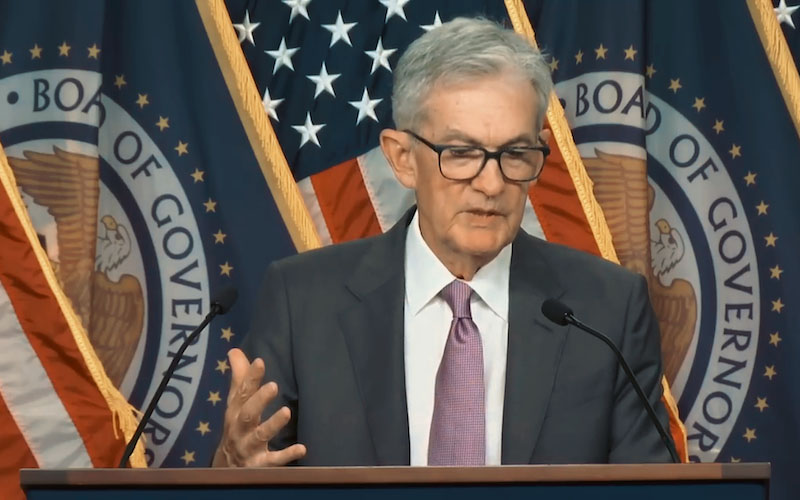
On Thursday, June 18th, the core variable in the global interest rate market was no longer whether the Federal Reserve had ended its easing cycle, but rather whether Warsh's first policy meeting under his leadership signified a rewriting of the policy response function. The Fed maintained its target range for the federal funds rate at 3.50%-3.75%, but its statement, press conference, and economic projections collectively signaled a stronger inflation-first approach.
In May, the Consumer Price Index (CPI) rose 4.2% year-on-year, while the core CPI rose 2.9% year-on-year. Energy prices increased by 23.5% year-on-year, and gasoline prices rose by 40.5% year-on-year. This put short-term interest rates under renewed pressure to repric the inflation. Following the meeting, the two-year Treasury yield rose from approximately 4.05% to 4.18%, while the 30-year yield fell from around 4.95% to 4.89%, showing a typical bearish flattening of the yield curve. Short-term volatility increased, while the long-term risk premium narrowed somewhat.
The key to this meeting was not simply remaining on hold, but rather the Fed's resetting of its market communication strategy. Warsh emphasized after the meeting that the Policy Committee is "clearly and consistently" committed to pushing inflation back to the 2% target and weakening traditional forward guidance. For traders, this means that the past model of relying on the chairman's hints, the inertia of the dot plot, and minor adjustments to the wording of statements to predict the future needs to give way to higher-frequency data responses.
The latest forecasts show that 9 out of 19 policy participants expect at least one rate hike this year, with 6 expecting more than one, whereas in March no one predicted a rate hike this year. The year-end personal consumption expenditure price index forecast has been revised upward to 3.6%, the core forecast to 3.3%, the unemployment rate forecast to be around 4.3%, and the real economic growth forecast to be around 2.2%. This combination of data does not simply point to overheated demand, but rather reveals the contradiction between energy shocks, service price stickiness, and policy credibility. The Federal Reserve has not yet raised rates, but has used communication to reopen the right tail of the interest rate distribution.
The two-year US Treasury yield is a direct carrier of policy expectations. Before the meeting, the market was still discussing whether there was a window for interest rate cuts this year; after the meeting, interest rate futures have significantly brought forward the probability of a rate hike this year, with some pricing pointing to September, and the probability of at least one rate hike before October has risen rapidly. The two-year yield rose 13 basis points in a single day, the largest increase since April 2025, and also matched one of the largest increases on a Fed meeting day since 2008.
Hager, head of fixed income and liquidity investing at Goldman Sachs Asset Management, believes that Warsh's "unambiguous hawkish message" will lead to higher volatility in two-year maturities because the Fed is no longer willing to preemptively reduce market uncertainty about the path of interest rates. Every deviation in inflation data, every resilience in employment data, and every fluctuation in oil prices could directly translate into a repricing of short-term interest rates. Increased short-term volatility is not merely a duration risk issue, but rather a reassessment of risk compensation following decreased transparency in the policy function.
More noteworthy is that the 30-year yield did not rise in tandem with the short end, but instead touched near a recent low. The yield curve narrowed from about 140 basis points at the beginning of the year to about 67 basis points, indicating that the market was not simply betting on fiscal risks or long-term runaway inflation, but rather trading in the possibility that the long-term inflation risk premium might decline after the Federal Reserve re-strengthened inflation constraints.
This is also the core meaning of the bearish sentiment: the short end reflects a higher policy interest rate path, while the long end reflects lower long-term inflation tail risks. If the credibility of policy communication improves, long-term investors will demand a lower term premium; however, if the short end continues to rise and suppresses economic expectations, the long end will also be pulled down by downward revisions to growth expectations. Therefore, the stability of the long end does not mean the risk has disappeared, but rather that the market believes the current shock is more like a repricing at the beginning of the policy cycle, rather than the collapse of the long-term nominal anchor.
Warsh announced the establishment of five working groups covering issues such as inflation frameworks, communication methods, use of economic data, productivity, employment, and policy implementation. On the surface, this appears to be an organizational and management adjustment; from a market perspective, it represents a systematic re-examination of the Fed's operating model. In particular, the balance sheet, the framework for ample reserves, short-term interest rate control tools, and the language of the statements can all potentially affect different maturities of the Treasury yield curve.
In May, the Consumer Price Index (CPI) rose 4.2% year-on-year, while the core CPI rose 2.9% year-on-year. Energy prices increased by 23.5% year-on-year, and gasoline prices rose by 40.5% year-on-year. This put short-term interest rates under renewed pressure to repric the inflation. Following the meeting, the two-year Treasury yield rose from approximately 4.05% to 4.18%, while the 30-year yield fell from around 4.95% to 4.89%, showing a typical bearish flattening of the yield curve. Short-term volatility increased, while the long-term risk premium narrowed somewhat.
The key to this meeting was not simply remaining on hold, but rather the Fed's resetting of its market communication strategy. Warsh emphasized after the meeting that the Policy Committee is "clearly and consistently" committed to pushing inflation back to the 2% target and weakening traditional forward guidance. For traders, this means that the past model of relying on the chairman's hints, the inertia of the dot plot, and minor adjustments to the wording of statements to predict the future needs to give way to higher-frequency data responses.
The latest forecasts show that 9 out of 19 policy participants expect at least one rate hike this year, with 6 expecting more than one, whereas in March no one predicted a rate hike this year. The year-end personal consumption expenditure price index forecast has been revised upward to 3.6%, the core forecast to 3.3%, the unemployment rate forecast to be around 4.3%, and the real economic growth forecast to be around 2.2%. This combination of data does not simply point to overheated demand, but rather reveals the contradiction between energy shocks, service price stickiness, and policy credibility. The Federal Reserve has not yet raised rates, but has used communication to reopen the right tail of the interest rate distribution.
The two-year US Treasury yield is a direct carrier of policy expectations. Before the meeting, the market was still discussing whether there was a window for interest rate cuts this year; after the meeting, interest rate futures have significantly brought forward the probability of a rate hike this year, with some pricing pointing to September, and the probability of at least one rate hike before October has risen rapidly. The two-year yield rose 13 basis points in a single day, the largest increase since April 2025, and also matched one of the largest increases on a Fed meeting day since 2008.
Hager, head of fixed income and liquidity investing at Goldman Sachs Asset Management, believes that Warsh's "unambiguous hawkish message" will lead to higher volatility in two-year maturities because the Fed is no longer willing to preemptively reduce market uncertainty about the path of interest rates. Every deviation in inflation data, every resilience in employment data, and every fluctuation in oil prices could directly translate into a repricing of short-term interest rates. Increased short-term volatility is not merely a duration risk issue, but rather a reassessment of risk compensation following decreased transparency in the policy function.
More noteworthy is that the 30-year yield did not rise in tandem with the short end, but instead touched near a recent low. The yield curve narrowed from about 140 basis points at the beginning of the year to about 67 basis points, indicating that the market was not simply betting on fiscal risks or long-term runaway inflation, but rather trading in the possibility that the long-term inflation risk premium might decline after the Federal Reserve re-strengthened inflation constraints.
This is also the core meaning of the bearish sentiment: the short end reflects a higher policy interest rate path, while the long end reflects lower long-term inflation tail risks. If the credibility of policy communication improves, long-term investors will demand a lower term premium; however, if the short end continues to rise and suppresses economic expectations, the long end will also be pulled down by downward revisions to growth expectations. Therefore, the stability of the long end does not mean the risk has disappeared, but rather that the market believes the current shock is more like a repricing at the beginning of the policy cycle, rather than the collapse of the long-term nominal anchor.
Warsh announced the establishment of five working groups covering issues such as inflation frameworks, communication methods, use of economic data, productivity, employment, and policy implementation. On the surface, this appears to be an organizational and management adjustment; from a market perspective, it represents a systematic re-examination of the Fed's operating model. In particular, the balance sheet, the framework for ample reserves, short-term interest rate control tools, and the language of the statements can all potentially affect different maturities of the Treasury yield curve.
- Risk Warning and Disclaimer
- The market involves risk, and trading may not be suitable for all investors. This article is for reference only and does not constitute personal investment advice, nor does it take into account certain users’ specific investment objectives, financial situation, or other needs. Any investment decisions made based on this information are at your own risk.