Gold fell to $4,165, prompting Goldman Sachs to suddenly cut its $500 target price, with $4,900 becoming the new "ceiling" by the end of the year.
2026-06-19 17:59:47
On Friday, June 19th, a significant shift occurred in the pricing dynamics of the gold market. Spot gold traded around $4165 per ounce, a clear pullback from its late January high of nearly $5600 per ounce, marking its third consecutive week of decline. The US dollar index rose to a near one-year high, and US Treasury yields remained strong, putting pressure on gold, as a non-interest-bearing asset, for revaluation. More importantly, the Federal Reserve maintained its interest rate range at 3.50% to 3.75% at its June meeting, but the policy signal shifted towards tightening, with nine of the 19 policymakers now expecting at least one rate hike this year. This shift in the interest rate path from "when to cut rates" to "whether further rate hikes are needed" directly altered the trading framework for gold in the second half of the year.
Against this backdrop, Goldman Sachs lowered its year-end gold price target from $5,400/oz to $4,900/oz, a reduction of $500/oz. Analysts Lina Thomas and Daan Struyven stated in a recent report that their view on gold remains "structurally constructive, but tactically cautious," with downside risks in the near term and upside risks in the medium term. This statement actually highlights the current contradiction in the gold market: the long-term buying logic has not collapsed, but the short-term macroeconomic discount rate is being revised upwards.
The current correction in gold prices is not merely due to a cooling of safe-haven demand, but rather a repricing of interest rate expectations. Previously, the market's main assumption was that the Federal Reserve would gradually shift towards easing in the coming quarters, and that falling real interest rates would drive up the valuation of gold-like assets. However, the latest policy path indicates that expectations for rate cuts have been further postponed, with some economists now pushing back the remaining window for rate cuts to June and December 2027, compared to previous expectations of December 2026 and March 2027.
This means gold faces two pressures. First, the opportunity cost of holding gold is rising. If short-term interest rates remain high, the yield attractiveness of funds remaining in cash, bills, and short-duration bonds will remain, naturally reducing marginal inflows into gold ETFs. Second, a stronger dollar will weaken the purchasing power of non-dollar investors. The dollar index rising to a near one-year high on June 19th was a significant external factor contributing to the continuous decline in gold prices.
In his first meeting, newly appointed Federal Reserve Chairman Warsh emphasized restoring price stability and reduced market bets on premature policy easing. For traders, this is not merely a change in rhetoric, but a shift in the reaction function. Previously, the market was accustomed to trading in advance easing based on weak data; now, policymakers are placing greater emphasis on the credibility of the inflation target, thus compressing the time value of gold bulls.
Goldman Sachs' lowering of its year-end price target to $4,900 per ounce does not negate the medium-term outlook for gold. Based on the current price of around $4,180 per ounce, $4,900 per ounce still implies room for a recovery in the second half of the year. What is truly being corrected is the slope, not the direction.
The most critical variable in the report is the flow of funds into gold ETFs. If the interest rate cut is delayed, the pace of ETF investors replenishing their positions will be weaker than previously estimated. The gold price increase over the past two years has been driven by three forces: official purchases, macro hedging funds, and ETF funds flowing back in amid expectations of interest rate cuts. Now that the third force is suppressed, prices must rely again on the first two types of buying to absorb profit-taking at higher levels.
This also explains why gold did not continue to strengthen amid geopolitical risks. The Middle East conflict initially pushed up energy prices, ostensibly increasing safe-haven demand. However, rising energy prices also increase inflation stickiness, thus reinforcing the Federal Reserve's rationale for maintaining high interest rates or even raising them again. When safe-haven premiums and interest rate pressures occur simultaneously, gold may not necessarily benefit unilaterally. Currently, the market is more concerned about whether the inflationary shock will prolong the tight monetary cycle than about short-term safe-haven buying itself.
Gold's medium-term resilience remains driven by official sector buying. Data from the World Gold Council shows that in the first quarter of 2026, official sector net purchases reached 244 tons, a 3% year-on-year increase, significantly higher than the five-year average; after a large net sale in March, net purchases resumed in April at 17 tons. Goldman Sachs projects official sector gold purchases to be around 50 tons per month this year and around 40 tons per month next year, implying that reserve allocation demand remains a crucial pillar for gold prices.
However, it's important to note that official buying and market-driven buying differ in their trading rhythms. Official institutions typically focus on long-term allocations and are less sensitive to short-term price fluctuations, but they also rarely engage in chasing rising prices. ETFs and leveraged funds are the key variables driving prices higher. If interest rate cuts are delayed, for gold to retest its highs, clearer evidence is needed, such as a decline in real interest rates, a weakening dollar, or continuous net inflows into ETFs.
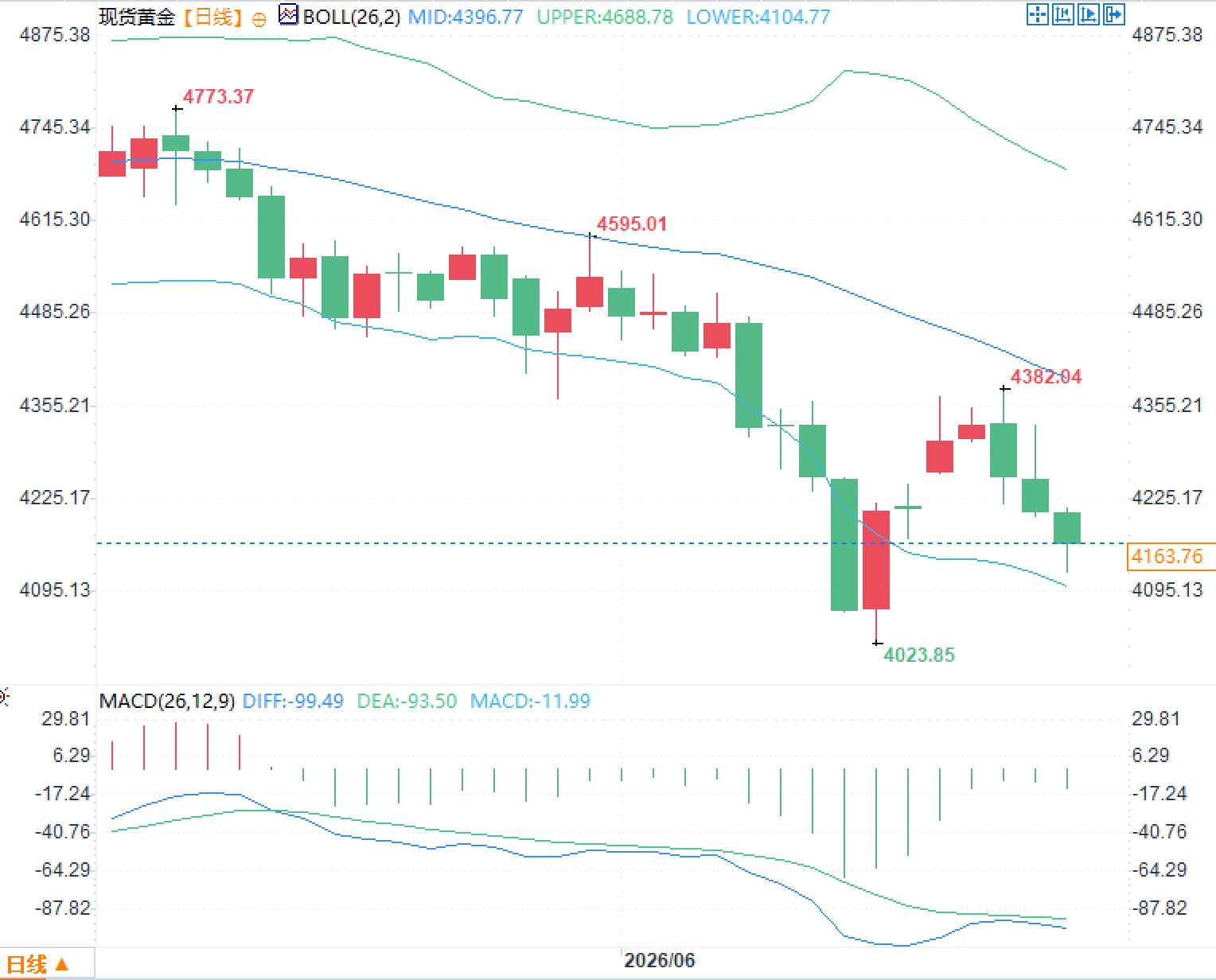
In other words, official gold purchases provide resilience at the price floor, not a guarantee of an immediate trend recovery. The report mentions that if the Federal Reserve raises interest rates further, the demand for gold as a macroeconomic policy hedge may recede more persistently, with a risk scenario where prices could fall back to around $4400/ounce by the end of the year. This figure is not simply bearish, but rather a reminder to the market that once the macroeconomic hedging logic fades, official buying may not be able to fully absorb the reduction in holdings by financial funds.
Therefore, gold has transformed from a purely safe-haven asset into a policy asset. It reflects both the long-term demand for diversified allocation within the credit money system and its high dependence on the short-term yield curve, the US dollar index, and ETF inflows. The current price pullback has not disrupted the long-term allocation narrative, but it has forced the market to lower its expectations for a steeper upward slope. The new target price of $4900/ounce essentially acknowledges that gold still has medium-term support, while reminding investors that the upward path will be more tortuous in a high-interest-rate environment.
Against this backdrop, Goldman Sachs lowered its year-end gold price target from $5,400/oz to $4,900/oz, a reduction of $500/oz. Analysts Lina Thomas and Daan Struyven stated in a recent report that their view on gold remains "structurally constructive, but tactically cautious," with downside risks in the near term and upside risks in the medium term. This statement actually highlights the current contradiction in the gold market: the long-term buying logic has not collapsed, but the short-term macroeconomic discount rate is being revised upwards.
The current correction in gold prices is not merely due to a cooling of safe-haven demand, but rather a repricing of interest rate expectations. Previously, the market's main assumption was that the Federal Reserve would gradually shift towards easing in the coming quarters, and that falling real interest rates would drive up the valuation of gold-like assets. However, the latest policy path indicates that expectations for rate cuts have been further postponed, with some economists now pushing back the remaining window for rate cuts to June and December 2027, compared to previous expectations of December 2026 and March 2027.
This means gold faces two pressures. First, the opportunity cost of holding gold is rising. If short-term interest rates remain high, the yield attractiveness of funds remaining in cash, bills, and short-duration bonds will remain, naturally reducing marginal inflows into gold ETFs. Second, a stronger dollar will weaken the purchasing power of non-dollar investors. The dollar index rising to a near one-year high on June 19th was a significant external factor contributing to the continuous decline in gold prices.
In his first meeting, newly appointed Federal Reserve Chairman Warsh emphasized restoring price stability and reduced market bets on premature policy easing. For traders, this is not merely a change in rhetoric, but a shift in the reaction function. Previously, the market was accustomed to trading in advance easing based on weak data; now, policymakers are placing greater emphasis on the credibility of the inflation target, thus compressing the time value of gold bulls.
Goldman Sachs' lowering of its year-end price target to $4,900 per ounce does not negate the medium-term outlook for gold. Based on the current price of around $4,180 per ounce, $4,900 per ounce still implies room for a recovery in the second half of the year. What is truly being corrected is the slope, not the direction.
The most critical variable in the report is the flow of funds into gold ETFs. If the interest rate cut is delayed, the pace of ETF investors replenishing their positions will be weaker than previously estimated. The gold price increase over the past two years has been driven by three forces: official purchases, macro hedging funds, and ETF funds flowing back in amid expectations of interest rate cuts. Now that the third force is suppressed, prices must rely again on the first two types of buying to absorb profit-taking at higher levels.
This also explains why gold did not continue to strengthen amid geopolitical risks. The Middle East conflict initially pushed up energy prices, ostensibly increasing safe-haven demand. However, rising energy prices also increase inflation stickiness, thus reinforcing the Federal Reserve's rationale for maintaining high interest rates or even raising them again. When safe-haven premiums and interest rate pressures occur simultaneously, gold may not necessarily benefit unilaterally. Currently, the market is more concerned about whether the inflationary shock will prolong the tight monetary cycle than about short-term safe-haven buying itself.
Gold's medium-term resilience remains driven by official sector buying. Data from the World Gold Council shows that in the first quarter of 2026, official sector net purchases reached 244 tons, a 3% year-on-year increase, significantly higher than the five-year average; after a large net sale in March, net purchases resumed in April at 17 tons. Goldman Sachs projects official sector gold purchases to be around 50 tons per month this year and around 40 tons per month next year, implying that reserve allocation demand remains a crucial pillar for gold prices.
However, it's important to note that official buying and market-driven buying differ in their trading rhythms. Official institutions typically focus on long-term allocations and are less sensitive to short-term price fluctuations, but they also rarely engage in chasing rising prices. ETFs and leveraged funds are the key variables driving prices higher. If interest rate cuts are delayed, for gold to retest its highs, clearer evidence is needed, such as a decline in real interest rates, a weakening dollar, or continuous net inflows into ETFs.
In other words, official gold purchases provide resilience at the price floor, not a guarantee of an immediate trend recovery. The report mentions that if the Federal Reserve raises interest rates further, the demand for gold as a macroeconomic policy hedge may recede more persistently, with a risk scenario where prices could fall back to around $4400/ounce by the end of the year. This figure is not simply bearish, but rather a reminder to the market that once the macroeconomic hedging logic fades, official buying may not be able to fully absorb the reduction in holdings by financial funds.
Therefore, gold has transformed from a purely safe-haven asset into a policy asset. It reflects both the long-term demand for diversified allocation within the credit money system and its high dependence on the short-term yield curve, the US dollar index, and ETF inflows. The current price pullback has not disrupted the long-term allocation narrative, but it has forced the market to lower its expectations for a steeper upward slope. The new target price of $4900/ounce essentially acknowledges that gold still has medium-term support, while reminding investors that the upward path will be more tortuous in a high-interest-rate environment.
- Risk Warning and Disclaimer
- The market involves risk, and trading may not be suitable for all investors. This article is for reference only and does not constitute personal investment advice, nor does it take into account certain users’ specific investment objectives, financial situation, or other needs. Any investment decisions made based on this information are at your own risk.