The dollar surged, but 10-year yields didn't follow suit. Could Warsh be quietly rewriting the rules of inflation?
2026-06-19 21:49:36
The first policy meeting under the new chairman Walsh sent a complex and multifaceted signal to the market with the contradictory combination of "keeping interest rates unchanged but removing easing guidance"—the apparent hawkish tone and the underlying dovish flexibility were clearly intertwined, and the lack of policy transparency led to a divergence in expectations, which further amplified market volatility.
This interest rate decision, which is both "continuity-driven" and "transformative," not only directly drove a rapid repricing of core assets such as the US dollar, US Treasury bonds, and stocks, but also hinted at multiple possibilities for future policy adjustments by the Federal Reserve, laying a crucial foundation for global investors' strategic planning.
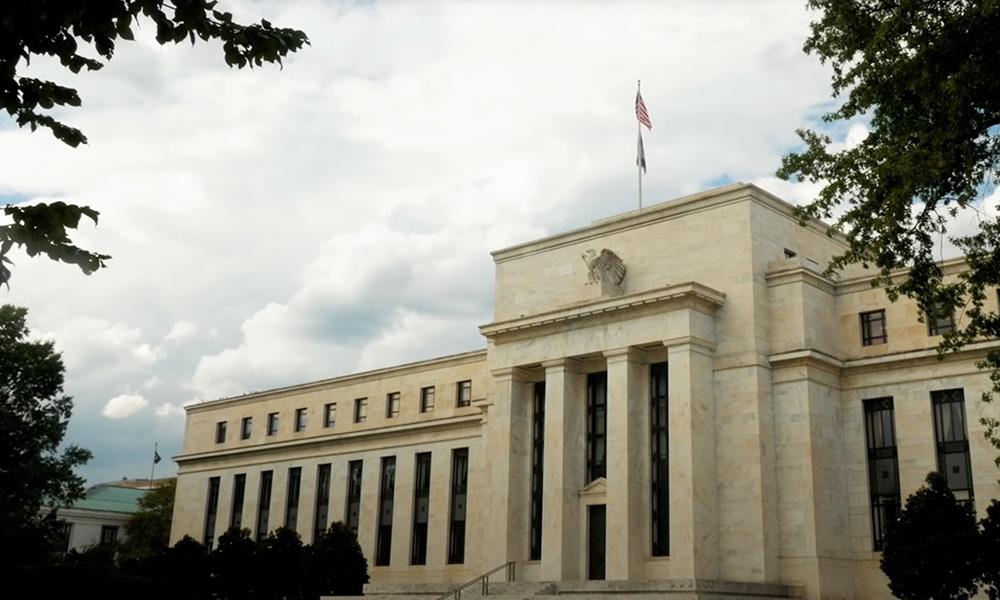
Interest Rate Operations and Policy Tone: The Federal Reserve maintained the federal funds rate at 3.5%-3.75% for the fourth consecutive time . The post-meeting statement was significantly streamlined, removing the dovish phrase "leaning towards rate cuts." New Chairman Walsh repeatedly emphasized that "price stability is a core commitment," clearly indicating a restrictive policy stance. The market interpreted this as an unexpectedly hawkish signal.
Structural reform actions: The government announced the establishment of five special working groups covering five key areas: communication mechanisms, balance sheets, data application, productivity and employment, and the inflation framework. The plan is to complete the review by the end of the year and submit conclusions starting in the fall. Walsh publicly questioned the "outdated survey methods" of traditional economic data , arguing that they are out of touch with the actual economic situation in 2026, hinting at possible adjustments to the Summary of Economic Forecasts and the "dot plot."
Potential dovish clues: No rate hikes have been initiated, maintaining a wait-and-see stance of "pausing tightening," contrasting with previous market concerns about "immediate rate hikes"; policy review covers both the "inflation framework" and "data system," reserving space for future adjustments to the inflation target and optimization of policy evaluation standards; the FOMC's voting members will rotate in 2026, exhibiting a "slightly dovish" lean, with newly added officials such as Anna Paulson focusing more on the risks of weak employment and supporting precautionary rate cuts.
Policy transparency controversy: Walsh's absence from the latest Summary of Economic Forecasts weakens the forward-looking guidance function of the dot plot; the review direction and decision-making process of the five working groups are not clearly disclosed, making it difficult for the market to accurately predict the policy logic after the reforms; the combination of "keeping rates unchanged but removing accommodative language" in the interest rate decision is neither a clear rate hike nor a commitment to easing, leaving multiple interpretations.
The core logic behind the strengthening of the US dollar is that after the Federal Reserve removed its guidance on interest rate cuts, the market significantly raised its expectations for rising US interest rates. The yield on the two-year US Treasury bond rose from 3.75% two months ago to 4.18%. Meanwhile, most central banks around the world are considering interest rate cuts due to the correction in oil prices. The interest rate differential between the US and Europe and between the US and Japan continues to widen, attracting international capital to flow into US dollar assets.
Coupled with the investment boom in US AI infrastructure and the huge capital demand brought by the IPOs of tech giants like SpaceX, the US dollar broke through the 97-100 trading range since April 2025, the DXY hit a one-year high, the euro fell 1% against the dollar in a single week, and the dollar approached a 40-year low against the yen.
Feedback from the bond and stock markets: Rising interest rate expectations put downward pressure on government bond prices, while the stock market also declined due to "tight policies suppressing growth expectations," which is consistent with the traditional logic that "hawkish policies are bad for risky assets and good for safe assets."
The sharp pullback in gold prices reflects increased market confidence in the US dollar, a trend further reinforced by the negative correlation between gold and the dollar.
Divergence and uncertainty: Some market participants have noticed the combination of the Fed's "pause in rate hikes + policy review" and have begun pricing in the possibility of a "long-term hawkish stance but short-term flexibility";
The dovish leaning of FOMC voting members has led to significant differences in pricing in the interest rate futures market regarding the magnitude of rate cuts in 2026 (ranging from 25 basis points to 100 basis points), reflecting a divergence in expectations caused by insufficient policy transparency.
Future Outlook: Hawkish Undertones Remain, Policy Maneuvering Space Still Exists?
In the short term, the Fed's hawkish stance will continue to dominate the market, and the trend of a stronger dollar and high US Treasury yields is likely to continue.
Walsh's repeated emphasis on price stability, the resilience of the US economy (AI industry driving capital inflows and better-than-expected economic growth), and the stickiness of core inflation determine that policy is unlikely to shift rapidly to easing. If inflation rebounds, the possibility of restarting interest rate hikes remains.
However, from a medium- to long-term perspective, the Fed's policy is not monolithic and there is a clear dovish shift and room for policy maneuver: First, after the rotation of FOMC voting members, the dovish forces have strengthened, and if there are signs of weakness in the job market, the voices supporting a preventative rate cut may heat up.
Secondly, the review of the inflation framework and data system by the five working groups may provide an "institutional excuse " for adjusting policy objectives (such as tolerating higher inflation) or easing policies. Walsh's questioning of traditional data may also pave the way for future downward revisions of inflation expectations and the initiation of interest rate cuts.
Third, the Trump administration's potential push for interest rate cuts could influence policy direction through high-level personnel changes (such as the appointment of dovish officials), providing political endorsement for the Federal Reserve to adjust its stance.
The lack of policy transparency further amplifies this uncertainty: the working group's review progress, decision-making criteria, and correlation with the interest rate path are all unclear, and the market can only infer indirectly through officials' speeches and scattered data. This leaves ample room for the Federal Reserve to flexibly adjust its policies according to the economic situation.
For investors, it is necessary to be wary of "dovish surprises under hawkish narratives." They should not only track inflation data to verify hawkish logic, but also pay attention to potential shifts in the positions of voting members and the progress of policy review, so as to avoid excessive one-sided betting.
This interest rate decision, which is both "continuity-driven" and "transformative," not only directly drove a rapid repricing of core assets such as the US dollar, US Treasury bonds, and stocks, but also hinted at multiple possibilities for future policy adjustments by the Federal Reserve, laying a crucial foundation for global investors' strategic planning.
Key facts about Fed policy: Hawkish signals dominate, with hints of dovish flexibility.
Interest Rate Operations and Policy Tone: The Federal Reserve maintained the federal funds rate at 3.5%-3.75% for the fourth consecutive time . The post-meeting statement was significantly streamlined, removing the dovish phrase "leaning towards rate cuts." New Chairman Walsh repeatedly emphasized that "price stability is a core commitment," clearly indicating a restrictive policy stance. The market interpreted this as an unexpectedly hawkish signal.
Structural reform actions: The government announced the establishment of five special working groups covering five key areas: communication mechanisms, balance sheets, data application, productivity and employment, and the inflation framework. The plan is to complete the review by the end of the year and submit conclusions starting in the fall. Walsh publicly questioned the "outdated survey methods" of traditional economic data , arguing that they are out of touch with the actual economic situation in 2026, hinting at possible adjustments to the Summary of Economic Forecasts and the "dot plot."
Potential dovish clues: No rate hikes have been initiated, maintaining a wait-and-see stance of "pausing tightening," contrasting with previous market concerns about "immediate rate hikes"; policy review covers both the "inflation framework" and "data system," reserving space for future adjustments to the inflation target and optimization of policy evaluation standards; the FOMC's voting members will rotate in 2026, exhibiting a "slightly dovish" lean, with newly added officials such as Anna Paulson focusing more on the risks of weak employment and supporting precautionary rate cuts.
Policy transparency controversy: Walsh's absence from the latest Summary of Economic Forecasts weakens the forward-looking guidance function of the dot plot; the review direction and decision-making process of the five working groups are not clearly disclosed, making it difficult for the market to accurately predict the policy logic after the reforms; the combination of "keeping rates unchanged but removing accommodative language" in the interest rate decision is neither a clear rate hike nor a commitment to easing, leaving multiple interpretations.
Market reasoning: Asset repricing driven by hawkish signals?
The core logic behind the strengthening of the US dollar is that after the Federal Reserve removed its guidance on interest rate cuts, the market significantly raised its expectations for rising US interest rates. The yield on the two-year US Treasury bond rose from 3.75% two months ago to 4.18%. Meanwhile, most central banks around the world are considering interest rate cuts due to the correction in oil prices. The interest rate differential between the US and Europe and between the US and Japan continues to widen, attracting international capital to flow into US dollar assets.
Coupled with the investment boom in US AI infrastructure and the huge capital demand brought by the IPOs of tech giants like SpaceX, the US dollar broke through the 97-100 trading range since April 2025, the DXY hit a one-year high, the euro fell 1% against the dollar in a single week, and the dollar approached a 40-year low against the yen.
Feedback from the bond and stock markets: Rising interest rate expectations put downward pressure on government bond prices, while the stock market also declined due to "tight policies suppressing growth expectations," which is consistent with the traditional logic that "hawkish policies are bad for risky assets and good for safe assets."
The sharp pullback in gold prices reflects increased market confidence in the US dollar, a trend further reinforced by the negative correlation between gold and the dollar.
Divergence and uncertainty: Some market participants have noticed the combination of the Fed's "pause in rate hikes + policy review" and have begun pricing in the possibility of a "long-term hawkish stance but short-term flexibility";
The dovish leaning of FOMC voting members has led to significant differences in pricing in the interest rate futures market regarding the magnitude of rate cuts in 2026 (ranging from 25 basis points to 100 basis points), reflecting a divergence in expectations caused by insufficient policy transparency.
Future Outlook: Hawkish Undertones Remain, Policy Maneuvering Space Still Exists?
In the short term, the Fed's hawkish stance will continue to dominate the market, and the trend of a stronger dollar and high US Treasury yields is likely to continue.
Walsh's repeated emphasis on price stability, the resilience of the US economy (AI industry driving capital inflows and better-than-expected economic growth), and the stickiness of core inflation determine that policy is unlikely to shift rapidly to easing. If inflation rebounds, the possibility of restarting interest rate hikes remains.
However, from a medium- to long-term perspective, the Fed's policy is not monolithic and there is a clear dovish shift and room for policy maneuver: First, after the rotation of FOMC voting members, the dovish forces have strengthened, and if there are signs of weakness in the job market, the voices supporting a preventative rate cut may heat up.
Secondly, the review of the inflation framework and data system by the five working groups may provide an "institutional excuse " for adjusting policy objectives (such as tolerating higher inflation) or easing policies. Walsh's questioning of traditional data may also pave the way for future downward revisions of inflation expectations and the initiation of interest rate cuts.
Third, the Trump administration's potential push for interest rate cuts could influence policy direction through high-level personnel changes (such as the appointment of dovish officials), providing political endorsement for the Federal Reserve to adjust its stance.
The lack of policy transparency further amplifies this uncertainty: the working group's review progress, decision-making criteria, and correlation with the interest rate path are all unclear, and the market can only infer indirectly through officials' speeches and scattered data. This leaves ample room for the Federal Reserve to flexibly adjust its policies according to the economic situation.
For investors, it is necessary to be wary of "dovish surprises under hawkish narratives." They should not only track inflation data to verify hawkish logic, but also pay attention to potential shifts in the positions of voting members and the progress of policy review, so as to avoid excessive one-sided betting.
- Risk Warning and Disclaimer
- The market involves risk, and trading may not be suitable for all investors. This article is for reference only and does not constitute personal investment advice, nor does it take into account certain users’ specific investment objectives, financial situation, or other needs. Any investment decisions made based on this information are at your own risk.