With a 19% sample gap emerging, the real risks in UK interest rate pricing have only just begun.
2026-06-19 21:56:25
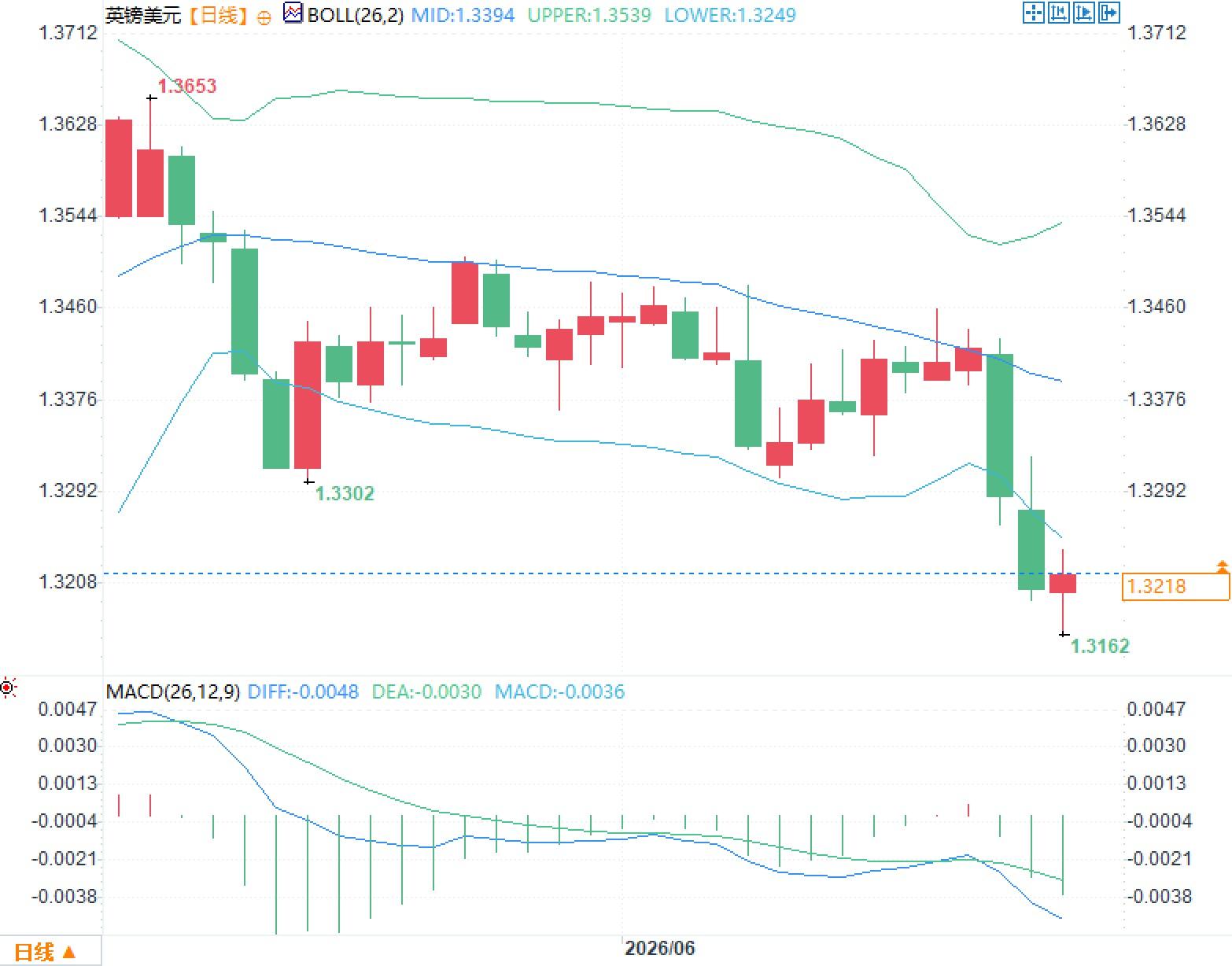
On Friday, June 19th, UK asset pricing entered a phase more reliant on data quality rather than a single data direction. The Bank of England maintained its benchmark interest rate at 3.75% on June 18th, while May's CPI rose 2.8% year-on-year, still above the 2% target. The yield on 10-year UK government bonds rose to around 4.82%, and the 2-year yield was around 4.25%. In the foreign exchange market, the pound sterling returned to around 1.3220 against the dollar and around 1.154 against the euro, but this rebound does not signify the disappearance of macroeconomic divergences. The latest variable comes from the UK Department for National Statistics' admission of an operational error in the labor force survey from early May to mid-June, resulting in a 19% decrease in responses to key labor force data, and a decline in the quality of data to be released in July. For interest rates, the pound, and UK bond pricing, this is not a mere technical flaw, but rather an input risk affecting the policy response function.
The issue centers on the sampling process of the labor force survey. James Benford, head of economic statistics at the UK Department for National Statistics, stated that the July labor market statistics "will see a certain degree of decline in quality, with a smaller impact on subsequent releases." The core reason is a misallocation of interviewer resources, with too many resources allocated to future alternative surveys, resulting in insufficient responses from the current labor force survey. The main period of impact is from May 3 to June 10, with residual effects extending to June 17.
These kinds of issues are amplified by the market because the labor force survey remains a key source of data on the UK unemployment rate, economic inactivity rate, and self-employment. If the sample size is insufficient, the statistics department needs to fill the gap with more estimates, which may smooth out the data series and suppress short-term changes. In other words, even if the July labor force data appears to have limited fluctuations, it may not necessarily represent true employment stability; it may simply be apparent stability due to increased estimation weighting.

From February to April, the employment rate for those aged 16 to 64 in the UK was 75.0%, essentially unchanged; the unemployment rate for those aged 16 and over was 4.9%, down 0.3 percentage points from the previous quarter, but up 0.3 percentage points from the same period last year; and the economic inactivity rate was 21.0%, up 0.3 percentage points from the previous quarter. Looking solely at the unemployment rate, the market might easily conclude that the labor market remains resilient, but other indicators do not support excessive optimism.
Job openings fell to 707,000 from March to May, a decrease of 19,000 from the previous period, marking the lowest level since February to April 2021. Salary data also showed divergence: regular wages rose 3.4% year-on-year from February to April, while total wages increased by 4.4%. Public sector regular wages rose 5.1%, while private sector wages rose only 2.9%. This indicates that wage pressures have not been completely relieved, but hiring demand has cooled, and companies are less inclined to expand. If the data quality deteriorates in July, traders will need to consider job claims, tax payrolls, job openings, and business surveys within the same framework, rather than mechanically interpreting the unemployment rate.
The Bank of England's current dilemma is not simply choosing between "falling inflation" and "weakening employment," but rather being simultaneously constrained by inflation stickiness, data reliability, and fiscal pressures. The May CPI rose 2.8% year-on-year, failing to continue its downward trend, and energy and service prices may still be passed on through wages and business costs. In its latest statement, the Bank of England emphasized that demand and labor are not strong, and higher interest rates may still limit the effects of a second wave of inflation, but policy cannot directly change global energy prices.
The fiscal side has also increased the sensitivity of long-term interest rates. Public sector net borrowing reached £23.3 billion in May, an increase of £5.4 billion compared to the same period last year, and £5.6 billion higher than the budget oversight forecast; central government debt interest payments reached £11.7 billion that month, the highest ever for May. The widening fiscal deficit and rising inflation-linked debt costs will make long-term UK bonds more susceptible to risk premiums, while short-term yields will continue to be priced around the Bank of England's policy path.
The pound rebounded on June 19, supported by a 1.2% month-on-month increase in May retail sales, and also a technical recovery after previous declines. However, the retail recovery is influenced by weather and seasonal factors and cannot independently alter the economic trend. More importantly, the pound remained under pressure over the past week, and market skepticism about the stability of UK economic data is rising.
For UK bonds, the 10-year yield has returned to around 4.82%, indicating that fiscal and inflation risks remain at the long end. If July's labor force data fluctuates less due to an increase in the estimated proportion, short-term interest rate pricing may experience a temporary misjudgment, which will then be corrected by wage, job vacancy, tax payroll, and inflation data. What asset prices truly need to reflect is not the level of the unemployment rate in a single month, but whether the UK economy is shifting from "insufficient wage cooling" to "accelerated employment cooling." This is the market implication of this statistical mishap; it reduces the interpretability of key data for the coming month and increases the necessity for cross-validation from multiple data sources.
The issue centers on the sampling process of the labor force survey. James Benford, head of economic statistics at the UK Department for National Statistics, stated that the July labor market statistics "will see a certain degree of decline in quality, with a smaller impact on subsequent releases." The core reason is a misallocation of interviewer resources, with too many resources allocated to future alternative surveys, resulting in insufficient responses from the current labor force survey. The main period of impact is from May 3 to June 10, with residual effects extending to June 17.
These kinds of issues are amplified by the market because the labor force survey remains a key source of data on the UK unemployment rate, economic inactivity rate, and self-employment. If the sample size is insufficient, the statistics department needs to fill the gap with more estimates, which may smooth out the data series and suppress short-term changes. In other words, even if the July labor force data appears to have limited fluctuations, it may not necessarily represent true employment stability; it may simply be apparent stability due to increased estimation weighting.
From February to April, the employment rate for those aged 16 to 64 in the UK was 75.0%, essentially unchanged; the unemployment rate for those aged 16 and over was 4.9%, down 0.3 percentage points from the previous quarter, but up 0.3 percentage points from the same period last year; and the economic inactivity rate was 21.0%, up 0.3 percentage points from the previous quarter. Looking solely at the unemployment rate, the market might easily conclude that the labor market remains resilient, but other indicators do not support excessive optimism.
Job openings fell to 707,000 from March to May, a decrease of 19,000 from the previous period, marking the lowest level since February to April 2021. Salary data also showed divergence: regular wages rose 3.4% year-on-year from February to April, while total wages increased by 4.4%. Public sector regular wages rose 5.1%, while private sector wages rose only 2.9%. This indicates that wage pressures have not been completely relieved, but hiring demand has cooled, and companies are less inclined to expand. If the data quality deteriorates in July, traders will need to consider job claims, tax payrolls, job openings, and business surveys within the same framework, rather than mechanically interpreting the unemployment rate.
The Bank of England's current dilemma is not simply choosing between "falling inflation" and "weakening employment," but rather being simultaneously constrained by inflation stickiness, data reliability, and fiscal pressures. The May CPI rose 2.8% year-on-year, failing to continue its downward trend, and energy and service prices may still be passed on through wages and business costs. In its latest statement, the Bank of England emphasized that demand and labor are not strong, and higher interest rates may still limit the effects of a second wave of inflation, but policy cannot directly change global energy prices.
The fiscal side has also increased the sensitivity of long-term interest rates. Public sector net borrowing reached £23.3 billion in May, an increase of £5.4 billion compared to the same period last year, and £5.6 billion higher than the budget oversight forecast; central government debt interest payments reached £11.7 billion that month, the highest ever for May. The widening fiscal deficit and rising inflation-linked debt costs will make long-term UK bonds more susceptible to risk premiums, while short-term yields will continue to be priced around the Bank of England's policy path.
The pound rebounded on June 19, supported by a 1.2% month-on-month increase in May retail sales, and also a technical recovery after previous declines. However, the retail recovery is influenced by weather and seasonal factors and cannot independently alter the economic trend. More importantly, the pound remained under pressure over the past week, and market skepticism about the stability of UK economic data is rising.
For UK bonds, the 10-year yield has returned to around 4.82%, indicating that fiscal and inflation risks remain at the long end. If July's labor force data fluctuates less due to an increase in the estimated proportion, short-term interest rate pricing may experience a temporary misjudgment, which will then be corrected by wage, job vacancy, tax payroll, and inflation data. What asset prices truly need to reflect is not the level of the unemployment rate in a single month, but whether the UK economy is shifting from "insufficient wage cooling" to "accelerated employment cooling." This is the market implication of this statistical mishap; it reduces the interpretability of key data for the coming month and increases the necessity for cross-validation from multiple data sources.
- Risk Warning and Disclaimer
- The market involves risk, and trading may not be suitable for all investors. This article is for reference only and does not constitute personal investment advice, nor does it take into account certain users’ specific investment objectives, financial situation, or other needs. Any investment decisions made based on this information are at your own risk.