From energy shocks to prolonged high interest rates: The rise in yields has only just begun after the 60-day negotiation window.
2026-06-22 20:46:20
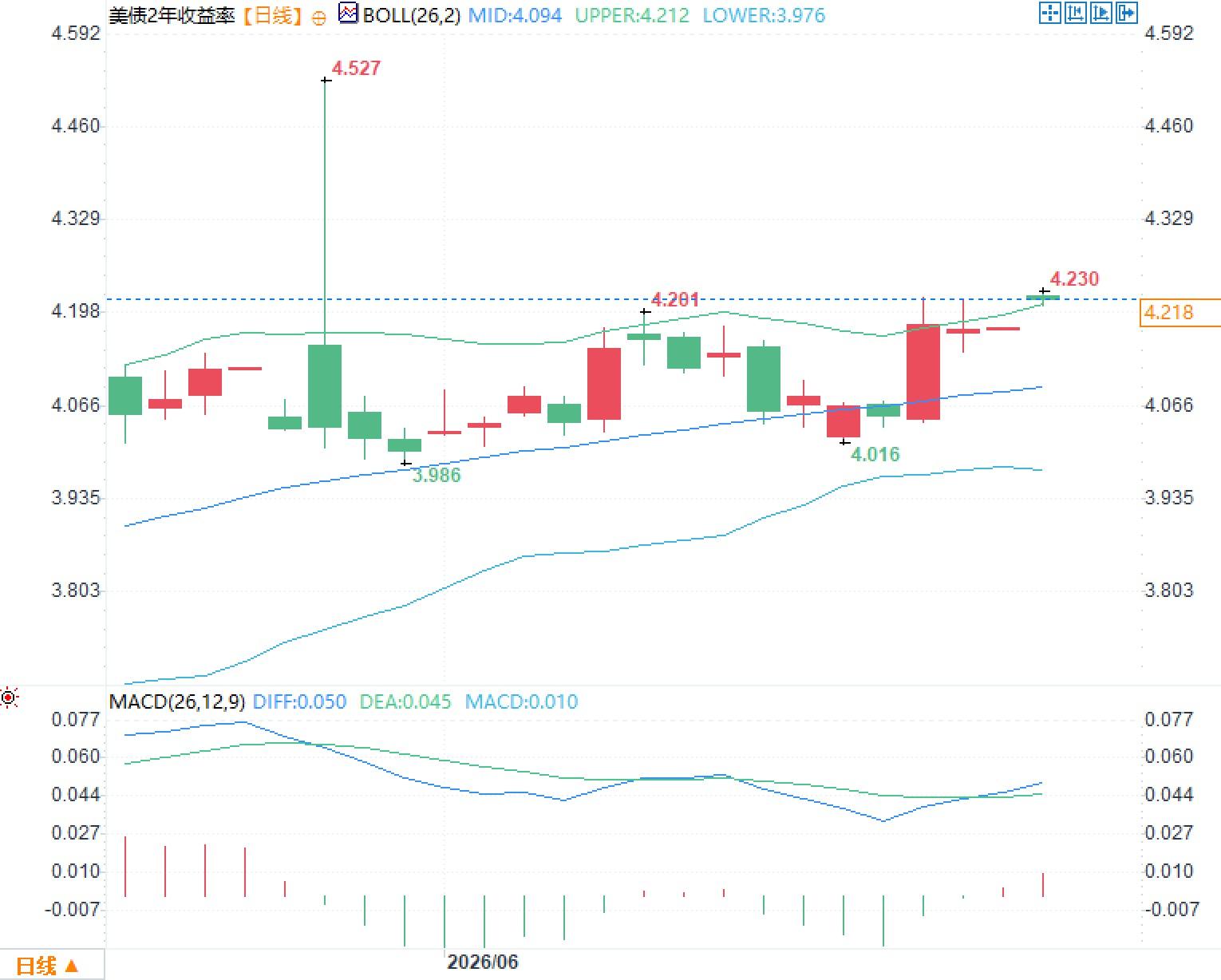
On Monday, June 22, a set of divergent signals emerged in the interest rate market that warrants attention: Brent crude oil fell back to around $78.50 per barrel due to progress in US-Iran negotiations, but US Treasury yields continued to rise when trading resumed after the holiday, with the 10-year yield approaching 4.5% at one point and the 2-year yield rising above 4.2%. On the surface, this appears to be a post-holiday rebound; in reality, the market is shifting its pricing focus from energy supply shocks to the more persistent risks associated with policy rates and inflation stickiness.
A decline in crude oil prices typically corresponds to a decrease in inflation expectations and provides support for long-term bonds. However, in this round of market activity, the drop in oil prices did not lead to a corresponding decline in yields, indicating that the bond market does not believe that progress in negotiations alone is sufficient to eliminate medium-term inflation uncertainty. Energy prices are merely a visible variable in the inflation chain; service prices, wage pressures, fiscal financing needs, and term premiums are the deeper factors determining whether long-term interest rates can truly fall.
The Federal Reserve recently kept policy rates unchanged, but market understanding of the future policy path has clearly shifted. Previously, the interest rate market focused more on when the easing cycle would begin; now, the market is re-discussing whether rate hikes are still possible this year, and how long the restrictive interest rates need to be maintained.

This means that the rise in yields does not entirely stem from improved growth expectations, but rather from an increase in the central level of real interest rates and expectations of terminal interest rates. Short-term yields are most sensitive to policy expectations, and the significant increase in the 2-year yield directly reflects this logic. For the bond market, the real danger is not a single policy statement, but rather the market's gradual acceptance of the conclusion that high interest rates will remain for a longer period.
When interest rate expectations shift from a postponement of rate cuts to a potential re-tightening, valuation systems will face a second adjustment. Duration assets that previously relied on lower interest rates for support will need to reassess their discount rates; while financing cost-sensitive industries may face longer periods of capital constraints.
Brent crude oil's retreat to around $78.50 per barrel has indeed reduced the direct pressure on inflation from short-term energy shocks. However, the price decline reflects more a temporary easing of supply disruption expectations than a complete dissipation of energy market risks. The market is currently facing a negotiation window of about 60 days, which inherently implies that uncertainty has not ended, but rather has shifted from an immediate shock to a period of observation.
From a bond pricing perspective, the decline in the oil risk premium can lower inflation expectations, but it cannot automatically lower the term premium. The term premium incorporates multiple factors, including fiscal supply, inflation uncertainty, policy credibility, and liquidity demand. As long as investors remain concerned about the possibility of a renewed surge in oil prices in the coming months, long-term yields are unlikely to simply follow the current decline in oil prices.
The key to this round of market activity is not whether the 10-year yield briefly breaks through 4.5%, but whether the rise in short-term yields continues to outpace that of long-term yields. If the 2-year yield remains high, it indicates that the market believes policy rates may continue to rise or remain high in the coming quarters; if the 10-year yield remains firm at the same time, it means that the market is beginning to demand compensation for higher long-term nominal interest rates.
These two scenarios correspond to entirely different macroeconomic implications. The former leans towards monetary policy repricing, while the latter implies a combined effect of inflation, fiscal policy, and term premiums. For the market, the short end determines policy expectations, while the long end determines valuation anchors. When both ends weaken simultaneously, the pressure on interest rate-sensitive assets is usually more widespread.
Next, we need to pay attention to three types of variables. First, whether energy prices can stabilize around $80/barrel, rather than jumping again amidst repeated news of negotiations. Second, whether inflation data shows persistent pressures on service and core prices. Third, whether statements from Federal Reserve officials continue to reinforce a defensive stance against inflation risks. If these three factors move in unison, the rise in yields will no longer be merely a post-holiday liquidity recovery.
A decline in crude oil prices typically corresponds to a decrease in inflation expectations and provides support for long-term bonds. However, in this round of market activity, the drop in oil prices did not lead to a corresponding decline in yields, indicating that the bond market does not believe that progress in negotiations alone is sufficient to eliminate medium-term inflation uncertainty. Energy prices are merely a visible variable in the inflation chain; service prices, wage pressures, fiscal financing needs, and term premiums are the deeper factors determining whether long-term interest rates can truly fall.
The Federal Reserve recently kept policy rates unchanged, but market understanding of the future policy path has clearly shifted. Previously, the interest rate market focused more on when the easing cycle would begin; now, the market is re-discussing whether rate hikes are still possible this year, and how long the restrictive interest rates need to be maintained.
This means that the rise in yields does not entirely stem from improved growth expectations, but rather from an increase in the central level of real interest rates and expectations of terminal interest rates. Short-term yields are most sensitive to policy expectations, and the significant increase in the 2-year yield directly reflects this logic. For the bond market, the real danger is not a single policy statement, but rather the market's gradual acceptance of the conclusion that high interest rates will remain for a longer period.
When interest rate expectations shift from a postponement of rate cuts to a potential re-tightening, valuation systems will face a second adjustment. Duration assets that previously relied on lower interest rates for support will need to reassess their discount rates; while financing cost-sensitive industries may face longer periods of capital constraints.
Brent crude oil's retreat to around $78.50 per barrel has indeed reduced the direct pressure on inflation from short-term energy shocks. However, the price decline reflects more a temporary easing of supply disruption expectations than a complete dissipation of energy market risks. The market is currently facing a negotiation window of about 60 days, which inherently implies that uncertainty has not ended, but rather has shifted from an immediate shock to a period of observation.
From a bond pricing perspective, the decline in the oil risk premium can lower inflation expectations, but it cannot automatically lower the term premium. The term premium incorporates multiple factors, including fiscal supply, inflation uncertainty, policy credibility, and liquidity demand. As long as investors remain concerned about the possibility of a renewed surge in oil prices in the coming months, long-term yields are unlikely to simply follow the current decline in oil prices.
The key to this round of market activity is not whether the 10-year yield briefly breaks through 4.5%, but whether the rise in short-term yields continues to outpace that of long-term yields. If the 2-year yield remains high, it indicates that the market believes policy rates may continue to rise or remain high in the coming quarters; if the 10-year yield remains firm at the same time, it means that the market is beginning to demand compensation for higher long-term nominal interest rates.
These two scenarios correspond to entirely different macroeconomic implications. The former leans towards monetary policy repricing, while the latter implies a combined effect of inflation, fiscal policy, and term premiums. For the market, the short end determines policy expectations, while the long end determines valuation anchors. When both ends weaken simultaneously, the pressure on interest rate-sensitive assets is usually more widespread.
Next, we need to pay attention to three types of variables. First, whether energy prices can stabilize around $80/barrel, rather than jumping again amidst repeated news of negotiations. Second, whether inflation data shows persistent pressures on service and core prices. Third, whether statements from Federal Reserve officials continue to reinforce a defensive stance against inflation risks. If these three factors move in unison, the rise in yields will no longer be merely a post-holiday liquidity recovery.
- Risk Warning and Disclaimer
- The market involves risk, and trading may not be suitable for all investors. This article is for reference only and does not constitute personal investment advice, nor does it take into account certain users’ specific investment objectives, financial situation, or other needs. Any investment decisions made based on this information are at your own risk.