The British pound strengthened against the euro but weakened against the US dollar, driven by two completely different trading logics.
2026-06-24 17:57:21
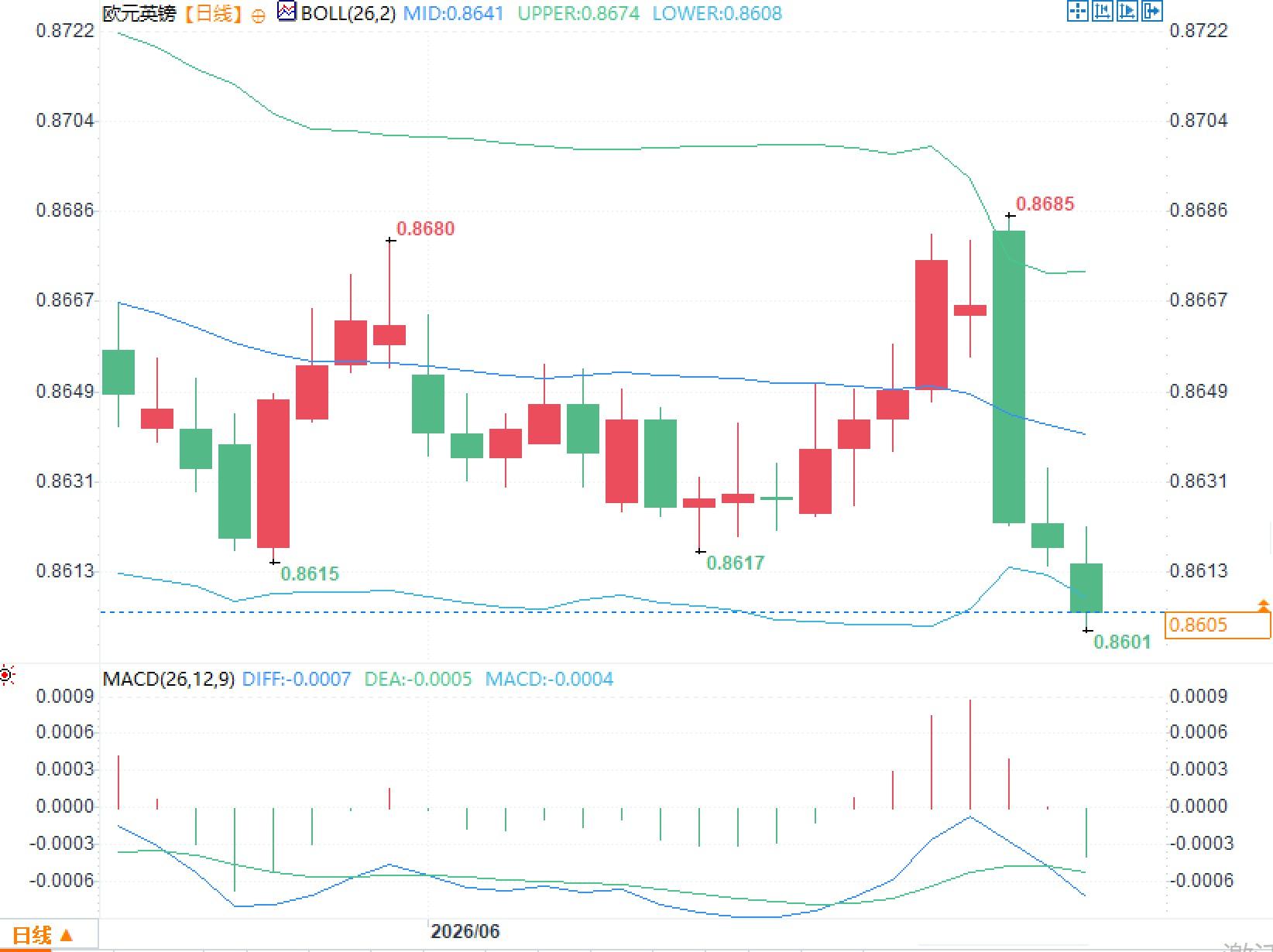
On Wednesday, June 24th, the core variable in the European currency market shifted from simple carry trades to the repricing of political risk. The euro fell to around 0.8601 against the pound, its lowest level since August last year; meanwhile, the pound remained around 1.318 against the dollar, having been under pressure for the month by about 2%. This price structure indicates that the pound is not strengthening across the board, but rather benefiting from reduced political uncertainty in the UK on cross-currency pairs, while continuing to be pressured by upward revisions in the Federal Reserve's interest rate expectations on the dollar side.
The market's current focus is not on the single question of who will succeed as prime minister, but on whether the new fiscal team can send verifiable signals of fiscal discipline to the bond market. The transition of leadership became clearer after Darren Jones withdrew from the race and endorsed Andy Burnham, providing marginal support for the pound. The problem is that this support stems from a decline in risk premiums, rather than a comprehensive improvement in fundamentals.
The euro fell below 0.861 against the pound, which on the surface appears to be a sign of pound strength, but is actually a temporary correction of the political risk discount. For the past two years, the pricing of UK assets has been constrained by three types of discounts: fiscal credibility, low growth elasticity, and policy continuity discounts resulting from frequent changes in leadership. If Burnham takes office without fierce competition, the market will first correct the risk premium associated with a "disorderly transition."

This explains why the pound has significantly outperformed the euro against the dollar. The euro itself has recently lacked strong drivers, influenced by growth prospects, easing inflationary pressures following a decline in energy prices, and a reduced need for further interest rate hikes by the European Central Bank. For the pound, however, the choice of the Chancellor of the Exchequer has become a short-term pricing anchor. If a more business-oriented figure like Wes Streitting takes over fiscal affairs, the market will tend to discount to reduce the probability of fiscal instability.
However, traders need to distinguish between "reduced political noise" and "rising growth premium." The former can drive a correction in cross-currency pairs, while the latter requires confirmation from actual economic data. Currently, the UK's April GDP was -0.1% month-on-month, and the services sector declined by 0.2%, indicating that growth momentum is not solid. The rebound in pound against euro is more like a position adjustment than a restart of fundamental trends.
Within the current UK macroeconomic framework, the Chancellor of the Exchequer is gaining more market weight than most cabinet positions. The reason is simple: the UK bond market is highly sensitive to fiscal expansion, while economic growth is insufficient to automatically alleviate debt pressures. For the new government to simultaneously address the pressures of public services, welfare spending, defense budgets, and tax revenue, its fiscal narrative must withstand the test of government bond yields.
Burnham's previous statements regarding public investment, local economies, and fiscal space have easily led the market to associate them with higher fiscal spending. If the Chancellor is a pro-business candidate who emphasizes budget constraints, this concern could be mitigated to some extent. Macro analyst Nick Rees recently pointed out that the gradual removal of obstacles to Burnham's succession is providing marginal support for the pound, but the current period is still a "honeymoon phase," and the economic reality remains challenging. This assessment is crucial because it separates short-term sentiment from medium-term constraints.
In other words, the current rise in the pound against the euro does not require a sudden improvement in the UK economy; it only requires the market to believe that the new government will not create additional fiscal shocks. However, if subsequent fiscal statements shift towards high spending and low constraints, the political benefits of pound cross rates may soon be offset by the repricing of government bonds.
The pound has weakened against the dollar this month, primarily not due to negative factors in the UK, but rather to renewed expectations of rising interest rates in the US. The market currently prices in a 36-38 basis point rate hike by the Federal Reserve this year, while the Bank of England's corresponding target is around 24 basis points. While the difference isn't extreme, it's enough to influence short-term fund allocations among major currencies.
The Bank of England's current interest rate is 3.75%, and the May CPI was 2.8%. Inflation is still some distance from the target, but this no longer supports an aggressive interest rate hike narrative. Weak UK economic data further limits the central bank's room for further tightening. In other words, the pound sterling is not lacking in nominal interest rate support, but it lacks a stronger logic for interest rate differential expansion.
Whether the pound can maintain its strength against the euro depends on three variables. First, whether the new Chancellor of the Exchequer clearly conveys budgetary discipline. Second, whether UK government bond yields remain stable during the political transition. Third, whether subsequent PMI, wage, and inflation data can demonstrate that the economy is not solely supported by fiscal expectations.
If the fiscal team signals a moderate, actionable, investment-friendly but not out-of-control approach, the pound may remain resilient. However, if markets become concerned again about the tensions between borrowing expansion, welfare spending, and tax pressures, the pound will likely return to a framework constrained by both bond yields and risk premiums.
The market's current focus is not on the single question of who will succeed as prime minister, but on whether the new fiscal team can send verifiable signals of fiscal discipline to the bond market. The transition of leadership became clearer after Darren Jones withdrew from the race and endorsed Andy Burnham, providing marginal support for the pound. The problem is that this support stems from a decline in risk premiums, rather than a comprehensive improvement in fundamentals.
The euro fell below 0.861 against the pound, which on the surface appears to be a sign of pound strength, but is actually a temporary correction of the political risk discount. For the past two years, the pricing of UK assets has been constrained by three types of discounts: fiscal credibility, low growth elasticity, and policy continuity discounts resulting from frequent changes in leadership. If Burnham takes office without fierce competition, the market will first correct the risk premium associated with a "disorderly transition."
This explains why the pound has significantly outperformed the euro against the dollar. The euro itself has recently lacked strong drivers, influenced by growth prospects, easing inflationary pressures following a decline in energy prices, and a reduced need for further interest rate hikes by the European Central Bank. For the pound, however, the choice of the Chancellor of the Exchequer has become a short-term pricing anchor. If a more business-oriented figure like Wes Streitting takes over fiscal affairs, the market will tend to discount to reduce the probability of fiscal instability.
However, traders need to distinguish between "reduced political noise" and "rising growth premium." The former can drive a correction in cross-currency pairs, while the latter requires confirmation from actual economic data. Currently, the UK's April GDP was -0.1% month-on-month, and the services sector declined by 0.2%, indicating that growth momentum is not solid. The rebound in pound against euro is more like a position adjustment than a restart of fundamental trends.
Within the current UK macroeconomic framework, the Chancellor of the Exchequer is gaining more market weight than most cabinet positions. The reason is simple: the UK bond market is highly sensitive to fiscal expansion, while economic growth is insufficient to automatically alleviate debt pressures. For the new government to simultaneously address the pressures of public services, welfare spending, defense budgets, and tax revenue, its fiscal narrative must withstand the test of government bond yields.
Burnham's previous statements regarding public investment, local economies, and fiscal space have easily led the market to associate them with higher fiscal spending. If the Chancellor is a pro-business candidate who emphasizes budget constraints, this concern could be mitigated to some extent. Macro analyst Nick Rees recently pointed out that the gradual removal of obstacles to Burnham's succession is providing marginal support for the pound, but the current period is still a "honeymoon phase," and the economic reality remains challenging. This assessment is crucial because it separates short-term sentiment from medium-term constraints.
In other words, the current rise in the pound against the euro does not require a sudden improvement in the UK economy; it only requires the market to believe that the new government will not create additional fiscal shocks. However, if subsequent fiscal statements shift towards high spending and low constraints, the political benefits of pound cross rates may soon be offset by the repricing of government bonds.
The pound has weakened against the dollar this month, primarily not due to negative factors in the UK, but rather to renewed expectations of rising interest rates in the US. The market currently prices in a 36-38 basis point rate hike by the Federal Reserve this year, while the Bank of England's corresponding target is around 24 basis points. While the difference isn't extreme, it's enough to influence short-term fund allocations among major currencies.
The Bank of England's current interest rate is 3.75%, and the May CPI was 2.8%. Inflation is still some distance from the target, but this no longer supports an aggressive interest rate hike narrative. Weak UK economic data further limits the central bank's room for further tightening. In other words, the pound sterling is not lacking in nominal interest rate support, but it lacks a stronger logic for interest rate differential expansion.
Whether the pound can maintain its strength against the euro depends on three variables. First, whether the new Chancellor of the Exchequer clearly conveys budgetary discipline. Second, whether UK government bond yields remain stable during the political transition. Third, whether subsequent PMI, wage, and inflation data can demonstrate that the economy is not solely supported by fiscal expectations.
If the fiscal team signals a moderate, actionable, investment-friendly but not out-of-control approach, the pound may remain resilient. However, if markets become concerned again about the tensions between borrowing expansion, welfare spending, and tax pressures, the pound will likely return to a framework constrained by both bond yields and risk premiums.
- Risk Warning and Disclaimer
- The market involves risk, and trading may not be suitable for all investors. This article is for reference only and does not constitute personal investment advice, nor does it take into account certain users’ specific investment objectives, financial situation, or other needs. Any investment decisions made based on this information are at your own risk.