Gold Price Outlook: Can Chinese Gold Purchases Offset Hawkish Pressure from the Federal Reserve?
2026-06-26 20:34:52
Spot gold rose slightly for the second consecutive trading day on Friday after hitting a multi-month low of $3,959.08 earlier this week. Gold prices fell below $4,000 for the first time since November and are currently trading around $4,050, marking their fourth consecutive weekly decline, with a cumulative weekly drop of 2.5%.
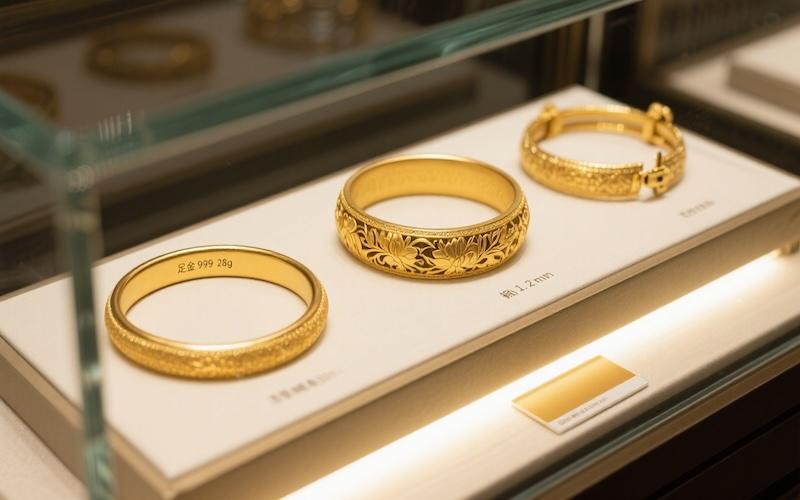
Since gold prices hit a record high of $5,602.23 in January, they have fallen by about 30% to date. The decline has been driven by two reinforcing forces: the Federal Reserve's policy stance has shifted from interest rate cuts to potential rate hikes, and the dollar has risen to its strongest level in more than a year.
The key reason why gold prices haven't fallen further is that they are supported by China. China's monthly gold imports in May hit a more than two-year high, and the cumulative import volume for the year is also significantly higher than the same period last year. As the world's largest physical gold consumer, China's continued physical buying has provided a floor for the price decline, but it has not yet reversed the overall downward trend, and a reversal is unlikely in the short term.
Technical Analysis of Spot Gold on Daily Chart
Spot gold rebounded slightly for the second consecutive day on Friday after hitting a multi-month low of $3,959.08 this week. The price has only recovered for two trading days from the low, forming a short-term trading range with the upper limit at the two-week high of $4,382.62. The short-term rebound target is $4,170.85.
The current overall trend remains downward, and once gold prices reach this target level, short sellers may re-enter the market to exert pressure.
On the downside support side, if gold prices break below $3959.08 and hit a new low for the week, traders will look to $3886.46. This level is a key support level and the last bottom before the previous rally to $5602.23. A break below this level could trigger a faster decline in gold prices.
The logic behind the interest rate cut trade has completely collapsed, and the Federal Reserve has made a major policy shift.
In December of last year, the Federal Reserve cut interest rates by 25 basis points, and the market widely priced in multiple rate cuts in 2026. This expectation of rate cuts propelled gold prices to a record high above $5,600 in January.
After six months, the Federal Reserve's policy stance has completely reversed. The market's focus is no longer on the pace of interest rate cuts. The CME FedWatch Tool shows that traders have begun pricing in the possibility of a Fed rate hike as early as September.
Gold itself does not generate interest income, while US Treasury bonds and money market funds can generate stable monthly returns. When market interest rate expectations reverse so dramatically, funds will flow out of non-interest-bearing precious metals and into assets that offer interest returns.
The current decline in gold prices, which began from the January high, is rooted in a shift in expectations regarding Federal Reserve policy. Until the market is convinced that the tightening cycle has completely ended, every gold price rebound will be met with selling pressure from short sellers betting on interest rate hikes.
On this week's daily chart, the 50-day moving average crossed below the 200-day moving average, forming a classic "death cross" technical signal. This signal will trigger a large number of technical traders to short the market, adding additional selling pressure even if there are no new changes in the market fundamentals.
The current situation for bulls is extremely unfavorable: the Fed's hawkish stance, the strong dollar, and bearish technical signals are all contributing to a triple negative impact, and downward pressure on gold prices continues.
A stronger dollar further dragged down gold prices.
Global gold is priced in US dollars, and the dollar is currently at its strongest level in over a year. A stronger dollar increases the cost of gold purchases for holders of other currencies, directly weakening global physical gold demand. There is a rigid inverse relationship between the two, and this mechanism is currently suppressing gold prices.
The core logic behind the strengthening of the US dollar is the continuous influx of global capital into dollar assets, with the market betting that US interest rates will remain high or even rise further. At the beginning of this year, the market originally expected that large-scale US fiscal spending and loose monetary policies would gradually weaken the dollar; however, after the Federal Reserve shifted its policy, this trading logic was completely reversed, and gold suffered from the dual pressure of interest rates and exchange rates.
Chinese buying provided support, but was insufficient to reverse the downward trend.
May import data shows that China's monthly gold imports hit a more than two-year high, and the total import volume for the year is also higher than the same period last year. Demand sources include gold jewelry, investment gold bars and coins, and continued gold purchases by the central bank.
This type of demand involves physical gold purchases, which are immediately withdrawn from the market after purchase. Unlike futures long positions that can be closed overnight, this type of demand provides long-term support.
Large-scale physical demand can form a bottom for gold prices: During the period of large-scale buying in China, the pace of gold price decline will slow down, and physical buying at low levels will continue to absorb selling pressure.
However, China's imports alone are insufficient to offset the decline driven by the Federal Reserve and the US dollar. Physical gold purchases can only limit the downside, not drive a trend of rising gold prices; for gold prices to reverse upwards, a shift in market interest rate expectations is necessary.
What factors could reverse the trend in gold prices?
International crude oil prices continued to decline, and lower energy costs could alleviate inflationary pressures and weaken the Federal Reserve's motivation to further tighten monetary policy; US Treasury yields have also fallen slightly in recent weeks.
If inflation continues to cool and the US economic growth slows moderately, the Federal Reserve may return to a wait-and-see stance of maintaining interest rates unchanged. This shift in expectation alone would be enough to drive a rebound in gold prices. Markets often react to the Fed's official decision beforehand, and this shift in expectations doesn't necessarily require waiting for an actual rate cut.
However, none of the aforementioned positive catalysts have yet formed a definite trend: oil prices have fallen, but the Federal Reserve has not indicated that it will ease policy as a result; US Treasury yields have slightly retreated, but the dollar's upward trend has not stopped.
The key prerequisite for gold prices to stabilize and rebound is that the Federal Reserve stops signaling interest rate hikes. Before that, every rebound will be an opportunity for short sellers to enter the market.
Key areas to watch in the future
Short-term rebound target: $4170.85 (the retracement level of the short-term trading range of $3959.08–$4382.62). The overall trend is downward, and short sellers are likely to re-enter the market when gold prices test this level.
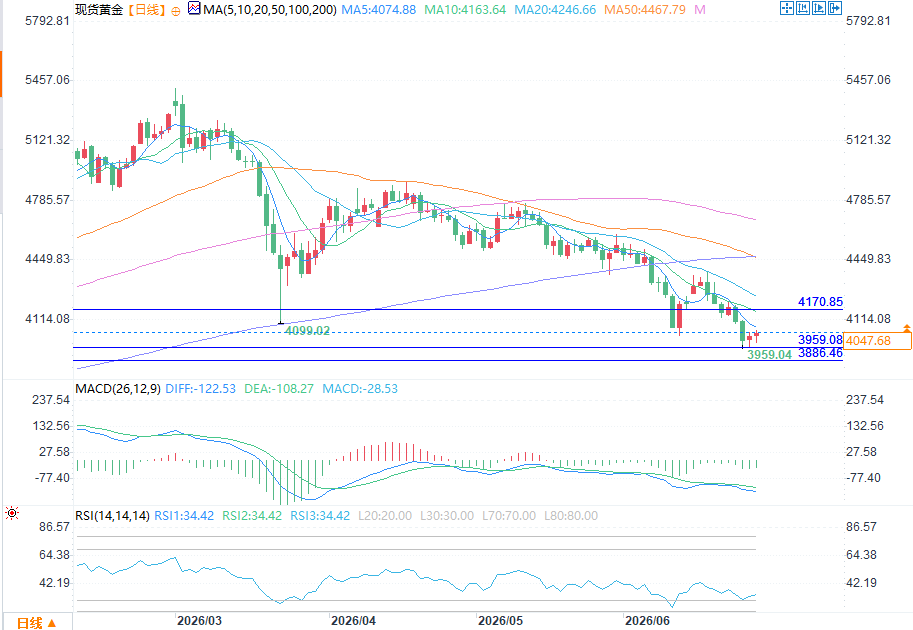
If gold prices break below $3,959.08, the next support target is $3,886.46. If this level is breached, the risk of a rapid decline in gold prices will increase significantly.
The core driving force behind the market trend is the Federal Reserve's interest rate expectations; the amplifying factor is the US dollar's performance; and the bottom support level is China's physical gold purchases.
With these three factors combined, gold prices will maintain a weak, range-bound trading pattern, with rebounds met with selling pressure until there is a clear shift in the outlook for market interest rates.
If subsequent US economic data continues to weaken, prompting the Federal Reserve to postpone discussions on interest rate hikes, gold prices may begin to rise ahead of the official decision. Until the relevant weak data is released, a wait-and-see approach is recommended; $3886.46 is a key support level for long-term bulls.
Since gold prices hit a record high of $5,602.23 in January, they have fallen by about 30% to date. The decline has been driven by two reinforcing forces: the Federal Reserve's policy stance has shifted from interest rate cuts to potential rate hikes, and the dollar has risen to its strongest level in more than a year.
The key reason why gold prices haven't fallen further is that they are supported by China. China's monthly gold imports in May hit a more than two-year high, and the cumulative import volume for the year is also significantly higher than the same period last year. As the world's largest physical gold consumer, China's continued physical buying has provided a floor for the price decline, but it has not yet reversed the overall downward trend, and a reversal is unlikely in the short term.
Technical Analysis of Spot Gold on Daily Chart
Spot gold rebounded slightly for the second consecutive day on Friday after hitting a multi-month low of $3,959.08 this week. The price has only recovered for two trading days from the low, forming a short-term trading range with the upper limit at the two-week high of $4,382.62. The short-term rebound target is $4,170.85.
The current overall trend remains downward, and once gold prices reach this target level, short sellers may re-enter the market to exert pressure.
On the downside support side, if gold prices break below $3959.08 and hit a new low for the week, traders will look to $3886.46. This level is a key support level and the last bottom before the previous rally to $5602.23. A break below this level could trigger a faster decline in gold prices.
The logic behind the interest rate cut trade has completely collapsed, and the Federal Reserve has made a major policy shift.
In December of last year, the Federal Reserve cut interest rates by 25 basis points, and the market widely priced in multiple rate cuts in 2026. This expectation of rate cuts propelled gold prices to a record high above $5,600 in January.
After six months, the Federal Reserve's policy stance has completely reversed. The market's focus is no longer on the pace of interest rate cuts. The CME FedWatch Tool shows that traders have begun pricing in the possibility of a Fed rate hike as early as September.
Gold itself does not generate interest income, while US Treasury bonds and money market funds can generate stable monthly returns. When market interest rate expectations reverse so dramatically, funds will flow out of non-interest-bearing precious metals and into assets that offer interest returns.
The current decline in gold prices, which began from the January high, is rooted in a shift in expectations regarding Federal Reserve policy. Until the market is convinced that the tightening cycle has completely ended, every gold price rebound will be met with selling pressure from short sellers betting on interest rate hikes.
On this week's daily chart, the 50-day moving average crossed below the 200-day moving average, forming a classic "death cross" technical signal. This signal will trigger a large number of technical traders to short the market, adding additional selling pressure even if there are no new changes in the market fundamentals.
The current situation for bulls is extremely unfavorable: the Fed's hawkish stance, the strong dollar, and bearish technical signals are all contributing to a triple negative impact, and downward pressure on gold prices continues.
A stronger dollar further dragged down gold prices.
Global gold is priced in US dollars, and the dollar is currently at its strongest level in over a year. A stronger dollar increases the cost of gold purchases for holders of other currencies, directly weakening global physical gold demand. There is a rigid inverse relationship between the two, and this mechanism is currently suppressing gold prices.
The core logic behind the strengthening of the US dollar is the continuous influx of global capital into dollar assets, with the market betting that US interest rates will remain high or even rise further. At the beginning of this year, the market originally expected that large-scale US fiscal spending and loose monetary policies would gradually weaken the dollar; however, after the Federal Reserve shifted its policy, this trading logic was completely reversed, and gold suffered from the dual pressure of interest rates and exchange rates.
Chinese buying provided support, but was insufficient to reverse the downward trend.
May import data shows that China's monthly gold imports hit a more than two-year high, and the total import volume for the year is also higher than the same period last year. Demand sources include gold jewelry, investment gold bars and coins, and continued gold purchases by the central bank.
This type of demand involves physical gold purchases, which are immediately withdrawn from the market after purchase. Unlike futures long positions that can be closed overnight, this type of demand provides long-term support.
Large-scale physical demand can form a bottom for gold prices: During the period of large-scale buying in China, the pace of gold price decline will slow down, and physical buying at low levels will continue to absorb selling pressure.
However, China's imports alone are insufficient to offset the decline driven by the Federal Reserve and the US dollar. Physical gold purchases can only limit the downside, not drive a trend of rising gold prices; for gold prices to reverse upwards, a shift in market interest rate expectations is necessary.
What factors could reverse the trend in gold prices?
International crude oil prices continued to decline, and lower energy costs could alleviate inflationary pressures and weaken the Federal Reserve's motivation to further tighten monetary policy; US Treasury yields have also fallen slightly in recent weeks.
If inflation continues to cool and the US economic growth slows moderately, the Federal Reserve may return to a wait-and-see stance of maintaining interest rates unchanged. This shift in expectation alone would be enough to drive a rebound in gold prices. Markets often react to the Fed's official decision beforehand, and this shift in expectations doesn't necessarily require waiting for an actual rate cut.
However, none of the aforementioned positive catalysts have yet formed a definite trend: oil prices have fallen, but the Federal Reserve has not indicated that it will ease policy as a result; US Treasury yields have slightly retreated, but the dollar's upward trend has not stopped.
The key prerequisite for gold prices to stabilize and rebound is that the Federal Reserve stops signaling interest rate hikes. Before that, every rebound will be an opportunity for short sellers to enter the market.
Key areas to watch in the future
Short-term rebound target: $4170.85 (the retracement level of the short-term trading range of $3959.08–$4382.62). The overall trend is downward, and short sellers are likely to re-enter the market when gold prices test this level.
If gold prices break below $3,959.08, the next support target is $3,886.46. If this level is breached, the risk of a rapid decline in gold prices will increase significantly.
The core driving force behind the market trend is the Federal Reserve's interest rate expectations; the amplifying factor is the US dollar's performance; and the bottom support level is China's physical gold purchases.
With these three factors combined, gold prices will maintain a weak, range-bound trading pattern, with rebounds met with selling pressure until there is a clear shift in the outlook for market interest rates.
If subsequent US economic data continues to weaken, prompting the Federal Reserve to postpone discussions on interest rate hikes, gold prices may begin to rise ahead of the official decision. Until the relevant weak data is released, a wait-and-see approach is recommended; $3886.46 is a key support level for long-term bulls.
- Risk Warning and Disclaimer
- The market involves risk, and trading may not be suitable for all investors. This article is for reference only and does not constitute personal investment advice, nor does it take into account certain users’ specific investment objectives, financial situation, or other needs. Any investment decisions made based on this information are at your own risk.