US Dollar Performance: Geopolitics Returns to Market Focus
2026-06-29 18:27:01
As geopolitical tensions in the Middle East continue to escalate, the uncertainty of regional conflict has thoroughly disrupted risk sentiment in global capital markets. Risk aversion has rapidly increased in global financial markets, with funds flowing heavily into traditional safe-haven assets, allowing the previously volatile US dollar to regain upward momentum and stabilize its rebound. Meanwhile, monetary policy expectations for the two major economies of Europe and the US continue to diverge, with market pricing showing a significant deviation in the policy paths of the Federal Reserve and the European Central Bank this year and next. Coupled with the upcoming release of highly anticipated Eurozone inflation data and US core employment data, these two key variables will be crucial drivers of the euro-dollar exchange rate movement in the short term.
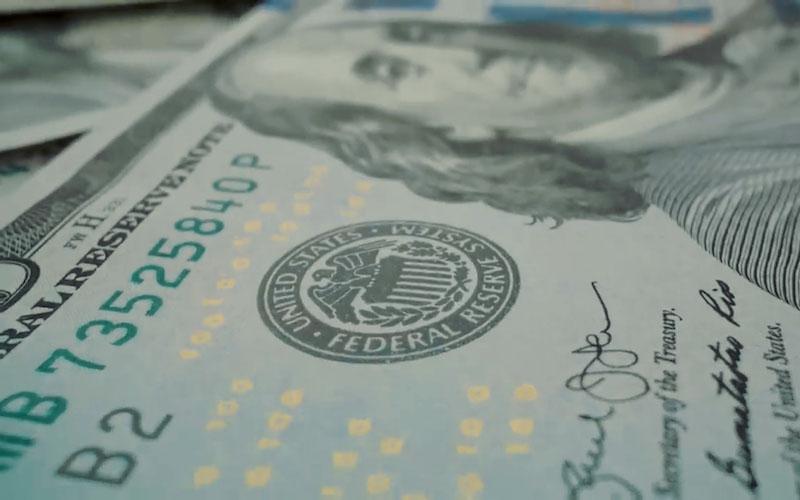
The ongoing escalation of the Middle East conflict and the resulting uncertainty have significantly increased global demand for safe-haven assets. Against the backdrop of heightened volatility in global stock markets and commodities, the traditional safe-haven attributes of the US dollar are being re-emphasized, providing continued support and boosting its safe-haven appeal. Meanwhile, upcoming Eurozone inflation and US employment data will directly validate market expectations regarding current monetary policies in Europe and the US, correcting current market pricing discrepancies and ultimately determining the short-term trend and direction of the euro/dollar exchange rate.
Geopolitical events reverse the dollar's trajectory, and expectations for continued easing of Federal Reserve policy remain.
Previously, Iran's attack on oil tankers passing through the Strait of Hormuz disrupted the regional balance, prompting the United States to retaliate by resuming airstrikes against Iran, causing a sharp rise in geopolitical risks. Stimulated by this sudden geopolitical event, the US dollar quickly reversed its losses, recovering all of its previous declines. Prior to this escalation, the dollar had been weakening, primarily due to a cooling of market expectations for aggressive interest rate hikes by the Federal Reserve. Many dollar bulls chose to take profits and close their positions, putting downward pressure on the dollar. After the policy maneuvering in the first half of the year, the market gradually digested the tail-end pressure of the Fed's tightening cycle. The latest economic data shows a significant rebound in the University of Michigan's consumer confidence index in June, reflecting a recovery in consumer spending and market confidence, while long-term inflation expectations have shown a steady decline. These dual positive signals suggest that the Fed's monetary policy in 2026 may become more accommodative, and the two previously anticipated interest rate hikes are unlikely to materialize, thus weakening the previous support for the dollar's interest rate hikes.
Investment banks are collectively bearish on the euro, limiting the ECB's policy space.
International investment banks are generally bearish on the future trend of the euro against the US dollar. Morgan Stanley explicitly points out that the euro/dollar exchange rate is highly likely to quickly fall to the key level of 1.1. The current market capital structure has undergone a significant shift, with long-term value investors gradually reducing and closing out their euro long positions, while aggressive trading institutions such as hedge funds continue to increase their euro short positions. This reversal of bullish and bearish forces continues to put downward pressure on the euro exchange rate. BNY Mellon's view is even more pessimistic, believing that the euro/dollar exchange rate has further downside potential, potentially falling below the 1.1 level. The core logic is that the European Central Bank's previous continuous tightening of monetary policy and significant interest rate hikes have already had a significant negative impact on the Eurozone's real economy, consumption, and investment. The recovery of the Eurozone's manufacturing and service sectors is weak, signs of economic stagnation are gradually emerging, and the momentum of economic recovery remains weak. This leaves the European Central Bank with almost no policy space for further interest rate hikes, and the euro has lost the support of favorable monetary policy.
Diverging monetary policies between Europe and the US put downward pressure on the euro exchange rate.
The divergence in monetary policy between the US and Europe is becoming increasingly clear. The Federal Reserve has clearly shifted its policy stance to a hawkish one, signaling a tightening trend, while European Central Bank President Christine Lagarde has repeatedly made dovish and easing statements, fueling expectations of further policy easing. This policy contrast has directly pushed the euro against the US dollar to a new low for the year. Currently, investors across the market are in a wait-and-see mode, awaiting Eurozone inflation data and US employment data to determine the sustainability of the euro's downward trend. Bloomberg's financial institution expert team predicts that the Eurozone's June Consumer Price Index (CPI) will steadily decline, with the inflation rate expected to fall from 3.2% to 3%. If the inflation data confirms that inflation has peaked and is declining, it means that inflationary pressures in the Eurozone have eased significantly, and the European Central Bank will no longer need to tighten monetary policy. The interest rate differential between the US and Europe will further tilt towards the US dollar, which would undoubtedly be a major negative factor for the euro, further exacerbating the downward pressure on the euro.
Looking back at this spring, the US job market showed a steady recovery, with resilient employment data providing ample economic support for the Federal Reserve to maintain the current federal funds rate and postpone interest rate hikes. Looking ahead, if the US job market continues to stabilize and its recovery continues, while domestic inflation data rises again, the Federal Reserve may restart interest rate hikes, further tightening monetary policy. The divergence in monetary policy between Europe and the US will continue to deepen, providing long-term support for the bearish trend of the euro against the US dollar. Meanwhile, the ongoing geopolitical conflict in the Middle East is likely to continue pushing up international oil prices. Rising energy prices will indirectly exacerbate imported inflation in the Eurozone and suppress economic recovery. With multiple negative factors combined, the euro exchange rate may further decline, falling to a low of 1 euro to 1.1 US dollars.
Oil prices were boosted by geopolitical tensions, further benefiting the fundamentals of the US dollar.
Brent crude oil prices have recently exhibited a clear structural trend, reacting sensitively to positive news and selectively ignoring negative news. Positive rumors such as regional ceasefires and multilateral negotiations have significantly boosted North Sea Brent crude oil prices, with an impact far exceeding that of negative geopolitical events like Iran's continued attacks on oil tankers and US airstrikes against Iran. However, the risks ahead cannot be ignored. If geopolitical panic in the Middle East continues to spread, hindering shipping efficiency and restricting logistics in the Strait of Hormuz, and if Persian Gulf oil production capacity fails to quickly recover to pre-conflict levels, global oil supply will face tight pressure, and international oil prices are likely to surge. As a major net exporter of energy commodities, the US will benefit from rising oil prices, supporting its economy and dollar assets. The expansion of its energy trade surplus will further solidify the dollar's fundamental advantage, providing strong support for a stronger dollar exchange rate.
The ongoing escalation of the Middle East conflict and the resulting uncertainty have significantly increased global demand for safe-haven assets. Against the backdrop of heightened volatility in global stock markets and commodities, the traditional safe-haven attributes of the US dollar are being re-emphasized, providing continued support and boosting its safe-haven appeal. Meanwhile, upcoming Eurozone inflation and US employment data will directly validate market expectations regarding current monetary policies in Europe and the US, correcting current market pricing discrepancies and ultimately determining the short-term trend and direction of the euro/dollar exchange rate.
Geopolitical events reverse the dollar's trajectory, and expectations for continued easing of Federal Reserve policy remain.
Previously, Iran's attack on oil tankers passing through the Strait of Hormuz disrupted the regional balance, prompting the United States to retaliate by resuming airstrikes against Iran, causing a sharp rise in geopolitical risks. Stimulated by this sudden geopolitical event, the US dollar quickly reversed its losses, recovering all of its previous declines. Prior to this escalation, the dollar had been weakening, primarily due to a cooling of market expectations for aggressive interest rate hikes by the Federal Reserve. Many dollar bulls chose to take profits and close their positions, putting downward pressure on the dollar. After the policy maneuvering in the first half of the year, the market gradually digested the tail-end pressure of the Fed's tightening cycle. The latest economic data shows a significant rebound in the University of Michigan's consumer confidence index in June, reflecting a recovery in consumer spending and market confidence, while long-term inflation expectations have shown a steady decline. These dual positive signals suggest that the Fed's monetary policy in 2026 may become more accommodative, and the two previously anticipated interest rate hikes are unlikely to materialize, thus weakening the previous support for the dollar's interest rate hikes.
Investment banks are collectively bearish on the euro, limiting the ECB's policy space.
International investment banks are generally bearish on the future trend of the euro against the US dollar. Morgan Stanley explicitly points out that the euro/dollar exchange rate is highly likely to quickly fall to the key level of 1.1. The current market capital structure has undergone a significant shift, with long-term value investors gradually reducing and closing out their euro long positions, while aggressive trading institutions such as hedge funds continue to increase their euro short positions. This reversal of bullish and bearish forces continues to put downward pressure on the euro exchange rate. BNY Mellon's view is even more pessimistic, believing that the euro/dollar exchange rate has further downside potential, potentially falling below the 1.1 level. The core logic is that the European Central Bank's previous continuous tightening of monetary policy and significant interest rate hikes have already had a significant negative impact on the Eurozone's real economy, consumption, and investment. The recovery of the Eurozone's manufacturing and service sectors is weak, signs of economic stagnation are gradually emerging, and the momentum of economic recovery remains weak. This leaves the European Central Bank with almost no policy space for further interest rate hikes, and the euro has lost the support of favorable monetary policy.
Diverging monetary policies between Europe and the US put downward pressure on the euro exchange rate.
The divergence in monetary policy between the US and Europe is becoming increasingly clear. The Federal Reserve has clearly shifted its policy stance to a hawkish one, signaling a tightening trend, while European Central Bank President Christine Lagarde has repeatedly made dovish and easing statements, fueling expectations of further policy easing. This policy contrast has directly pushed the euro against the US dollar to a new low for the year. Currently, investors across the market are in a wait-and-see mode, awaiting Eurozone inflation data and US employment data to determine the sustainability of the euro's downward trend. Bloomberg's financial institution expert team predicts that the Eurozone's June Consumer Price Index (CPI) will steadily decline, with the inflation rate expected to fall from 3.2% to 3%. If the inflation data confirms that inflation has peaked and is declining, it means that inflationary pressures in the Eurozone have eased significantly, and the European Central Bank will no longer need to tighten monetary policy. The interest rate differential between the US and Europe will further tilt towards the US dollar, which would undoubtedly be a major negative factor for the euro, further exacerbating the downward pressure on the euro.
Looking back at this spring, the US job market showed a steady recovery, with resilient employment data providing ample economic support for the Federal Reserve to maintain the current federal funds rate and postpone interest rate hikes. Looking ahead, if the US job market continues to stabilize and its recovery continues, while domestic inflation data rises again, the Federal Reserve may restart interest rate hikes, further tightening monetary policy. The divergence in monetary policy between Europe and the US will continue to deepen, providing long-term support for the bearish trend of the euro against the US dollar. Meanwhile, the ongoing geopolitical conflict in the Middle East is likely to continue pushing up international oil prices. Rising energy prices will indirectly exacerbate imported inflation in the Eurozone and suppress economic recovery. With multiple negative factors combined, the euro exchange rate may further decline, falling to a low of 1 euro to 1.1 US dollars.
Oil prices were boosted by geopolitical tensions, further benefiting the fundamentals of the US dollar.
Brent crude oil prices have recently exhibited a clear structural trend, reacting sensitively to positive news and selectively ignoring negative news. Positive rumors such as regional ceasefires and multilateral negotiations have significantly boosted North Sea Brent crude oil prices, with an impact far exceeding that of negative geopolitical events like Iran's continued attacks on oil tankers and US airstrikes against Iran. However, the risks ahead cannot be ignored. If geopolitical panic in the Middle East continues to spread, hindering shipping efficiency and restricting logistics in the Strait of Hormuz, and if Persian Gulf oil production capacity fails to quickly recover to pre-conflict levels, global oil supply will face tight pressure, and international oil prices are likely to surge. As a major net exporter of energy commodities, the US will benefit from rising oil prices, supporting its economy and dollar assets. The expansion of its energy trade surplus will further solidify the dollar's fundamental advantage, providing strong support for a stronger dollar exchange rate.
- Risk Warning and Disclaimer
- The market involves risk, and trading may not be suitable for all investors. This article is for reference only and does not constitute personal investment advice, nor does it take into account certain users’ specific investment objectives, financial situation, or other needs. Any investment decisions made based on this information are at your own risk.