The euro fell back to around 1.14 against the dollar; the market's real concern is not a single interest rate hike.
2026-06-30 21:59:41
On Tuesday, June 30th, the euro was trading around 1.1400 against the US dollar. The daily chart shows the exchange rate retreated from 1.1685, briefly touching 1.1324, and has only seen limited recovery recently. The core of the current market reassessment is not a rate hike, but rather whether the European Central Bank can maintain a relatively tight policy stance after the energy shock subsides.
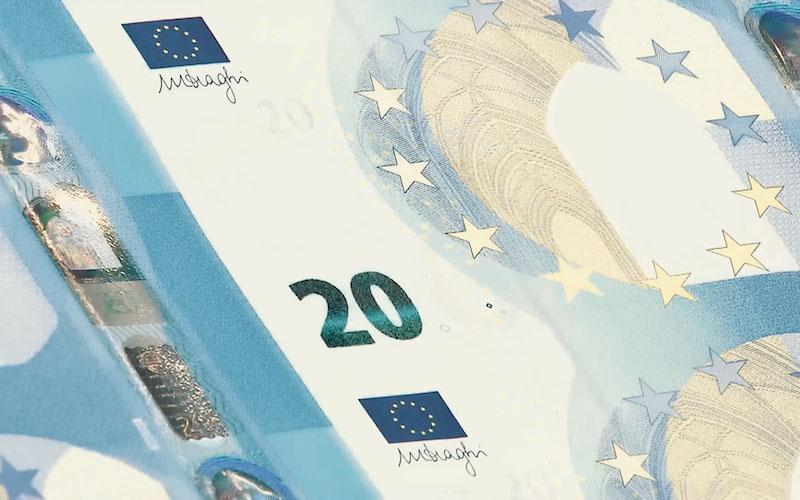
On June 11, the European Central Bank (ECB) raised three key interest rates by 25 basis points. Effective June 17, the deposit facility rate will be 2.25%, the main refinancing rate will be 2.40%, and the marginal lending rate will be 2.65%. The Federal Reserve maintained its target range for the federal funds rate at 3.50% to 3.75% in June. Comparing the midpoint of the range (3.625%), the short-term policy rates of the two central banks still differ by approximately 137.5 basis points. This difference, while not equivalent to forward points, is sufficient to illustrate that a 25-basis-point rate hike in Europe is unlikely to significantly alter the euro's exchange rate against the US dollar.
This rate hike was already anticipated by the market. The exchange rate continued to fall after the policy was implemented, indicating that the market did not see it as the start of a continuous tightening cycle. The ECB's framework involves assessment at each meeting, without pre-committing to a specific interest rate path. Key variables for the euro have shifted to how long high interest rates will persist and whether the energy shock will transmit to service prices and wages.
The latest national data shows significant divergence. Spain's Harmonized Index of Consumer Prices (HICP) rose 3.6% year-on-year in June, and 0.6% month-on-month; France's HICP fell to 2.0% year-on-year from 2.8% in May; and Italy's HICP fell to 3.1% year-on-year from 3.2%. National data cannot be simply averaged; the Eurozone's June HICP will be released on July 1st, and the results from high-weighted economies such as Germany will still alter the overall picture.
In May, the Eurozone's HICP was 3.2%, with the core index at 2.5%, and energy and services inflation at 10.9% and 3.5% respectively. Therefore, the focus is not just on whether the overall index will decline in June, but also on whether the core and services indices will cool down simultaneously. If the decline in the overall index is mainly due to oil prices while the services index remains high, the ECB will find it difficult to completely abandon its inflationary concerns; only when price pressures converge across a wider range of components will the urgency for the next policy discussion significantly decrease.
Christine Lagarde stated in Sintra on June 29th that oil prices, which had previously approached $120 per barrel, have recently fallen back to around $73, but whether this change will be sustained remains uncertain. She defined the current environment as a "middle range" requiring fine-tuning. The ECB's June baseline forecast shows an average inflation rate of 3.0% in 2026, 2.3% in 2027, and only returning to 2.0% in 2028; core inflation is projected at 2.5% in both 2026 and 2027, while energy inflation is expected to reach 12.5% in the third quarter of 2026. The decline in spot energy prices does not automatically eliminate the indirect transmission in the coming quarters.
The Sintra-Pacific Economic Cooperation (SPEC) study provides a more gradual structural variable. Covering 38 economies, the study found that for every 1% increase in net migration as a percentage of the recipient country's population, output per worker increases by approximately 1.2% over 5 years and approximately 1.9% over 10 years, with no significant statistical impact on inflation. In Spain, up to one-third of the growth in output per worker from 1990 to 2024 could be attributed to immigration inflows. While this doesn't translate into short-term exchange rate signals, it reflects the impact of labor supply, capital accumulation, and productivity improvements on regional resilience.
The Bollinger Bands in the chart have a middle band at 1.1525, an upper band at 1.1723, and a lower band at 1.1328. The current price is approximately 128 basis points below the middle band and only about 69 basis points above the lower band. After breaking below the lower band at the low of 1.1324, a rebound occurred, but the price has not yet recovered the recent price level of 1.1499. The MACD's DIF is -0.0065, lower than the DEA at -0.0057, and both are below the zero line, indicating weak momentum on the daily chart.
This doesn't foreshadow a single direction, but rather indicates that the exchange rate hasn't yet escaped the repricing range following the policy implementation. The Eurozone inflation data on July 1st, the ECB meeting on July 23rd, and the speed of energy price transmission to service inflation will determine whether the rebound after the 1.1324 low is a range-bound correction or a more complete trend correction. The key lies in distinguishing between two different macroeconomic outcomes: "a decline in overall oil prices" and "convergence of core pressures."
Question 1: Why is the euro still weakening against the US dollar after the European Central Bank raised interest rates by 25 basis points?
A: The interest rate hike had already been priced in. Even after the ECB's deposit facility rate rose to 2.25%, it still has a gap of approximately 137.5 basis points compared to the median of the Federal Reserve's federal funds target range of 3.625%. More importantly, the ECB emphasizes that decisions are made at each meeting, and cannot be directly extrapolated to a series of rate hikes.
Question 2: Does the decline in inflation in France and Italy indicate the end of price pressures?
A: No. France's HICP has fallen to 2.0%, Italy's to 3.1%, while Spain's remains at 3.6%. The extent to which energy costs are transmitted to core inflation still depends on the Eurozone's aggregate HICP, services inflation, and wage indicators.
The interest rate hike did not change the main trend of interest rate differentials.
On June 11, the European Central Bank (ECB) raised three key interest rates by 25 basis points. Effective June 17, the deposit facility rate will be 2.25%, the main refinancing rate will be 2.40%, and the marginal lending rate will be 2.65%. The Federal Reserve maintained its target range for the federal funds rate at 3.50% to 3.75% in June. Comparing the midpoint of the range (3.625%), the short-term policy rates of the two central banks still differ by approximately 137.5 basis points. This difference, while not equivalent to forward points, is sufficient to illustrate that a 25-basis-point rate hike in Europe is unlikely to significantly alter the euro's exchange rate against the US dollar.
This rate hike was already anticipated by the market. The exchange rate continued to fall after the policy was implemented, indicating that the market did not see it as the start of a continuous tightening cycle. The ECB's framework involves assessment at each meeting, without pre-committing to a specific interest rate path. Key variables for the euro have shifted to how long high interest rates will persist and whether the energy shock will transmit to service prices and wages.
Inflation divergence reduces the sense of urgency, but does not eliminate the risks.
The latest national data shows significant divergence. Spain's Harmonized Index of Consumer Prices (HICP) rose 3.6% year-on-year in June, and 0.6% month-on-month; France's HICP fell to 2.0% year-on-year from 2.8% in May; and Italy's HICP fell to 3.1% year-on-year from 3.2%. National data cannot be simply averaged; the Eurozone's June HICP will be released on July 1st, and the results from high-weighted economies such as Germany will still alter the overall picture.
In May, the Eurozone's HICP was 3.2%, with the core index at 2.5%, and energy and services inflation at 10.9% and 3.5% respectively. Therefore, the focus is not just on whether the overall index will decline in June, but also on whether the core and services indices will cool down simultaneously. If the decline in the overall index is mainly due to oil prices while the services index remains high, the ECB will find it difficult to completely abandon its inflationary concerns; only when price pressures converge across a wider range of components will the urgency for the next policy discussion significantly decrease.
Energy price decline and structural resilience are two different threads.
Christine Lagarde stated in Sintra on June 29th that oil prices, which had previously approached $120 per barrel, have recently fallen back to around $73, but whether this change will be sustained remains uncertain. She defined the current environment as a "middle range" requiring fine-tuning. The ECB's June baseline forecast shows an average inflation rate of 3.0% in 2026, 2.3% in 2027, and only returning to 2.0% in 2028; core inflation is projected at 2.5% in both 2026 and 2027, while energy inflation is expected to reach 12.5% in the third quarter of 2026. The decline in spot energy prices does not automatically eliminate the indirect transmission in the coming quarters.
The Sintra-Pacific Economic Cooperation (SPEC) study provides a more gradual structural variable. Covering 38 economies, the study found that for every 1% increase in net migration as a percentage of the recipient country's population, output per worker increases by approximately 1.2% over 5 years and approximately 1.9% over 10 years, with no significant statistical impact on inflation. In Spain, up to one-third of the growth in output per worker from 1990 to 2024 could be attributed to immigration inflows. While this doesn't translate into short-term exchange rate signals, it reflects the impact of labor supply, capital accumulation, and productivity improvements on regional resilience.
The daily chart remains in a downtrend, and macroeconomic data will determine the nature of any potential correction.
The Bollinger Bands in the chart have a middle band at 1.1525, an upper band at 1.1723, and a lower band at 1.1328. The current price is approximately 128 basis points below the middle band and only about 69 basis points above the lower band. After breaking below the lower band at the low of 1.1324, a rebound occurred, but the price has not yet recovered the recent price level of 1.1499. The MACD's DIF is -0.0065, lower than the DEA at -0.0057, and both are below the zero line, indicating weak momentum on the daily chart.
This doesn't foreshadow a single direction, but rather indicates that the exchange rate hasn't yet escaped the repricing range following the policy implementation. The Eurozone inflation data on July 1st, the ECB meeting on July 23rd, and the speed of energy price transmission to service inflation will determine whether the rebound after the 1.1324 low is a range-bound correction or a more complete trend correction. The key lies in distinguishing between two different macroeconomic outcomes: "a decline in overall oil prices" and "convergence of core pressures."
Frequently Asked Questions
Question 1: Why is the euro still weakening against the US dollar after the European Central Bank raised interest rates by 25 basis points?
A: The interest rate hike had already been priced in. Even after the ECB's deposit facility rate rose to 2.25%, it still has a gap of approximately 137.5 basis points compared to the median of the Federal Reserve's federal funds target range of 3.625%. More importantly, the ECB emphasizes that decisions are made at each meeting, and cannot be directly extrapolated to a series of rate hikes.
Question 2: Does the decline in inflation in France and Italy indicate the end of price pressures?
A: No. France's HICP has fallen to 2.0%, Italy's to 3.1%, while Spain's remains at 3.6%. The extent to which energy costs are transmitted to core inflation still depends on the Eurozone's aggregate HICP, services inflation, and wage indicators.
- Risk Warning and Disclaimer
- The market involves risk, and trading may not be suitable for all investors. This article is for reference only and does not constitute personal investment advice, nor does it take into account certain users’ specific investment objectives, financial situation, or other needs. Any investment decisions made based on this information are at your own risk.