July 1st Financial Breakfast: Gold prices fell for the first time in two years, driven by expectations of a Fed rate hike; US-Iran peace talks reached a strategic stalemate; US oil prices battled for the $70 mark.
2026-07-01 07:33:11
On Wednesday (July 1, Beijing time) in early Asian trading, spot gold was trading around $4,009 per ounce. Gold prices fell 11.2% in June, marking the largest quarterly decline since 2013 at 14.14% in the second quarter, and the first quarterly decline since 2024. Inflation concerns triggered by the Middle East conflict strengthened market expectations for further interest rate hikes by the Federal Reserve, and the prospects for a US-Iran ceasefire agreement were clouded by uncertainty surrounding Qatar's diplomatic efforts. US crude oil was trading around $70 per barrel, with US-Iran peace talks at a strategic stalemate. Iran used the Strait of Hormuz to control the negotiation initiative, and oil prices fell nearly 29% in the second quarter.

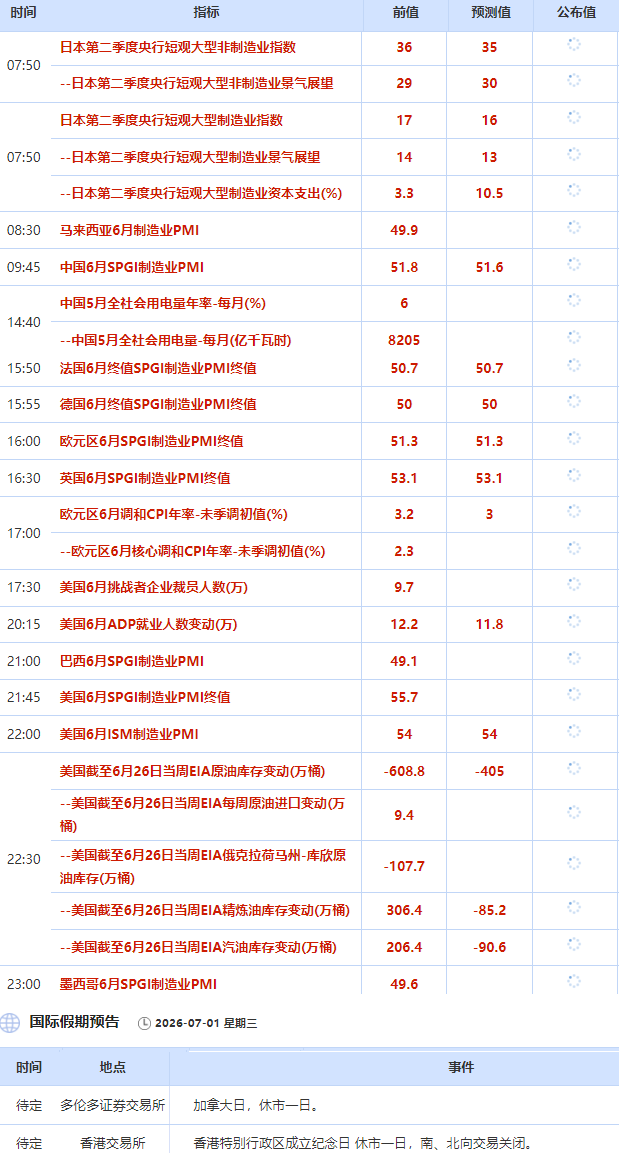
U.S. stocks performed strongly in the second quarter of 2026, with the S&P 500 and Nasdaq both posting their biggest quarterly gains since 2020, rising 14.9% and 21.4% respectively. The Dow Jones Industrial Average also recorded its best quarterly performance since 2022, rising about 13%. Despite the ongoing conflict in the Middle East and the weekend clashes between the U.S. and Iran posing a challenge to the newly signed ceasefire memorandum, investor optimism about economic growth and corporate earnings prevailed.
Technology stocks led the gains, with the semiconductor index closing 3.9% higher on Tuesday. The S&P 500 and Nasdaq indexes rose 0.79% and 1.52% respectively, while the Dow Jones Industrial Average hit a record closing high for the second consecutive day.
Markets are anticipating second-quarter earnings reports in the coming weeks, while strong first-quarter results and hopes for a lasting ceasefire in the Iranian conflict have boosted risk appetite. However, the initial rise in oil prices has exacerbated concerns about inflation and interest rate hikes, with traders expecting the Federal Reserve to raise rates at least once before the end of 2026.
The recent weakness in tech stocks has dragged down the market, with both major indices recording monthly declines in June. Investors are concerned about the high valuations of tech stocks and the continued large-scale investment in the AI field. Bank of America strategists suggest focusing on cyclical value sectors such as energy and finance in the second half of the year.
Gold prices fell on Tuesday, narrowly missing the $4,000/ounce mark, hitting their lowest level since November last year. The price fell 11.2% in June, marking the largest quarterly decline since 2013 and the first quarterly drop since 2024. This was mainly due to inflation concerns stemming from the Middle East conflict reinforcing market expectations of further interest rate hikes by the Federal Reserve, and the uncertainty surrounding the US-Iran ceasefire agreement due to Qatar's diplomatic efforts—the US senior envoy did not hold a high-level meeting with Iran.
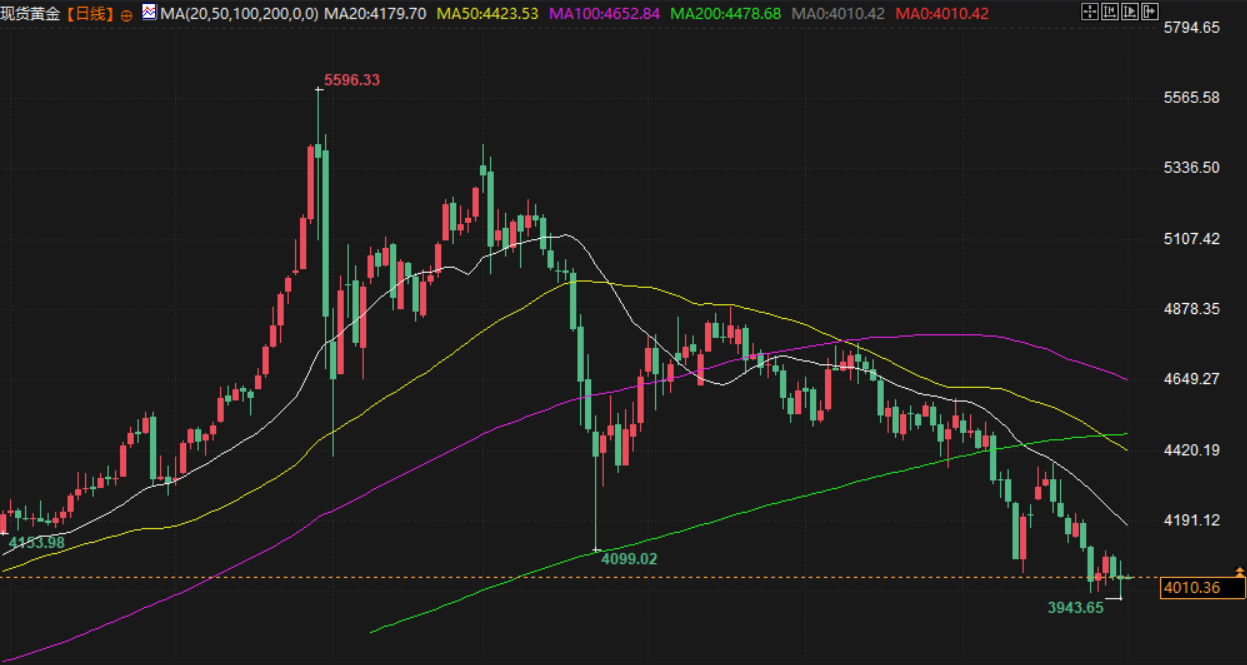
Meanwhile, US inflation data remains well above the 2% target, and traders expect a 67% probability of a rate hike in September. The ADP and non-farm payroll data later this week will provide further guidance. Although gold prices are under short-term pressure, a survey by the Official Monetary and Financial Institutions Forum (OMFIF) shows that central banks may reduce their dollar exposure and increase their gold holdings over the next decade due to geopolitical concerns. Silver, platinum, and palladium also recorded monthly and quarterly declines.
Oil prices were little volatile on Tuesday, with WTI crude trading around $70 a barrel. However, Brent and WTI crude recorded their largest monthly and quarterly declines since the COVID-19 pandemic began in 2020 (Brent crude fell 19.94% in June) and quarterly declines, respectively (Brent crude plunged 28.99% in the second quarter). This decline in oil prices was mainly due to market uncertainty regarding the prospects of the US-Iran Doha talks. Qatari officials stated that the senior US envoy would not hold a high-level meeting with Iran, and that only technical consultations would take place this week, with the possibility of escalation later. Meanwhile, the temporary increase in supply as some ships resumed passage through the Strait of Hormuz eased the risk premium.
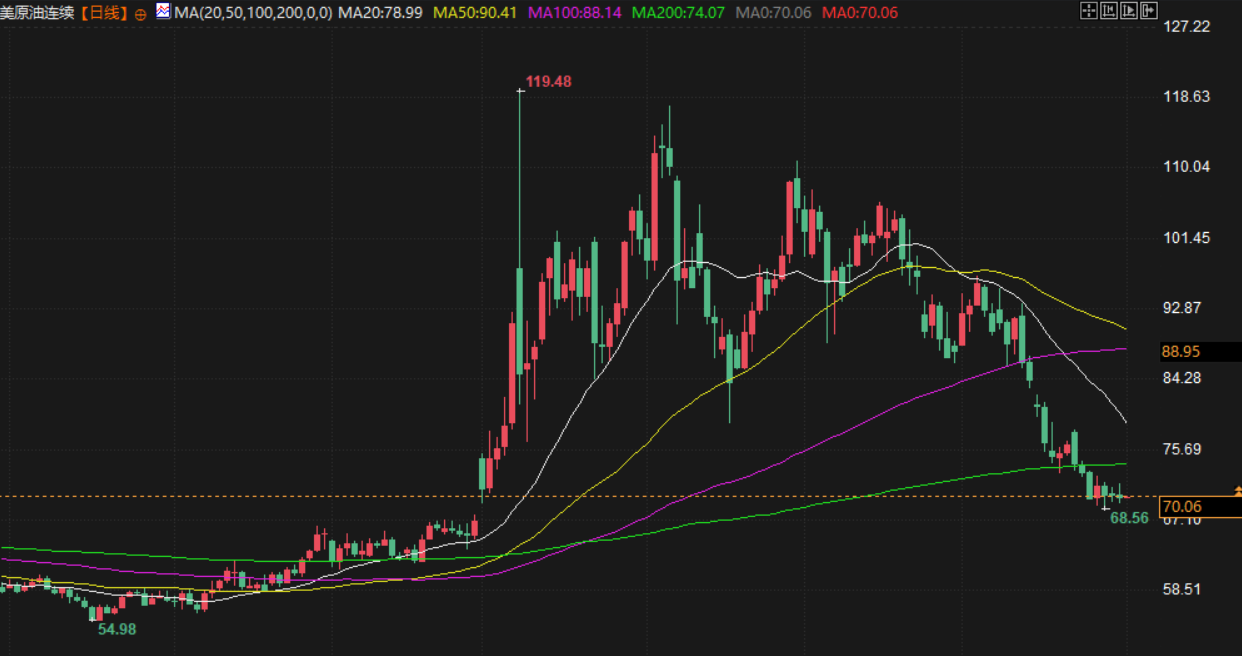
UBS analysts pointed out that the risk premium has not been completely eliminated, while Morgan Stanley's model shows that the global oil market will have an implied surplus of 4.8 million barrels per day in 2027. Both major crude oil benchmarks have been in technically oversold territory for several consecutive days (Brent crude for 13 days and WTI crude for 11 days). In addition, U.S. crude oil production hit a record high of 13.93 million barrels per day in April, further suppressing prices. API data showed that crude oil inventories fell by more than 6 million barrels, and the market is awaiting EIA weekly inventory data. Analysts expect U.S. crude oil inventories to have decreased by 4.5 million barrels last week.
The dollar strengthened on Tuesday, pushing the yen to its lowest level since 1986. The dollar rose as high as 162.66 against the yen, marking its fourth consecutive quarterly gain and the longest winning streak in four years. This was mainly due to the market increasingly pricing in expectations of a Federal Reserve rate hike – federal funds futures indicate a probability of about 65% for a rate hike in September. Furthermore, the strong performance of the US economy and inflation well above target, coupled with the fact that Japanese interest rates remain far lower than those in the US, resulting in a significant yield gap, continue to benefit the dollar and sustain carry trades.
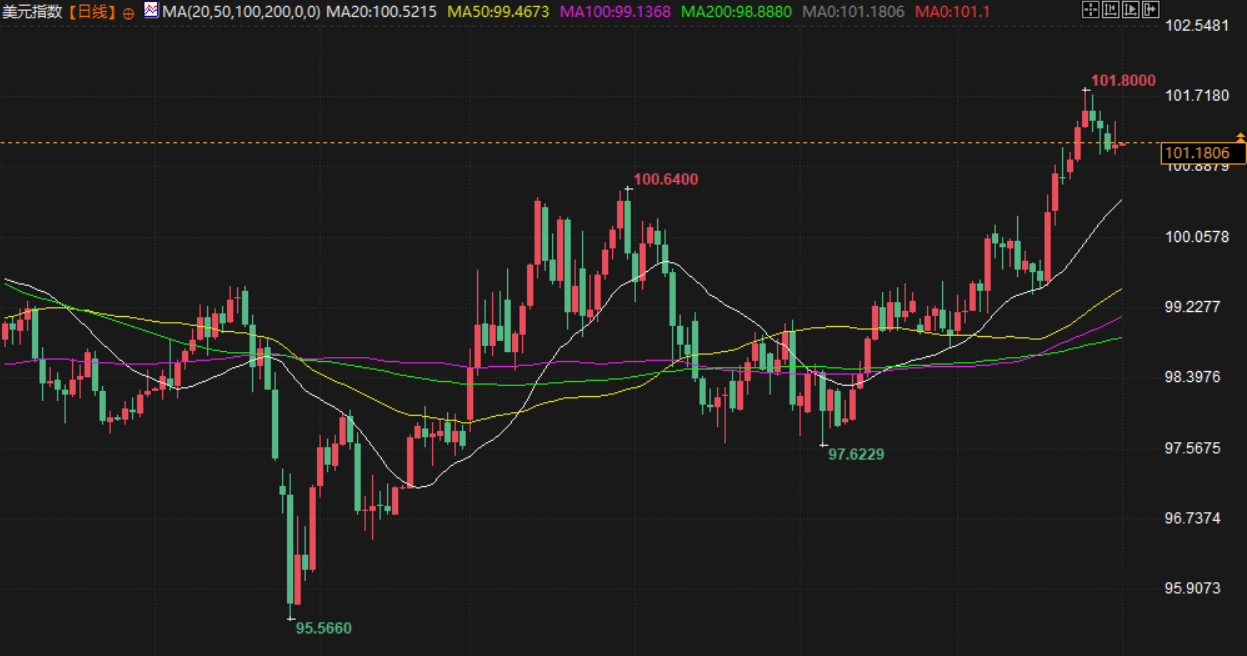
Japanese Finance Minister Satsuki Katayama reiterated Japan's readiness to respond at any time but did not use stronger language. Previously, the authorities had intervened with 11.7 trillion yen in April and May, but the effect gradually weakened. Analysts believe that Japan may intervene again but will be more hesitant. Currently, the yen is only weakening against the US dollar, while the euro against the yen is still below its April high.
The dollar index traded at 101.19, up 1.29% in the second quarter, while the euro edged up to $1.1422 but was not far from a one-year low, as it digested the impact of lower inflation data from France, Italy and Germany.
The market is awaiting the US June jobs report on Thursday (expected to show 110,000 new jobs and an unemployment rate of 4.3%), while most US markets will be closed on Friday for Independence Day. Reduced liquidity may provide an opportunity to disrupt speculative short positions. Morgan Stanley, however, believes that the market's expectations for the Federal Reserve are too aggressive and expects US inflation to be lower than official forecasts, thus reducing the likelihood of interest rate hikes.
The Washington Post: Iran uses the Strait of Hormuz to seize the initiative in negotiations, leading to a strategic stalemate in US-Iran peace talks.
While limited airstrikes occurred between the US and Iran over the weekend, both sides deliberately avoided escalating the conflict, indicating their continued willingness to maintain diplomatic channels. However, with nearly two weeks of the 60-day window for nuclear talks closed, Iranian hardliners have consistently refused to make substantial concessions on key issues, even refusing face-to-face talks with the US. Tuesday's talks in Qatar could only be conducted indirectly through mediators. Iran's biggest bargaining chip in this conflict is not a breakthrough in nuclear technology, but rather its de facto control of the Strait of Hormuz. Through mines and low-cost drones, Iran has successfully intercepted 20% of global oil shipments, transforming this once theoretical threat into a real strategic lever. Last week, Iran attacked a cargo ship under the pretext of "using an unauthorized route," followed by mutual airstrikes between the US and Iran, further highlighting the vulnerability of this waterway. The Trump administration faces dual pressures: on the one hand, the White House press secretary stated that "violence will be met with violence," emphasizing that the US will continue to seek diplomatic solutions; on the other hand, Trump is increasingly dissatisfied with high gasoline prices, publicly complaining on Monday that while oil prices have fallen to $69 per barrel, retail prices have not followed suit, and urging retailers to lower prices to around $2.50 per gallon as soon as possible. Energy analysts point out that this goal is unlikely to be achieved in the short term due to refineries shifting to producing aviation fuel to fill supply gaps in Europe, leading to a decline in diesel and gasoline production capacity. Currently, the two sides are engaged in a game over the Strait of Hormuz "service fees." According to the agreement, Iran will guarantee free passage through the Strait for 60 days and negotiate with Oman on "future administration and maritime services." Oman opposes charging "fees" but has not ruled out the possibility of establishing a "voluntary" fund. This week's Doha talks are likely to focus on the situation in the Strait, the nuclear program, and the unfreezing process for the first batch of $6 billion in frozen assets.
Oman has proposed that Tehran and Muscat charge tolls for ships passing through the Strait of Hormuz.
Oman has submitted a formal proposal to the United States and other Western allies, requiring shipping companies to pay service fees in exchange for passage through the Strait of Hormuz. A source familiar with the US position revealed that Washington has received the proposal and plans to communicate its concerns to Omani officials. The proposal partially draws on the management model of the Strait of Malacca-Singapore, where navigation safety is ensured through voluntary donations from ships. A regional diplomat stated that payments related to the Strait of Hormuz would be voluntary, but an Iranian official indicated that the fee would be mandatory.
Internal divisions within Iran have plunged US-Iran peace talks into crisis.
An internal division between moderates and hardliners in Iran over the Strait of Hormuz has stalled US-Iran negotiations, casting uncertainty over a peace agreement. Several officials familiar with the negotiations revealed that power struggles within Tehran are hindering the peace process: the civilian leadership is keen to unfreeze billions of dollars in frozen overseas assets, while hardline military officials are determined to maintain control of the Strait of Hormuz. The civilian government, led by President Masoud Pezehikyan, hopes to unfreeze massive amounts of frozen funds to alleviate the economic burden on millions of Iranians. The economic shocks left by war and the devastating damage to the oil industry have made life extremely difficult for the country. However, the Islamic Revolutionary Guard Corps (IRGC), which now controls the situation in Iran, has other plans. The IRGC is determined to gain complete control of this vital waterway at all costs and plans to establish a high-fee passage mechanism to bolster its military finances and thereby control the security landscape of the entire Middle East. There are already indications that, in order to achieve this goal, the Revolutionary Guard is willing to forgo the opportunity to unfreeze Qatari assets and has repeatedly attacked ships that pass through Omani waters and rely on US shipping lanes to sail out of the Persian Gulf, avoiding shipping routes along the Iranian mainland coast.
Russia has ordered the temporary closure of several railway border crossings connecting Finland and two other countries.
The Russian government ordered the temporary closure of several railway border crossings with Latvia, Finland, and Estonia, effective July 1. The relevant documents were published on the Russian official legal documents website that day. According to Russian media reports, the government's decision to temporarily close the St. Petersburg-Finland and Vyborg railway crossings, as well as three other railway crossings along the Russian-Finnish border, will take effect on July 1. Also temporarily closed are one railway crossing on the Russian-Estonian border and one on the Russian-Latvian border. According to the Russian decision, the passage of people, vehicles, goods, and cargo will be suspended at these border crossings starting July 1. However, the Russian government did not specify the reasons for the closures. (Xinhua)
U.S. oil production and exports hit record highs in April.
U.S. oil production and exports both hit record highs in April. Global buyers turned to U.S. oil as the war with Iran disrupted shipping in the Persian Gulf. Since the start of the war, hundreds of millions of barrels of U.S. crude and fuel have been shipped from ports in Texas and Louisiana, with the worst energy supply disruption in history forcing European and Asian buyers to scramble to purchase supplies. Data released Tuesday by the U.S. Department of Energy reflects this boom in the U.S. oil industry. According to the Energy Information Administration, U.S. onshore pumping units and offshore drilling rigs produced 13.93 million barrels per day in April, a record monthly output. U.S. oil exports reached a record 13.6 million barrels per day in April, an increase of 2.3 million barrels per day from February before the war began.
Iranian Parliament Speaker: The purpose of the current talks in Iran is to fulfill the commitments set forth in the memorandum of understanding.
Iranian Parliament Speaker Mohammad Ghalibaf stated that the current talks in Iran aim to fulfill the commitments outlined in the Memorandum of Understanding (MOU), including discussions on the implementation of Article 13. Ghalibaf said, "The Pakistani Prime Minister's announcement of a ceasefire and Trump's statement that the US has lifted the naval blockade are significant achievements of this MOU." He added, "We are following up on the consultation process to ensure the implementation of Article 13." Ghalibaf further added, "Differences will inevitably arise between the two sides in the process of implementing the ceasefire arrangements." Article 13 of the MOU stipulates that after the signing of this MOU, and provided that the measures outlined in Sections 1, 4, 5, 10, and 11 of the MOU are initiated and continuously advanced, the US and Iran may begin final agreement negotiations focusing solely on the remaining clauses.
OpenAI has developed a new solution that can halve inference costs.
According to a source familiar with the discussions, there's a previously undisclosed piece of information: earlier this month, OpenAI engineers told some colleagues that, using several newly developed optimization techniques, they had found a solution that could reduce model inference costs by more than half. After applying this new technology to scenarios where ChatGPT was used by guests without free/paid accounts, the engineers reduced the required number of NVIDIA graphics processing units (GPUs) to just a few hundred—a shockingly low number. The specific techniques OpenAI used to achieve this significant increase in computational efficiency are currently unclear. Common industry optimization methods generally include: quantization compression, key-value caching, batch processing of user queries instead of individual computation, and offloading some requests to lower-power, lightweight models or model fragments for response.
The probability of a Federal Reserve rate hike in July is 33.7%, in September it is 66.9%, and in December it is 82.7%.
According to CME's "FedWatch": The probability of the Federal Reserve keeping interest rates unchanged in July is 66.3%, and the probability of a cumulative 25 basis point rate hike is 33.7%. The probability of the Fed keeping interest rates unchanged by September is 33.1%, the probability of a cumulative 25 basis point rate hike is 50.0%, and the probability of a cumulative 50 basis point rate hike is 16.9%. The probability of the Fed keeping interest rates unchanged by December is 17.3%, the probability of a cumulative 25 basis point rate hike is 39.6%, and the probability of at least a 50 basis point rate hike is 43.1%.
Hefei's artificial sun sets a record of 100 million degrees per kilosecond.
Anhui's Hefei Science Island boasts the most concentrated cluster of large-scale scientific facilities in China, including the EAST controlled nuclear fusion experimental device, known as the "artificial sun," which currently holds the world record for "100 million degrees Celsius per kilosecond." Cao Hongrui, head of the diagnostic system for the EAST device, stated that fusion devices, including EAST, are not just conducting experiments; every aspect of their technology is continuously being transformed into practical commercial applications, supporting the fusion industry chain of nearly 100 upstream and downstream companies in the surrounding area. In Zhangjiang Robotics Valley, the area with the highest concentration of embodied intelligent enterprises in Shanghai, nearly 100 companies across the entire industry chain are located. Most aspects of building a robot can be found here, and extending another 150 kilometers outwards, the entire upstream, midstream, and downstream supply chain for embodied robots can be completed. (CCTV Finance)
Key Focus Today
stock market
U.S. stocks performed strongly in the second quarter of 2026, with the S&P 500 and Nasdaq both posting their biggest quarterly gains since 2020, rising 14.9% and 21.4% respectively. The Dow Jones Industrial Average also recorded its best quarterly performance since 2022, rising about 13%. Despite the ongoing conflict in the Middle East and the weekend clashes between the U.S. and Iran posing a challenge to the newly signed ceasefire memorandum, investor optimism about economic growth and corporate earnings prevailed.
Technology stocks led the gains, with the semiconductor index closing 3.9% higher on Tuesday. The S&P 500 and Nasdaq indexes rose 0.79% and 1.52% respectively, while the Dow Jones Industrial Average hit a record closing high for the second consecutive day.
Markets are anticipating second-quarter earnings reports in the coming weeks, while strong first-quarter results and hopes for a lasting ceasefire in the Iranian conflict have boosted risk appetite. However, the initial rise in oil prices has exacerbated concerns about inflation and interest rate hikes, with traders expecting the Federal Reserve to raise rates at least once before the end of 2026.
The recent weakness in tech stocks has dragged down the market, with both major indices recording monthly declines in June. Investors are concerned about the high valuations of tech stocks and the continued large-scale investment in the AI field. Bank of America strategists suggest focusing on cyclical value sectors such as energy and finance in the second half of the year.
Gold Market
Gold prices fell on Tuesday, narrowly missing the $4,000/ounce mark, hitting their lowest level since November last year. The price fell 11.2% in June, marking the largest quarterly decline since 2013 and the first quarterly drop since 2024. This was mainly due to inflation concerns stemming from the Middle East conflict reinforcing market expectations of further interest rate hikes by the Federal Reserve, and the uncertainty surrounding the US-Iran ceasefire agreement due to Qatar's diplomatic efforts—the US senior envoy did not hold a high-level meeting with Iran.
Meanwhile, US inflation data remains well above the 2% target, and traders expect a 67% probability of a rate hike in September. The ADP and non-farm payroll data later this week will provide further guidance. Although gold prices are under short-term pressure, a survey by the Official Monetary and Financial Institutions Forum (OMFIF) shows that central banks may reduce their dollar exposure and increase their gold holdings over the next decade due to geopolitical concerns. Silver, platinum, and palladium also recorded monthly and quarterly declines.
oil market
Oil prices were little volatile on Tuesday, with WTI crude trading around $70 a barrel. However, Brent and WTI crude recorded their largest monthly and quarterly declines since the COVID-19 pandemic began in 2020 (Brent crude fell 19.94% in June) and quarterly declines, respectively (Brent crude plunged 28.99% in the second quarter). This decline in oil prices was mainly due to market uncertainty regarding the prospects of the US-Iran Doha talks. Qatari officials stated that the senior US envoy would not hold a high-level meeting with Iran, and that only technical consultations would take place this week, with the possibility of escalation later. Meanwhile, the temporary increase in supply as some ships resumed passage through the Strait of Hormuz eased the risk premium.
UBS analysts pointed out that the risk premium has not been completely eliminated, while Morgan Stanley's model shows that the global oil market will have an implied surplus of 4.8 million barrels per day in 2027. Both major crude oil benchmarks have been in technically oversold territory for several consecutive days (Brent crude for 13 days and WTI crude for 11 days). In addition, U.S. crude oil production hit a record high of 13.93 million barrels per day in April, further suppressing prices. API data showed that crude oil inventories fell by more than 6 million barrels, and the market is awaiting EIA weekly inventory data. Analysts expect U.S. crude oil inventories to have decreased by 4.5 million barrels last week.
Foreign exchange market
The dollar strengthened on Tuesday, pushing the yen to its lowest level since 1986. The dollar rose as high as 162.66 against the yen, marking its fourth consecutive quarterly gain and the longest winning streak in four years. This was mainly due to the market increasingly pricing in expectations of a Federal Reserve rate hike – federal funds futures indicate a probability of about 65% for a rate hike in September. Furthermore, the strong performance of the US economy and inflation well above target, coupled with the fact that Japanese interest rates remain far lower than those in the US, resulting in a significant yield gap, continue to benefit the dollar and sustain carry trades.
Japanese Finance Minister Satsuki Katayama reiterated Japan's readiness to respond at any time but did not use stronger language. Previously, the authorities had intervened with 11.7 trillion yen in April and May, but the effect gradually weakened. Analysts believe that Japan may intervene again but will be more hesitant. Currently, the yen is only weakening against the US dollar, while the euro against the yen is still below its April high.
The dollar index traded at 101.19, up 1.29% in the second quarter, while the euro edged up to $1.1422 but was not far from a one-year low, as it digested the impact of lower inflation data from France, Italy and Germany.
The market is awaiting the US June jobs report on Thursday (expected to show 110,000 new jobs and an unemployment rate of 4.3%), while most US markets will be closed on Friday for Independence Day. Reduced liquidity may provide an opportunity to disrupt speculative short positions. Morgan Stanley, however, believes that the market's expectations for the Federal Reserve are too aggressive and expects US inflation to be lower than official forecasts, thus reducing the likelihood of interest rate hikes.
International News
The Washington Post: Iran uses the Strait of Hormuz to seize the initiative in negotiations, leading to a strategic stalemate in US-Iran peace talks.
While limited airstrikes occurred between the US and Iran over the weekend, both sides deliberately avoided escalating the conflict, indicating their continued willingness to maintain diplomatic channels. However, with nearly two weeks of the 60-day window for nuclear talks closed, Iranian hardliners have consistently refused to make substantial concessions on key issues, even refusing face-to-face talks with the US. Tuesday's talks in Qatar could only be conducted indirectly through mediators. Iran's biggest bargaining chip in this conflict is not a breakthrough in nuclear technology, but rather its de facto control of the Strait of Hormuz. Through mines and low-cost drones, Iran has successfully intercepted 20% of global oil shipments, transforming this once theoretical threat into a real strategic lever. Last week, Iran attacked a cargo ship under the pretext of "using an unauthorized route," followed by mutual airstrikes between the US and Iran, further highlighting the vulnerability of this waterway. The Trump administration faces dual pressures: on the one hand, the White House press secretary stated that "violence will be met with violence," emphasizing that the US will continue to seek diplomatic solutions; on the other hand, Trump is increasingly dissatisfied with high gasoline prices, publicly complaining on Monday that while oil prices have fallen to $69 per barrel, retail prices have not followed suit, and urging retailers to lower prices to around $2.50 per gallon as soon as possible. Energy analysts point out that this goal is unlikely to be achieved in the short term due to refineries shifting to producing aviation fuel to fill supply gaps in Europe, leading to a decline in diesel and gasoline production capacity. Currently, the two sides are engaged in a game over the Strait of Hormuz "service fees." According to the agreement, Iran will guarantee free passage through the Strait for 60 days and negotiate with Oman on "future administration and maritime services." Oman opposes charging "fees" but has not ruled out the possibility of establishing a "voluntary" fund. This week's Doha talks are likely to focus on the situation in the Strait, the nuclear program, and the unfreezing process for the first batch of $6 billion in frozen assets.
Oman has proposed that Tehran and Muscat charge tolls for ships passing through the Strait of Hormuz.
Oman has submitted a formal proposal to the United States and other Western allies, requiring shipping companies to pay service fees in exchange for passage through the Strait of Hormuz. A source familiar with the US position revealed that Washington has received the proposal and plans to communicate its concerns to Omani officials. The proposal partially draws on the management model of the Strait of Malacca-Singapore, where navigation safety is ensured through voluntary donations from ships. A regional diplomat stated that payments related to the Strait of Hormuz would be voluntary, but an Iranian official indicated that the fee would be mandatory.
Internal divisions within Iran have plunged US-Iran peace talks into crisis.
An internal division between moderates and hardliners in Iran over the Strait of Hormuz has stalled US-Iran negotiations, casting uncertainty over a peace agreement. Several officials familiar with the negotiations revealed that power struggles within Tehran are hindering the peace process: the civilian leadership is keen to unfreeze billions of dollars in frozen overseas assets, while hardline military officials are determined to maintain control of the Strait of Hormuz. The civilian government, led by President Masoud Pezehikyan, hopes to unfreeze massive amounts of frozen funds to alleviate the economic burden on millions of Iranians. The economic shocks left by war and the devastating damage to the oil industry have made life extremely difficult for the country. However, the Islamic Revolutionary Guard Corps (IRGC), which now controls the situation in Iran, has other plans. The IRGC is determined to gain complete control of this vital waterway at all costs and plans to establish a high-fee passage mechanism to bolster its military finances and thereby control the security landscape of the entire Middle East. There are already indications that, in order to achieve this goal, the Revolutionary Guard is willing to forgo the opportunity to unfreeze Qatari assets and has repeatedly attacked ships that pass through Omani waters and rely on US shipping lanes to sail out of the Persian Gulf, avoiding shipping routes along the Iranian mainland coast.
Russia has ordered the temporary closure of several railway border crossings connecting Finland and two other countries.
The Russian government ordered the temporary closure of several railway border crossings with Latvia, Finland, and Estonia, effective July 1. The relevant documents were published on the Russian official legal documents website that day. According to Russian media reports, the government's decision to temporarily close the St. Petersburg-Finland and Vyborg railway crossings, as well as three other railway crossings along the Russian-Finnish border, will take effect on July 1. Also temporarily closed are one railway crossing on the Russian-Estonian border and one on the Russian-Latvian border. According to the Russian decision, the passage of people, vehicles, goods, and cargo will be suspended at these border crossings starting July 1. However, the Russian government did not specify the reasons for the closures. (Xinhua)
U.S. oil production and exports hit record highs in April.
U.S. oil production and exports both hit record highs in April. Global buyers turned to U.S. oil as the war with Iran disrupted shipping in the Persian Gulf. Since the start of the war, hundreds of millions of barrels of U.S. crude and fuel have been shipped from ports in Texas and Louisiana, with the worst energy supply disruption in history forcing European and Asian buyers to scramble to purchase supplies. Data released Tuesday by the U.S. Department of Energy reflects this boom in the U.S. oil industry. According to the Energy Information Administration, U.S. onshore pumping units and offshore drilling rigs produced 13.93 million barrels per day in April, a record monthly output. U.S. oil exports reached a record 13.6 million barrels per day in April, an increase of 2.3 million barrels per day from February before the war began.
Iranian Parliament Speaker: The purpose of the current talks in Iran is to fulfill the commitments set forth in the memorandum of understanding.
Iranian Parliament Speaker Mohammad Ghalibaf stated that the current talks in Iran aim to fulfill the commitments outlined in the Memorandum of Understanding (MOU), including discussions on the implementation of Article 13. Ghalibaf said, "The Pakistani Prime Minister's announcement of a ceasefire and Trump's statement that the US has lifted the naval blockade are significant achievements of this MOU." He added, "We are following up on the consultation process to ensure the implementation of Article 13." Ghalibaf further added, "Differences will inevitably arise between the two sides in the process of implementing the ceasefire arrangements." Article 13 of the MOU stipulates that after the signing of this MOU, and provided that the measures outlined in Sections 1, 4, 5, 10, and 11 of the MOU are initiated and continuously advanced, the US and Iran may begin final agreement negotiations focusing solely on the remaining clauses.
OpenAI has developed a new solution that can halve inference costs.
According to a source familiar with the discussions, there's a previously undisclosed piece of information: earlier this month, OpenAI engineers told some colleagues that, using several newly developed optimization techniques, they had found a solution that could reduce model inference costs by more than half. After applying this new technology to scenarios where ChatGPT was used by guests without free/paid accounts, the engineers reduced the required number of NVIDIA graphics processing units (GPUs) to just a few hundred—a shockingly low number. The specific techniques OpenAI used to achieve this significant increase in computational efficiency are currently unclear. Common industry optimization methods generally include: quantization compression, key-value caching, batch processing of user queries instead of individual computation, and offloading some requests to lower-power, lightweight models or model fragments for response.
The probability of a Federal Reserve rate hike in July is 33.7%, in September it is 66.9%, and in December it is 82.7%.
According to CME's "FedWatch": The probability of the Federal Reserve keeping interest rates unchanged in July is 66.3%, and the probability of a cumulative 25 basis point rate hike is 33.7%. The probability of the Fed keeping interest rates unchanged by September is 33.1%, the probability of a cumulative 25 basis point rate hike is 50.0%, and the probability of a cumulative 50 basis point rate hike is 16.9%. The probability of the Fed keeping interest rates unchanged by December is 17.3%, the probability of a cumulative 25 basis point rate hike is 39.6%, and the probability of at least a 50 basis point rate hike is 43.1%.
Domestic News
Hefei's artificial sun sets a record of 100 million degrees per kilosecond.
Anhui's Hefei Science Island boasts the most concentrated cluster of large-scale scientific facilities in China, including the EAST controlled nuclear fusion experimental device, known as the "artificial sun," which currently holds the world record for "100 million degrees Celsius per kilosecond." Cao Hongrui, head of the diagnostic system for the EAST device, stated that fusion devices, including EAST, are not just conducting experiments; every aspect of their technology is continuously being transformed into practical commercial applications, supporting the fusion industry chain of nearly 100 upstream and downstream companies in the surrounding area. In Zhangjiang Robotics Valley, the area with the highest concentration of embodied intelligent enterprises in Shanghai, nearly 100 companies across the entire industry chain are located. Most aspects of building a robot can be found here, and extending another 150 kilometers outwards, the entire upstream, midstream, and downstream supply chain for embodied robots can be completed. (CCTV Finance)
- Risk Warning and Disclaimer
- The market involves risk, and trading may not be suitable for all investors. This article is for reference only and does not constitute personal investment advice, nor does it take into account certain users’ specific investment objectives, financial situation, or other needs. Any investment decisions made based on this information are at your own risk.