A senior Federal Reserve official issued a hawkish statement: Inflation has been raging for five years, and the door to interest rate hikes remains open.
2026-07-01 09:42:30
Amidst ongoing speculation in financial markets about a shift in US monetary policy, Cleveland Federal Reserve President Loretta Hammark delivered a clear hawkish signal in an interview on Tuesday. As a key voting member of the Federal Open Market Committee (FOMC) this year, Hammark bluntly stated that US inflation is not only far above target but has also remained stubbornly high for five consecutive years. She emphasized that if subsequent data fails to demonstrate a substantial easing of price pressures, she personally would not rule out the possibility of further interest rate hikes.
This statement immediately drew market attention, as earlier this month, the first interest rate decision chaired by the new Federal Reserve Chairman Warsh decided to maintain the benchmark interest rate at 3.5% to 3.75%. While the forecast materials released at the time indicated that officials expected rate hikes this year, the policy statement unusually removed forward guidance. Hammark's interview marks the first public appearance of a voting official after this delicate turning point, and his forceful wording and open attitude have added new uncertainty to the future path of monetary policy.
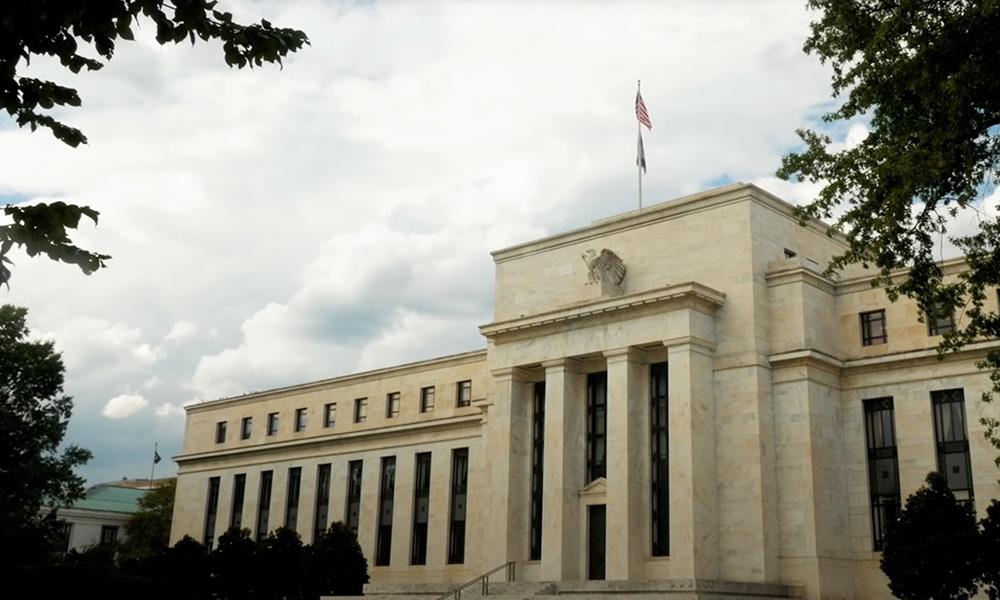
In the interview, Hammark described the severity of the current inflation situation in rather blunt language. She pointed out that the price pressures facing the US economy are not a short-term disturbance, but have persisted for a full five years and remain persistently high. This long-term inflation pattern has exceeded the "temporary" scope initially expected by many economists, evolving into a structural problem deeply embedded in the economy. From the Consumer Price Index to the Personal Consumption Expenditures Deflator, many key inflation indicators have consistently and significantly exceeded the Federal Reserve's 2% long-term target, and the recent rate of decline has slowed significantly, even showing fluctuations in some specific areas.
Hammark expressed clear concern, arguing that if this sticky inflation trend cannot be effectively reversed, then from the perspective of monetary policy responsibilities, the Federal Open Market Committee will have to consider taking more forceful tightening action—namely, raising the target range for the policy rate—to re-anchor inflation expectations and ensure that the statutory mandate of price stability is not lost.
When pressed by the moderator about the specific conditions under which an interest rate hike decision would be triggered, Hammark displayed an extremely cautious yet open attitude. She explicitly refused to provide any quantitative thresholds or timelines, repeatedly emphasizing that every FOMC meeting is a "real-time decision-making" occasion, without any mechanical rules or predetermined trajectories.
She explained her decision-making philosophy in detail: before each meeting, she reviews all the latest economic data from a fresh perspective, including but not limited to employment reports, consumer spending, wage growth, energy price fluctuations, and financial market conditions, and then makes the most appropriate judgment based on this real-time information. She frankly stated that the answer to whether or not to raise interest rates cannot be given in advance, because the economic outlook itself is full of variables. External factors such as geopolitical shocks, changes in fiscal policy, and adjustments in global supply chains can all change the direction of interest rates at any time. Therefore, she deliberately maintains sufficient flexibility in policy choices, neither ruling out interest rate hikes nor implying that they are inevitable; everything is based on data.
In the interview, Hammark devoted considerable time to elaborating on her unique understanding of the art of central bank communication. She stated that while she personally prefers not to offer specific point predictions or directional guidance on the future path of interest rates, this does not mean she endorses vague or ambiguous messaging. On the contrary, she believes it is crucial to clearly explain to the public and markets her own "reaction function"—the underlying logic and weighting of how she responds to different economic variables through policy.
This transparency of the reaction function allows investors, businesses, and households to anticipate potential policy shifts under different economic scenarios without relying on official forecasts, thus enabling them to make more rational financial and operational decisions. Her words subtly reflected a departure from her predecessor's management style, while also echoing the philosophy advocated by the new chairman, Warsh: forward guidance often leads the market to over-focus on the Fed's "standard answers," thereby suppressing the market's own ability to price information and digest risk. Hammark believes that a responsible central bank official's duty is not to "guide" the market, but to ensure the market clearly understands the operating principles of the "compass."
When discussing the overall health of the US economy, Hammark offered a relatively positive assessment. She pointed out that economic activity is performing well, and there are no signs of recession as previously feared by the market.
Regarding the labor market, she clearly judged that the United States is at full employment—the unemployment rate remains at a historical low, wage growth has slowed slightly but is still positive, and the ratio of job vacancies to job seekers is roughly balanced.
Of particular note is her rather optimistic view of the resilience of the household sector. Despite the ongoing conflict in the Middle East, which caused international crude oil prices to surge and domestic gasoline prices in the United States to rise significantly, American households have so far absorbed this shock relatively smoothly by adjusting their consumption patterns, using savings as a buffer, or increasing working hours. There have been no signs of a sharp contraction in consumer spending or a dramatic increase in default rates.
Furthermore, Hammark noted that she did not hear widespread complaints about financing difficulties in her conversations with entrepreneurs, and that interest rates and credit spreads are not currently seen by businesses as major obstacles to investment, production expansion, or business development. In other words, the economic fundamentals provide the Federal Reserve with ample policy maneuvering space, and it need not be constrained by excessive concerns about harming growth.
By summarizing the core messages from Hammark's entire interview, we can clearly outline her current monetary policy stance: on the surface, she maintained an open mind and a data-dependent attitude, refusing to make any commitment to a timeframe for interest rate hikes; but upon closer examination of her wording, it is not difficult to discern that her anxiety about persistently high inflation far outweighs her concerns about an economic downturn.
She specifically emphasized the option of "potentially raising interest rates" and cited full employment and household resilience as a "safety net" for tightening policy, effectively sending a clear warning to the market—the trigger for raising interest rates is not rusty, and she will not hesitate to pull the trigger if subsequent inflation readings exceed expectations again.
For investors, Hammark's remarks mean that the June interest rate pause should not be interpreted as the end of the tightening cycle, and every future inflation report could reignite expectations of rate hikes. For the Federal Reserve internally, her statement also reflects that under the new framework of "less guidance, more data" led by new Chairman Warsh, the individual judgments of each voting member will be given increasing importance, and policy disagreements may be more pronounced than before. In short, the five-year itch of inflation may still need to be addressed with the sword of interest rates.
Question 1: What exactly does Harmack mean by "reaction function"? Why does she think it's more important to disclose this than to provide interest rate forecasts?
A: "Reaction function" is a term commonly used by central bank officials. It refers to the systematic logic and rules by which policymakers adjust policies based on changes in economic data. In other words, it describes the extent and speed at which policy interest rates will respond to different variables such as inflation rates, unemployment rates, and GDP growth rates. Hammark emphasizes publishing the reaction function, rather than directly providing interest rate dot plots or directional guidance, because she agrees with the new chairman Warsh's philosophy: forward guidance can easily lead to "policy dependence" in the market, meaning investors no longer independently analyze economic fundamentals but instead focus on guessing the Fed's "standard answer." Once market pricing is overly anchored to official forecasts, asset prices may experience sharp corrections when actual data deviates from forecasts, increasing the risk of financial instability. However, once the reaction function is fully understood by the market, regardless of future data changes, the market can autonomously deduce policy direction, making the pricing process more continuous and rational.
Question 2: Since the Federal Reserve just kept interest rates unchanged in June, why is Hammark bringing up rate hikes again? Does this mean that there will be a rate hike at the July meeting?
A: The decision to keep interest rates unchanged in June was based on economic data available up to that meeting—inflation, while sticky, had not deteriorated sharply, and the committee wanted to observe the lagged effects of previous tightening policies. However, Harmark's reiteration of the rate hike in an interview on July 1st was not an indication that action would inevitably be taken at the July meeting, but rather a clear "risk warning" to the market: if future inflation data—including CPI, PCE, and sub-items such as wages and housing costs—show signs of renewed upward movement or a stalled decline, then she personally believed it would be necessary to initiate a rate hike. She deliberately refused to set any time threshold to preserve the space for a complete assessment of subsequent data. Therefore, whether or not a rate hike will occur in July depends entirely on the economic data released in June and July; no one can predict this in advance.
Question 3: Harmack said that "inflation has remained high for five years." Does this match official statistics? What is the starting point for the five-year period?
A: Hammark's "five years" is a rough timeframe, roughly corresponding to the beginning of 2021, after the US economy reopened from pandemic lockdowns, with fiscal stimulus coupled with supply chain bottlenecks triggering the first significant surge in inflation. In March 2021, the US CPI year-on-year growth rate first exceeded the 2% target, and continued to climb, reaching a peak of 9.1% in June 2022. Although it subsequently declined somewhat, the core inflation rate hovered between 3.5% and 4% for a long period, failing to stabilize and return to 2% until the first half of 2026. Therefore, from the beginning of 2021 to mid-2026, it does indeed span approximately five years. Her statement emphasizes the long-term nature of the inflation problem, which is far beyond what can be explained by "temporary" factors, and is the core argument for her maintaining an open attitude towards interest rate hikes.
Question 4: How is Chairman Walsh's decision to cancel forward guidance related to Harmack's communication style? Are their positions aligned?
A: Warsh advocated for the elimination of forward guidance, arguing that the market should price data itself, while Hammark, though not providing direct path guidance, emphasized the need to disclose the Fed's reaction function—the two are fundamentally aligned, both opposing central banks making promises of "certain future interest rate hikes or cuts." The difference lies in Warsh's focus on the efficiency of market microstructures, while Hammark supplements his argument with considerations of decision-making transparency and public understanding. Both agree that making policy more data-dependent and unpredictable effectively grants each voting member greater discretion and necessitates a more detailed analysis of each member's unique analytical framework. Therefore, their positions are not contradictory but rather complementary, constructing a new communication paradigm for the Federal Reserve.
Question 5: If Hammark advocates for raising interest rates, but the other voting members oppose it, how will the final decision be made? How much weight does her vote carry?
A: The Federal Open Market Committee (FOMC) consists of 12 voting members, including 7 Federal Reserve Governors (including the Chair), the President of the New York Fed, and 4 of the remaining 11 regional Fed presidents (who rotate annually). As President of the Cleveland Fed, Hammark has a vote this year, but she only has one of the 12 votes. Any interest rate decision requires a simple majority vote to pass. Therefore, even if Hammark supports raising rates, if a majority of voting members favor maintaining or lowering rates, the final decision will still be based on the majority opinion. However, as a senior hawkish official with voting rights, her public statements often influence market expectations and play a significant persuasive role in internal committee debates. The final decision is always the result of collective deliberation and democratic voting, not a unilateral decision by any individual.
This statement immediately drew market attention, as earlier this month, the first interest rate decision chaired by the new Federal Reserve Chairman Warsh decided to maintain the benchmark interest rate at 3.5% to 3.75%. While the forecast materials released at the time indicated that officials expected rate hikes this year, the policy statement unusually removed forward guidance. Hammark's interview marks the first public appearance of a voting official after this delicate turning point, and his forceful wording and open attitude have added new uncertainty to the future path of monetary policy.
Inflation Dilemma: Five Years of High Inflation, Slower Than Expected
In the interview, Hammark described the severity of the current inflation situation in rather blunt language. She pointed out that the price pressures facing the US economy are not a short-term disturbance, but have persisted for a full five years and remain persistently high. This long-term inflation pattern has exceeded the "temporary" scope initially expected by many economists, evolving into a structural problem deeply embedded in the economy. From the Consumer Price Index to the Personal Consumption Expenditures Deflator, many key inflation indicators have consistently and significantly exceeded the Federal Reserve's 2% long-term target, and the recent rate of decline has slowed significantly, even showing fluctuations in some specific areas.
Hammark expressed clear concern, arguing that if this sticky inflation trend cannot be effectively reversed, then from the perspective of monetary policy responsibilities, the Federal Open Market Committee will have to consider taking more forceful tightening action—namely, raising the target range for the policy rate—to re-anchor inflation expectations and ensure that the statutory mandate of price stability is not lost.
Interest rate hike threshold: No time limit or predetermined path.
When pressed by the moderator about the specific conditions under which an interest rate hike decision would be triggered, Hammark displayed an extremely cautious yet open attitude. She explicitly refused to provide any quantitative thresholds or timelines, repeatedly emphasizing that every FOMC meeting is a "real-time decision-making" occasion, without any mechanical rules or predetermined trajectories.
She explained her decision-making philosophy in detail: before each meeting, she reviews all the latest economic data from a fresh perspective, including but not limited to employment reports, consumer spending, wage growth, energy price fluctuations, and financial market conditions, and then makes the most appropriate judgment based on this real-time information. She frankly stated that the answer to whether or not to raise interest rates cannot be given in advance, because the economic outlook itself is full of variables. External factors such as geopolitical shocks, changes in fiscal policy, and adjustments in global supply chains can all change the direction of interest rates at any time. Therefore, she deliberately maintains sufficient flexibility in policy choices, neither ruling out interest rate hikes nor implying that they are inevitable; everything is based on data.
Communication Philosophy: Explain the "response function," rather than giving guidance.
In the interview, Hammark devoted considerable time to elaborating on her unique understanding of the art of central bank communication. She stated that while she personally prefers not to offer specific point predictions or directional guidance on the future path of interest rates, this does not mean she endorses vague or ambiguous messaging. On the contrary, she believes it is crucial to clearly explain to the public and markets her own "reaction function"—the underlying logic and weighting of how she responds to different economic variables through policy.
This transparency of the reaction function allows investors, businesses, and households to anticipate potential policy shifts under different economic scenarios without relying on official forecasts, thus enabling them to make more rational financial and operational decisions. Her words subtly reflected a departure from her predecessor's management style, while also echoing the philosophy advocated by the new chairman, Warsh: forward guidance often leads the market to over-focus on the Fed's "standard answers," thereby suppressing the market's own ability to price information and digest risk. Hammark believes that a responsible central bank official's duty is not to "guide" the market, but to ensure the market clearly understands the operating principles of the "compass."
Economic panorama: Solid growth, household resilience remains.
When discussing the overall health of the US economy, Hammark offered a relatively positive assessment. She pointed out that economic activity is performing well, and there are no signs of recession as previously feared by the market.
Regarding the labor market, she clearly judged that the United States is at full employment—the unemployment rate remains at a historical low, wage growth has slowed slightly but is still positive, and the ratio of job vacancies to job seekers is roughly balanced.
Of particular note is her rather optimistic view of the resilience of the household sector. Despite the ongoing conflict in the Middle East, which caused international crude oil prices to surge and domestic gasoline prices in the United States to rise significantly, American households have so far absorbed this shock relatively smoothly by adjusting their consumption patterns, using savings as a buffer, or increasing working hours. There have been no signs of a sharp contraction in consumer spending or a dramatic increase in default rates.
Furthermore, Hammark noted that she did not hear widespread complaints about financing difficulties in her conversations with entrepreneurs, and that interest rates and credit spreads are not currently seen by businesses as major obstacles to investment, production expansion, or business development. In other words, the economic fundamentals provide the Federal Reserve with ample policy maneuvering space, and it need not be constrained by excessive concerns about harming growth.
In conclusion: Let's wait and see, but the eagle's claws have already been revealed.
By summarizing the core messages from Hammark's entire interview, we can clearly outline her current monetary policy stance: on the surface, she maintained an open mind and a data-dependent attitude, refusing to make any commitment to a timeframe for interest rate hikes; but upon closer examination of her wording, it is not difficult to discern that her anxiety about persistently high inflation far outweighs her concerns about an economic downturn.
She specifically emphasized the option of "potentially raising interest rates" and cited full employment and household resilience as a "safety net" for tightening policy, effectively sending a clear warning to the market—the trigger for raising interest rates is not rusty, and she will not hesitate to pull the trigger if subsequent inflation readings exceed expectations again.
For investors, Hammark's remarks mean that the June interest rate pause should not be interpreted as the end of the tightening cycle, and every future inflation report could reignite expectations of rate hikes. For the Federal Reserve internally, her statement also reflects that under the new framework of "less guidance, more data" led by new Chairman Warsh, the individual judgments of each voting member will be given increasing importance, and policy disagreements may be more pronounced than before. In short, the five-year itch of inflation may still need to be addressed with the sword of interest rates.
Frequently Asked Questions
Question 1: What exactly does Harmack mean by "reaction function"? Why does she think it's more important to disclose this than to provide interest rate forecasts?
A: "Reaction function" is a term commonly used by central bank officials. It refers to the systematic logic and rules by which policymakers adjust policies based on changes in economic data. In other words, it describes the extent and speed at which policy interest rates will respond to different variables such as inflation rates, unemployment rates, and GDP growth rates. Hammark emphasizes publishing the reaction function, rather than directly providing interest rate dot plots or directional guidance, because she agrees with the new chairman Warsh's philosophy: forward guidance can easily lead to "policy dependence" in the market, meaning investors no longer independently analyze economic fundamentals but instead focus on guessing the Fed's "standard answer." Once market pricing is overly anchored to official forecasts, asset prices may experience sharp corrections when actual data deviates from forecasts, increasing the risk of financial instability. However, once the reaction function is fully understood by the market, regardless of future data changes, the market can autonomously deduce policy direction, making the pricing process more continuous and rational.
Question 2: Since the Federal Reserve just kept interest rates unchanged in June, why is Hammark bringing up rate hikes again? Does this mean that there will be a rate hike at the July meeting?
A: The decision to keep interest rates unchanged in June was based on economic data available up to that meeting—inflation, while sticky, had not deteriorated sharply, and the committee wanted to observe the lagged effects of previous tightening policies. However, Harmark's reiteration of the rate hike in an interview on July 1st was not an indication that action would inevitably be taken at the July meeting, but rather a clear "risk warning" to the market: if future inflation data—including CPI, PCE, and sub-items such as wages and housing costs—show signs of renewed upward movement or a stalled decline, then she personally believed it would be necessary to initiate a rate hike. She deliberately refused to set any time threshold to preserve the space for a complete assessment of subsequent data. Therefore, whether or not a rate hike will occur in July depends entirely on the economic data released in June and July; no one can predict this in advance.
Question 3: Harmack said that "inflation has remained high for five years." Does this match official statistics? What is the starting point for the five-year period?
A: Hammark's "five years" is a rough timeframe, roughly corresponding to the beginning of 2021, after the US economy reopened from pandemic lockdowns, with fiscal stimulus coupled with supply chain bottlenecks triggering the first significant surge in inflation. In March 2021, the US CPI year-on-year growth rate first exceeded the 2% target, and continued to climb, reaching a peak of 9.1% in June 2022. Although it subsequently declined somewhat, the core inflation rate hovered between 3.5% and 4% for a long period, failing to stabilize and return to 2% until the first half of 2026. Therefore, from the beginning of 2021 to mid-2026, it does indeed span approximately five years. Her statement emphasizes the long-term nature of the inflation problem, which is far beyond what can be explained by "temporary" factors, and is the core argument for her maintaining an open attitude towards interest rate hikes.
Question 4: How is Chairman Walsh's decision to cancel forward guidance related to Harmack's communication style? Are their positions aligned?
A: Warsh advocated for the elimination of forward guidance, arguing that the market should price data itself, while Hammark, though not providing direct path guidance, emphasized the need to disclose the Fed's reaction function—the two are fundamentally aligned, both opposing central banks making promises of "certain future interest rate hikes or cuts." The difference lies in Warsh's focus on the efficiency of market microstructures, while Hammark supplements his argument with considerations of decision-making transparency and public understanding. Both agree that making policy more data-dependent and unpredictable effectively grants each voting member greater discretion and necessitates a more detailed analysis of each member's unique analytical framework. Therefore, their positions are not contradictory but rather complementary, constructing a new communication paradigm for the Federal Reserve.
Question 5: If Hammark advocates for raising interest rates, but the other voting members oppose it, how will the final decision be made? How much weight does her vote carry?
A: The Federal Open Market Committee (FOMC) consists of 12 voting members, including 7 Federal Reserve Governors (including the Chair), the President of the New York Fed, and 4 of the remaining 11 regional Fed presidents (who rotate annually). As President of the Cleveland Fed, Hammark has a vote this year, but she only has one of the 12 votes. Any interest rate decision requires a simple majority vote to pass. Therefore, even if Hammark supports raising rates, if a majority of voting members favor maintaining or lowering rates, the final decision will still be based on the majority opinion. However, as a senior hawkish official with voting rights, her public statements often influence market expectations and play a significant persuasive role in internal committee debates. The final decision is always the result of collective deliberation and democratic voting, not a unilateral decision by any individual.
- Risk Warning and Disclaimer
- The market involves risk, and trading may not be suitable for all investors. This article is for reference only and does not constitute personal investment advice, nor does it take into account certain users’ specific investment objectives, financial situation, or other needs. Any investment decisions made based on this information are at your own risk.