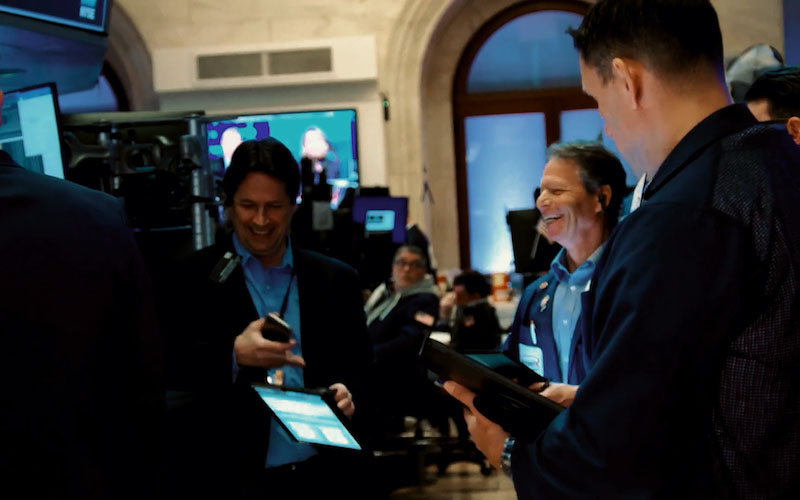
Federal Reserve Chairman Joseph Warsh stated at the Sintracht Frankfurt Forum that upholding central bank policy independence and strictly controlling inflation are core priorities.
2026-07-02 00:53:12
Newly appointed Federal Reserve Chairman Kevin Warsh made his first appearance on the global central bank dialogue stage on Wednesday at the European Central Bank Forum in Sintra, Portugal, sending a clear signal: the US central bank will resolutely maintain its policy independence and will never allow inflation to remain above the 2% policy target for an extended period. This directly responded to US President Trump's repeated pressure on the Federal Reserve to significantly cut interest rates.
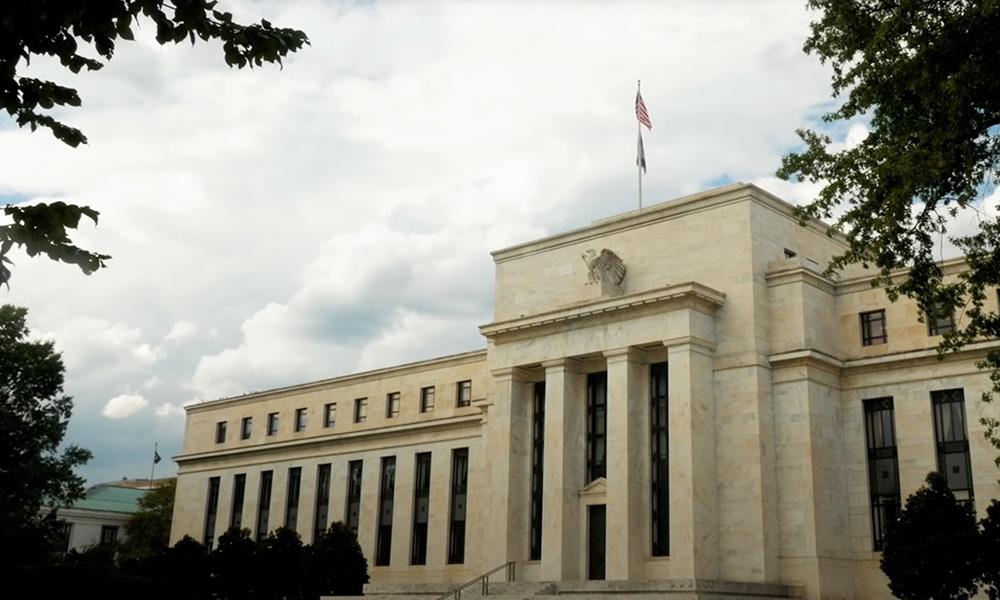
During a panel discussion at the forum, Warsh stated, "If businesses and households think the Fed will tolerate inflation exceeding the 2% target, they are likely to be disappointed. We will definitely achieve price stability." He emphasized, "The Fed has a long history of maintaining policy independence, and we will continue to adhere to this principle without wavering."
The roundtable discussion included European Central Bank President Christine Lagarde, Bank of England Governor Andrew Bailey, and heads of central banks from various countries around the world. This statement fully demonstrates Warsh's commitment to traditional, orthodox monetary policy. Having officially assumed the presidency of the Federal Reserve on May 22, his appearance at the Sintra Forum is seen by the market as a crucial first test of his governing philosophy, his ability to deflect domestic political pressure, and his defense of the central bank's independence.
Key points of Wassintra's speech
On July 1, Warsh attended several high-level seminars covering three main topics: inflation trends, the impact of artificial intelligence on the economy, and the challenges of coordinating global monetary policies. He acknowledged that the upside risks to inflation have eased somewhat compared to previous assessments, but also stated that "the overall price level remains high" and is far from reaching the 2% target range.
What the market should pay close attention to is that Warsh refused to provide any forward guidance on future interest rate policy, including the upcoming Federal Open Market Committee (FOMC) meeting in July. This is consistent with his consistent stance: he has long questioned forward guidance mechanisms that predetermine the policy path, arguing that such measures would weaken the Fed's policy adjustment flexibility and disrupt market pricing discipline. When pressed by reporters about the possibility of rate cuts or hikes, he only stated that all interest rate decisions would be discussed behind closed doors and made based entirely on the latest economic data.
Regarding artificial intelligence, Warsh expressed optimism, stating that the AI industry revolution is currently only in its early stages. He announced that the Federal Reserve will form a special task force to systematically study the profound impact of AI on labor productivity, global supply chains, and inflation cycles, predicting that the United States will be a major beneficiary of AI technology's dividends. Analyzing the economy from a supply-side growth perspective also provides the market with a new approach to inflation issues, distinct from demand-side adjustments.
During the forum, Warsh stated in an exclusive interview: "The core mission of all central banks is to maintain price stability." This consensus reached by top officials of major central banks around the world reflects that although inflation risks have eased marginally, countries remain highly vigilant about high prices.
Real-time Market and Economic Analysis
Warsh's speech in Sintra further reinforced the market's mainstream expectation that "high interest rates will be maintained for a longer period," breaking the market's expectation of a short-term rate cut, while consolidating the credibility of the Federal Reserve's policy to combat inflation. After the announcement, US Treasury yields stabilized, as investors fully digested the Fed's statement defending its independence; the overall sentiment in the US stock market became cautious, with the market generally predicting that borrowing costs will remain high for an extended period.
Economists analyze that Warsh's prioritization of the 2% inflation target and his refusal to signal interest rate cuts aim to anchor market inflation expectations and correct the confusion in expectations left by the misguided loose monetary policies of 2021-2022. Warsh repeatedly conveys a core argument: "The direction of inflation depends on policy choices," implying that the Federal Reserve will proactively adopt tightening measures to prevent high inflation from becoming a long-term trend. This stance stands in stark contrast to Trump's demands—the White House believes that lowering interest rates can alleviate the pressure of federal debt payments and stimulate economic growth.
Short-term economic impact
Interest rate-sensitive sectors will continue to face pressure: the burden of homeownership in the housing market will remain difficult to alleviate, and businesses' willingness to invest in the real economy may remain weak. However, if tightening policies successfully cool inflation, they will drive up real wages in the long run, supporting sustainable economic expansion.
This Sintra Forum also highlighted the challenge of diverging global monetary policies: some overseas central banks may begin their interest rate cut cycle earlier, and the differences in the pace of policy in different countries will directly impact the dollar exchange rate and cross-border capital flows; however, Warsh clearly stated that the Federal Reserve's policy-making is only anchored to domestic US economic data and will not passively follow the pace of adjustments made by overseas central banks.
In-depth background: Walsh's policy shift and governance challenges
Since taking office, Warsh's policy stance has undergone a significant shift: previously advocating for loose monetary policy and interest rate cuts, he has now turned his attention entirely to strictly controlling inflation. The June FOMC meeting kept interest rates unchanged, and his remarks at the Sintra Forum continued the hawkish tone, sending a clear signal to the market: under his leadership, the Federal Reserve will not compromise with the political demands of the administration.
Critics within the White House camp view this statement as an open defiance of the government, but policy supporters argue that upholding independence is the cornerstone of long-term U.S. economic stability. Warsh, with his dual background as a former Federal Reserve governor and a seasoned financial professional, possesses practical experience in balancing political pressure and monetary policy objectives. He favors using the cut-off mean inflation indicator to observe price trends, while downplaying the use of the Federal Reserve's balance sheet adjustment tools, signaling a reformist approach that simplifies policy tools and reduces market intervention.
Analysts predict that Warsh's path to governance is fraught with multiple risks: if tariff barriers, fiscal stimulus, and supply chain disruptions continue to push up inflation stickiness, he may be forced to restart interest rate hikes rather than cuts; conversely, if the economy experiences a rapid slowdown, it will also test his "data-dependent" policy framework. Artificial intelligence is expected to bring a productivity-boosting growth dividend, but the timing and scale of this dividend remain highly uncertain.
Market pricing following the Sintra Forum indicates that investors have largely ruled out a July rate cut, shifting their focus to the September and subsequent policy meetings. Citadel Securities recently warned that the market has generally underestimated Warsh's firm resolve to curb inflation, a consensus that is currently unanimously held across the market.
Why the Sintra Forum is so important: a global platform for voices and a declaration of domestic policies.
The European Central Bank's annual forum serves as a neutral and high-profile platform for the newly appointed Federal Reserve Chair to communicate globally and shape policy narratives. Warsh fully utilized this opportunity to demonstrate his determination to combat inflation and his commitment to collaboration with global central banks. The discussions focused on productivity, artificial intelligence, and flexible policy innovation, showcasing a forward-looking vision. However, "price stability" remained the core objective shared by all central bank governors.
Domestically, Warsh's message was straightforward and unambiguous: monetary policy would never serve fiscal objectives or electoral goals. He publicly reiterated the central bank's independence, emphasizing its ability to stabilize market inflation expectations and reduce the policy uncertainty premium embedded in financial assets.
Market Outlook: July Interest Rate Meeting Becomes a Key Observation Window
The Sintra Forum did not release clear policy guidance, and the final decision of the July FOMC meeting will depend entirely on key economic indicators such as non-farm payrolls and the core personal consumption expenditure price index (core PCE). Warsh's reluctance to release policy signals in advance may amplify short-term market volatility, but in the long run, it can significantly enhance the credibility of the Fed's policies.
Three Potential Scenarios and Medium- to Long-Term Economic Outlook
Baseline scenario: Interest rates remain unchanged throughout the summer; if inflation continues to steadily decline toward 2%, the Federal Reserve will gradually begin cutting interest rates, potentially achieving a soft landing for the economy.
Optimistic growth scenario: Artificial intelligence rapidly unleashes productivity dividends, allowing the Federal Reserve to ease monetary policy without reigniting inflation.
Downside risk scenario: Persistently high prices and a strong labor market force the Federal Reserve to maintain high interest rates for an extended period, potentially leading to recessionary signs in the economy.
This Sintra debut demonstrates that Warsh is prepared to weigh trade-offs and prioritizes policy credibility. As one of the youngest chairs in Federal Reserve history, his full term may reshape the Fed's communication mechanisms, policy operating framework, and the relationship between the central bank and the U.S. executive branch.
Summarize
Warsh's speech at the Sintra Forum on July 1st was a landmark policy declaration since he took office: upholding the independence of the central bank, keeping a close eye on the 2% inflation target, and retaining room for flexible policy adjustments. In the coming weeks, global financial institutions and policymakers will meticulously analyze every piece of economic data and every statement from officials, and the Federal Reserve will navigate a complex economic and political environment to make its monetary policy decisions.
During a panel discussion at the forum, Warsh stated, "If businesses and households think the Fed will tolerate inflation exceeding the 2% target, they are likely to be disappointed. We will definitely achieve price stability." He emphasized, "The Fed has a long history of maintaining policy independence, and we will continue to adhere to this principle without wavering."
The roundtable discussion included European Central Bank President Christine Lagarde, Bank of England Governor Andrew Bailey, and heads of central banks from various countries around the world. This statement fully demonstrates Warsh's commitment to traditional, orthodox monetary policy. Having officially assumed the presidency of the Federal Reserve on May 22, his appearance at the Sintra Forum is seen by the market as a crucial first test of his governing philosophy, his ability to deflect domestic political pressure, and his defense of the central bank's independence.
Key points of Wassintra's speech
On July 1, Warsh attended several high-level seminars covering three main topics: inflation trends, the impact of artificial intelligence on the economy, and the challenges of coordinating global monetary policies. He acknowledged that the upside risks to inflation have eased somewhat compared to previous assessments, but also stated that "the overall price level remains high" and is far from reaching the 2% target range.
What the market should pay close attention to is that Warsh refused to provide any forward guidance on future interest rate policy, including the upcoming Federal Open Market Committee (FOMC) meeting in July. This is consistent with his consistent stance: he has long questioned forward guidance mechanisms that predetermine the policy path, arguing that such measures would weaken the Fed's policy adjustment flexibility and disrupt market pricing discipline. When pressed by reporters about the possibility of rate cuts or hikes, he only stated that all interest rate decisions would be discussed behind closed doors and made based entirely on the latest economic data.
Regarding artificial intelligence, Warsh expressed optimism, stating that the AI industry revolution is currently only in its early stages. He announced that the Federal Reserve will form a special task force to systematically study the profound impact of AI on labor productivity, global supply chains, and inflation cycles, predicting that the United States will be a major beneficiary of AI technology's dividends. Analyzing the economy from a supply-side growth perspective also provides the market with a new approach to inflation issues, distinct from demand-side adjustments.
During the forum, Warsh stated in an exclusive interview: "The core mission of all central banks is to maintain price stability." This consensus reached by top officials of major central banks around the world reflects that although inflation risks have eased marginally, countries remain highly vigilant about high prices.
Real-time Market and Economic Analysis
Warsh's speech in Sintra further reinforced the market's mainstream expectation that "high interest rates will be maintained for a longer period," breaking the market's expectation of a short-term rate cut, while consolidating the credibility of the Federal Reserve's policy to combat inflation. After the announcement, US Treasury yields stabilized, as investors fully digested the Fed's statement defending its independence; the overall sentiment in the US stock market became cautious, with the market generally predicting that borrowing costs will remain high for an extended period.
Economists analyze that Warsh's prioritization of the 2% inflation target and his refusal to signal interest rate cuts aim to anchor market inflation expectations and correct the confusion in expectations left by the misguided loose monetary policies of 2021-2022. Warsh repeatedly conveys a core argument: "The direction of inflation depends on policy choices," implying that the Federal Reserve will proactively adopt tightening measures to prevent high inflation from becoming a long-term trend. This stance stands in stark contrast to Trump's demands—the White House believes that lowering interest rates can alleviate the pressure of federal debt payments and stimulate economic growth.
Short-term economic impact
Interest rate-sensitive sectors will continue to face pressure: the burden of homeownership in the housing market will remain difficult to alleviate, and businesses' willingness to invest in the real economy may remain weak. However, if tightening policies successfully cool inflation, they will drive up real wages in the long run, supporting sustainable economic expansion.
This Sintra Forum also highlighted the challenge of diverging global monetary policies: some overseas central banks may begin their interest rate cut cycle earlier, and the differences in the pace of policy in different countries will directly impact the dollar exchange rate and cross-border capital flows; however, Warsh clearly stated that the Federal Reserve's policy-making is only anchored to domestic US economic data and will not passively follow the pace of adjustments made by overseas central banks.
In-depth background: Walsh's policy shift and governance challenges
Since taking office, Warsh's policy stance has undergone a significant shift: previously advocating for loose monetary policy and interest rate cuts, he has now turned his attention entirely to strictly controlling inflation. The June FOMC meeting kept interest rates unchanged, and his remarks at the Sintra Forum continued the hawkish tone, sending a clear signal to the market: under his leadership, the Federal Reserve will not compromise with the political demands of the administration.
Critics within the White House camp view this statement as an open defiance of the government, but policy supporters argue that upholding independence is the cornerstone of long-term U.S. economic stability. Warsh, with his dual background as a former Federal Reserve governor and a seasoned financial professional, possesses practical experience in balancing political pressure and monetary policy objectives. He favors using the cut-off mean inflation indicator to observe price trends, while downplaying the use of the Federal Reserve's balance sheet adjustment tools, signaling a reformist approach that simplifies policy tools and reduces market intervention.
Analysts predict that Warsh's path to governance is fraught with multiple risks: if tariff barriers, fiscal stimulus, and supply chain disruptions continue to push up inflation stickiness, he may be forced to restart interest rate hikes rather than cuts; conversely, if the economy experiences a rapid slowdown, it will also test his "data-dependent" policy framework. Artificial intelligence is expected to bring a productivity-boosting growth dividend, but the timing and scale of this dividend remain highly uncertain.
Market pricing following the Sintra Forum indicates that investors have largely ruled out a July rate cut, shifting their focus to the September and subsequent policy meetings. Citadel Securities recently warned that the market has generally underestimated Warsh's firm resolve to curb inflation, a consensus that is currently unanimously held across the market.
Why the Sintra Forum is so important: a global platform for voices and a declaration of domestic policies.
The European Central Bank's annual forum serves as a neutral and high-profile platform for the newly appointed Federal Reserve Chair to communicate globally and shape policy narratives. Warsh fully utilized this opportunity to demonstrate his determination to combat inflation and his commitment to collaboration with global central banks. The discussions focused on productivity, artificial intelligence, and flexible policy innovation, showcasing a forward-looking vision. However, "price stability" remained the core objective shared by all central bank governors.
Domestically, Warsh's message was straightforward and unambiguous: monetary policy would never serve fiscal objectives or electoral goals. He publicly reiterated the central bank's independence, emphasizing its ability to stabilize market inflation expectations and reduce the policy uncertainty premium embedded in financial assets.
Market Outlook: July Interest Rate Meeting Becomes a Key Observation Window
The Sintra Forum did not release clear policy guidance, and the final decision of the July FOMC meeting will depend entirely on key economic indicators such as non-farm payrolls and the core personal consumption expenditure price index (core PCE). Warsh's reluctance to release policy signals in advance may amplify short-term market volatility, but in the long run, it can significantly enhance the credibility of the Fed's policies.
Three Potential Scenarios and Medium- to Long-Term Economic Outlook
Baseline scenario: Interest rates remain unchanged throughout the summer; if inflation continues to steadily decline toward 2%, the Federal Reserve will gradually begin cutting interest rates, potentially achieving a soft landing for the economy.
Optimistic growth scenario: Artificial intelligence rapidly unleashes productivity dividends, allowing the Federal Reserve to ease monetary policy without reigniting inflation.
Downside risk scenario: Persistently high prices and a strong labor market force the Federal Reserve to maintain high interest rates for an extended period, potentially leading to recessionary signs in the economy.
This Sintra debut demonstrates that Warsh is prepared to weigh trade-offs and prioritizes policy credibility. As one of the youngest chairs in Federal Reserve history, his full term may reshape the Fed's communication mechanisms, policy operating framework, and the relationship between the central bank and the U.S. executive branch.
Summarize
Warsh's speech at the Sintra Forum on July 1st was a landmark policy declaration since he took office: upholding the independence of the central bank, keeping a close eye on the 2% inflation target, and retaining room for flexible policy adjustments. In the coming weeks, global financial institutions and policymakers will meticulously analyze every piece of economic data and every statement from officials, and the Federal Reserve will navigate a complex economic and political environment to make its monetary policy decisions.
- Risk Warning and Disclaimer
- The market involves risk, and trading may not be suitable for all investors. This article is for reference only and does not constitute personal investment advice, nor does it take into account certain users’ specific investment objectives, financial situation, or other needs. Any investment decisions made based on this information are at your own risk.