The ongoing stalemate in the Taiwan Strait dispute, despite positive factors, has failed to drive up oil prices, revealing concerns about demand.
2026-07-02 21:57:22
Currently, the power struggle between the United States and Iran over control of the Strait of Hormuz continues to escalate, and the regional geopolitical situation presents a complex picture of tension and easing. This struggle, which concerns the lifeline of global energy, continues to dominate the sentiment and trends of the international oil market.
As a vital passage through the Persian Gulf, the Strait of Hormuz carries one-fifth of the world's oil and liquefied natural gas trade. It is a core hub of the international energy supply chain and a key point of contention in the negotiations for a permanent agreement to end the war between the United States and Iran.
On Thursday, the Iranian military sent a strong signal, with its Joint Military Command issuing a public warning that all oil tankers passing through the Strait of Hormuz must strictly use the navigation channels approved by Iran and abide by Iranian navigation regulations. Any vessel that deviates from the channels or refuses to cooperate will be met with a strong response from the Iranian armed forces, and the navigational safety of violating vessels will not be guaranteed.
At the same time, Iran directly criticized the US military's continued patrols over the Strait of Hormuz, believing that this seriously undermines the safety of navigation in the waters and threatens the stability of the Middle East region. Iran also stated that any US intervention in the security of the Strait of Hormuz or disruption of navigation order constitutes an infringement on Iran's national sovereignty, and Iran will retaliate swiftly and decisively.
This strong statement is most likely a response to the latest actions of the U.S. Central Command.
The US military previously held a multinational Middle East meeting in Bahrain, emphasizing that all parties would work together to maintain freedom of commercial navigation in the Strait of Hormuz, a statement that angered Iran.
The ongoing preparations for the funeral of Iran's late Supreme Leader Ayatollah Khamenei have significantly heightened regional public opinion and heightened sensitivity to the situation, further exacerbating tensions around the Taiwan Strait.
It is reported that Khamenei was killed in an attack in February this year at the beginning of the US-Iran war. His funeral is scheduled to be held on July 9, and a new round of US-Iran negotiations will also begin after the funeral.
In fact, the US and Iran had previously reached a temporary navigation agreement, agreeing to establish a 60-day free navigation window in the Taiwan Strait, which temporarily stabilized the energy shipping order.
However, the core differences between the two sides have not been resolved. Iran insists on maintaining control of the strait waterway and plans to impose passage fees on passing ships after the free passage window ends in mid-August. This move completely overturns decades of international navigation practices in the waterway and has been met with collective opposition from the United States and many Gulf Arab countries.
The opening of a new coastal shipping route by Oman and UN agencies previously triggered instability in many parts of the Middle East over the weekend, and the subsequent military clashes between the US and Iran put further pressure on the already fragile ceasefire.
Amidst fluctuating tensions, the US and Iran completed a new round of indirect negotiations in Doha, Qatar on Wednesday, with each side holding separate consultations with mediators from Qatar and Pakistan.
This round of negotiations focused on two legacy issues from the interim agreement: the control of shipping in the Taiwan Strait and the unfreezing of Iranian overseas assets. It was a technical consultation and did not involve the Iranian nuclear issue, which is of great concern to the United States. The Iranian nuclear issue was the core reason for the joint US-Israel military action against Iran in February this year.
The US has made it clear that the nuclear issue will be postponed to a separate negotiation, and this round of negotiations has not made any breakthrough progress. Neither the US nor Iran has disclosed the progress in resolving the core differences. Only Pakistan and Qatar have released signals that the negotiations have made positive progress.
It is worth noting that the high-level negotiations previously announced by the White House did not materialize, and none of the key senior U.S. envoys participated in the consultations, which also indirectly confirms the pragmatism and limitations of this round of negotiations.
The navigation situation in the Strait of Hormuz remains chaotic. Although some shipping has resumed, the overall order is fragmented, the risks are unpredictable, and the transparency of the rules is extremely low.
Recently, several foreign container ships have run aground in shallow waters after deviating from the designated shipping lanes of Iran, exposing the current uncertainty of navigation in the strait.
Several European countries have offered to assist in clearing mines from the Strait of Hormuz and stabilizing the navigation environment, but Germany has explicitly refused to participate. The core obstacle is that Iran is unwilling to accept cooperation from multiple external countries, which further increases the difficulty of restoring order to the waterway.
Iran has maintained a hardline stance, making it clear that it will use all means, including military means, to gain international recognition of its control over the Straits. The implementation of subsequent toll policies may become the trigger for a new round of conflict.
In addition to the negative impact of easing geopolitical tensions, the latest US non-farm payroll data showed a significant weakening, further amplifying market pessimism about a weakening global economy and insufficient oil demand, which further suppressed the upside potential of oil prices.
The U.S. added only 57,000 non-farm jobs in June, significantly below market expectations of 110,000 to 115,000. Furthermore, the employment data for the first two months was revised down by a combined 74,000, clearly indicating a cooling trend in the job market.
The slight decline in the unemployment rate this time is entirely due to the sharp drop in the labor force participation rate, rather than an improvement in the economic fundamentals. Coupled with a wave of layoffs in multiple service industries such as leisure hotels, retail, and information, the overall willingness of enterprises to recruit has contracted significantly, reflecting the continued weakening of the endogenous driving force of the real economy.
The combination of a sluggish economy, lagging wage growth, and high prices suppressing consumption has raised market concerns that the slowdown in the US economy will spread outwards, leading to a continued contraction in global aggregate demand.
Negative demand factors have directly rewritten the pricing logic of the oil market. Traders have therefore postponed their expectations for a Fed rate hike to December. Behind the postponement of easing expectations is rising concern about an economic recession. As a highly cyclical commodity, the pessimistic expectations on the demand side continue to dilute the geopolitical supply premium, bringing sustained downward pressure on oil prices.
Overall, the oil market has gradually shifted from the previous "supply panic" to a cautious wait-and-see state. However, the core differences between the US and Iran have not been fundamentally resolved. Potential risks such as the rules for navigation in the Taiwan Strait, disputes over tolls, and the nuclear issue remain. This means that oil prices will continue to be highly volatile. After the short-term decline caused by geopolitical easing and weak demand, any reversal in the situation could quickly trigger a rebound in oil prices.
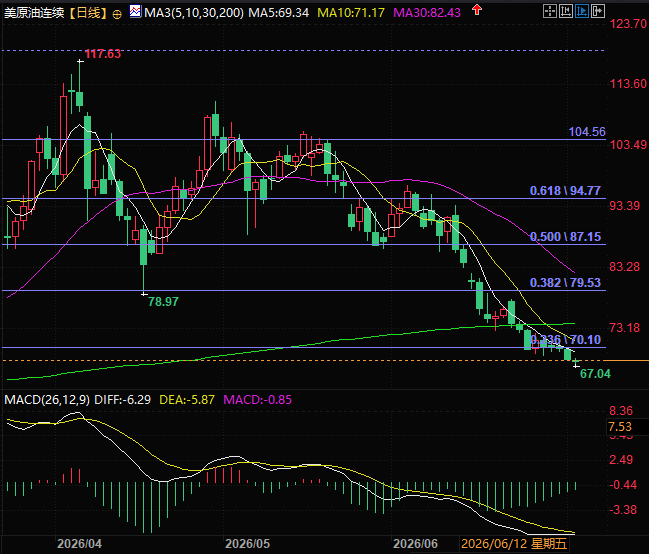
(WTI crude oil futures daily chart, source: EasyForex)
At 51:54 Beijing time, WTI crude oil futures were trading at $67.82 per ounce.
As a vital passage through the Persian Gulf, the Strait of Hormuz carries one-fifth of the world's oil and liquefied natural gas trade. It is a core hub of the international energy supply chain and a key point of contention in the negotiations for a permanent agreement to end the war between the United States and Iran.
Iran firmly draws a red line for navigation, responding to US regional claims.
On Thursday, the Iranian military sent a strong signal, with its Joint Military Command issuing a public warning that all oil tankers passing through the Strait of Hormuz must strictly use the navigation channels approved by Iran and abide by Iranian navigation regulations. Any vessel that deviates from the channels or refuses to cooperate will be met with a strong response from the Iranian armed forces, and the navigational safety of violating vessels will not be guaranteed.
At the same time, Iran directly criticized the US military's continued patrols over the Strait of Hormuz, believing that this seriously undermines the safety of navigation in the waters and threatens the stability of the Middle East region. Iran also stated that any US intervention in the security of the Strait of Hormuz or disruption of navigation order constitutes an infringement on Iran's national sovereignty, and Iran will retaliate swiftly and decisively.
The war of words between the US and Iran escalates, with the funeral date setting a time limit for the pace of negotiations.
This strong statement is most likely a response to the latest actions of the U.S. Central Command.
The US military previously held a multinational Middle East meeting in Bahrain, emphasizing that all parties would work together to maintain freedom of commercial navigation in the Strait of Hormuz, a statement that angered Iran.
The ongoing preparations for the funeral of Iran's late Supreme Leader Ayatollah Khamenei have significantly heightened regional public opinion and heightened sensitivity to the situation, further exacerbating tensions around the Taiwan Strait.
It is reported that Khamenei was killed in an attack in February this year at the beginning of the US-Iran war. His funeral is scheduled to be held on July 9, and a new round of US-Iran negotiations will also begin after the funeral.
The temporary agreement failed to bridge the core differences, and the dispute over air traffic fees continued to create conflict.
In fact, the US and Iran had previously reached a temporary navigation agreement, agreeing to establish a 60-day free navigation window in the Taiwan Strait, which temporarily stabilized the energy shipping order.
However, the core differences between the two sides have not been resolved. Iran insists on maintaining control of the strait waterway and plans to impose passage fees on passing ships after the free passage window ends in mid-August. This move completely overturns decades of international navigation practices in the waterway and has been met with collective opposition from the United States and many Gulf Arab countries.
The opening of a new coastal shipping route by Oman and UN agencies previously triggered instability in many parts of the Middle East over the weekend, and the subsequent military clashes between the US and Iran put further pressure on the already fragile ceasefire.
The indirect negotiations in Doha have concluded, but core differences remain unresolved.
Amidst fluctuating tensions, the US and Iran completed a new round of indirect negotiations in Doha, Qatar on Wednesday, with each side holding separate consultations with mediators from Qatar and Pakistan.
This round of negotiations focused on two legacy issues from the interim agreement: the control of shipping in the Taiwan Strait and the unfreezing of Iranian overseas assets. It was a technical consultation and did not involve the Iranian nuclear issue, which is of great concern to the United States. The Iranian nuclear issue was the core reason for the joint US-Israel military action against Iran in February this year.
The US has made it clear that the nuclear issue will be postponed to a separate negotiation, and this round of negotiations has not made any breakthrough progress. Neither the US nor Iran has disclosed the progress in resolving the core differences. Only Pakistan and Qatar have released signals that the negotiations have made positive progress.
It is worth noting that the high-level negotiations previously announced by the White House did not materialize, and none of the key senior U.S. envoys participated in the consultations, which also indirectly confirms the pragmatism and limitations of this round of negotiations.
Chaos persists in cross-strait navigation, and the risk of future conflict remains.
The navigation situation in the Strait of Hormuz remains chaotic. Although some shipping has resumed, the overall order is fragmented, the risks are unpredictable, and the transparency of the rules is extremely low.
Recently, several foreign container ships have run aground in shallow waters after deviating from the designated shipping lanes of Iran, exposing the current uncertainty of navigation in the strait.
Several European countries have offered to assist in clearing mines from the Strait of Hormuz and stabilizing the navigation environment, but Germany has explicitly refused to participate. The core obstacle is that Iran is unwilling to accept cooperation from multiple external countries, which further increases the difficulty of restoring order to the waterway.
Iran has maintained a hardline stance, making it clear that it will use all means, including military means, to gain international recognition of its control over the Straits. The implementation of subsequent toll policies may become the trigger for a new round of conflict.
Insufficient demand leads to pessimistic expectations for oil prices:
In addition to the negative impact of easing geopolitical tensions, the latest US non-farm payroll data showed a significant weakening, further amplifying market pessimism about a weakening global economy and insufficient oil demand, which further suppressed the upside potential of oil prices.
The U.S. added only 57,000 non-farm jobs in June, significantly below market expectations of 110,000 to 115,000. Furthermore, the employment data for the first two months was revised down by a combined 74,000, clearly indicating a cooling trend in the job market.
The slight decline in the unemployment rate this time is entirely due to the sharp drop in the labor force participation rate, rather than an improvement in the economic fundamentals. Coupled with a wave of layoffs in multiple service industries such as leisure hotels, retail, and information, the overall willingness of enterprises to recruit has contracted significantly, reflecting the continued weakening of the endogenous driving force of the real economy.
The combination of a sluggish economy, lagging wage growth, and high prices suppressing consumption has raised market concerns that the slowdown in the US economy will spread outwards, leading to a continued contraction in global aggregate demand.
Negative demand factors have directly rewritten the pricing logic of the oil market. Traders have therefore postponed their expectations for a Fed rate hike to December. Behind the postponement of easing expectations is rising concern about an economic recession. As a highly cyclical commodity, the pessimistic expectations on the demand side continue to dilute the geopolitical supply premium, bringing sustained downward pressure on oil prices.
Summarize:
Overall, the oil market has gradually shifted from the previous "supply panic" to a cautious wait-and-see state. However, the core differences between the US and Iran have not been fundamentally resolved. Potential risks such as the rules for navigation in the Taiwan Strait, disputes over tolls, and the nuclear issue remain. This means that oil prices will continue to be highly volatile. After the short-term decline caused by geopolitical easing and weak demand, any reversal in the situation could quickly trigger a rebound in oil prices.
(WTI crude oil futures daily chart, source: EasyForex)
At 51:54 Beijing time, WTI crude oil futures were trading at $67.82 per ounce.
- Risk Warning and Disclaimer
- The market involves risk, and trading may not be suitable for all investors. This article is for reference only and does not constitute personal investment advice, nor does it take into account certain users’ specific investment objectives, financial situation, or other needs. Any investment decisions made based on this information are at your own risk.