Why is the employment figure of 57,000 people enough to rewrite the July interest rate script?
2026-07-02 22:01:34
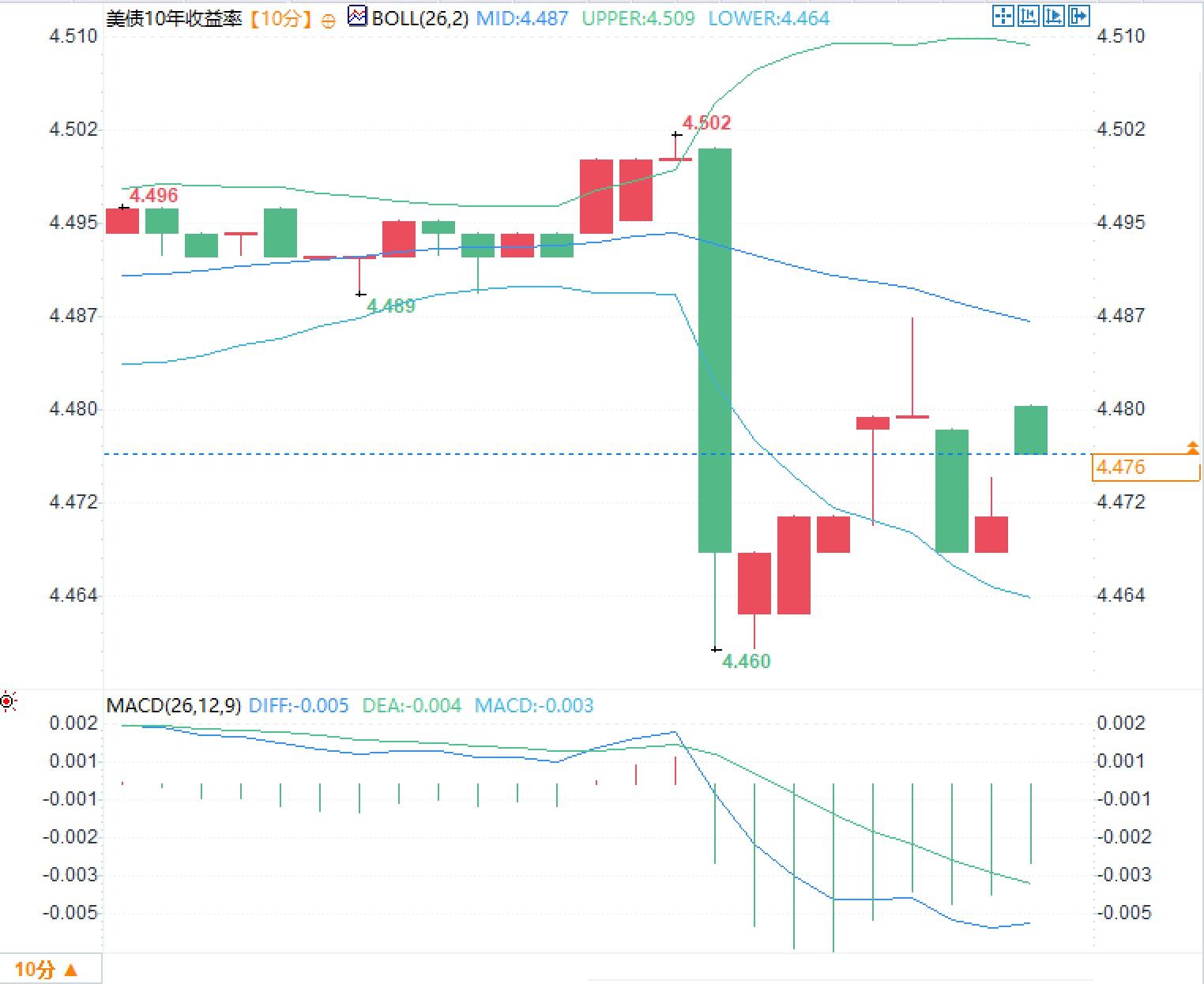
On Thursday, July 2nd, the US June jobs report became the main variable in the interest rate market. Non-farm payrolls increased by only 57,000, significantly lower than market expectations, with the combined April and May figures revised down by 74,000. While the unemployment rate fell to 4.2%, the labor force participation rate dropped to 61.5%, indicating that the decline in the unemployment rate did not stem from job expansion. Following the report's release, the 2-year US Treasury yield fell from approximately 4.191% to 4.108%, and the 10-year yield fell from approximately 4.505% to 4.461%. The interest rate swap market's pricing of a July rate hike fell to less than 20%. This is not simply a rebound in risk appetite, but rather a market recalibration of the Federal Reserve's near-term policy path.

On the surface, the drop in the unemployment rate from 4.3% to 4.2% could easily be misinterpreted as a sign of continued resilience in the labor market. However, a closer look at the household survey reveals a much more complex picture. In June, the labor force decreased by 720,000, the number of employed decreased by 507,000, and the number of people leaving the labor market increased by 832,000. This explains why the unemployment rate declined despite weak job creation. In other words, the improvement in the unemployment rate stemmed more from a contraction in the denominator than from increased job absorption capacity.
Business surveys also point to a cooling trend. Professional and business services added 36,000 jobs, social assistance added 25,000, and healthcare added 22,000, but the leisure and hospitality industry saw a decrease of 61,000, indicating a lack of expansion across traditional cyclical sectors. Long-term unemployment remained at 1.9 million, an increase of 286,000 from the previous year, representing 27.3% of the total unemployed. This structure typically indicates that the labor market has not suddenly stalled, but has entered a phase of slow wear and tear.
Wage growth continues to limit the room for policy shift. Average hourly earnings rose 0.3% month-over-month in June to $37.64 per hour, and 3.5% year-over-year; average weekly hours remained at 34.3. While wage growth is not out of control, it is insufficient to support a narrative of a rapid shift to easing. For the interest rate market, this report weakens the necessity for a near-term rate hike, but does not provide sufficient evidence for a rate cut trade.
The 2-year yield is most sensitive to expectations of policy rates, and its decline is greater than that of the 10-year yield, indicating that the core of the trading focus is on the policy probability of the next few meetings, rather than a systematic reassessment of the long-term growth outlook. On June 17, the Federal Reserve maintained the target range for the federal funds rate at 3.50% to 3.75%, stating that inflation remains above the 2% target. Currently, the 2-year yield is still above the upper limit of the policy rate, meaning the market has not completely ruled out further tightening, but has significantly reduced the probability of immediate action in July.
This distinction is crucial. If the market were trading on a recessionary shock, the 10-year yield would typically decline more sharply, leading to a renewed compression of the term premium; however, the current reaction is more akin to a "near-term hawkish premium retracement." Previously, the shocks to employment, inflation, and energy prices resulting from the Middle East conflict led the market to anticipate interest rate hikes. But with the simultaneous emergence of 57,000 new jobs and a downward revision of the previous figure, policymakers are finding it difficult to act quickly based solely on inflation as a single variable.
Following the release of the employment data, the US dollar index fell by about 0.7%, while major currencies such as the euro, pound sterling, and yen strengthened temporarily. The trading logic is not complex: the dollar had previously received support partly from near-term interest rate differential expectations of another Fed rate hike; as the probability of a July rate hike decreased, the short-term dollar interest rate premium naturally narrowed.
However, the weakening dollar should not be interpreted as a complete reversal of policy path. The May consumer price index remained at 4.2% year-on-year, the core index at 2.9%, and energy prices rose 23.5% year-on-year, indicating that supply-side shocks still exist in the inflation structure. As long as inflation fails to decline continuously, the Federal Reserve lacks a clear policy basis to shift towards easing.
Therefore, the core contradiction for the US dollar is not a single day's employment data, but rather the simultaneous existence of "still high inflation" and "marginally weakening employment." The former limits the room for interest rate declines, while the latter limits the scope for raising interest rates in advance. The foreign exchange market is currently reacting to the second point in the short term, but subsequent pricing will still return to the combined verification of inflation, employment, and term spreads.
Kevin Warsh recently stated at a central bank forum in Portugal that there would be thorough discussions once inside the meeting room and behind closed doors, but he did not offer any directional hints for the next interest rate decision. He also emphasized that inflation remains high and reiterated the 2% inflation target. This suggests a weakening of the familiar "pre-emptive" model, with the price impact of individual data points becoming more significant because the policy response function is no longer buffered by clear forward guidance.
This explains the sharp reaction in the bond market. The jobs report gave the Fed reason to remain on the sidelines, but it did not eliminate inflationary pressures. For traders, the key going forward is not simply judging whether the Fed is hawkish or dovish, but rather identifying the boundaries of policy tolerance. If employment continues to fall below trend and wages slow, near-term yields still have a basis for being suppressed; if inflation remains sticky, the yield curve will again face the prospect of a rate hike.
The key to employment data is not the unemployment rate, but the collapse in labor supply.
On the surface, the drop in the unemployment rate from 4.3% to 4.2% could easily be misinterpreted as a sign of continued resilience in the labor market. However, a closer look at the household survey reveals a much more complex picture. In June, the labor force decreased by 720,000, the number of employed decreased by 507,000, and the number of people leaving the labor market increased by 832,000. This explains why the unemployment rate declined despite weak job creation. In other words, the improvement in the unemployment rate stemmed more from a contraction in the denominator than from increased job absorption capacity.
Business surveys also point to a cooling trend. Professional and business services added 36,000 jobs, social assistance added 25,000, and healthcare added 22,000, but the leisure and hospitality industry saw a decrease of 61,000, indicating a lack of expansion across traditional cyclical sectors. Long-term unemployment remained at 1.9 million, an increase of 286,000 from the previous year, representing 27.3% of the total unemployed. This structure typically indicates that the labor market has not suddenly stalled, but has entered a phase of slow wear and tear.
Wage growth continues to limit the room for policy shift. Average hourly earnings rose 0.3% month-over-month in June to $37.64 per hour, and 3.5% year-over-year; average weekly hours remained at 34.3. While wage growth is not out of control, it is insufficient to support a narrative of a rapid shift to easing. For the interest rate market, this report weakens the necessity for a near-term rate hike, but does not provide sufficient evidence for a rate cut trade.
The rush of short-term yields indicates that the market is targeting the timing of interest rate hikes.
The 2-year yield is most sensitive to expectations of policy rates, and its decline is greater than that of the 10-year yield, indicating that the core of the trading focus is on the policy probability of the next few meetings, rather than a systematic reassessment of the long-term growth outlook. On June 17, the Federal Reserve maintained the target range for the federal funds rate at 3.50% to 3.75%, stating that inflation remains above the 2% target. Currently, the 2-year yield is still above the upper limit of the policy rate, meaning the market has not completely ruled out further tightening, but has significantly reduced the probability of immediate action in July.
This distinction is crucial. If the market were trading on a recessionary shock, the 10-year yield would typically decline more sharply, leading to a renewed compression of the term premium; however, the current reaction is more akin to a "near-term hawkish premium retracement." Previously, the shocks to employment, inflation, and energy prices resulting from the Middle East conflict led the market to anticipate interest rate hikes. But with the simultaneous emergence of 57,000 new jobs and a downward revision of the previous figure, policymakers are finding it difficult to act quickly based solely on inflation as a single variable.
The decline in the US dollar is not a sign of a directional collapse, but rather a correction in interest rate premiums.
Following the release of the employment data, the US dollar index fell by about 0.7%, while major currencies such as the euro, pound sterling, and yen strengthened temporarily. The trading logic is not complex: the dollar had previously received support partly from near-term interest rate differential expectations of another Fed rate hike; as the probability of a July rate hike decreased, the short-term dollar interest rate premium naturally narrowed.
However, the weakening dollar should not be interpreted as a complete reversal of policy path. The May consumer price index remained at 4.2% year-on-year, the core index at 2.9%, and energy prices rose 23.5% year-on-year, indicating that supply-side shocks still exist in the inflation structure. As long as inflation fails to decline continuously, the Federal Reserve lacks a clear policy basis to shift towards easing.
Therefore, the core contradiction for the US dollar is not a single day's employment data, but rather the simultaneous existence of "still high inflation" and "marginally weakening employment." The former limits the room for interest rate declines, while the latter limits the scope for raising interest rates in advance. The foreign exchange market is currently reacting to the second point in the short term, but subsequent pricing will still return to the combined verification of inflation, employment, and term spreads.
The variable in the Walsh era is shifting from forward guidance to data tolerance.
Kevin Warsh recently stated at a central bank forum in Portugal that there would be thorough discussions once inside the meeting room and behind closed doors, but he did not offer any directional hints for the next interest rate decision. He also emphasized that inflation remains high and reiterated the 2% inflation target. This suggests a weakening of the familiar "pre-emptive" model, with the price impact of individual data points becoming more significant because the policy response function is no longer buffered by clear forward guidance.
This explains the sharp reaction in the bond market. The jobs report gave the Fed reason to remain on the sidelines, but it did not eliminate inflationary pressures. For traders, the key going forward is not simply judging whether the Fed is hawkish or dovish, but rather identifying the boundaries of policy tolerance. If employment continues to fall below trend and wages slow, near-term yields still have a basis for being suppressed; if inflation remains sticky, the yield curve will again face the prospect of a rate hike.
- Risk Warning and Disclaimer
- The market involves risk, and trading may not be suitable for all investors. This article is for reference only and does not constitute personal investment advice, nor does it take into account certain users’ specific investment objectives, financial situation, or other needs. Any investment decisions made based on this information are at your own risk.