July 6th Financial Breakfast: Weakening bets on interest rate hikes push gold prices towards $4200; OPEC+ agrees to increase production in August; US oil hovers around the $68 mark, awaiting this week's US-Iran talks.
2026-07-06 07:18:35
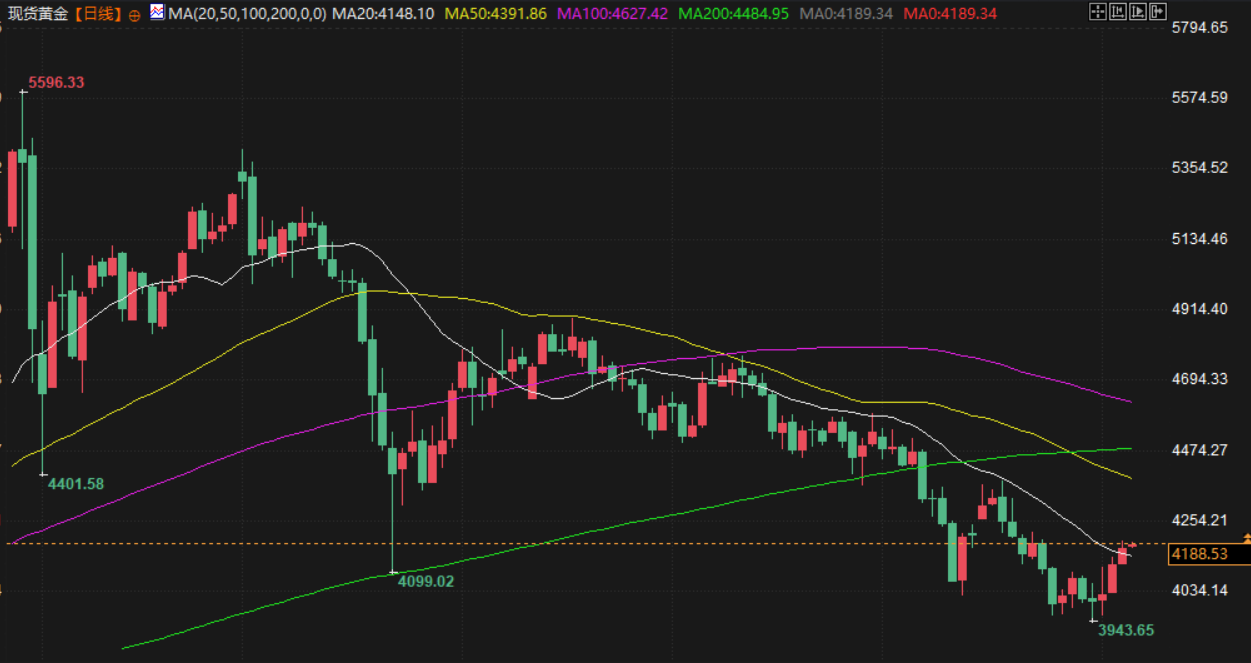
On Monday (July 6, Beijing time) in early Asian trading, spot gold was trading around $4,190 per ounce. Gold prices rose as bets on a September rate hike by the Federal Reserve decreased, while uncertainty surrounding the US-Iran situation remained. A new round of US-Iran talks is scheduled to be held in Pakistan on July 11. US crude oil was trading around $68.38 per barrel. The talks are expected to focus on three main issues: US sanctions against Iran, frozen Iranian funds, and Iran's nuclear program. However, reports of Iran's suspected expansion of secret nuclear facilities have increased uncertainty.

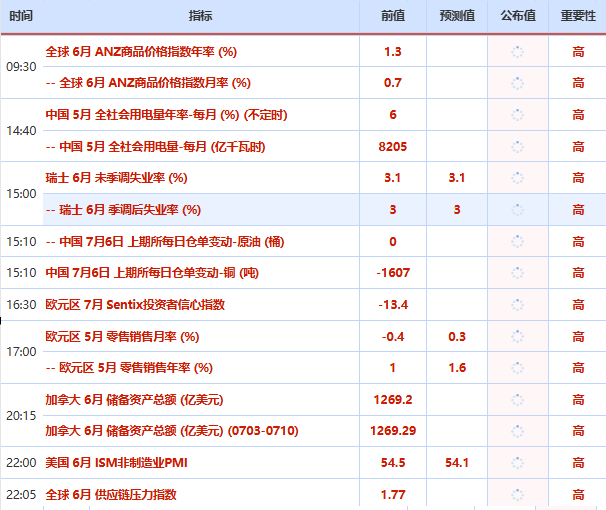
Spot gold rose 1.24% to $4,174.93 an ounce on Friday, hitting its highest level since June 23 and remaining above the 21-day moving average. The market's bets on a September rate hike by the Federal Reserve fell from 66% to 54% due to weaker-than-expected US June non-farm payroll data (only 57,000 jobs added, compared to an expected 110,000). The dollar also suffered its biggest weekly drop since April, pushing gold prices up more than 2% last week after four consecutive weeks of declines.
Bybit's chief market analyst pointed out that the sharp slowdown in job growth was the direct driver of the gold price rebound, while expectations of interest rate cuts reduced the opportunity cost of holding gold. Furthermore, data from the World Gold Council showed that central banks net bought 41 tons of gold reserves in May. Other precious metals also benefited from the weakening dollar, with spot silver, platinum, and palladium rising by 1.9%, 2.3%, and 0.8% respectively, all poised for weekly gains.
Oil prices rose on Friday, with Brent crude up 0.54% to settle at $71.94 a barrel and WTI crude up 0.47% to settle at $68.78 a barrel. Both benchmark contracts remained virtually unchanged for the week, primarily driven by traders' cautious bets on US-Iran peace talks.
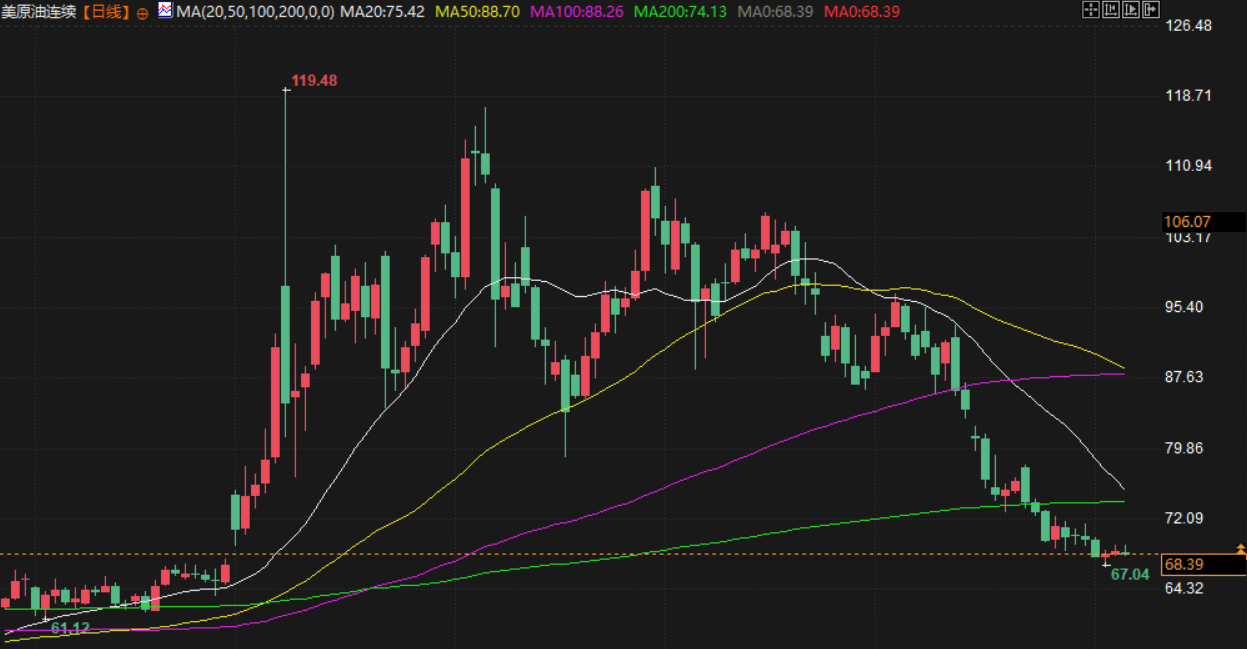
Traders remain hopeful for a successful peace negotiation between the US and Iran. Analysts at Commerzbank and Citigroup believe the talks are likely to continue, despite their fragile nature and weak incentives for default. Meanwhile, Gulf oil producers are actively increasing production to meet expectations of increased exports. According to surveys, OPEC's daily output surged by 3.3 million barrels in June, with Kuwait's output jumping from 580,000 barrels per day in May to 1.65 million barrels per day. As supply increases, the Brent crude oil market structure has shifted from a backwardation to a contango, with spot prices lower than forward contracts, reflecting a gradual easing of market concerns about supply shortages.
OPEC+ announced that Saudi Arabia, Russia, Iraq, Kuwait, Kazakhstan, Algeria, and Oman have adjusted their production levels, reaffirming their commitment to market stability. The next meeting will be held on August 2, 2026. The seven member countries decided to implement a production adjustment of 188,000 barrels per day.
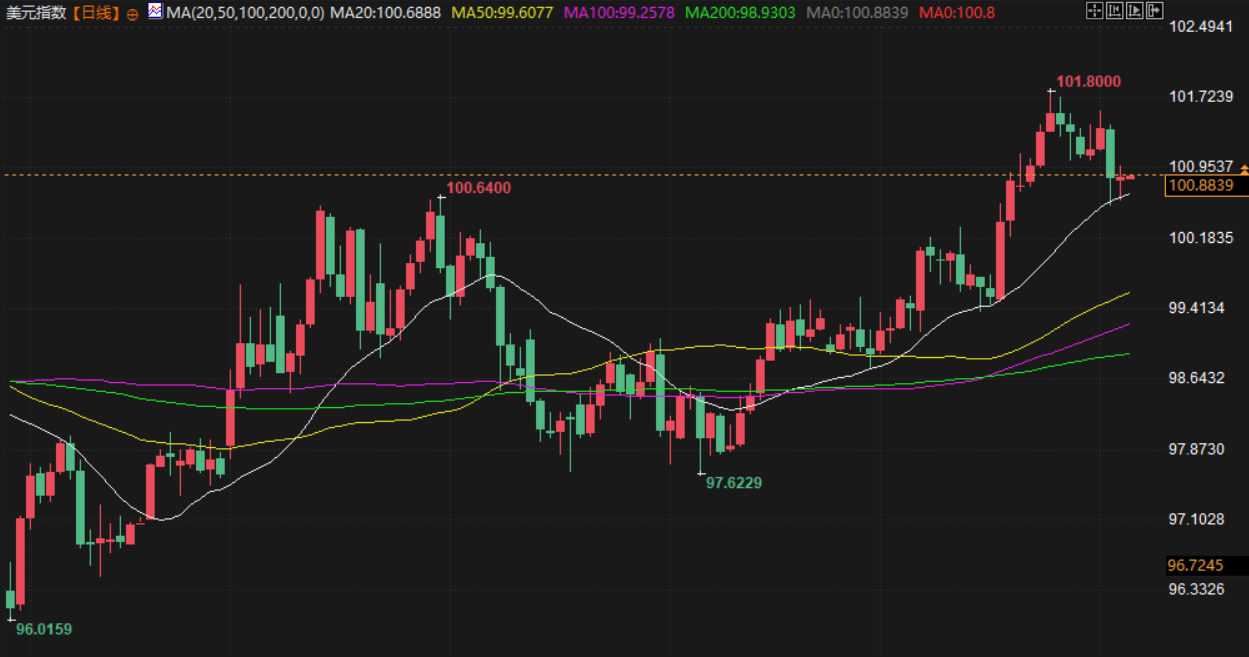
The US dollar index closed at 100.83 on Friday, but fell 0.48% last week, marking its biggest weekly drop since early April. Affected by the much weaker-than-expected US non-farm payroll data for June (only 57,000 new jobs added, and the previous two months were also revised downward), market bets on a Fed rate hike in September fell from about 66% before the data release to around 45%.
The euro rose to 1.1440 against the dollar, up 0.5% for the week, while the pound traded at 1.3352 against the dollar, up 1.1% for the week, its best weekly performance in nearly three months. The yen rebounded to 161.25 against the dollar from a 40-year low of 162.84 hit on Thursday. Although it has temporarily escaped its lows, the market remains highly vigilant about potential intervention by Japanese authorities. Finance Minister Satsuki Katayama and Chief Cabinet Secretary Minoru Kihara have both issued warnings. Analysts point out that Japan prefers to act when liquidity is low, and whether the yen can hold onto this rebound will depend on subsequent US economic data and developments in the Japanese government bond market.
The US and Iran will resume talks in Pakistan this week.
According to Saudi Arabia's Al Arabiya television, citing sources, a new round of talks between the United States and Iran will be held in Pakistan on July 11. The talks are expected to focus on three main issues: US sanctions against Iran, frozen Iranian funds, and its nuclear program. Meanwhile, the Washington-based Institute for Science and International Security (ISIS) has issued a warning that, based on the latest satellite images from late June 2026, Iran is continuing construction at its underground facility in the Pickaxe Mountain in the Zagros Mountains. ISIS senior researcher Spencer Faragaso pointed out that construction at the facility has been steadily progressing since 2020 and is large enough to accommodate a uranium enrichment plant. He believes this is a "hedging" strategy prepared by Iran in case negotiations fail, allowing it to possess a nuclear facility in its later stages of construction should diplomatic channels falter. Satellite images show that the entrance to the enrichment hall, personnel and vehicle access at the Natanz nuclear facility remains damaged, and the power system is still in a state of disrepair. At the Pickaxe Mountain facility, vehicle activity is observed near the western tunnel entrance, indicating ongoing construction inside the tunnel and reinforcement work at the entrance. The eastern tunnel entrance has been partially backfilled with soil to impede rapid vehicle access. The institute believes that, according to the memorandum of understanding signed between the US and Iran, Iran should maintain the status quo of its nuclear program and prohibit construction at any nuclear-related facilities, including "Gorshka." The International Atomic Energy Agency has not yet been granted access to the site for inspection.
The probability of the Federal Reserve raising interest rates this year is 77.1%.
According to data from CME's FedWatch tool, the probability of the Federal Reserve maintaining the current interest rate level by December is 22.9%, while the probability of raising interest rates is 77.1%. Among these, the probability of a cumulative rate hike of 25 basis points is 42.2%, the probability of a cumulative rate hike of 50 basis points is 27%, and the probability of a cumulative rate hike of 75 basis points is 7.3%.
Peskov: Russia is open to peace talks and looks forward to US mediation.
On May 5th local time, Russian Presidential Press Secretary Dmitry Peskov stated in a broadcast that Ukrainian armed forces had intensified their attacks on Russian infrastructure due to the deteriorating situation on the front lines. The Russian military is establishing a secure buffer zone along the border, and concrete results are already visible. He also stated that the Russian military is steadily advancing according to plan in special military operations areas. Peskov stated that the EU's transformation into a military-political bloc has further exacerbated the Ukraine issue. Russia hopes the EU will not undermine the prospects for peace negotiations. Peskov also stated that Russia remains open to peace negotiations and expects the United States to play a mediating role. Russia has always welcomed visits from US Presidential Envoy Witkov and Trump's son-in-law Jared Kushner. Even with their extended absence, Russia continues to maintain contact with the United States through existing channels. (CCTV News)
OPEC+ agreed to raise oil production quotas starting in August.
On August 5th local time, OPEC issued a statement saying that the seven OPEC+ member countries (Saudi Arabia, Russia, Iraq, Kuwait, Kazakhstan, Algeria, and Oman) held an online meeting to review the global market situation and outlook. The member countries agreed to increase their oil production target by 188,000 barrels per day starting in August, and will hold monthly meetings to review market conditions, compliance, and compensation mechanisms. (CCTV News)
South Korea plans to establish a "Future Response Fund" to leverage tax revenue from the semiconductor boom to support youth and national competitiveness.
South Korean Presidential Chief of Staff Kang Hoon-sik announced on Sunday that the government plans to establish a "Future Response Fund" using the additional tax revenue generated by the semiconductor industry boom. The fund will be used to finance major national investment projects, cultivate new growth drivers, address the "K-shaped" economic polarization, and provide housing, entrepreneurship, and employment support for people aged 20 to 39 to enhance the country's long-term competitiveness. Kang emphasized that this extra tax revenue should not be wasted, pointing out that the fund is a key cornerstone in realizing President Lee Jae-myung's goal of "making South Korea irreplaceable globally," and urged the government to work closely with the ruling party to expedite the relevant plans.
Traffic in the Strait of Hormuz has drastically decreased: multiple ships have turned back, highlighting Iran's control.
Reports indicate a significant decrease in the number of vessels transiting the Strait of Hormuz off the coast of Oman on Sunday. This follows a sharp turnaround by several ships attempting to exit the strait along the channel on Saturday, highlighting Iran's continued efforts to strengthen its control over this strategic waterway. One product tanker that turned around on Saturday appears to be attempting to pass again, having already passed the northernmost tip of Oman's Musandem Peninsula; another product tanker also followed the same route and publicly announced its intentions, and is currently broadcasting its position in the Gulf of Oman. Other vessels are opting for unauthorized transit; a Suezmax oil tanker, after its last position broadcast in the Persian Gulf on Saturday, appeared in the Gulf of Oman on Sunday. Between Friday and Saturday, at least eight vessels suddenly turned around while transiting the Omani channel, four of which subsequently diverted to the Iranian side of the route. There is no official explanation yet, but Iran has repeatedly stated that vessels can only transit through its designated and authorized channels. According to Kpler data, a total of 19 vessels transited the strait in both directions on Saturday, but only one vessel publicly indicated that it entered via the Oman shipping lane, compared to 13 vessels that transited the lane on Friday.
China's logistics industry prosperity index rose to 50.6% in June, with balanced growth across regions.
The China Federation of Logistics and Purchasing released its June China Logistics Industry Prosperity Index today (June 5). The index continued to accelerate within the expansion range, showing a balanced recovery across all regions. The June China Logistics Industry Prosperity Index was 50.6%, up 0.3 percentage points from the previous month. Looking at the sub-indices, 9 out of 12 sub-indices were in the expansion range. Among them, the total business volume index and the new orders index both continued to rise month-on-month for several consecutive months. In June, the total business volume index was 50.6%, up 0.3 percentage points from the previous month; the new orders index was 50.3%, up 0.1 percentage points from the previous month. Logistics demand in the manufacturing sector remained stable with some improvement, with sectors such as electronic machinery and equipment manufacturing, communication equipment manufacturing, transportation equipment manufacturing, and energy-saving home appliance manufacturing showing good recovery momentum. Logistics demand from consumer spending remained stable, with holiday consumption driving a recovery in wholesale, retail chains, and some supermarket businesses. (CCTV News)
A total of 92 new international air cargo routes were opened nationwide in the first half of this year.
According to the China Federation of Logistics and Purchasing (CFLP), the construction of my country's international air cargo network continues to accelerate. As of June 30, more than 90 new international air cargo routes have been opened nationwide this year. Statistics from the CFLP's Air Logistics Branch show that 12 new international air cargo routes were opened in June alone. In the first half of this year, a total of 92 new international air cargo routes were opened nationwide, adding more than 217 round-trip flights per week. The route structure remains primarily Asia-Europe, with 41 routes to Asia, 38 to Europe, 11 to North America, 1 to South America, and 1 to Africa. In terms of cargo composition, cross-border e-commerce goods, high-end manufacturing goods, high-value-added goods, electronic products, and auto parts are the mainstays. Since the beginning of this year, the construction of my country's international air cargo network has continued to accelerate. Route layout has deepened its focus on core Eurasian corridors, steadily expanding transoceanic and long-distance routes, continuously extending the global logistics reach. Domestic airlines have become the main force in opening up air cargo channels, and their independent air transport capacity has been steadily strengthened. Freight cargo continues to concentrate on high-speed, high-value-added categories, with cross-border e-commerce and high-end manufacturing-related goods becoming the main modes of transportation. Air logistics precisely matches the needs of high-quality development of foreign trade, and the global air cargo hub system is becoming increasingly完善 (perfected/improved). (CCTV News)
Key Focus Today
Gold Market
Spot gold rose 1.24% to $4,174.93 an ounce on Friday, hitting its highest level since June 23 and remaining above the 21-day moving average. The market's bets on a September rate hike by the Federal Reserve fell from 66% to 54% due to weaker-than-expected US June non-farm payroll data (only 57,000 jobs added, compared to an expected 110,000). The dollar also suffered its biggest weekly drop since April, pushing gold prices up more than 2% last week after four consecutive weeks of declines.
Bybit's chief market analyst pointed out that the sharp slowdown in job growth was the direct driver of the gold price rebound, while expectations of interest rate cuts reduced the opportunity cost of holding gold. Furthermore, data from the World Gold Council showed that central banks net bought 41 tons of gold reserves in May. Other precious metals also benefited from the weakening dollar, with spot silver, platinum, and palladium rising by 1.9%, 2.3%, and 0.8% respectively, all poised for weekly gains.
oil market
Oil prices rose on Friday, with Brent crude up 0.54% to settle at $71.94 a barrel and WTI crude up 0.47% to settle at $68.78 a barrel. Both benchmark contracts remained virtually unchanged for the week, primarily driven by traders' cautious bets on US-Iran peace talks.
Traders remain hopeful for a successful peace negotiation between the US and Iran. Analysts at Commerzbank and Citigroup believe the talks are likely to continue, despite their fragile nature and weak incentives for default. Meanwhile, Gulf oil producers are actively increasing production to meet expectations of increased exports. According to surveys, OPEC's daily output surged by 3.3 million barrels in June, with Kuwait's output jumping from 580,000 barrels per day in May to 1.65 million barrels per day. As supply increases, the Brent crude oil market structure has shifted from a backwardation to a contango, with spot prices lower than forward contracts, reflecting a gradual easing of market concerns about supply shortages.
OPEC+ announced that Saudi Arabia, Russia, Iraq, Kuwait, Kazakhstan, Algeria, and Oman have adjusted their production levels, reaffirming their commitment to market stability. The next meeting will be held on August 2, 2026. The seven member countries decided to implement a production adjustment of 188,000 barrels per day.
Foreign exchange market
The US dollar index closed at 100.83 on Friday, but fell 0.48% last week, marking its biggest weekly drop since early April. Affected by the much weaker-than-expected US non-farm payroll data for June (only 57,000 new jobs added, and the previous two months were also revised downward), market bets on a Fed rate hike in September fell from about 66% before the data release to around 45%.
The euro rose to 1.1440 against the dollar, up 0.5% for the week, while the pound traded at 1.3352 against the dollar, up 1.1% for the week, its best weekly performance in nearly three months. The yen rebounded to 161.25 against the dollar from a 40-year low of 162.84 hit on Thursday. Although it has temporarily escaped its lows, the market remains highly vigilant about potential intervention by Japanese authorities. Finance Minister Satsuki Katayama and Chief Cabinet Secretary Minoru Kihara have both issued warnings. Analysts point out that Japan prefers to act when liquidity is low, and whether the yen can hold onto this rebound will depend on subsequent US economic data and developments in the Japanese government bond market.
International News
The US and Iran will resume talks in Pakistan this week.
According to Saudi Arabia's Al Arabiya television, citing sources, a new round of talks between the United States and Iran will be held in Pakistan on July 11. The talks are expected to focus on three main issues: US sanctions against Iran, frozen Iranian funds, and its nuclear program. Meanwhile, the Washington-based Institute for Science and International Security (ISIS) has issued a warning that, based on the latest satellite images from late June 2026, Iran is continuing construction at its underground facility in the Pickaxe Mountain in the Zagros Mountains. ISIS senior researcher Spencer Faragaso pointed out that construction at the facility has been steadily progressing since 2020 and is large enough to accommodate a uranium enrichment plant. He believes this is a "hedging" strategy prepared by Iran in case negotiations fail, allowing it to possess a nuclear facility in its later stages of construction should diplomatic channels falter. Satellite images show that the entrance to the enrichment hall, personnel and vehicle access at the Natanz nuclear facility remains damaged, and the power system is still in a state of disrepair. At the Pickaxe Mountain facility, vehicle activity is observed near the western tunnel entrance, indicating ongoing construction inside the tunnel and reinforcement work at the entrance. The eastern tunnel entrance has been partially backfilled with soil to impede rapid vehicle access. The institute believes that, according to the memorandum of understanding signed between the US and Iran, Iran should maintain the status quo of its nuclear program and prohibit construction at any nuclear-related facilities, including "Gorshka." The International Atomic Energy Agency has not yet been granted access to the site for inspection.
The probability of the Federal Reserve raising interest rates this year is 77.1%.
According to data from CME's FedWatch tool, the probability of the Federal Reserve maintaining the current interest rate level by December is 22.9%, while the probability of raising interest rates is 77.1%. Among these, the probability of a cumulative rate hike of 25 basis points is 42.2%, the probability of a cumulative rate hike of 50 basis points is 27%, and the probability of a cumulative rate hike of 75 basis points is 7.3%.
Peskov: Russia is open to peace talks and looks forward to US mediation.
On May 5th local time, Russian Presidential Press Secretary Dmitry Peskov stated in a broadcast that Ukrainian armed forces had intensified their attacks on Russian infrastructure due to the deteriorating situation on the front lines. The Russian military is establishing a secure buffer zone along the border, and concrete results are already visible. He also stated that the Russian military is steadily advancing according to plan in special military operations areas. Peskov stated that the EU's transformation into a military-political bloc has further exacerbated the Ukraine issue. Russia hopes the EU will not undermine the prospects for peace negotiations. Peskov also stated that Russia remains open to peace negotiations and expects the United States to play a mediating role. Russia has always welcomed visits from US Presidential Envoy Witkov and Trump's son-in-law Jared Kushner. Even with their extended absence, Russia continues to maintain contact with the United States through existing channels. (CCTV News)
OPEC+ agreed to raise oil production quotas starting in August.
On August 5th local time, OPEC issued a statement saying that the seven OPEC+ member countries (Saudi Arabia, Russia, Iraq, Kuwait, Kazakhstan, Algeria, and Oman) held an online meeting to review the global market situation and outlook. The member countries agreed to increase their oil production target by 188,000 barrels per day starting in August, and will hold monthly meetings to review market conditions, compliance, and compensation mechanisms. (CCTV News)
South Korea plans to establish a "Future Response Fund" to leverage tax revenue from the semiconductor boom to support youth and national competitiveness.
South Korean Presidential Chief of Staff Kang Hoon-sik announced on Sunday that the government plans to establish a "Future Response Fund" using the additional tax revenue generated by the semiconductor industry boom. The fund will be used to finance major national investment projects, cultivate new growth drivers, address the "K-shaped" economic polarization, and provide housing, entrepreneurship, and employment support for people aged 20 to 39 to enhance the country's long-term competitiveness. Kang emphasized that this extra tax revenue should not be wasted, pointing out that the fund is a key cornerstone in realizing President Lee Jae-myung's goal of "making South Korea irreplaceable globally," and urged the government to work closely with the ruling party to expedite the relevant plans.
Traffic in the Strait of Hormuz has drastically decreased: multiple ships have turned back, highlighting Iran's control.
Reports indicate a significant decrease in the number of vessels transiting the Strait of Hormuz off the coast of Oman on Sunday. This follows a sharp turnaround by several ships attempting to exit the strait along the channel on Saturday, highlighting Iran's continued efforts to strengthen its control over this strategic waterway. One product tanker that turned around on Saturday appears to be attempting to pass again, having already passed the northernmost tip of Oman's Musandem Peninsula; another product tanker also followed the same route and publicly announced its intentions, and is currently broadcasting its position in the Gulf of Oman. Other vessels are opting for unauthorized transit; a Suezmax oil tanker, after its last position broadcast in the Persian Gulf on Saturday, appeared in the Gulf of Oman on Sunday. Between Friday and Saturday, at least eight vessels suddenly turned around while transiting the Omani channel, four of which subsequently diverted to the Iranian side of the route. There is no official explanation yet, but Iran has repeatedly stated that vessels can only transit through its designated and authorized channels. According to Kpler data, a total of 19 vessels transited the strait in both directions on Saturday, but only one vessel publicly indicated that it entered via the Oman shipping lane, compared to 13 vessels that transited the lane on Friday.
Domestic News
China's logistics industry prosperity index rose to 50.6% in June, with balanced growth across regions.
The China Federation of Logistics and Purchasing released its June China Logistics Industry Prosperity Index today (June 5). The index continued to accelerate within the expansion range, showing a balanced recovery across all regions. The June China Logistics Industry Prosperity Index was 50.6%, up 0.3 percentage points from the previous month. Looking at the sub-indices, 9 out of 12 sub-indices were in the expansion range. Among them, the total business volume index and the new orders index both continued to rise month-on-month for several consecutive months. In June, the total business volume index was 50.6%, up 0.3 percentage points from the previous month; the new orders index was 50.3%, up 0.1 percentage points from the previous month. Logistics demand in the manufacturing sector remained stable with some improvement, with sectors such as electronic machinery and equipment manufacturing, communication equipment manufacturing, transportation equipment manufacturing, and energy-saving home appliance manufacturing showing good recovery momentum. Logistics demand from consumer spending remained stable, with holiday consumption driving a recovery in wholesale, retail chains, and some supermarket businesses. (CCTV News)
A total of 92 new international air cargo routes were opened nationwide in the first half of this year.
According to the China Federation of Logistics and Purchasing (CFLP), the construction of my country's international air cargo network continues to accelerate. As of June 30, more than 90 new international air cargo routes have been opened nationwide this year. Statistics from the CFLP's Air Logistics Branch show that 12 new international air cargo routes were opened in June alone. In the first half of this year, a total of 92 new international air cargo routes were opened nationwide, adding more than 217 round-trip flights per week. The route structure remains primarily Asia-Europe, with 41 routes to Asia, 38 to Europe, 11 to North America, 1 to South America, and 1 to Africa. In terms of cargo composition, cross-border e-commerce goods, high-end manufacturing goods, high-value-added goods, electronic products, and auto parts are the mainstays. Since the beginning of this year, the construction of my country's international air cargo network has continued to accelerate. Route layout has deepened its focus on core Eurasian corridors, steadily expanding transoceanic and long-distance routes, continuously extending the global logistics reach. Domestic airlines have become the main force in opening up air cargo channels, and their independent air transport capacity has been steadily strengthened. Freight cargo continues to concentrate on high-speed, high-value-added categories, with cross-border e-commerce and high-end manufacturing-related goods becoming the main modes of transportation. Air logistics precisely matches the needs of high-quality development of foreign trade, and the global air cargo hub system is becoming increasingly完善 (perfected/improved). (CCTV News)
- Risk Warning and Disclaimer
- The market involves risk, and trading may not be suitable for all investors. This article is for reference only and does not constitute personal investment advice, nor does it take into account certain users’ specific investment objectives, financial situation, or other needs. Any investment decisions made based on this information are at your own risk.