Friction reignites in the Strait of Hormuz: Geopolitical maneuvering during the ceasefire window
2026-07-08 02:26:06
In the early hours of July 7, 2026, a merchant ship was attacked in the waters off Oman in the Strait of Hormuz. The LNG carrier "Al Rekayyat," owned by Qatar National Shipping Company Nakilat, was attacked by a drone and caught fire. Two other Saudi oil tankers in the same area were also damaged, forcing the UK's Office for Maritime Trade Operations to raise the maritime threat level in the region to "serious." This sudden maritime conflict was not an isolated geopolitical incident, but rather a typical manifestation of the resurgence of deep-seated regional contradictions 20 days after the US-Iran Islamabad temporary ceasefire agreement came into effect. Compared with previous rounds of instability, this incident exhibited new characteristics: controllable conflict, market resilience, and more restrained competition, defining new boundaries for the Middle East geopolitical landscape and the global energy market.
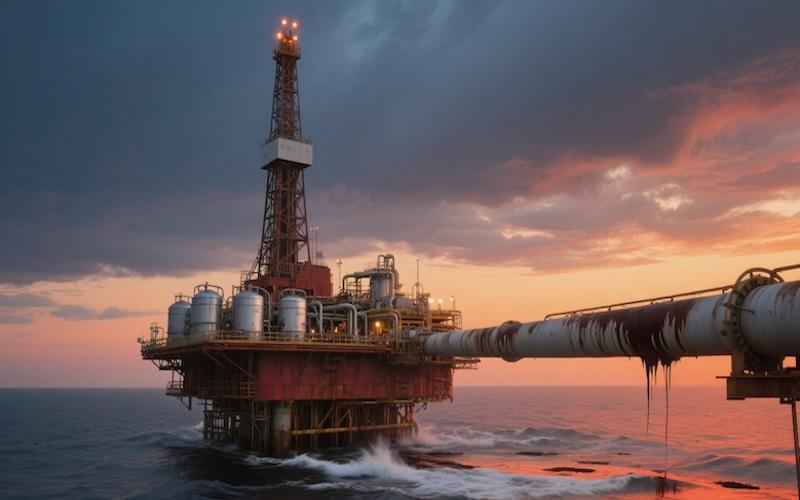
Shipping lane conflicts during a fragile ceasefire
This friction is rooted in the months-long Middle East conflict and the fragile ceasefire system. Since the joint US-Israeli military strike against Iran on February 28, shipping safety in the Strait of Hormuz has been under continuous pressure, with frequent incidents of harassment by merchant ships. On June 19, the US and Iran signed a 60-day temporary ceasefire agreement in Islamabad, putting a temporary halt to the regional situation. However, the core differences between the two sides have not been resolved, and the ceasefire remains in a fragile state of "effective on paper, with constant friction." The Qatari LNG ship attacked was sailing in the southern shipping lane coordinated by Oman and the International Maritime Organization at the time of the incident. The Iranian Revolutionary Guard had previously publicly denied the legitimacy of this shipping lane, unilaterally declaring that only the northern route designated by Iran is the only compliant navigation channel. From the perspective of the incident's causes, the essence of this conflict is a direct clash between Iran's claim to sovereignty over the shipping lanes and internationally accepted navigation rules. Some analyses also suggest that the vessel may have mistakenly entered Iran's mine-clearing operation area and was deemed a threat to maritime safety, rather than a targeted and deliberate attack, further complicating the nature of this conflict.
Factions are divided and the game is becoming more restrained.
Following the incident, the reactions of regional countries and the international community clearly outlined the current camp positions in the Middle East, and the main voices of public opinion showed distinct characteristics, correcting previous misconceptions. In this incident, the core condemners were Qatar and the Gulf Cooperation Council (GCC). The Qatari Ministry of Foreign Affairs immediately asserted that the attack violated international law, undermined freedom of navigation and global energy security, and urgently summoned Iranian ambassadors to lodge a strong protest, explicitly demanding that Iran bear full legal and economic responsibility. The GCC also publicly supported Qatar, condemning Iran for unilaterally creating maritime instability. It is noteworthy that the UAE did not issue a statement condemning this incident; its previous statements only addressed other past attacks on merchant ships and should not be confused with this one.
The US stance further highlights the restraint and strategic nature of the current power struggle. Previously circulated extreme claims were untrue. Trump's latest statement at the White House on July 6th was relatively restrained yet firm, clearly issuing an ultimatum to Iran: "Either negotiate a deal, or the US ends the conflict." However, as of now, the White House has not issued a specific statement regarding the LNG ship attack, nor has it taken any military retaliation or escalation of sanctions, remaining in a wait-and-see assessment phase. This demonstrates that the US has no intention of escalating tensions during the ceasefire window. In contrast, Iran has maintained a vague stance, refusing to formally claim responsibility for the attack and only interpreting the cause as a violation of shipping lanes or interference with operations through state media, avoiding a complete break with the Gulf states and the US. Both sides demonstrate a willingness to manage the escalation of the conflict.
Energy Market: Risks Fully Digested, Oil Price Trends Moderate and Controllable
Compared to the renewed geopolitical turmoil, the global energy market has remained remarkably stable, completely overturning previous extreme market predictions. During the trading session on July 7th, Brent crude futures rose slightly by 2.4% to $73.75 per barrel, while US WTI crude futures rose 2.3% to $70.13 per barrel. The increases were moderate and prices were manageable, far below the peaks of $126 at the beginning of the US-Iran conflict in February and $101 after the regional attacks in May. The core reason for the stable market trend lies in the prior digestion of risks and the supporting role of supply and demand fundamentals. Before the attacks, influenced by the implementation of OPEC+ production quotas and the gradual resumption of shipping in the Strait of Hormuz, oil prices had already fallen to their lowest levels since the conflict began. Saudi Aramco even lowered its Asian crude oil prices and expanded discounts, solidifying market expectations of ample supply. At the same time, after multiple rounds of geopolitical conflicts, the global energy market has become accustomed to intermittent friction in the Strait of Hormuz. Shipowners have adjusted their navigation strategies and diversified their routes, significantly reducing the risk of systemic supply chain disruptions. Most institutions believe that this shock is a localized and controllable event. Neither the US nor Iran can afford the global inflation and economic backlash from a full-blown conflict, and there are sufficient constraints to prevent the situation from escalating.
Situation Summary and Future Outlook
Overall, the current situation in the Middle East has entered a new phase characterized by "preserved ceasefires, normalized frictions, and limited conflicts." The stalled US-Iran negotiations, the intertwined power struggles within the region, and the unresolved disagreements over navigation rules mean that the geopolitical risks in the Strait of Hormuz will not completely dissipate. However, the restraint of all parties and the market's risk buffering mechanisms ensure that a large-scale conflict is unlikely to recur. The core key to the future direction of the situation lies in whether all parties can uphold the ceasefire consensus and return to the path of equal negotiations. The international community should adhere to the principles of multilateral governance, oppose bloc confrontation and military pressure, and unify navigation rules in the Strait through consultation, resolving regional differences through diplomatic means. This is not only crucial for stabilizing the Middle East but also an inevitable choice for safeguarding global energy security and world economic stability.
Shipping lane conflicts during a fragile ceasefire
This friction is rooted in the months-long Middle East conflict and the fragile ceasefire system. Since the joint US-Israeli military strike against Iran on February 28, shipping safety in the Strait of Hormuz has been under continuous pressure, with frequent incidents of harassment by merchant ships. On June 19, the US and Iran signed a 60-day temporary ceasefire agreement in Islamabad, putting a temporary halt to the regional situation. However, the core differences between the two sides have not been resolved, and the ceasefire remains in a fragile state of "effective on paper, with constant friction." The Qatari LNG ship attacked was sailing in the southern shipping lane coordinated by Oman and the International Maritime Organization at the time of the incident. The Iranian Revolutionary Guard had previously publicly denied the legitimacy of this shipping lane, unilaterally declaring that only the northern route designated by Iran is the only compliant navigation channel. From the perspective of the incident's causes, the essence of this conflict is a direct clash between Iran's claim to sovereignty over the shipping lanes and internationally accepted navigation rules. Some analyses also suggest that the vessel may have mistakenly entered Iran's mine-clearing operation area and was deemed a threat to maritime safety, rather than a targeted and deliberate attack, further complicating the nature of this conflict.
Factions are divided and the game is becoming more restrained.
Following the incident, the reactions of regional countries and the international community clearly outlined the current camp positions in the Middle East, and the main voices of public opinion showed distinct characteristics, correcting previous misconceptions. In this incident, the core condemners were Qatar and the Gulf Cooperation Council (GCC). The Qatari Ministry of Foreign Affairs immediately asserted that the attack violated international law, undermined freedom of navigation and global energy security, and urgently summoned Iranian ambassadors to lodge a strong protest, explicitly demanding that Iran bear full legal and economic responsibility. The GCC also publicly supported Qatar, condemning Iran for unilaterally creating maritime instability. It is noteworthy that the UAE did not issue a statement condemning this incident; its previous statements only addressed other past attacks on merchant ships and should not be confused with this one.
The US stance further highlights the restraint and strategic nature of the current power struggle. Previously circulated extreme claims were untrue. Trump's latest statement at the White House on July 6th was relatively restrained yet firm, clearly issuing an ultimatum to Iran: "Either negotiate a deal, or the US ends the conflict." However, as of now, the White House has not issued a specific statement regarding the LNG ship attack, nor has it taken any military retaliation or escalation of sanctions, remaining in a wait-and-see assessment phase. This demonstrates that the US has no intention of escalating tensions during the ceasefire window. In contrast, Iran has maintained a vague stance, refusing to formally claim responsibility for the attack and only interpreting the cause as a violation of shipping lanes or interference with operations through state media, avoiding a complete break with the Gulf states and the US. Both sides demonstrate a willingness to manage the escalation of the conflict.
Energy Market: Risks Fully Digested, Oil Price Trends Moderate and Controllable
Compared to the renewed geopolitical turmoil, the global energy market has remained remarkably stable, completely overturning previous extreme market predictions. During the trading session on July 7th, Brent crude futures rose slightly by 2.4% to $73.75 per barrel, while US WTI crude futures rose 2.3% to $70.13 per barrel. The increases were moderate and prices were manageable, far below the peaks of $126 at the beginning of the US-Iran conflict in February and $101 after the regional attacks in May. The core reason for the stable market trend lies in the prior digestion of risks and the supporting role of supply and demand fundamentals. Before the attacks, influenced by the implementation of OPEC+ production quotas and the gradual resumption of shipping in the Strait of Hormuz, oil prices had already fallen to their lowest levels since the conflict began. Saudi Aramco even lowered its Asian crude oil prices and expanded discounts, solidifying market expectations of ample supply. At the same time, after multiple rounds of geopolitical conflicts, the global energy market has become accustomed to intermittent friction in the Strait of Hormuz. Shipowners have adjusted their navigation strategies and diversified their routes, significantly reducing the risk of systemic supply chain disruptions. Most institutions believe that this shock is a localized and controllable event. Neither the US nor Iran can afford the global inflation and economic backlash from a full-blown conflict, and there are sufficient constraints to prevent the situation from escalating.
Situation Summary and Future Outlook
Overall, the current situation in the Middle East has entered a new phase characterized by "preserved ceasefires, normalized frictions, and limited conflicts." The stalled US-Iran negotiations, the intertwined power struggles within the region, and the unresolved disagreements over navigation rules mean that the geopolitical risks in the Strait of Hormuz will not completely dissipate. However, the restraint of all parties and the market's risk buffering mechanisms ensure that a large-scale conflict is unlikely to recur. The core key to the future direction of the situation lies in whether all parties can uphold the ceasefire consensus and return to the path of equal negotiations. The international community should adhere to the principles of multilateral governance, oppose bloc confrontation and military pressure, and unify navigation rules in the Strait through consultation, resolving regional differences through diplomatic means. This is not only crucial for stabilizing the Middle East but also an inevitable choice for safeguarding global energy security and world economic stability.
- Risk Warning and Disclaimer
- The market involves risk, and trading may not be suitable for all investors. This article is for reference only and does not constitute personal investment advice, nor does it take into account certain users’ specific investment objectives, financial situation, or other needs. Any investment decisions made based on this information are at your own risk.