The Reserve Bank of New Zealand's hawkish stance exceeded expectations, but Commerzbank warned that the market has "over-priced" in three rate hikes.
2026-07-08 16:49:12
On Wednesday (July 8), the Reserve Bank of New Zealand raised the official cash rate by 25 basis points to 2.50%, as widely expected by the market. The New Zealand dollar rose against the US dollar after the announcement and is currently trading around 0.5715, ending several weeks of downward pressure.
However, what truly captured market attention was the hawkish tone revealed in the Reserve Bank of New Zealand's statement—its hawkishness exceeded the previous estimates of most institutions, including Commerzbank.
In a research note released Wednesday, Commerzbank currency analyst Volkmar Bauer pointed out that the Reserve Bank of New Zealand's hawkish stance is not limited to responding to the inflationary shock caused by the conflict with Iran, but extends to a discussion of structural inflation factors.
This signal suggests that the Reserve Bank of New Zealand's concerns about medium-term price pressures are more deeply rooted than the market previously perceived.

The Reserve Bank of New Zealand's (RBNZ) rate hike comes against the backdrop of a significant decline in global energy prices following the partial reopening of the Strait of Hormuz. Logically, lower energy costs should have eased the central bank's tightening pressures. However, the RBNZ stated explicitly that while recent inflationary pressures have eased, the impact of the energy shock will persist for some time, and the medium-term inflation outlook remains highly uncertain.
Powell specifically pointed out that the Reserve Bank of New Zealand's hawkish rhetoric went beyond the scope of the inflationary shock caused by the conflict with Iran. The statement explicitly mentioned structural factors—specifically, the possibility that low productivity growth could structurally exacerbate price pressures. This is a noteworthy signal, as it indicates that the Reserve Bank of New Zealand's policy considerations are not purely focused on cyclical inflation fluctuations, but rather on recognizing deeper supply-side problems in the New Zealand economy.
The Reserve Bank of New Zealand (RBNZ) governor acknowledged concerns that high inflation could dampen household demand in his statement, echoing the assessment of Commerzbank. In other words, the RBNZ itself recognizes that continued tightening could have a dampening effect on consumption.
While Commerzbank aligned its interest rate hike strategy with the Reserve Bank of New Zealand—also anticipating another rate hike in the coming months—it expressed clear skepticism about the current market pricing levels.
Data shows that following the Reserve Bank of New Zealand's decision, the market had already priced in three additional OCR increases within the next 12 months. Powell bluntly stated that this expectation was "excessive." His judgment was based on an assessment of New Zealand's economic fundamentals: Commerzbank believes that the New Zealand economy will perform weakly in the coming months, insufficient to sustain current price pressures.
In other words, the risk of rising inflation will gradually dissipate in the face of actual economic weakness, making the expectation of three interest rate hikes seem overly aggressive.
Powell also cited comments from the Reserve Bank of New Zealand governor himself to support this view—the latter acknowledging that high inflation could drag down household demand. This effectively creates a policy paradox: if interest rate hikes dampen consumption, the economic slowdown will in turn depress inflation, thereby reducing the need for further rate hikes.
From the perspective of the New Zealand dollar exchange rate, the short-term trend is relatively clear. The Reserve Bank of New Zealand's more hawkish statement than expected provided some buying support for the New Zealand dollar, especially given its significant decline over the past few weeks. The market needs to digest this policy signal, and there is some upside potential for the New Zealand dollar against the US dollar around 0.5700.
However, the medium-term outlook is more complex. Commerzbank's core assessment is that once the market begins to adjust its excessive expectations regarding the OCR path—that is, gradually revising down from pricing in three additional rate hikes to one—the New Zealand dollar will face downward pressure again. The logic behind this assessment is that exchange rates often experience significant corrective momentum as market expectations return from extremes to normal.
In summary, the Reserve Bank of New Zealand's July rate hike and hawkish statement provided a short-term boost to the New Zealand dollar, but this positive effect may be difficult to sustain. Commerzbank's view clearly points to the core contradiction in the market: there is a tension between the Reserve Bank of New Zealand's hawkish rhetoric and New Zealand's weak economic fundamentals. The market's pricing in three additional rate hikes may have underestimated the dampening effect of the economic slowdown on inflation.
For the New Zealand dollar, the key variable in the coming weeks lies in the performance of domestic economic data – particularly indicators of service and manufacturing activity, employment data, and the housing market trend. If the data continues to confirm the assessment of economic weakness, a revision of market expectations regarding the OCR path will be inevitable, at which point the New Zealand dollar may return to a depreciation trend. Upside potential above 0.5700 may be limited, with the medium-term risk skewed to the downside.
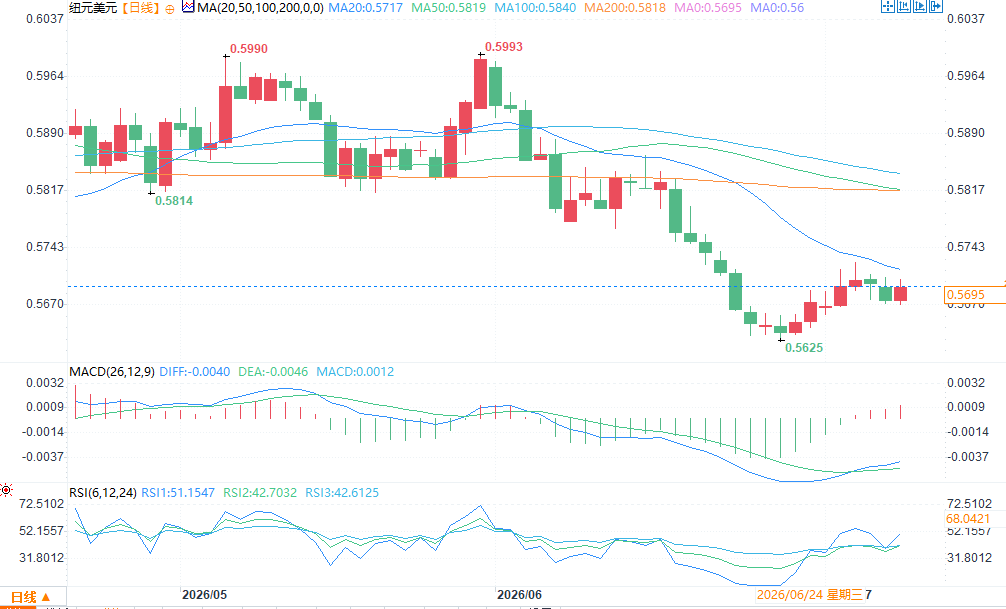
(NZD/USD daily chart, source: FX678)
At 16:01 Beijing time on July 8, the New Zealand dollar was trading at 0.5715/16 against the US dollar.
However, what truly captured market attention was the hawkish tone revealed in the Reserve Bank of New Zealand's statement—its hawkishness exceeded the previous estimates of most institutions, including Commerzbank.
In a research note released Wednesday, Commerzbank currency analyst Volkmar Bauer pointed out that the Reserve Bank of New Zealand's hawkish stance is not limited to responding to the inflationary shock caused by the conflict with Iran, but extends to a discussion of structural inflation factors.
This signal suggests that the Reserve Bank of New Zealand's concerns about medium-term price pressures are more deeply rooted than the market previously perceived.
Policy Statement Analysis: Structural Inflation Concerns Form the Core of the Hawkish Stance
The Reserve Bank of New Zealand's (RBNZ) rate hike comes against the backdrop of a significant decline in global energy prices following the partial reopening of the Strait of Hormuz. Logically, lower energy costs should have eased the central bank's tightening pressures. However, the RBNZ stated explicitly that while recent inflationary pressures have eased, the impact of the energy shock will persist for some time, and the medium-term inflation outlook remains highly uncertain.
Powell specifically pointed out that the Reserve Bank of New Zealand's hawkish rhetoric went beyond the scope of the inflationary shock caused by the conflict with Iran. The statement explicitly mentioned structural factors—specifically, the possibility that low productivity growth could structurally exacerbate price pressures. This is a noteworthy signal, as it indicates that the Reserve Bank of New Zealand's policy considerations are not purely focused on cyclical inflation fluctuations, but rather on recognizing deeper supply-side problems in the New Zealand economy.
The Reserve Bank of New Zealand (RBNZ) governor acknowledged concerns that high inflation could dampen household demand in his statement, echoing the assessment of Commerzbank. In other words, the RBNZ itself recognizes that continued tightening could have a dampening effect on consumption.
Commerzbank believes the market has overpriced in the interest rate hike path.
While Commerzbank aligned its interest rate hike strategy with the Reserve Bank of New Zealand—also anticipating another rate hike in the coming months—it expressed clear skepticism about the current market pricing levels.
Data shows that following the Reserve Bank of New Zealand's decision, the market had already priced in three additional OCR increases within the next 12 months. Powell bluntly stated that this expectation was "excessive." His judgment was based on an assessment of New Zealand's economic fundamentals: Commerzbank believes that the New Zealand economy will perform weakly in the coming months, insufficient to sustain current price pressures.
In other words, the risk of rising inflation will gradually dissipate in the face of actual economic weakness, making the expectation of three interest rate hikes seem overly aggressive.
Powell also cited comments from the Reserve Bank of New Zealand governor himself to support this view—the latter acknowledging that high inflation could drag down household demand. This effectively creates a policy paradox: if interest rate hikes dampen consumption, the economic slowdown will in turn depress inflation, thereby reducing the need for further rate hikes.
New Zealand Dollar Outlook: Supported in the short term, facing pressure for expected corrections in the medium term.
From the perspective of the New Zealand dollar exchange rate, the short-term trend is relatively clear. The Reserve Bank of New Zealand's more hawkish statement than expected provided some buying support for the New Zealand dollar, especially given its significant decline over the past few weeks. The market needs to digest this policy signal, and there is some upside potential for the New Zealand dollar against the US dollar around 0.5700.
However, the medium-term outlook is more complex. Commerzbank's core assessment is that once the market begins to adjust its excessive expectations regarding the OCR path—that is, gradually revising down from pricing in three additional rate hikes to one—the New Zealand dollar will face downward pressure again. The logic behind this assessment is that exchange rates often experience significant corrective momentum as market expectations return from extremes to normal.
Conclusion: The positive impact of hawkish sentiment is limited, and the medium-term risk is skewed to the downside.
In summary, the Reserve Bank of New Zealand's July rate hike and hawkish statement provided a short-term boost to the New Zealand dollar, but this positive effect may be difficult to sustain. Commerzbank's view clearly points to the core contradiction in the market: there is a tension between the Reserve Bank of New Zealand's hawkish rhetoric and New Zealand's weak economic fundamentals. The market's pricing in three additional rate hikes may have underestimated the dampening effect of the economic slowdown on inflation.
For the New Zealand dollar, the key variable in the coming weeks lies in the performance of domestic economic data – particularly indicators of service and manufacturing activity, employment data, and the housing market trend. If the data continues to confirm the assessment of economic weakness, a revision of market expectations regarding the OCR path will be inevitable, at which point the New Zealand dollar may return to a depreciation trend. Upside potential above 0.5700 may be limited, with the medium-term risk skewed to the downside.
(NZD/USD daily chart, source: FX678)
At 16:01 Beijing time on July 8, the New Zealand dollar was trading at 0.5715/16 against the US dollar.
- Risk Warning and Disclaimer
- The market involves risk, and trading may not be suitable for all investors. This article is for reference only and does not constitute personal investment advice, nor does it take into account certain users’ specific investment objectives, financial situation, or other needs. Any investment decisions made based on this information are at your own risk.