The Hormuz trade cut off not only crude oil, but also LNG: the energy competition intensifies, and inflation trading makes a comeback.
2026-07-13 20:28:10
On Monday (July 13), military tensions between the US and Iran escalated sharply in the Strait of Hormuz, with both sides exchanging missiles and drones. Tehran claimed it would once again block the strait. Oil prices jumped more than 3%, global stock markets came under pressure, particularly AI and chip sectors, which suffered heavy losses. Inflation expectations rose sharply, pushing US Treasury yields to multi-month highs, while gold fell due to interest rate anxieties. Market focus shifted to the upcoming US CPI data and the Federal Reserve Chairman's congressional testimony.  The sounds of gunfire in the Strait of Hormuz are sending shockwaves through global financial markets. If you're only focusing on routine data this week, you might miss the real driving forces behind the market. The latest round of retaliatory actions by the US and Iran has once again cast the shadow of disruption over approximately 20% of the world's oil shipping routes, and oil prices have reacted swiftly. But the deeper impact lies in the repricing of inflation expectations—high oil prices, coupled with the Russian diesel export ban and the AI investment boom, are forcing traders to reassess the Federal Reserve's interest rate path. Expectations of a rate hike have resurfaced. This week, the Fed Chair's hearing and CPI data will validate these concerns, making market sentiment tense and sensitive. Key Analysis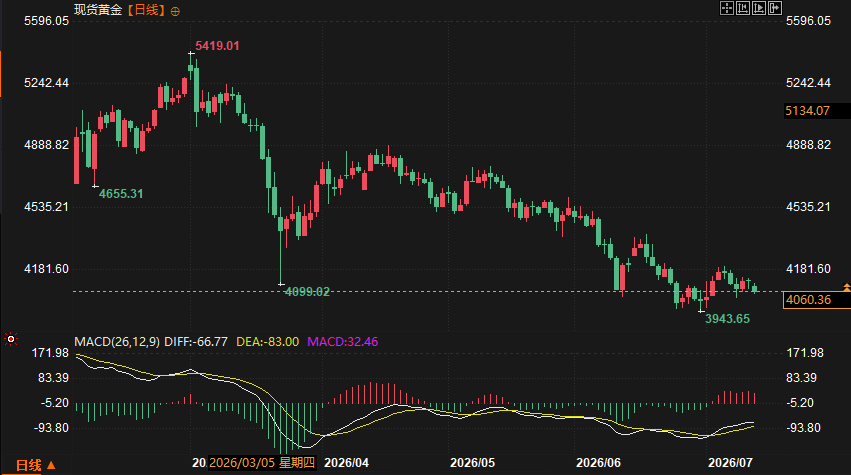
A: Currently, the probability of a full and sustained blockade of the Strait of Hormuz remains low, as pressure from the US midterm elections may force the White House to seek some kind of agreement to lower oil prices. However, intermittent attacks and rising transportation costs have already created a supply risk premium, and oil prices will be extremely sensitive to any news of crossfire. If the conflict unexpectedly escalates, it is not inconceivable that oil prices will test higher levels; traders should treat this as a tail risk. Q: How will this week's US CPI data affect the market?
A: The market generally expects the core CPI monthly rate to be moderate, but the risk lies in a reading of 0.26% or higher, which would trigger deep concerns about a resurgence of inflation, especially given that the core PCE is already as high as 3.5%. If the CPI confirms the transmission effect of oil prices, it will greatly solidify expectations of interest rate hikes, severely impacting the stock and bond markets and supporting the US dollar. Q: Will the Fed really raise interest rates again?
A: Federal funds futures pricing has already hinted at a possible rate hike of nearly 40 basis points this year. If inflation continues to rise unexpectedly, coupled with AI capital expenditures and energy costs, the Fed may begin raising rates in September. This is likely not a single adjustment, but the beginning of a normalization cycle. The wording of the Fed Chair's hearing this week will be an important clue. Q: Why did gold fall instead of rise during the conflict?
A: The core impact of this round of geopolitical conflict is to push up inflation expectations, which in turn raises real interest rates, significantly suppressing the attractiveness of gold. Only when the conflict develops to the point of triggering systemic risk aversion and the market begins to worry about a significant reduction in global growth will gold's safe-haven premium likely outweigh interest rate pressures. Q: Will the European energy crisis return?
A: Risks are building. Asian scramble for US LNG has led to a sharp drop in European arrivals, widening the inventory gap. If Qatari LNG shipments continue to be disrupted, Europe will be forced to compete for supplies at high prices, which will not only push up European inflation but also exacerbate the risk of stagflation globally. This is another energy flashpoint, besides oil prices, that needs close monitoring.
The sounds of gunfire in the Strait of Hormuz are sending shockwaves through global financial markets. If you're only focusing on routine data this week, you might miss the real driving forces behind the market. The latest round of retaliatory actions by the US and Iran has once again cast the shadow of disruption over approximately 20% of the world's oil shipping routes, and oil prices have reacted swiftly. But the deeper impact lies in the repricing of inflation expectations—high oil prices, coupled with the Russian diesel export ban and the AI investment boom, are forcing traders to reassess the Federal Reserve's interest rate path. Expectations of a rate hike have resurfaced. This week, the Fed Chair's hearing and CPI data will validate these concerns, making market sentiment tense and sensitive. Key AnalysisThe Hormuz Powder Keg: Crude Oil Risk Premium Expands Rapidly
The spiral of US-Iran strikes and retaliations is escalating. Tehran has adopted a strategy of simultaneous talks and attacks, constantly probing the waters, with its true intention likely being to strengthen its control over navigation in the Strait of Hormuz, rather than simply seeking the lifting of sanctions. In this exchange of fire, commercial vessels and Qatari LNG carriers have already been attacked, and the risk of supply disruptions is beginning to materialize from the outset. Even if the Strait is not completely blocked, shipping insurance rates and detour costs already constitute a de facto supply tightening. Oil prices were already supported before the conflict by the disruption of Russian diesel exports due to the Russia-Ukraine situation; now, with the double risk of supply disruptions, Brent crude briefly surged above $78. The US summer driving season combined with the pressure of the midterm elections means the White House has limited tolerance for high oil prices, which may force it to take more aggressive actions, further exacerbating geopolitical instability and oil price volatility.The nightmare of inflation reignites: Interest rate hike expectations resurface.
Traders should be most wary of the fact that oil price shocks can seep into core inflation through channels such as diesel and jet fuel. Following the attacks on Russian refineries, diesel exports were suspended, and Russia accounts for approximately 12% of global diesel exports, supporting land transportation, construction, and agricultural costs. More concerning is that core PCE inflation, already stubbornly hovering around 3.5%, is being further fueled by the AI investment boom through channels such as business services and electricity demand. Major overseas institutions warn that the market's excessive focus on a potentially moderate core CPI is overlooking the accelerating risk of core CPI converging with core PCE—not the latter cooling down, but the former being pushed up by oil prices and diesel costs. Federal funds futures already imply a nearly 40 basis point rate hike bet this year, and the 2-year Treasury yield has climbed to a 17-month high near 4.24%. Rising inflation expectations are significantly eroding hopes for rate cuts; higher and longer-lasting interest rates are no longer a tail risk, but the baseline scenario.The battle between safe-haven demand and interest rates: Gold under pressure, dollar supported.
Geopolitical tensions typically benefit gold, but this time the logic was disrupted by high oil prices. Increased inflation fears due to rising oil prices imply higher real interest rates, directly pressuring non-interest-bearing gold, which fell to around $4060. The US dollar index, however, showed resilience, benefiting from a safe-haven premium and the expectation of rising US interest rates, which increased the interest rate differential for dollar assets. The euro was relatively constrained by Europe's more severe energy shortages. While the yen was affected by rumors of Japanese pension fund repatriation, the widening US-Japan interest rate differential meant that intervention could only slow its depreciation. The core narrative in the current foreign exchange market has shifted to "who can withstand the impact of high oil prices," with the US, as an energy producer, gaining relative immunity.Hidden Clues: The Asian LNG Battle and the European Gas Shortage
The Hormuz conflict also disrupted Qatar's LNG supply routes, forcing Asian buyers to purchase US LNG at inflated prices. Data shows that Asian LNG imports in July are expected to reach a six-month high, with Japan and South Korea experiencing a surge in imports from the US, directly impacting Europe's market share. European LNG arrivals have fallen to a near two-year low, and the natural gas inventory gap has widened by 22% compared to the ten-year average. This means that European utilities may ultimately be forced to raise prices to compete for gas supplies from Asia, further pushing up global energy costs and fueling inflation.Trend Outlook
In the short term, oil prices will remain highly volatile, highly sensitive to any real-time news regarding shipping in the Taiwan Strait; US Treasury yields face continued upward pressure until CPI data or Fed hearings provide clear signals; gold prices will fluctuate weakly unless the conflict triggers a full-blown safe-haven rush that outweighs interest rate concerns; the US dollar will remain relatively strong. In the long term, if the US-Iran stalemate and Russian supply disruptions persist, core inflation may accelerate in the second half of the year, forcing the Fed to open a rate hike window before the midterm elections, with September being a key observation point. This path will continue to suppress the valuations of technology stocks and risk assets, while energy and physical assets will relatively benefit. The turning point lies in the de-escalation of the conflict and the reopening of energy routes, but current game-playing does not point in this direction.Frequently Asked Questions
Q: Will the US-Iran conflict cause oil prices to spiral out of control?A: Currently, the probability of a full and sustained blockade of the Strait of Hormuz remains low, as pressure from the US midterm elections may force the White House to seek some kind of agreement to lower oil prices. However, intermittent attacks and rising transportation costs have already created a supply risk premium, and oil prices will be extremely sensitive to any news of crossfire. If the conflict unexpectedly escalates, it is not inconceivable that oil prices will test higher levels; traders should treat this as a tail risk. Q: How will this week's US CPI data affect the market?
A: The market generally expects the core CPI monthly rate to be moderate, but the risk lies in a reading of 0.26% or higher, which would trigger deep concerns about a resurgence of inflation, especially given that the core PCE is already as high as 3.5%. If the CPI confirms the transmission effect of oil prices, it will greatly solidify expectations of interest rate hikes, severely impacting the stock and bond markets and supporting the US dollar. Q: Will the Fed really raise interest rates again?
A: Federal funds futures pricing has already hinted at a possible rate hike of nearly 40 basis points this year. If inflation continues to rise unexpectedly, coupled with AI capital expenditures and energy costs, the Fed may begin raising rates in September. This is likely not a single adjustment, but the beginning of a normalization cycle. The wording of the Fed Chair's hearing this week will be an important clue. Q: Why did gold fall instead of rise during the conflict?
A: The core impact of this round of geopolitical conflict is to push up inflation expectations, which in turn raises real interest rates, significantly suppressing the attractiveness of gold. Only when the conflict develops to the point of triggering systemic risk aversion and the market begins to worry about a significant reduction in global growth will gold's safe-haven premium likely outweigh interest rate pressures. Q: Will the European energy crisis return?
A: Risks are building. Asian scramble for US LNG has led to a sharp drop in European arrivals, widening the inventory gap. If Qatari LNG shipments continue to be disrupted, Europe will be forced to compete for supplies at high prices, which will not only push up European inflation but also exacerbate the risk of stagflation globally. This is another energy flashpoint, besides oil prices, that needs close monitoring.
- Risk Warning and Disclaimer
- The market involves risk, and trading may not be suitable for all investors. This article is for reference only and does not constitute personal investment advice, nor does it take into account certain users’ specific investment objectives, financial situation, or other needs. Any investment decisions made based on this information are at your own risk.