The British pound has retreated significantly from its highs against the US dollar and is now entering a consolidation phase in the short term.
2026-07-17 16:44:12
The British pound against the US dollar (GBP/USD) experienced a significant technical pullback after a period of continuous gains. The exchange rate had previously risen to around 1.3556 , reaching a recent high, but subsequently quickly retreated to around 1.3460 , a daily decline of approximately 0.43% . Although short-term profit-taking increased significantly, the exchange rate remains within its recent high range, indicating that the medium-term upward trend has not yet completely reversed.  This pullback was mainly due to the release of technical overbought pressure after the previous continuous rise. As the pound climbed rapidly, short-term profit-taking occurred, preventing the exchange rate from breaking through the resistance near 1.3560 and instead resulting in a rapid correction at higher levels. However, judging from the current market performance, the bearish forces have not yet gained sustained dominance. After falling to around 1.3460, the exchange rate found some buying support and entered a consolidation phase at higher levels. The US dollar remains a crucial factor influencing the pound's movement. Recent tensions between the US and Iran, coupled with rising international oil prices, have prompted the market to reassess global inflation risks, with investors generally expecting the Federal Reserve to maintain high interest rates for a longer period. This has provided some support for the US dollar, putting temporary pressure on non-US currencies, including the pound. Meanwhile, recent US employment and manufacturing data have been generally robust, further strengthening market confidence in the resilience of the US economy. The market currently estimates that the probability of the Federal Reserve raising interest rates by another 25 basis points before the end of this year remains high, and high US Treasury yields are keeping the dollar generally strong. However, the fundamentals in the UK still provide some support for the pound. Improved UK fiscal prospects and market expectations of relative economic stability have allowed the pound to outperform some major non-US currencies. While a short-term pullback has occurred, funds have not significantly shifted towards a bearish stance on the pound, and the foundation for a medium- to long-term uptrend remains intact. Market sentiment suggests investors are currently awaiting new economic data and central bank policy signals. If subsequent US economic data remains strong, the dollar may maintain its advantage, and the pound may continue its short-term consolidation. If the dollar's rise slows while UK economic data remains stable, the pound may have a chance to resume its upward trend. Technically, the GBP/USD daily chart maintains a generally bullish structure, but after a rapid rise, it has entered a technical correction phase. The MACD indicator remains above the zero line, with the red bars narrowing, indicating that bullish momentum has weakened but has not yet turned bearish. Medium- to long-term moving averages continue to rise, and the overall trend remains bullish. Currently, the key support level to watch is 1.3420 . As long as the price holds this area, the medium-term uptrend is expected to continue. On the upside, the first resistance level to watch is around 1.3520 , with a more significant resistance level at 1.3590 . A successful break above this level could open up further upside potential. From the 4-hour chart, the GBP/USD pair has entered a short-term consolidation phase. The MACD has shown signs of a death cross, indicating a significant cooling of short-term upward momentum. However, the indicators have not yet entered a clear bearish zone, suggesting that this correction is more of a technical adjustment within an uptrend. Short-term moving averages are gradually flattening, indicating the market is entering a directional decision phase. If the exchange rate regains its footing above 1.3520, it may retest the important resistance level of 1.3590. If it breaks below 1.3420, it may enter a longer period of range-bound consolidation. However, as long as key support levels are not effectively broken, the medium-term bullish trend is expected to remain intact.
 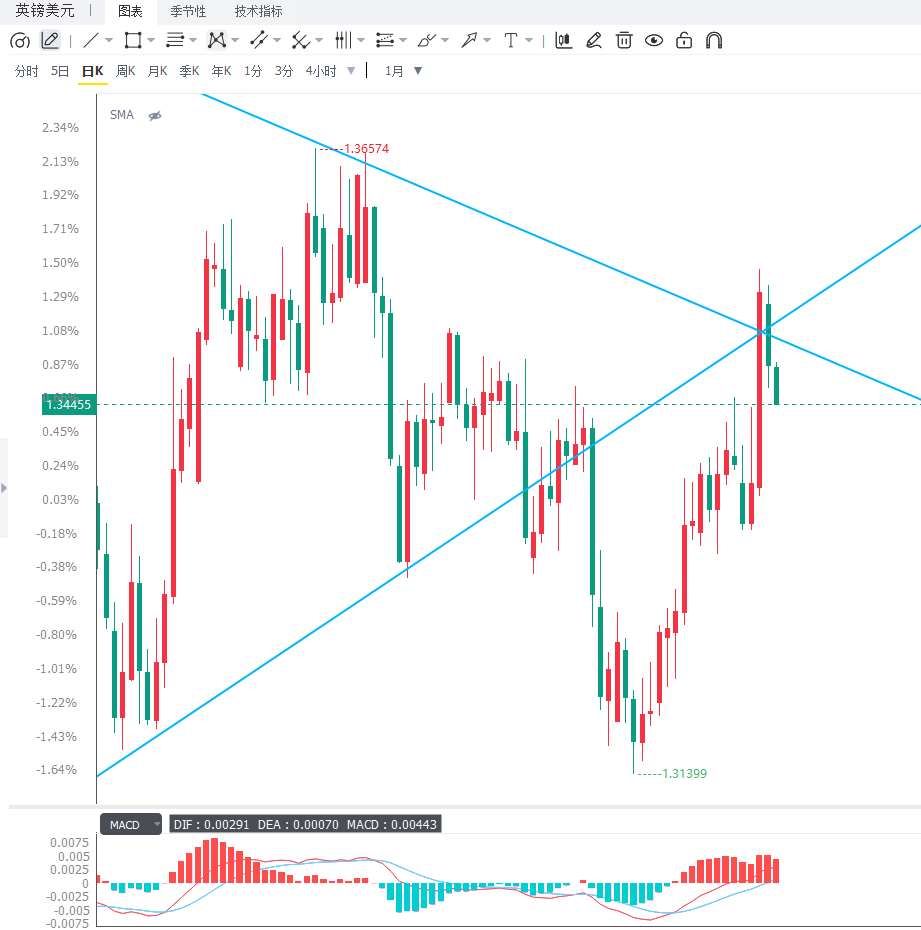 Editor's Summary : In summary, the British pound has experienced a technical pullback after its rapid rise against the US dollar, with short-term bullish momentum cooling somewhat, but the overall upward trend has not been substantially broken. The US dollar is supported by the resilience of the US economy, expectations of high interest rates from the Federal Reserve, and safe-haven demand stemming from the Middle East situation, putting some pressure on the pound. However, the UK's economic fundamentals continue to provide medium- to long-term support for the pound. Going forward, the market will focus on US economic data, Federal Reserve policy signals, and the performance of the UK economy. As long as the key support level of 1.3420 holds, the British pound against the US dollar is still expected to retest the important resistance level near 1.3590 after consolidation.
This pullback was mainly due to the release of technical overbought pressure after the previous continuous rise. As the pound climbed rapidly, short-term profit-taking occurred, preventing the exchange rate from breaking through the resistance near 1.3560 and instead resulting in a rapid correction at higher levels. However, judging from the current market performance, the bearish forces have not yet gained sustained dominance. After falling to around 1.3460, the exchange rate found some buying support and entered a consolidation phase at higher levels. The US dollar remains a crucial factor influencing the pound's movement. Recent tensions between the US and Iran, coupled with rising international oil prices, have prompted the market to reassess global inflation risks, with investors generally expecting the Federal Reserve to maintain high interest rates for a longer period. This has provided some support for the US dollar, putting temporary pressure on non-US currencies, including the pound. Meanwhile, recent US employment and manufacturing data have been generally robust, further strengthening market confidence in the resilience of the US economy. The market currently estimates that the probability of the Federal Reserve raising interest rates by another 25 basis points before the end of this year remains high, and high US Treasury yields are keeping the dollar generally strong. However, the fundamentals in the UK still provide some support for the pound. Improved UK fiscal prospects and market expectations of relative economic stability have allowed the pound to outperform some major non-US currencies. While a short-term pullback has occurred, funds have not significantly shifted towards a bearish stance on the pound, and the foundation for a medium- to long-term uptrend remains intact. Market sentiment suggests investors are currently awaiting new economic data and central bank policy signals. If subsequent US economic data remains strong, the dollar may maintain its advantage, and the pound may continue its short-term consolidation. If the dollar's rise slows while UK economic data remains stable, the pound may have a chance to resume its upward trend. Technically, the GBP/USD daily chart maintains a generally bullish structure, but after a rapid rise, it has entered a technical correction phase. The MACD indicator remains above the zero line, with the red bars narrowing, indicating that bullish momentum has weakened but has not yet turned bearish. Medium- to long-term moving averages continue to rise, and the overall trend remains bullish. Currently, the key support level to watch is 1.3420 . As long as the price holds this area, the medium-term uptrend is expected to continue. On the upside, the first resistance level to watch is around 1.3520 , with a more significant resistance level at 1.3590 . A successful break above this level could open up further upside potential. From the 4-hour chart, the GBP/USD pair has entered a short-term consolidation phase. The MACD has shown signs of a death cross, indicating a significant cooling of short-term upward momentum. However, the indicators have not yet entered a clear bearish zone, suggesting that this correction is more of a technical adjustment within an uptrend. Short-term moving averages are gradually flattening, indicating the market is entering a directional decision phase. If the exchange rate regains its footing above 1.3520, it may retest the important resistance level of 1.3590. If it breaks below 1.3420, it may enter a longer period of range-bound consolidation. However, as long as key support levels are not effectively broken, the medium-term bullish trend is expected to remain intact. Editor's Summary : In summary, the British pound has experienced a technical pullback after its rapid rise against the US dollar, with short-term bullish momentum cooling somewhat, but the overall upward trend has not been substantially broken. The US dollar is supported by the resilience of the US economy, expectations of high interest rates from the Federal Reserve, and safe-haven demand stemming from the Middle East situation, putting some pressure on the pound. However, the UK's economic fundamentals continue to provide medium- to long-term support for the pound. Going forward, the market will focus on US economic data, Federal Reserve policy signals, and the performance of the UK economy. As long as the key support level of 1.3420 holds, the British pound against the US dollar is still expected to retest the important resistance level near 1.3590 after consolidation.
- Risk Warning and Disclaimer
- The market involves risk, and trading may not be suitable for all investors. This article is for reference only and does not constitute personal investment advice, nor does it take into account certain users’ specific investment objectives, financial situation, or other needs. Any investment decisions made based on this information are at your own risk.