Geopolitical tensions fueled risk aversion, causing the euro to return to range-bound trading against the dollar.
2026-07-17 16:56:12
The euro/dollar exchange rate has been fluctuating narrowly around its previous highs recently, with neither bulls nor bears having the catalyst to push the exchange rate higher. Against the backdrop of escalating tensions between the US and Iran, a sharp rise in international oil prices, and significant uncertainty surrounding the monetary policy outlook in Europe and the US, the euro/dollar exchange rate has generally maintained a consolidation trend.  The market's focus has shifted back to the international energy market. As the military conflict between the US and Iran escalates, global energy transportation risks continue to rise, keeping international oil prices high. Rising energy prices have not only fueled renewed global inflation expectations but also increased uncertainty surrounding the European Central Bank's (ECB) future monetary policy. Europe, as an energy-importing region, is more sensitive to changes in international oil prices. With rising energy costs, the market is reassessing the ECB's future policy path. Some investors believe that if oil prices remain high, imported inflation may resurface, increasing the likelihood that the ECB will maintain its tight monetary policy. Therefore, the correlation between recent international oil price movements and the ECB's year-end interest rate expectations has significantly strengthened. Meanwhile, the situation in the US is more complex. On the one hand, recent US consumer and producer inflation data have generally cooled, easing market expectations for further short-term interest rate hikes. On the other hand, the US job market and manufacturing activity remain resilient, and the potential for renewed inflation due to rising international oil prices has led to significant disagreement in the market regarding whether the Federal Reserve will maintain high interest rates. Furthermore, besides being influenced by monetary policy, the US dollar's status as a major global reserve currency and safe-haven currency remains a crucial factor supporting its position. As the conflict between the US and Iran continues to escalate, global demand for safe-haven assets has increased, with some funds continuing to flow into dollar assets, keeping the dollar relatively stable overall. However, some argue that increased discussion in the international market regarding the long-term credit foundation of the dollar in recent years has created some uncertainty about its medium- to long-term trend. The market generally believes that investors are inclined to remain cautious and wait-and-see ahead of the European Central Bank and the Federal Reserve's interest rate meetings in the next two weeks. Currently, the conditions for further interest rate hikes by the European Central Bank in the short term are not yet fully mature, and the Federal Reserve has not yet released any clear signals of a shift towards easing; therefore, the differences in monetary policy between the US and Europe are unlikely to change significantly in the short term. Meanwhile, developments in the US-Iran situation will continue to affect international energy prices. If international oil prices continue to rise, inflationary pressures in Europe may further increase, while the US may also face the risk of energy-driven reflation, thus affecting the future policy pace of the two central banks. This also means that the euro/dollar exchange rate still lacks a clear direction in the short term. From a technical perspective, the euro/dollar exchange rate remains in a consolidation pattern on the daily chart, trading near previous rebound highs, but has failed to break through key resistance levels multiple times. The MACD indicator is gradually flattening, with the red bars continuing to narrow, indicating a weakening of bullish momentum. The medium- and long-term moving averages continue to rise, and the overall medium-term structure remains intact. Currently, the key support level to watch is around 1.1330 . As long as this area holds, the exchange rate is expected to maintain a slightly bullish trend. On the upside, the first resistance level to watch is 1.1477 , with further resistance levels at 1.1508 , 1.1563 , and 1.1618 . Looking at the 4-hour chart, the EUR/USD pair continues to consolidate around the moving average system, with the MACD near the zero line, indicating a lack of clear market direction. The short-term moving averages are gradually flattening, reflecting a short-term range-bound trading pattern. If the price breaks through the 1.1477-1.1508 resistance zone, the bulls are likely to regain the upper hand; however, a break below the key support of 1.1330 could trigger a deeper correction. The short-term trend should still be viewed as range-bound consolidation.
 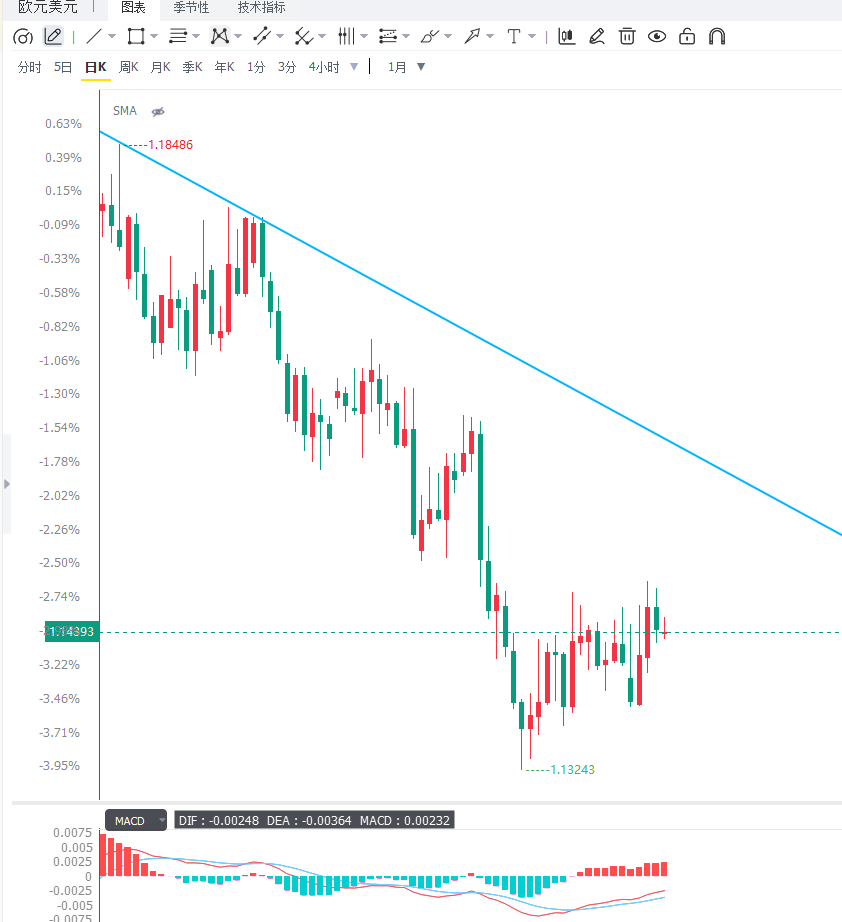 Editor's Summary : In summary, the situation between the US and Iran has pushed up international oil prices, making the European Central Bank's policy expectations subject to energy prices again. Meanwhile, the US faces a complex environment with declining inflation, economic resilience, and high interest rate expectations coexisting. Both the US and European monetary policy directions lack clear new signals in the short term. Ahead of the ECB and Fed rate meetings, market sentiment is expected to remain cautious, and the euro/dollar exchange rate is likely to maintain a range-bound trading pattern. Going forward, investors should pay close attention to changes in international oil prices, US and European economic data, and policy statements from the two central banks. These factors will determine whether the exchange rate can break out of the current consolidation pattern.
The market's focus has shifted back to the international energy market. As the military conflict between the US and Iran escalates, global energy transportation risks continue to rise, keeping international oil prices high. Rising energy prices have not only fueled renewed global inflation expectations but also increased uncertainty surrounding the European Central Bank's (ECB) future monetary policy. Europe, as an energy-importing region, is more sensitive to changes in international oil prices. With rising energy costs, the market is reassessing the ECB's future policy path. Some investors believe that if oil prices remain high, imported inflation may resurface, increasing the likelihood that the ECB will maintain its tight monetary policy. Therefore, the correlation between recent international oil price movements and the ECB's year-end interest rate expectations has significantly strengthened. Meanwhile, the situation in the US is more complex. On the one hand, recent US consumer and producer inflation data have generally cooled, easing market expectations for further short-term interest rate hikes. On the other hand, the US job market and manufacturing activity remain resilient, and the potential for renewed inflation due to rising international oil prices has led to significant disagreement in the market regarding whether the Federal Reserve will maintain high interest rates. Furthermore, besides being influenced by monetary policy, the US dollar's status as a major global reserve currency and safe-haven currency remains a crucial factor supporting its position. As the conflict between the US and Iran continues to escalate, global demand for safe-haven assets has increased, with some funds continuing to flow into dollar assets, keeping the dollar relatively stable overall. However, some argue that increased discussion in the international market regarding the long-term credit foundation of the dollar in recent years has created some uncertainty about its medium- to long-term trend. The market generally believes that investors are inclined to remain cautious and wait-and-see ahead of the European Central Bank and the Federal Reserve's interest rate meetings in the next two weeks. Currently, the conditions for further interest rate hikes by the European Central Bank in the short term are not yet fully mature, and the Federal Reserve has not yet released any clear signals of a shift towards easing; therefore, the differences in monetary policy between the US and Europe are unlikely to change significantly in the short term. Meanwhile, developments in the US-Iran situation will continue to affect international energy prices. If international oil prices continue to rise, inflationary pressures in Europe may further increase, while the US may also face the risk of energy-driven reflation, thus affecting the future policy pace of the two central banks. This also means that the euro/dollar exchange rate still lacks a clear direction in the short term. From a technical perspective, the euro/dollar exchange rate remains in a consolidation pattern on the daily chart, trading near previous rebound highs, but has failed to break through key resistance levels multiple times. The MACD indicator is gradually flattening, with the red bars continuing to narrow, indicating a weakening of bullish momentum. The medium- and long-term moving averages continue to rise, and the overall medium-term structure remains intact. Currently, the key support level to watch is around 1.1330 . As long as this area holds, the exchange rate is expected to maintain a slightly bullish trend. On the upside, the first resistance level to watch is 1.1477 , with further resistance levels at 1.1508 , 1.1563 , and 1.1618 . Looking at the 4-hour chart, the EUR/USD pair continues to consolidate around the moving average system, with the MACD near the zero line, indicating a lack of clear market direction. The short-term moving averages are gradually flattening, reflecting a short-term range-bound trading pattern. If the price breaks through the 1.1477-1.1508 resistance zone, the bulls are likely to regain the upper hand; however, a break below the key support of 1.1330 could trigger a deeper correction. The short-term trend should still be viewed as range-bound consolidation. Editor's Summary : In summary, the situation between the US and Iran has pushed up international oil prices, making the European Central Bank's policy expectations subject to energy prices again. Meanwhile, the US faces a complex environment with declining inflation, economic resilience, and high interest rate expectations coexisting. Both the US and European monetary policy directions lack clear new signals in the short term. Ahead of the ECB and Fed rate meetings, market sentiment is expected to remain cautious, and the euro/dollar exchange rate is likely to maintain a range-bound trading pattern. Going forward, investors should pay close attention to changes in international oil prices, US and European economic data, and policy statements from the two central banks. These factors will determine whether the exchange rate can break out of the current consolidation pattern.
- Risk Warning and Disclaimer
- The market involves risk, and trading may not be suitable for all investors. This article is for reference only and does not constitute personal investment advice, nor does it take into account certain users’ specific investment objectives, financial situation, or other needs. Any investment decisions made based on this information are at your own risk.