The escalating conflict between the US and Iran has disrupted oil prices, causing them to surge 3% to a more than one-month high.
2026-07-20 07:54:13
On Monday (July 20), international oil prices jumped sharply, impacted by the escalating military conflict between the US and Iran and the serious threat posed to the energy transport route through the Strait of Hormuz. Brent crude futures briefly broke through $91 per barrel, while WTI crude briefly surpassed $84 to reach $84.60 per barrel, both hitting new highs since June 11. Both oil prices rose by more than 3% at one point, and their cumulative gains last week exceeded 15%. This volatility highlights the immediate impact of Middle East geopolitical risks on the global energy market. 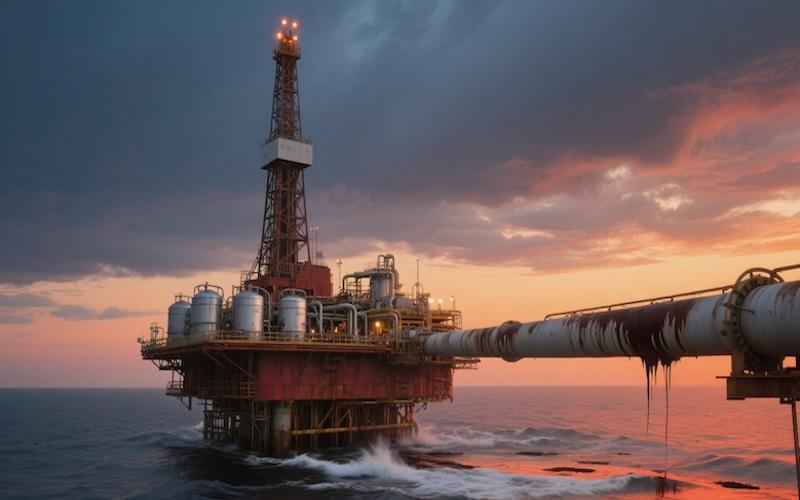
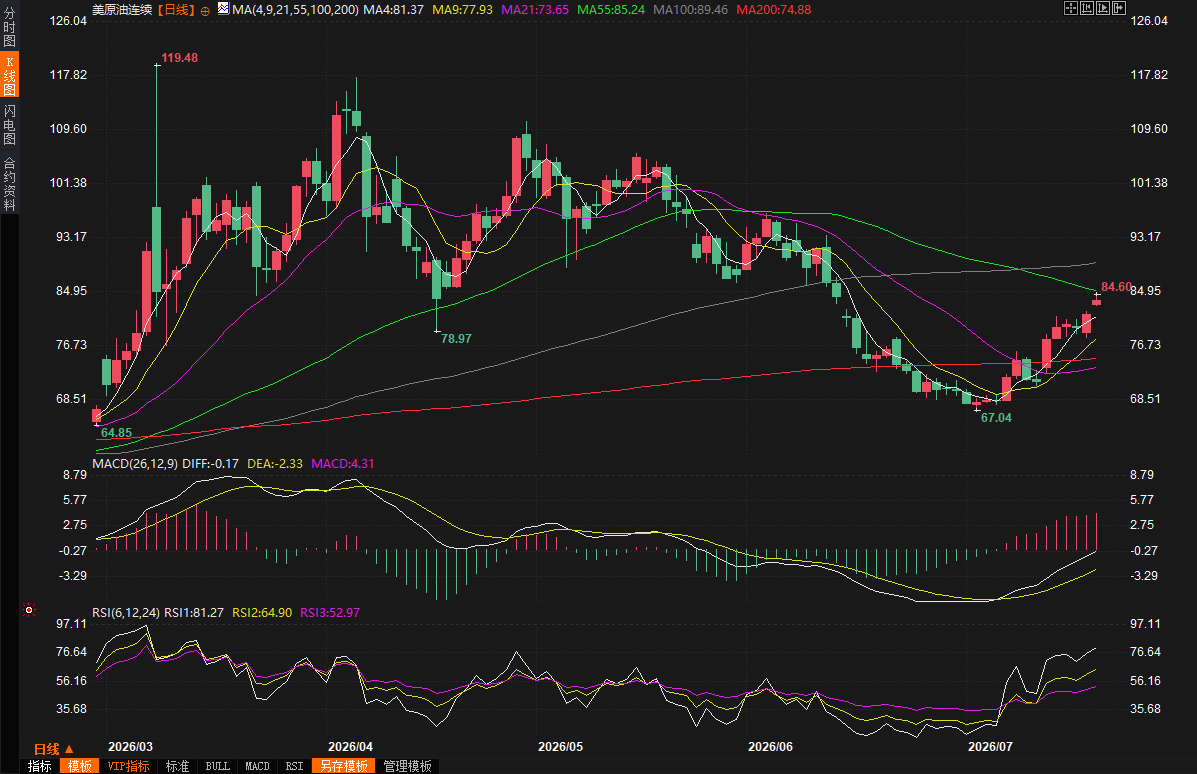 (US crude oil daily chart, source: FX678) At 07:50 Beijing time, US crude oil futures were trading at $83.94 per barrel.
Background of the conflict: The temporary ceasefire broke down and attacks continued to escalate.
A month ago, the US and Iran signed a temporary ceasefire agreement, but it quickly collapsed. The struggle between the two sides over control of the Strait of Hormuz has intensified, leading to escalating attacks. US Central Command stated that it has launched airstrikes against Iran for the eighth consecutive night, targeting measures including weakening Iran's ability to threaten commercial shipping in the strait and punishing Islamic Revolutionary Guard Corps forces suspected of attacking US forces. The latest round of strikes began Saturday night, destroying Iranian coastal surveillance and air defense facilities. Iran reported that the US attacked areas in the south, including Sirik and Shadegan, as well as near the Iraqi border, and targeted a nuclear power plant under construction in Darhoven. The Atomic Energy Organization of Iran strongly condemned the attacks, and Iranian Deputy Foreign Minister Qazim Gharibabadi stated that Iran will take appropriate action to defend its national interests. US officials had previously deployed additional military forces, including fighter jets, to the Middle East.Regional allies involved in intercepting Iranian attacks
The conflict has spilled over into US allies in the Middle East. Kuwait, Bahrain, and Jordan all reported intercepting Iranian missile and drone attacks. Kuwait's desalination plant suffered two consecutive days of attacks, triggering fires and causing severe damage to critical civilian infrastructure. Bahrain's air defense system successfully intercepted the attacks, while air raid sirens sounded and multiple missiles were shot down in Jordan. The Israeli military detected the launches and stated it was ready to resume operations immediately. Furthermore, US forces reported casualties in Jordan and Iraq: the Jordanian attack resulted in at least two US soldiers killed and one missing (remains were found and are being identified); in northern Iraq, a US soldier died while handling unexploded ordnance from an Iranian drone, and another was wounded. Israeli officials revealed that the US has notified them of plans to escalate its attacks on Iran in the coming days but hopes Israel will not become involved in the escalation cycle.Disruptions to maritime shipping put pressure on energy supply chains
The Strait of Hormuz is the world's most important oil shipping route. Iran's Revolutionary Guard claimed two ships were involved in an "incident" in the strait and warned of action against vessels violating navigation rules. The United States, in turn, imposed a maritime blockade on Iranian ports. Both sides accused each other of threatening commercial shipping, leading to a significant decrease in traffic in the strait and posing a risk of disruption to the global energy supply chain. This directly pushed up oil price risk premiums, causing gasoline and heating oil futures to rise in tandem.Editor's Summary:
The current US-Iran conflict has escalated from a temporary ceasefire to multiple rounds of direct confrontation, making the stability of the Strait of Hormuz a key variable for global energy security. Oil prices have risen significantly in the short term, driven by geopolitical risks, but their long-term trend still depends on diplomatic efforts, the degree of military restraint, and the responsiveness of global crude oil inventories and alternative supplies. Market participants need to closely monitor the evolving situation and guard against the potential cascading effects of further supply chain disruptions.Frequently Asked Questions
Q1: What is the core driving factor behind this surge in oil prices? A: Primarily, it stems from the escalation of the US-Iran conflict, which has disrupted shipping through the Strait of Hormuz. This strait handles approximately 20% of global oil shipments, and any disruption would trigger supply concerns. News reports indicate that the US launched its eighth consecutive night of airstrikes against Iran, and Iran responded by attacking a regional ally and affecting ship passage. Oil prices had already risen by over 15% last week, and surged by over 3% on Monday alone, with Brent crude breaking $91 and WTI crude breaking $84, reaching recent highs. Risk premiums have rapidly pushed up prices, reflecting the market's pricing in potential long-term disruptions. Q2: How is the conflict affecting regional countries and the US military? A: The conflict has spread to multiple countries. Kuwait's desalination plant was attacked, severely damaging infrastructure; Bahrain and Jordan intercepted missiles and protested; Israel remains on high alert. On the US side, two US soldiers died and one is missing (remains are being identified) in Jordan, and one was killed and one wounded in Iraq. Iran accused the US of attacking a nuclear facility under construction and stated it would take corresponding action. This shows that the conflict has expanded from bilateral to regional proxies, increasing the risk of miscalculation and full-scale escalation. Q3: What exactly does the "incident" in the Strait of Hormuz refer to? A: The Iranian Revolutionary Guard claimed that four ships ignored warnings and attempted to pass through an "unsafe route," two of which encountered an "incident." The United States denied the allegations and maintained the blockade. This reflects a direct confrontation between the two sides over control of the Strait, potentially involving threats from drones, missiles, or mines, leading to a significant reduction in shipping traffic and putting pressure on global energy prices. Q4: What is Israel's role in the conflict and its preparedness? A: Israel is closely monitoring the situation and is ready to resume combat immediately, receiving support from more US aerial refueling tankers. The US has notified Israel of a possible escalation of strikes but hopes it will not directly intervene to avoid further escalation. Israeli Chief of Staff Zamir emphasized a firm stance against any threat. This indicates that Israel, as a key ally, could further amplify regional tensions with its actions. Q5: How might oil prices and the conflict develop in the future? A: Short-term oil prices are likely to continue to fluctuate due to news-driven volatility. If the Strait disruption continues, it may test higher price levels. However, historical experience shows that diplomatic mediation or military restraint can often mitigate supply shocks. Global inventories, OPEC+ responses, and alternative routes (such as increased production from other oil-producing countries) will buffer the impact. Investors should pay attention to Central Command updates, IAEA investigations into nuclear facilities, and potential ceasefire negotiations, balancing geopolitical risks with macroeconomic demand factors. (US crude oil daily chart, source: FX678) At 07:50 Beijing time, US crude oil futures were trading at $83.94 per barrel.
- Risk Warning and Disclaimer
- The market involves risk, and trading may not be suitable for all investors. This article is for reference only and does not constitute personal investment advice, nor does it take into account certain users’ specific investment objectives, financial situation, or other needs. Any investment decisions made based on this information are at your own risk.