Strange phenomenon in the Japanese economy: Interest rates hit a 31-year high, but why did the yen fall to a 40-year low?
2026-07-21 01:06:13
Most investors have heard the common sense that when a country raises interest rates, its currency appreciates. The logic is simple: higher interest rates mean higher returns on savings and investments, attracting foreign investment and naturally strengthening the currency. However, Japan is currently experiencing a completely counterintuitive situation: the Bank of Japan has continued to raise interest rates to a 31-year high, yet the yen's exchange rate has plummeted to its lowest level in nearly 40 years. 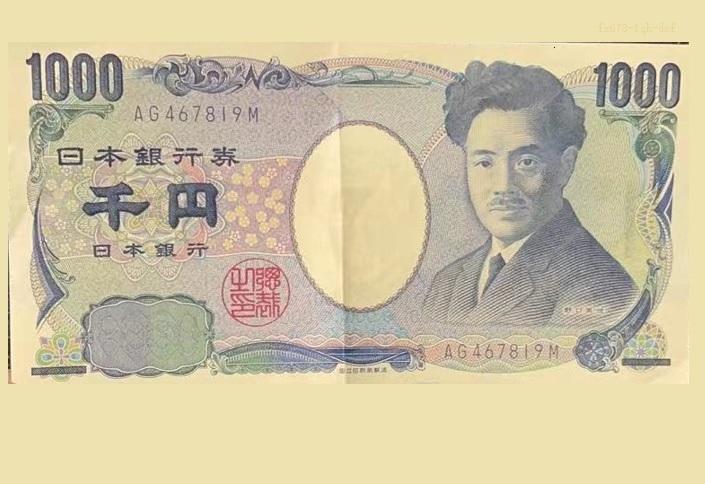 The vast majority of retail investors and ordinary investors have been bewildered by this market trend. The mainstream market interpretation has also been consistently wrong; everyone has been misled by the superficial indicator of "high or low interest rates." Let's set aside complex financial jargon and use logic that ordinary people can understand to thoroughly explain this unusual market trend in Japan and its implications for our investments. A common market misconception: mistaking "low interest rates" for "monetary easing." For decades, everyone has held the fixed belief that Japan's zero or low interest rates equate to super-loose monetary policy and rampant monetary easing. Therefore, everyone agrees that as long as Japan starts raising interest rates and tightening monetary policy, inflation will stabilize, the yen will appreciate, and the economy will improve. This was also the core judgment of Bank of Japan Governor Kazuo Ueda. After taking office in 2023, he overturned his predecessor's easing policies, removed yield curve control in 2024, and subsequently raised interest rates five times in a row, pulling Japanese interest rates from a negative -0.1% to 1%, a 31-year high since 1995. The Bank of Japan's logic is straightforward: raising interest rates to curb monetary easing, coupled with rising wages, imports, and energy prices, would stabilize inflation at the 2% target, allowing the economy to escape deflation and naturally strengthen the yen. However, reality has proven otherwise: the higher interest rates rise, the lower the yen falls, and inflation is likely to subsequently decline. The core reason is simple: low interest rates ≠ monetary easing—this is the biggest misconception. The truth is surprising: Japan's low interest rates have never been due to monetary easing, but rather a lack of money. Ordinary investors should remember this key conclusion: to judge monetary tightness, never look at interest rates, but only at whether the money supply in the market has increased or decreased. Interest rates are merely a "result," not a "cause." Japan's long-term low interest rates were not due to the central bank actively easing to stimulate the economy, but rather to extremely low money circulation in the market, a sluggish economy, and prolonged deflation. People were unwilling to consume, invest, or borrow, resulting in extremely low money activity in the market and consequently, very low interest rates. This is like a struggling shopping mall; no one is buying, no one is entering the stores, and merchants can only lower prices to the bare minimum—not because they want to lower prices, but because no one is buying and there's no cash flow. Japan's low interest rates are a manifestation of an economy that is "too cold, lacking money, and lacking liquidity," essentially a tightening of monetary policy, contrary to popular belief. This explains a key point: even though the Bank of Japan has been talking about quantitative easing and large-scale bond purchases for years, it's all been "fake easing." From 2000 until before the pandemic, the average annual growth rate of Japan's total money supply was only 2.6%, almost stagnant. The corresponding result was: almost zero economic growth, consistently falling prices, and people only saving money and not spending it. The only successful instance of "real easing" occurred during the pandemic. In the past thirty years, Japan has only truly achieved monetary easing during the pandemic years, which was also the only period of economic recovery, rising inflation, and market recovery. During the pandemic, the Bank of Japan stopped its superficial bond-buying easing and launched concrete support policies: providing banks with zero-interest loans and forcing them to lend to real businesses. This move revitalized the market, injecting a large influx of real money and propelling Japan's money supply growth to a peak of 9.6%. The ensuing market reaction was entirely predictable: a stock market surge, economic recovery, and inflation soaring to 4%, effectively ending decades of deflation. This confirms the fundamental logic of investment: only when there is more money in the market will the economy and inflation rise, regardless of interest rate levels. The current predicament: While interest rates are rising, the market is already "short of money." Post-pandemic, Japan's policies have completely gone astray, falling into a fatal contradiction, the core reason for the yen's plunge: 1. Central bank passively raises interest rates: following global trends, tightening market liquidity; 2. Market money supply returns to a slump: Japan's money supply growth has now fallen to 2.5%, returning to the pre-pandemic "shortage of money" state; 3. Government relies solely on fiscal spending: relying on government spending to stimulate the economy without the support of private funds or market liquidity. In short: less money is circulating in the market, but interest rates are rising. This structural contradiction directly caused the abnormal market conditions. Many people are wondering: Shouldn't interest rate hikes retain foreign investment? Why is the yen still falling? Besides the huge interest rate differential between the US and Japan (US interest rates are much higher than Japan's, leading to a continuous outflow of arbitrage funds from Japan), the core issue is: a contraction in the money supply, meaning weak future economic growth and no support for inflation in Japan. Capital is looking at the future, not current interest rate figures. Investors anticipate another weakening of the Japanese economy, naturally selling off the yen, causing the exchange rate to fall to a 40-year low. Key predictions for ordinary investors : Based on this underlying logic, we can clearly predict the future trend of the Japanese market and avoid the erroneous judgments of mainstream markets: 1. Inflation will not continue to rise: The Bank of Japan's belief that rising wages and prices will maintain high inflation is wrong. Without an increase in monetary liquidity, all price increases are short-term, and subsequent inflation will only continue to decline. 2. This round of interest rate hikes is about to end: With cooling inflation and a weakening economy, Japan will not only not raise interest rates further, but will most likely stop raising rates altogether, and may even gradually shift towards easing. Interest rates and government bond yields will subsequently decline. 3. The Japanese Yen is unlikely to reverse its appreciation trend in the short term: As long as Japan's money supply growth cannot reach a reasonable level above 5%, the weak economic situation will not change, and the pressure on the yen to depreciate will persist for a long time. Small interest rate hikes alone cannot save the exchange rate. Core investment common sense that ordinary investors must remember: This counterintuitive market trend in Japan has taught all retail investors an important lesson, completely shattering conventional wisdom: 1. Don't focus on interest rates when investing: Interest rates are a lagging result, not a driver of the economy and exchange rate. Focusing solely on interest rate fluctuations will likely lead to missing out on opportunities or making mistakes. 2. Liquidity is key: To judge the rise and fall of assets in a market or country, prioritize the money supply (the amount of liquidity in the market). Money drives the market; without it, all positive news is an illusion. 3. Beware of policy illusions: What appear to be interest rate hikes or tightening policies, if accompanied by a drying up of market liquidity, are essentially signals of economic weakness, not strength.
The vast majority of retail investors and ordinary investors have been bewildered by this market trend. The mainstream market interpretation has also been consistently wrong; everyone has been misled by the superficial indicator of "high or low interest rates." Let's set aside complex financial jargon and use logic that ordinary people can understand to thoroughly explain this unusual market trend in Japan and its implications for our investments. A common market misconception: mistaking "low interest rates" for "monetary easing." For decades, everyone has held the fixed belief that Japan's zero or low interest rates equate to super-loose monetary policy and rampant monetary easing. Therefore, everyone agrees that as long as Japan starts raising interest rates and tightening monetary policy, inflation will stabilize, the yen will appreciate, and the economy will improve. This was also the core judgment of Bank of Japan Governor Kazuo Ueda. After taking office in 2023, he overturned his predecessor's easing policies, removed yield curve control in 2024, and subsequently raised interest rates five times in a row, pulling Japanese interest rates from a negative -0.1% to 1%, a 31-year high since 1995. The Bank of Japan's logic is straightforward: raising interest rates to curb monetary easing, coupled with rising wages, imports, and energy prices, would stabilize inflation at the 2% target, allowing the economy to escape deflation and naturally strengthen the yen. However, reality has proven otherwise: the higher interest rates rise, the lower the yen falls, and inflation is likely to subsequently decline. The core reason is simple: low interest rates ≠ monetary easing—this is the biggest misconception. The truth is surprising: Japan's low interest rates have never been due to monetary easing, but rather a lack of money. Ordinary investors should remember this key conclusion: to judge monetary tightness, never look at interest rates, but only at whether the money supply in the market has increased or decreased. Interest rates are merely a "result," not a "cause." Japan's long-term low interest rates were not due to the central bank actively easing to stimulate the economy, but rather to extremely low money circulation in the market, a sluggish economy, and prolonged deflation. People were unwilling to consume, invest, or borrow, resulting in extremely low money activity in the market and consequently, very low interest rates. This is like a struggling shopping mall; no one is buying, no one is entering the stores, and merchants can only lower prices to the bare minimum—not because they want to lower prices, but because no one is buying and there's no cash flow. Japan's low interest rates are a manifestation of an economy that is "too cold, lacking money, and lacking liquidity," essentially a tightening of monetary policy, contrary to popular belief. This explains a key point: even though the Bank of Japan has been talking about quantitative easing and large-scale bond purchases for years, it's all been "fake easing." From 2000 until before the pandemic, the average annual growth rate of Japan's total money supply was only 2.6%, almost stagnant. The corresponding result was: almost zero economic growth, consistently falling prices, and people only saving money and not spending it. The only successful instance of "real easing" occurred during the pandemic. In the past thirty years, Japan has only truly achieved monetary easing during the pandemic years, which was also the only period of economic recovery, rising inflation, and market recovery. During the pandemic, the Bank of Japan stopped its superficial bond-buying easing and launched concrete support policies: providing banks with zero-interest loans and forcing them to lend to real businesses. This move revitalized the market, injecting a large influx of real money and propelling Japan's money supply growth to a peak of 9.6%. The ensuing market reaction was entirely predictable: a stock market surge, economic recovery, and inflation soaring to 4%, effectively ending decades of deflation. This confirms the fundamental logic of investment: only when there is more money in the market will the economy and inflation rise, regardless of interest rate levels. The current predicament: While interest rates are rising, the market is already "short of money." Post-pandemic, Japan's policies have completely gone astray, falling into a fatal contradiction, the core reason for the yen's plunge: 1. Central bank passively raises interest rates: following global trends, tightening market liquidity; 2. Market money supply returns to a slump: Japan's money supply growth has now fallen to 2.5%, returning to the pre-pandemic "shortage of money" state; 3. Government relies solely on fiscal spending: relying on government spending to stimulate the economy without the support of private funds or market liquidity. In short: less money is circulating in the market, but interest rates are rising. This structural contradiction directly caused the abnormal market conditions. Many people are wondering: Shouldn't interest rate hikes retain foreign investment? Why is the yen still falling? Besides the huge interest rate differential between the US and Japan (US interest rates are much higher than Japan's, leading to a continuous outflow of arbitrage funds from Japan), the core issue is: a contraction in the money supply, meaning weak future economic growth and no support for inflation in Japan. Capital is looking at the future, not current interest rate figures. Investors anticipate another weakening of the Japanese economy, naturally selling off the yen, causing the exchange rate to fall to a 40-year low. Key predictions for ordinary investors : Based on this underlying logic, we can clearly predict the future trend of the Japanese market and avoid the erroneous judgments of mainstream markets: 1. Inflation will not continue to rise: The Bank of Japan's belief that rising wages and prices will maintain high inflation is wrong. Without an increase in monetary liquidity, all price increases are short-term, and subsequent inflation will only continue to decline. 2. This round of interest rate hikes is about to end: With cooling inflation and a weakening economy, Japan will not only not raise interest rates further, but will most likely stop raising rates altogether, and may even gradually shift towards easing. Interest rates and government bond yields will subsequently decline. 3. The Japanese Yen is unlikely to reverse its appreciation trend in the short term: As long as Japan's money supply growth cannot reach a reasonable level above 5%, the weak economic situation will not change, and the pressure on the yen to depreciate will persist for a long time. Small interest rate hikes alone cannot save the exchange rate. Core investment common sense that ordinary investors must remember: This counterintuitive market trend in Japan has taught all retail investors an important lesson, completely shattering conventional wisdom: 1. Don't focus on interest rates when investing: Interest rates are a lagging result, not a driver of the economy and exchange rate. Focusing solely on interest rate fluctuations will likely lead to missing out on opportunities or making mistakes. 2. Liquidity is key: To judge the rise and fall of assets in a market or country, prioritize the money supply (the amount of liquidity in the market). Money drives the market; without it, all positive news is an illusion. 3. Beware of policy illusions: What appear to be interest rate hikes or tightening policies, if accompanied by a drying up of market liquidity, are essentially signals of economic weakness, not strength.
- Risk Warning and Disclaimer
- The market involves risk, and trading may not be suitable for all investors. This article is for reference only and does not constitute personal investment advice, nor does it take into account certain users’ specific investment objectives, financial situation, or other needs. Any investment decisions made based on this information are at your own risk.