July 22nd Financial Breakfast: Fed officials reinforce hawkish expectations, gold prices rebound and target $4100; Trump strikes back at Iran's Ghosan nuclear facility threat, oil prices rise nearly 3%.
2026-07-22 06:52:14
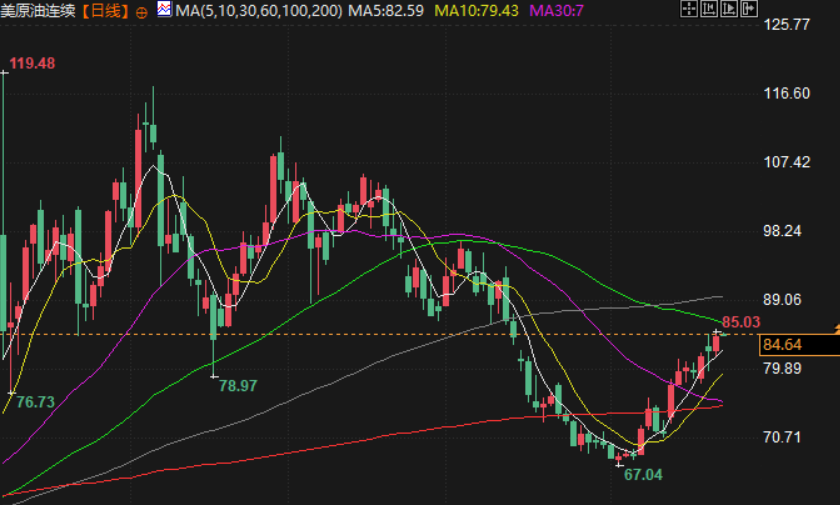
On Wednesday (July 22, Beijing time) in early Asian trading, spot gold was trading around $4,084 per ounce, boosted by expectations of a more hawkish stance from Federal Reserve officials and a resurgence of safe-haven demand due to tariffs. US crude oil was trading around $84.74 per barrel, after rising nearly 3% on Tuesday. Continued tensions in the Middle East exacerbated market concerns about ongoing logistical disruptions, particularly the risk of further obstacles to Saudi exports to Asia or Red Sea shipping. 
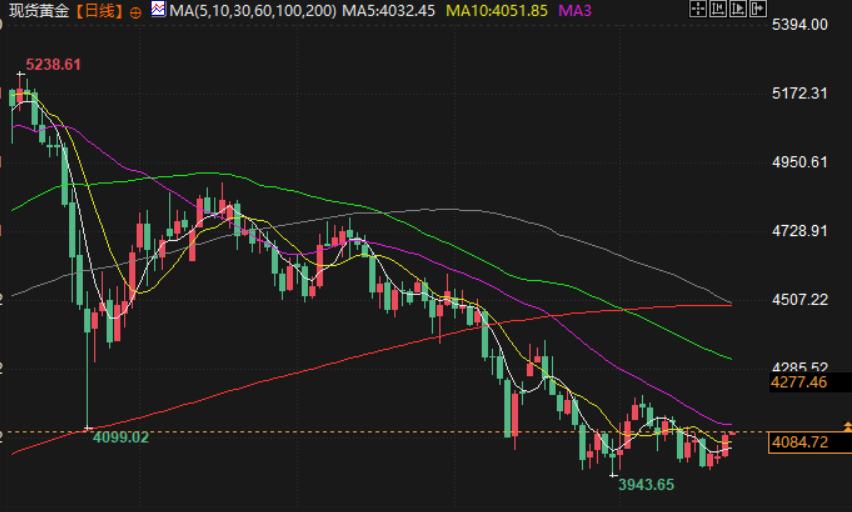 Marex analysts pointed out that gold prices found technical buying support after breaking through the short-term downtrend line, and may maintain range-bound trading in the short term. However, investors remain focused on geopolitical developments and the Federal Reserve's policy meeting next week, with Chairman Warsh's speech and interest rate decision being key. Currently, CME Group's FedWatch shows traders expect a 68% probability of a rate hike in September. Other precious metals also rose, with spot silver surging 4.21% to $58.80, while platinum and palladium rose 1.9% and 2.4%, respectively.
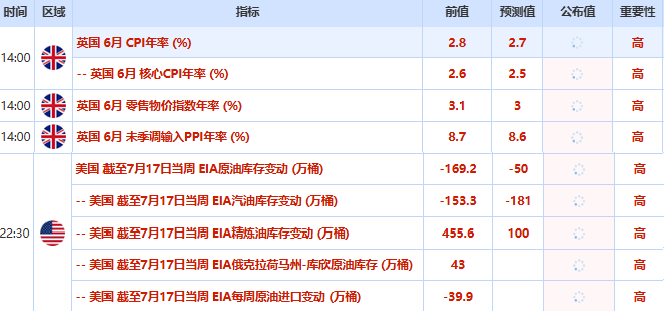
 US forces bombed targets in southern and western Iran, while Tehran attacked US facilities in Bahrain, Kuwait, and Jordan. At least one oil tanker was attacked in the Strait of Hormuz, and Houthi rebels in Yemen threatened to block commercial shipping in the Red Sea, causing two tankers carrying Saudi crude oil bound for Asia to turn back in the Red Sea, although sources said the port of Yanbu was still operating normally. Analysts pointed out that this round of price increases was not due to actual supply losses, but rather to heightened market concerns about continued logistical disruptions, especially the risk of further obstacles to Saudi exports to Asia or Red Sea shipping. Brent crude oil remained in technically overbought territory for the seventh consecutive trading day, the first time since June 2025. The Joint Organization Data Initiative (JODI) data showed that Saudi crude oil exports fell for the third consecutive month to a record low in May. Furthermore, the Caspian Pipeline Consortium (CPC) has stopped receiving Kazakhstani oil due to attacks on tankers at Black Sea terminals. The market is also awaiting the US Energy Information Administration's weekly inventory report; analysts expect crude oil inventories to decrease by 500,000 barrels in the week ending July 17, which, if true, would mark the second consecutive week of decline.
 CME Group's FedWatch tool showed the probability of a 25 basis point rate hike at next week's meeting rose slightly to 21.9%, with a 68.2% probability of a September rate hike. Despite Iran receiving a 10-day ceasefire proposal from mediators and diplomatic efforts continuing, geopolitical risks remain due to US President Trump's threats to respond to the Houthi blockade. Among major currency pairs, the euro fell 0.11% to $1.1402, and the pound fell 0.39% to $1.3376 for the fourth consecutive trading day. Investors assessed the prospects for increased spending by the new UK Prime Minister Burnham's government and the new Chancellor of the Exchequer Healy's funding plan, while stabilizing UK labor market data indicated modest wage pressures. The yen fell below 163 against the dollar to 162.42 yen to the dollar for the first time since December 1986, as traders remained wary of signs of Japanese government intervention. The Canadian dollar fell 0.27% to 1.411 against the dollar, retreating from a one-month high, influenced by the US imposing a new 50% tariff on Canadian products. The market is also focused on the European Central Bank meeting later this week, which is expected to keep interest rates unchanged but may still see at least one more rate hike later this year.
Key Focus Today
stock market
Major U.S. stock indexes closed higher on Tuesday, with the Nasdaq leading the gains at 1.29%, followed by the Dow Jones Industrial Average and S&P 500, which rose 0.74% and 0.89%, respectively. A strong rebound in semiconductor stocks was the main driver, with the Philadelphia Semiconductor Index closing up 5.2%, marking its second consecutive day of gains. Investors were buying back chip stocks ahead of tech giants' earnings reports, fearing they might miss out on opportunities. However, analysts warned that if stock prices have already risen significantly ahead of earnings reports, further upside potential is limited. Despite U.S. President Trump's announcement of a new 50% tariff on Canadian imports and escalating tensions in the Middle East due to Houthi threats to Red Sea shipping, which boosted oil prices, the market reacted mutedly, focusing instead on upcoming earnings reports from companies such as Alphabet, Intel, and Texas Instruments. Among the 11 S&P sectors, information technology led the gains at 2.35%, while consumer staples and communication services fell by 1% and 0.85%, respectively. In terms of individual stocks, 3M surged 7.3% after raising its full-year earnings forecast, Hasbro jumped 8.8% due to upward revisions to its revenue and earnings forecasts, while Danaher plummeted 11%, becoming the biggest loser in the S&P 500, after lowering its core revenue growth forecast and its biotechnology business underperforming expectations. MSCI, despite better-than-expected quarterly revenue, raised its full-year expense forecast, resulting in a 10% drop, making it the second-largest decliner among its constituent stocks.Gold Market
Gold prices rose nearly 2% on Tuesday, with spot gold closing up 1.75% at $4,086.71 an ounce, mainly boosted by expectations of a possible easing of the Middle East conflict – a senior Iranian official revealed that Tehran had received a 10-day ceasefire proposal from mediators, a diplomatic breakthrough that could ease concerns about energy supply disruptions and curb market expectations of a hawkish stance from the Federal Reserve. Marex analysts pointed out that gold prices found technical buying support after breaking through the short-term downtrend line, and may maintain range-bound trading in the short term. However, investors remain focused on geopolitical developments and the Federal Reserve's policy meeting next week, with Chairman Warsh's speech and interest rate decision being key. Currently, CME Group's FedWatch shows traders expect a 68% probability of a rate hike in September. Other precious metals also rose, with spot silver surging 4.21% to $58.80, while platinum and palladium rose 1.9% and 2.4%, respectively.oil market
Oil prices rose nearly 3% on Tuesday, with Brent crude closing at $91.36 a barrel and WTI crude at $84.54 a barrel, both marking their highest closing prices in five weeks since June 10 and 11, mainly driven by escalating conflict in the Middle East. US forces bombed targets in southern and western Iran, while Tehran attacked US facilities in Bahrain, Kuwait, and Jordan. At least one oil tanker was attacked in the Strait of Hormuz, and Houthi rebels in Yemen threatened to block commercial shipping in the Red Sea, causing two tankers carrying Saudi crude oil bound for Asia to turn back in the Red Sea, although sources said the port of Yanbu was still operating normally. Analysts pointed out that this round of price increases was not due to actual supply losses, but rather to heightened market concerns about continued logistical disruptions, especially the risk of further obstacles to Saudi exports to Asia or Red Sea shipping. Brent crude oil remained in technically overbought territory for the seventh consecutive trading day, the first time since June 2025. The Joint Organization Data Initiative (JODI) data showed that Saudi crude oil exports fell for the third consecutive month to a record low in May. Furthermore, the Caspian Pipeline Consortium (CPC) has stopped receiving Kazakhstani oil due to attacks on tankers at Black Sea terminals. The market is also awaiting the US Energy Information Administration's weekly inventory report; analysts expect crude oil inventories to decrease by 500,000 barrels in the week ending July 17, which, if true, would mark the second consecutive week of decline.Foreign exchange market
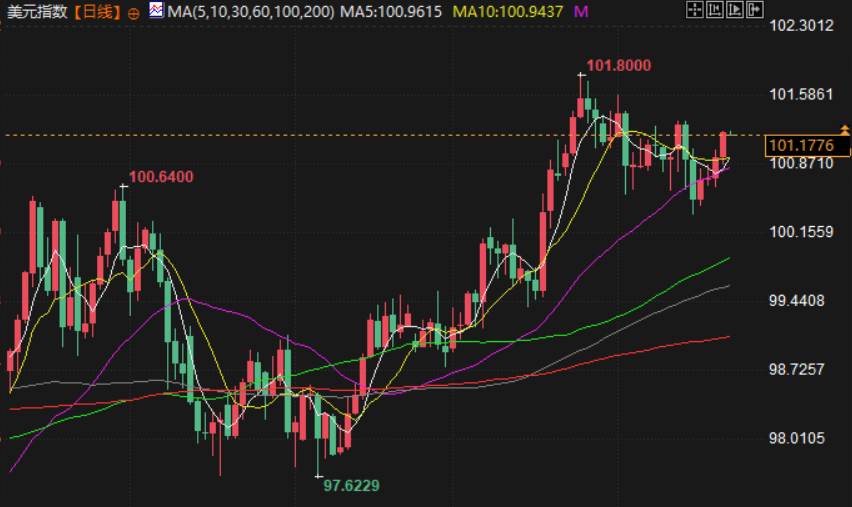
The dollar index rose 0.25% to 101.20 on Tuesday, climbing for the fourth consecutive trading day, mainly driven by rising oil prices following the latest attacks in the Middle East, which exacerbated market concerns about persistently high inflation. Meanwhile, several Federal Reserve officials, including Chairman Warsh, expressed concern about inflationary pressures, reinforcing hawkish expectations. CME Group's FedWatch tool showed the probability of a 25 basis point rate hike at next week's meeting rose slightly to 21.9%, with a 68.2% probability of a September rate hike. Despite Iran receiving a 10-day ceasefire proposal from mediators and diplomatic efforts continuing, geopolitical risks remain due to US President Trump's threats to respond to the Houthi blockade. Among major currency pairs, the euro fell 0.11% to $1.1402, and the pound fell 0.39% to $1.3376 for the fourth consecutive trading day. Investors assessed the prospects for increased spending by the new UK Prime Minister Burnham's government and the new Chancellor of the Exchequer Healy's funding plan, while stabilizing UK labor market data indicated modest wage pressures. The yen fell below 163 against the dollar to 162.42 yen to the dollar for the first time since December 1986, as traders remained wary of signs of Japanese government intervention. The Canadian dollar fell 0.27% to 1.411 against the dollar, retreating from a one-month high, influenced by the US imposing a new 50% tariff on Canadian products. The market is also focused on the European Central Bank meeting later this week, which is expected to keep interest rates unchanged but may still see at least one more rate hike later this year.International News
The probability of a Federal Reserve rate hike in July is 25.1%, and the probability of a rate hike this year has risen to 87.4%, according to CME's "FedWatch". The probability of the Fed keeping rates unchanged in July is 74.9%, with a 25.1% probability of a cumulative 25 basis point rate hike. The probability of the Fed keeping rates unchanged by September is 28.9%, with a 55.7% probability of a cumulative 25 basis point rate hike and a 15.4% probability of a cumulative 50 basis point rate hike. The probability of the Fed keeping rates unchanged by December is 12.8%, with a 37.4% probability of a cumulative 25 basis point rate hike and a 50% probability of at least a 50 basis point rate hike. CME plans to launch a sorghum basis futures contract in August. The Chicago Mercantile Exchange Group announced on Tuesday that it plans to launch a new sorghum basis futures contract on August 24, currently awaiting regulatory approval. This contract aims to provide market participants with a precise tool to manage price fluctuations between sorghum spot prices and corn futures. Sorghum, a drought-resistant grain, is primarily grown in the plains of the United States. Similar to corn, its uses include animal feed and biofuel production. Its price is typically quoted at a premium or discount relative to the CME corn futures contract. In recent years, this price spread has become significantly more volatile, frequently shifting between large premiums and deep discounts. The contract is for physical delivery, with delivery taking place at a network of warehouses in Kansas, the leading sorghum-producing state. Goods will be shipped by truck or rail. Global agricultural leaders say this tool will help farmers, traders, and exporters effectively hedge basis risk. Reports indicate that Iran initially proposed a 10-day ceasefire, while the US demands a partial agreement on passage through the Strait of Hormuz first. According to the Jerusalem Post, citing two sources, the current 10-day ceasefire proposal between the US and Iran, currently being promoted by mediators, was initially put forward by Tehran, highlighting Iran's urgency in seeking a ceasefire. The proposal aims to create a window of opportunity for negotiations on the Strait of Hormuz issue. The mediators (including senior officials from Qatar, Egypt, Oman, and Pakistan) have submitted it to the US, proposing the establishment of a "transit corridor" to ensure the safe passage of merchant ships. The US is currently demanding an extension of the ceasefire, insisting on at least a partial agreement on freedom of navigation in the strait before the ceasefire takes effect, with remaining details to be finalized within 10 days. However, reports indicate that some Trump administration officials consider the Iranian proposal "absurd," and one US official stated that Trump remains committed to making Iran "pay the price" for violating previous memorandums of understanding and causing US military deaths. Iranian military: If the US attacks Iranian nuclear facilities, all US interests in the Middle East will face retaliation. Early on the 22nd local time, the Iranian Hatem Anbia Central Command issued a statement saying that the US threatened to attack Iran's nuclear facilities and sensitive centers. If the US takes such action, Iran will view it as an expansion of regional war, and all interests of the US and its allies in the region will become targets of strong attacks by the Iranian armed forces. The US plans to impose new tariffs no later than Friday to align with the expiring temporary 10% global tariffs, sources said. This move aims to ensure the sustainability of the tariff system even after the temporary 10% global tariffs expire. Last month, the Trump administration proposed imposing new tariffs of at least 10% on 60 trading partners, citing forced labor. Sources said the president's team is preparing to implement these tariffs before the end of this week, but it remains unclear whether the final rates will deviate from the initial proposal. New British Prime Minister Burnham approves use of British bases for part of the US strike against Iran New British Prime Minister Andy Burnham has approved the US use of British military bases for what Britain calls a defensive strike against Iran; Burnham continues the policy of his predecessor, Starmer, despite President Trump's escalating military action against Iran. Sources said Starmer chaired a meeting of senior ministers and officials last Friday to discuss Britain's policy stance following the US resumption of operations earlier this month. The aforementioned sources indicated that the ministers at the meeting decided to continue the existing policy of allowing US military aircraft to use bases at Diego Garcia in the Indian Ocean and RAF Fairford in Gloucestershire, England, to counter the Iranian missile threat and strike locations used to target the Strait of Hormuz. Trump: US Will Take Action if Houthi Blockade of the Red Sea US President Trump stated during a meeting with visiting Lebanese President Aoun at the White House on the 21st that the US would take action if the Houthi rebels in Yemen blocked the Red Sea. Regarding the possibility of the Houthis blocking the Red Sea, Trump said that this has not yet happened, "If it does, we will take action and handle it." The Houthi rebels in Yemen announced a maritime embargo on Saudi Arabia on the 20th, effective immediately. The Saudi-led coalition subsequently stated that it had taken measures to protect the safe passage of member state vessels through the Bab el-Mandeb Strait and would resolutely respond to any threats from the Houthis. Regarding the situation in Lebanon, Trump said he was willing to engage in dialogue with Hezbollah and would discuss aid to Lebanon with Aoun, coordinating the participation of other parties in the assistance. (Xinhua) Trump Says He Will Soon Strike Iran's Ghoshul Nuclear Facility On July 21, US President Donald Trump told reporters at the White House during a meeting with visiting Lebanese President Michel Aoun that the US would "soon" strike Iran's underground facility at Ghoshul, south of Natanz, and that the strike would be "very powerful." Ghoshul is a fortified underground facility. Iran declared to the International Atomic Energy Agency in 2020 that the site would be used to assemble centrifuges needed for nuclear fuel production. Trump also stated in an interview last week that the US "may take action against Ghoshul very soon." Reports indicate that Israel believes Iran moved advanced centrifuges and some of its highly enriched uranium stockpile to the underground facility after the 12-day Israeli-Iranian conflict last June. (CCTV International News) Canadian Prime Minister: Will Consider All Options to Respond to US Tariffs On July 21, local time, Canadian Prime Minister Mark Carney stated that he had spoken with US President Trump after the US tariffs were announced. Carney also stated that if the new tariffs take effect, Canada will consider all options to respond. The White House announced on August 20 that the United States will impose an additional 50% ad valorem tariff on certain Canadian products in response to "discriminatory practices by Canada against the United States in trade in automobiles and auto parts." A fact list released by the White House that day showed that the U.S. will impose tariffs on Canadian goods such as wine, hockey sticks, and cement, even if these goods comply with the United States-Mexico-Canada Agreement (USMCA). The White House stated that these tariffs are intended to offset the burden and disadvantages imposed on U.S. businesses by Canada's discriminatory practices, and the new tariffs will take effect on August 19, Eastern Time. (CCTV News)Domestic News
China's oil and gas production equivalent will reach a new high of 420 million tons in 2025. On July 21, the National Energy Administration released the "China Oil and Gas Exploration and Development Report 2026." Data shows that in 2025, China's crude oil production reached a record high of 216 million tons, and natural gas production has increased by more than 10 billion cubic meters for nine consecutive years. The total oil and gas production equivalent reached a new high of 420 million tons, significantly improving self-sufficiency. Solid progress has been made in oil and gas technological innovation, upstream system and mechanism reform, and low-carbon transformation. (CCTV News)- Risk Warning and Disclaimer
- The market involves risk, and trading may not be suitable for all investors. This article is for reference only and does not constitute personal investment advice, nor does it take into account certain users’ specific investment objectives, financial situation, or other needs. Any investment decisions made based on this information are at your own risk.