Gold Trading Alert: A glimmer of hope for a ceasefire in the Middle East helps gold prices rebound; can the bull market restart amid a hawkish storm from the Federal Reserve?
2026-07-22 07:32:17
Gold prices surged on Tuesday (July 21) on expectations of diplomatic easing in the Middle East conflict, successfully breaking through the psychological barrier of $4,050 and demonstrating strong rebound momentum. This rise not only reflects market optimism about a short-term easing of geopolitical risks but also highlights gold's unique appeal as a safe-haven asset in a complex macroeconomic environment. However, the deep-seated uncertainties surrounding the conflict, inflationary pressures stemming from rising oil prices, and the upcoming Federal Reserve policy meeting all add layers of uncertainty to gold's price movement. On Wednesday (July 22) in early Asian trading, spot gold fluctuated narrowly around $4,080. 
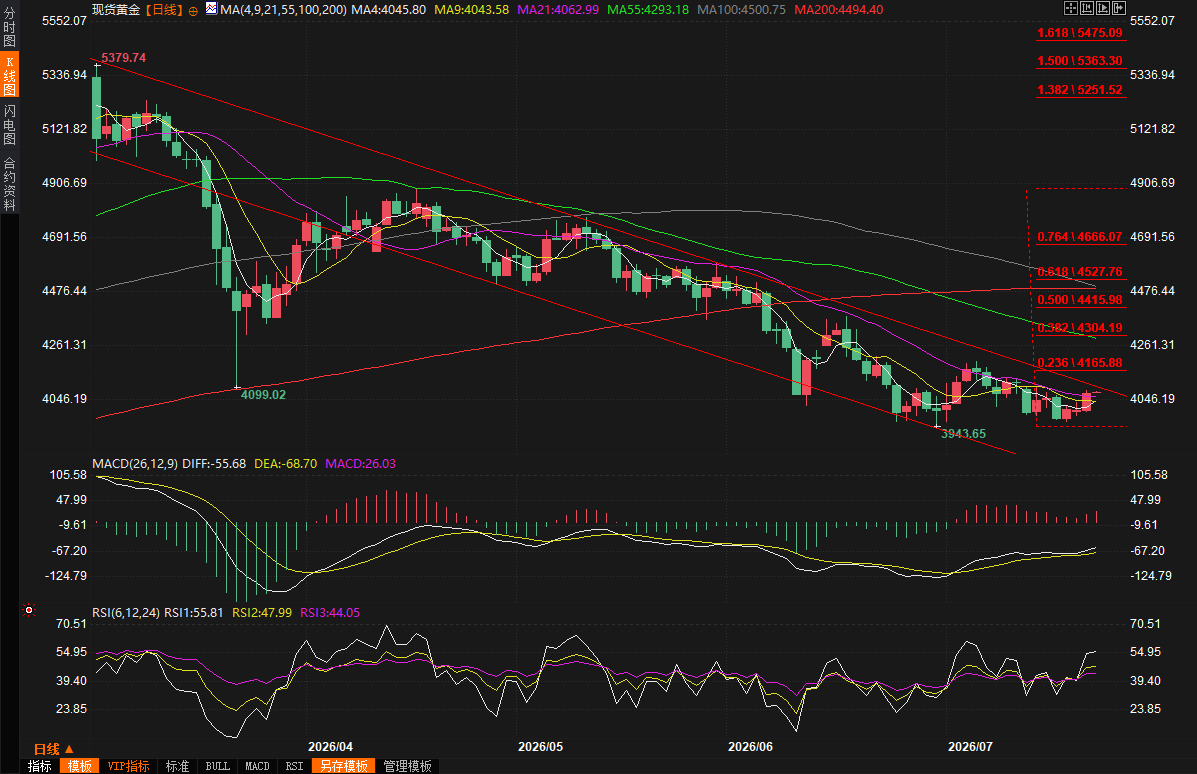 (Spot gold daily chart, source: FX678) At 07:26 Beijing time, spot gold is currently trading at $4081.90 per ounce.
Expectations of a diplomatic breakthrough in the Middle East are the biggest driver of gold prices.
The recent surge in gold prices is primarily attributed to positive signals of a potential ceasefire in the Middle East. Reports indicate that Iran has received a 10-day ceasefire proposal from mediators, a plan aimed at salvaging the previous interim agreement and paving the way for long-term peace. While the military confrontation between the US and Iran continues—including repeated US strikes against Iranian targets and Iranian retaliation against US facilities—diplomatic channels have not been completely closed. The Iranian Interior Minister's visit to Pakistan seeking mediation, and the Trump administration's statements regarding potential talks, all indicate a continued willingness from all parties to de-escalate through negotiations. This expectation of easing tensions has directly alleviated extreme market concerns about energy supply disruptions. While the Houthi threat to Saudi oil shipments has led some tankers to divert to the Red Sea route, a complete blockade has not yet been achieved. Analysts point out that if a ceasefire agreement is implemented, it will significantly reduce upward pressure on energy prices, thereby weakening market expectations of a hawkish stance from the Federal Reserve. This logic has driven a broad-based rise in the prices of gold and other commodities. Marex analyst Edward Meir stated that a potential ceasefire agreement in the Middle East has injected optimism into the commodity market, and gold, after breaking through the short-term downtrend line since July 6, has received further strong technical buying support. Spot gold rose 1.75% on Tuesday, closing at $4,077.56 per ounce; the August U.S. gold futures contract also rose 1.5% to $4,076.40. This gain is particularly noteworthy in the recent volatile market, indicating that investors are rapidly adjusting their positions in response to potential geopolitical shifts.Soaring oil prices and the shadow of inflation: Gold's double-edged sword
However, behind the optimism lies the real pressure from the ongoing conflict in the Middle East. Following the Houthi declaration of a naval blockade against Saudi Arabia, two oil tankers carrying Saudi crude oil bound for major Asian countries and India have changed course, directly disrupting key global energy transport routes—the Strait of Hormuz and the Red Sea. Attacks on tankers in the Strait of Hormuz have further exacerbated shipping risks, causing Brent crude prices to briefly reach a near six-week high, remaining above $91 per barrel, with US crude futures also rising in tandem. The rapid rebound in oil prices is reigniting global inflation concerns. Rising energy costs not only increase production and transportation expenses but may also be transmitted to a broader price system through consumption. This is highly relevant to the current policy dilemma faced by the Federal Reserve. Investors are closely awaiting the Fed's two-day policy meeting next week and subsequent statements from Chairman Warsh. The CME Group's FedWatch tool shows that the market currently expects a 68% probability of a rate hike in September, a slight increase from previous estimates; the probability of a rate hike by the end of the year is as high as 88%. This hawkish sentiment, theoretically, puts downward pressure on gold, a non-interest-bearing asset. However, given that geopolitical risks have not yet fully subsided, gold's safe-haven appeal is actually strengthened. The bond market also reflects this tension. The yield on the 10-year US Treasury note rose to a two-month high, and the 2-year yield also increased, flattening the yield curve. This indicates that investors are preparing for a more prolonged period of high interest rates, while the revaluation of oil prices is forcing the market to reassess its previous optimistic assessment of slowing inflation.Technical and macroeconomic factors intertwine: Opportunities amid short-term volatility.
From a technical perspective, gold prices have broken free from the short-term downtrend and entered a potential range-bound trading phase. After breaking through the key trendline, buying interest has clearly strengthened, but multiple resistance levels remain, including previous highs and uncertainties surrounding macroeconomic policies. In the short term, if the conflict escalates again or oil prices continue to rise, gold prices may face profit-taking pressure; conversely, if the ceasefire negotiations make substantial progress, it could suppress oil prices and alleviate inflation concerns, and expectations of a Fed rate hike could also quickly decline, thus providing further upward momentum for gold prices. The broader macroeconomic backdrop is equally complex. US President Trump recently announced high tariffs on Canadian imports, indicating a rising risk of trade friction, which could further disrupt global supply chains and inflation paths. In this environment, gold, as an asset with both safe-haven and inflation-hedging properties, is increasingly highlighting its strategic value. Unlike stocks or bonds, gold often provides unique diversification protection when multiple uncertainties overlap.Looking ahead: Gold investment presents both opportunities and risks.
In summary, this round of gold price increases is the result of a combination of factors, including expectations of geopolitical easing, technical recovery, and macroeconomic safe-haven demand. Although the situation in the Middle East remains volatile—from the Houthi threat to direct US-Iran confrontation—continued diplomatic efforts have provided the market with a short-term respite. The Federal Reserve meeting will be the next key catalyst: a cautious stance could solidify gold's current gains, while a strong hawkish signal could trigger a temporary pullback. For investors, the current gold market is characterized by "rising risk premiums but persistent policy pressure." It is recommended to closely monitor the progress of ceasefire negotiations, oil price dynamics, and the latest statements from Federal Reserve officials. Against the backdrop of heightened global uncertainty, gold will remain an indispensable part of portfolio allocation, hedging against geopolitical and inflation risks and potentially demonstrating greater resilience during prolonged periods of monetary easing. (Spot gold daily chart, source: FX678) At 07:26 Beijing time, spot gold is currently trading at $4081.90 per ounce.
- Risk Warning and Disclaimer
- The market involves risk, and trading may not be suitable for all investors. This article is for reference only and does not constitute personal investment advice, nor does it take into account certain users’ specific investment objectives, financial situation, or other needs. Any investment decisions made based on this information are at your own risk.