The US and Canada have implemented 50% tariffs! Will the Canadian dollar begin its depreciation cycle?
2026-07-22 20:50:20
The trade dispute between the US and Canada has escalated sharply recently, with the Trump administration introducing powerful tariffs that have not only disrupted the long-standing North American Free Trade Agreement framework but also thrown financial markets' expectations for the Canadian dollar's valuation. This has ultimately led to a rapid depreciation of the Canadian dollar against the US dollar, as well as against other currencies such as the euro. The tariffs are scheduled to take effect on August 19th, but the Canadian dollar is currently weak against the US dollar and strong against the euro, suggesting it will likely continue its previous trend. 
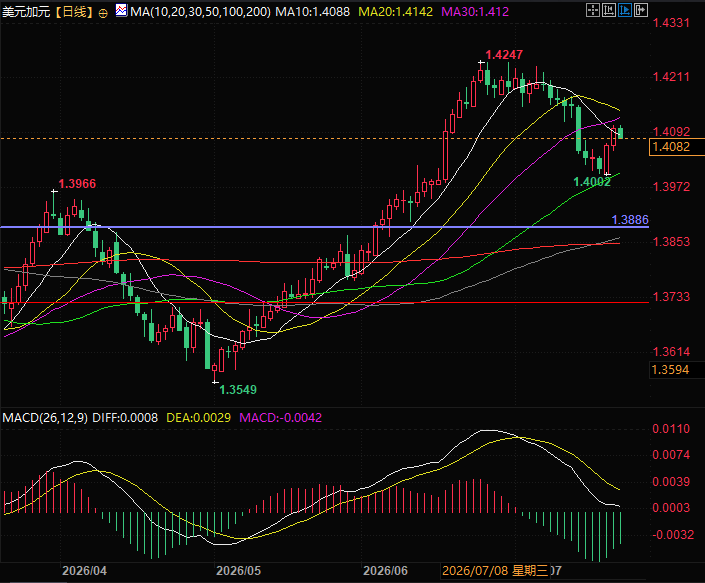 (USD/CAD daily chart, source: EasyForex) Meanwhile, the EUR/CAD cross rate also strengthened. Although the euro was weak and had previously depreciated against the Canadian dollar, the tariff war directly ignited safe-haven buying, causing the euro to rebound rapidly against the Canadian dollar. While Europe itself faces the challenge of a slow economic recovery, the euro has stronger safe-haven and risk-hedging attributes compared to Canada, which is directly at the center of the tariff storm. Specifically regarding the current US-Canada tariff dispute, this round of new policies will have a precise and sustained negative impact on the Canadian dollar, but after the impact, technically speaking, the Canadian dollar is expected to continue its strengthening against the euro.
 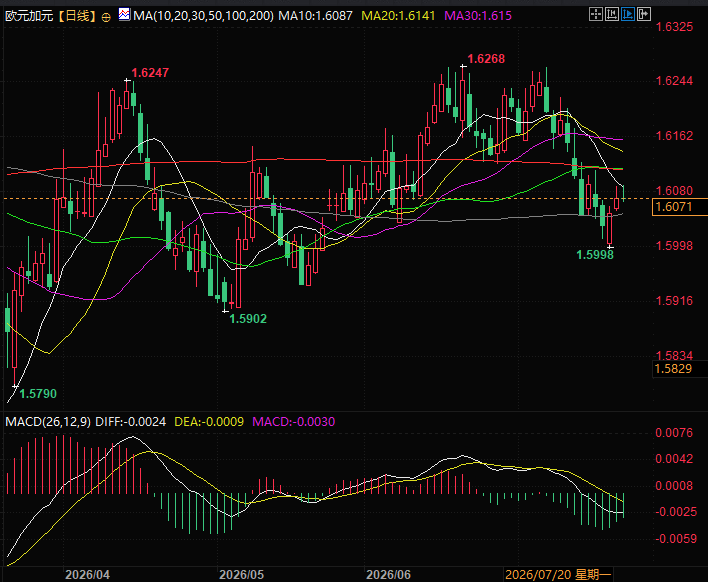 (EUR/CAD daily chart, source: EasyForex) Canada is a typical trade-driven economy, with over 70% of its exports going to the United States. Its trade dependence on the US is the highest among G7 economies. The 50% tariffs imposed this time cover a vast number of core export categories, completely shattering the previous easing and recovery trend in US-Canada trade. Previously, bilateral trade between the US and Canada had been steadily recovering, with zero-tariff cross-border trade becoming the norm and bilateral trade negotiations progressing steadily, resulting in a relatively stable Canadian dollar. However, Trump's abrupt policy reversal directly reversed market expectations. In the short term, pressure on exports and rising economic downturn risks will directly drag down the Canadian dollar's valuation, pushing the USD/CAD exchange rate upward, and causing the Canadian dollar to fall in cross-currency pairs. In the medium to long term, the escalation of the trade war may trigger the Bank of Canada to stabilize the economy and adjust monetary policy. Coupled with continued market concerns about a Canadian economic recession, the Canadian dollar will continue to face the dual pressures of depreciation and high volatility, becoming the most direct currency target under pressure in this round of US-Canada trade friction. At 20:43 Beijing time, the US dollar was trading at 1.408/84 against the Canadian dollar, and the euro was trading at 1.6071/72 against the Canadian dollar.
The Evolution of US Tariffs on Canada: From Threats to Rapid Escalation to 50%
The US's imposition of tariffs on Canada was not a sudden move, but rather a process that unfolded in three stages: verbal threats, full implementation, and rapid escalation. The first stage, verbal intimidation and preparation (late 2024), began in late November 2024, following the election. Trump issued a clear warning on social media, announcing an executive order imposing a 25% tariff on all imports from Canada and Mexico. This was the earliest clear indication of the current US-Canada trade war. The second stage, full implementation and countermeasures (February-March 2025), saw Trump officially sign the executive order in February 2025. After a brief grace period, the tariffs were fully implemented in early March. Canada subsequently launched equivalent trade retaliatory measures, and the US and Canada entered a period of normalized trade confrontation. Dramatic Policy Escalation and Rule Breaking (July 2026): On July 20, 2026, the Trump administration invoked Section 338 of the Tariff Act of 1930 to drastically increase tariffs on Canadian automobiles, alcoholic beverages, dairy products, and numerous non-automobile goods to 50%, with the tariffs scheduled to take effect on August 19. The unique aspect of this tariff is that it completely breaks with the framework of the United States-Mexico-Canada Agreement (USMCA), including all previously duty-free categories with no exemptions whatsoever.Why did the Trump administration insist on imposing high tariffs on Canada?
Behind the US actions lies a complex interplay of political leverage, industrial protection, and border demands: the core essence of the US tariffs is to address the trade deficit and industrial protectionism. The US has long believed that Canada uses its policy advantages to export large quantities of goods to the US, causing a bilateral trade imbalance. Particularly in areas such as high tariffs on dairy products, the division of labor in the automotive supply chain, and restrictions on alcohol sales, the US accuses Canada of "discriminatory treatment" of US businesses. The US is attempting to force Canada to open its market through a maximum 50% tariff. The US's stated pretext is border security and anti-drug efforts. In the initial stages of the policy, the US used tariffs as a political tool to demand that Canada increase its efforts to combat illegal border crossings and the smuggling of drugs such as fentanyl. The US's strategic intention is to force a renegotiation of the USMCA. The US intends to use tariffs as an extreme bargaining chip to compel Canada to make significant concessions in the subsequent review of the USMCA agreement, thereby encouraging the return of manufacturing supply chains and capital to the US.Impact of the event: Maine's economy under pressure
The tariff threat quickly triggered political turmoil in the United States, particularly impacting Maine, a state with the deepest economic ties to Canada. Maine shares a land border with Canada, and its bilateral industrial and supply chains are deeply integrated. Its core specialties, such as blueberries, potatoes, lobsters, and logs, operate on a mature model of "produced in Maine, processed in Canada, and sold back in the United States." Cross-border trade is a core pillar of the local economy. Therefore, the implementation of high tariffs will directly increase the cost of Maine's industries and impact its real economy, further exacerbating the already precarious situation of high oil prices, sticky inflation, and weak consumer confidence.The conventional transmission mechanism of tariff disputes to exchange rates
From a financial trading perspective, the escalation of international trade tariffs has a mature and fixed transmission logic to exchange rate fluctuations, making it one of the core fundamental factors influencing the exchange rate trends of different countries. Typically, when a country imposes high tariffs on other countries, it directly disrupts the supply and demand balance of bilateral trade, impacting the export supply chains of the taxed country and suppressing its economic growth expectations. Simultaneously, escalating trade frictions exacerbate market risk aversion and increase uncertainty in global capital markets. Under this logic, the taxing country, relying on import tariff barriers to improve its trade balance and having a relatively superior economic fundamental, often sees its currency appreciate. Conversely, the taxed country, with shrinking exports, pressure on corporate profits, and a weakening economic outlook, coupled with a cooling market risk appetite, is likely to face depreciation pressure on its currency, resulting in a clear divergence in bilateral currency exchange rates. Market Implementation: The Direct Negative Impact of this Round of Trade Friction on the Canadian DollarOutlook for Major Exchange Rate Movements Amid the US-Canada Tariff Dispute
The escalation of the tariff war has directly disrupted market equilibrium. For forex traders, the Canadian dollar (CAD) has become the primary target of pressure in this round of fundamental deterioration. From a fundamental perspective, the widening US-Canada interest rate differential and the downward pressure on the Canadian economy constitute a double drag. The focus now shifts to the turning point of the US dollar; otherwise, the Canadian dollar is likely to continue depreciating against the US dollar. Technically, close attention needs to be paid to market sentiment ahead of the tariffs taking effect on August 19th. The US dollar appreciated rapidly against the Canadian dollar starting July 20th, leading to a rapid strengthening of the USD/CAD pair. (USD/CAD daily chart, source: EasyForex) Meanwhile, the EUR/CAD cross rate also strengthened. Although the euro was weak and had previously depreciated against the Canadian dollar, the tariff war directly ignited safe-haven buying, causing the euro to rebound rapidly against the Canadian dollar. While Europe itself faces the challenge of a slow economic recovery, the euro has stronger safe-haven and risk-hedging attributes compared to Canada, which is directly at the center of the tariff storm. Specifically regarding the current US-Canada tariff dispute, this round of new policies will have a precise and sustained negative impact on the Canadian dollar, but after the impact, technically speaking, the Canadian dollar is expected to continue its strengthening against the euro. (EUR/CAD daily chart, source: EasyForex) Canada is a typical trade-driven economy, with over 70% of its exports going to the United States. Its trade dependence on the US is the highest among G7 economies. The 50% tariffs imposed this time cover a vast number of core export categories, completely shattering the previous easing and recovery trend in US-Canada trade. Previously, bilateral trade between the US and Canada had been steadily recovering, with zero-tariff cross-border trade becoming the norm and bilateral trade negotiations progressing steadily, resulting in a relatively stable Canadian dollar. However, Trump's abrupt policy reversal directly reversed market expectations. In the short term, pressure on exports and rising economic downturn risks will directly drag down the Canadian dollar's valuation, pushing the USD/CAD exchange rate upward, and causing the Canadian dollar to fall in cross-currency pairs. In the medium to long term, the escalation of the trade war may trigger the Bank of Canada to stabilize the economy and adjust monetary policy. Coupled with continued market concerns about a Canadian economic recession, the Canadian dollar will continue to face the dual pressures of depreciation and high volatility, becoming the most direct currency target under pressure in this round of US-Canada trade friction. At 20:43 Beijing time, the US dollar was trading at 1.408/84 against the Canadian dollar, and the euro was trading at 1.6071/72 against the Canadian dollar.
- Risk Warning and Disclaimer
- The market involves risk, and trading may not be suitable for all investors. This article is for reference only and does not constitute personal investment advice, nor does it take into account certain users’ specific investment objectives, financial situation, or other needs. Any investment decisions made based on this information are at your own risk.