A summary of various viewpoints on the Federal Reserve's dilemma.
2026-07-28 18:32:03
The Federal Reserve's current core dilemma lies in the structural predicament of high US interest rates and high inflation, compounded by White House intervention, which has significantly damaged the Fed's policy independence. Meanwhile, Warsh's abandonment of forward guidance has led to market confusion and naturally pushed up US Treasury yields, as the Fed's independence is inversely related to inflation expectations. Warsh can only lean more towards maintaining the Fed's independence. However, constrained by multiple factors including Middle East geopolitical conflicts, inflationary pressures from AI infrastructure, the need for stock market stability, and White House restrictions, the Fed has had to adopt a verbally hawkish stance while practicing a dovish one. It will seek a reasonable approach to moderate interest rate cuts, striking a balance between stabilizing inflation, protecting the stock market, and preserving policy space. The Fed will hold its next interest rate decision meeting this Thursday. Previously released June US CPI data initially released positive data, significantly reversing market expectations for interest rate hikes. However, the recent escalation of the US-Iran conflict has brought interest rate hike expectations back into the discussion. 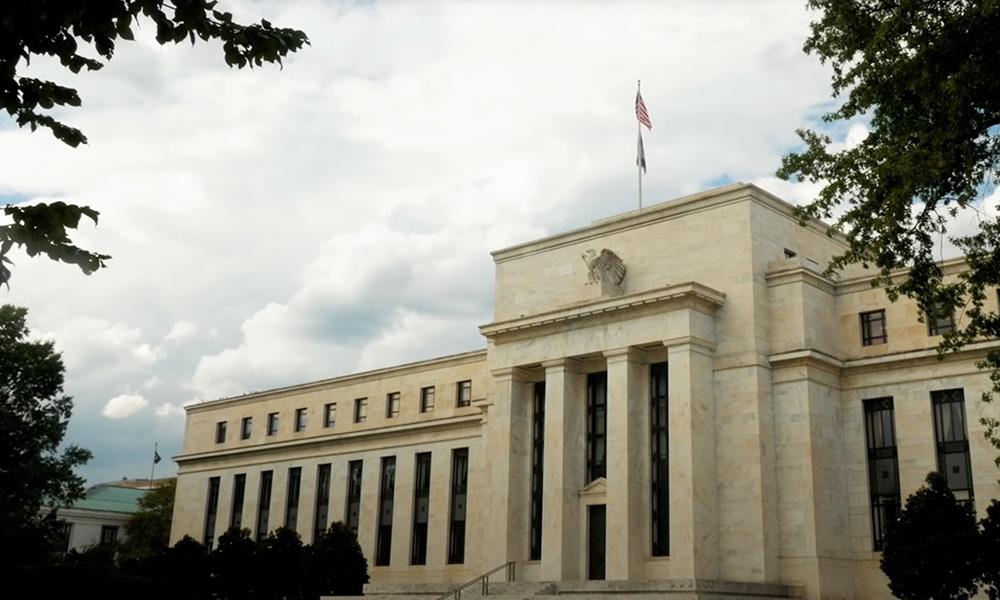
Geopolitical conflicts coupled with the AI boom significantly increase inflationary uncertainties.
However, the market's positive momentum was short-lived. Recent escalation of conflicts in the Middle East has directly driven a sharp rise in global energy prices. The international benchmark Brent crude oil price recently broke through $100 per barrel, reaching a new high since May of this year, injecting further upward pressure on US inflation. In addition to geopolitical oil price variables, the massive AI infrastructure investment boom across the US has also become a key emerging inflationary factor that the Federal Reserve is focusing on. The combination of these two variables makes the trend of US inflation increasingly difficult to predict. The complex and volatile economic environment, coupled with the Federal Reserve's shift in policy communication, has further amplified market uncertainty. Federal Reserve Chairman Kevin Warsh has consistently failed to provide clear guidance on the future path of interest rates, completely breaking with previous policy communication practices. Ahead of this week's interest rate meeting, market opinions were sharply divided, and the game intensified. Whether the Federal Reserve would continue its fifth round of interest rate stagnation or implement a rate hike remained unclear, and the market failed to reach a unified expectation. This ambiguity in policy prospects is extremely rare in recent Federal Reserve policy cycles.Editor's Viewpoint and Reasons: Hawkish statements are aimed at maintaining independence; interest rate cuts are the optimal solution.
With the US economy slowing, government debt interest rates soaring, corporate capital expenditures remaining high, and the stock market experiencing a significant correction, it's difficult to sustain further interest rate increases. Against this backdrop, the Federal Reserve can only adopt a strategy of making hawkish statements to stabilize inflation and maintain public trust, without actually raising interest rates. Going forward, the Fed will rely on economic data interpreted by its four new departments to find justifications for rate cuts, aiming to achieve a moderate rate reduction without impacting the stock market or creating administrative conflicts. Given the current dilemma, the Fed's final policy path is clear: it will verbally maintain its independence, resulting in hawkish rhetoric that may impact the market, but it will still not choose to raise interest rates. After all, raising rates won't make oil prices cheaper or allow ships to pass through the Strait of Hormuz. Regarding the impact on assets, not raising rates will stimulate a short-term upward trend in asset prices, including gold. However, as the hawkish statements unfold and develop, the market may turn around and reach a low point. Ultimately, the focus will still be on how to lower interest rates; for example, a sudden slowdown in the labor market could be a breakthrough.Institutional Viewpoint: Abandoning Forward Guidance Sparks Market Controversy
Industry professionals have raised numerous questions about the Federal Reserve's current policy communication model. Narayana Coachellakota, Professor of Economics at the University of Rochester and former President of the Minneapolis Fed, points out that while the Fed is currently reviewing various inflation drivers one by one, distinguishing between short-term volatility and long-term sustained inflationary pressures, Chairman Warsh deliberately maintains policy silence, failing to clearly articulate the Fed's response to changes in the economic environment. This makes it impossible for the market to predict the Fed's policy moves in the coming months. The core of this policy communication reform is Warsh's abandonment of the "forward guidance" policy tool that the Fed has used for over two decades. Since 2000, the Fed has consistently relied on forward guidance to convey clear interest rate expectations to investors, ensuring the effectiveness of monetary policy by increasing policy transparency. However, Warsh clearly stated at his Fed Chair nomination hearing in April that he would not make advance predictions about economic trends or release forward policy signals after taking office. Currently, the market is highly controversial regarding this policy communication reform unseen for decades. Industry experts cannot determine whether Warsh's departure from the traditional communication framework is intended to flexibly respond to complex economic situations and reduce ineffective market fluctuations, or whether it further exacerbates market uncertainty. Coachellakota is explicitly critical of this, arguing that the Fed's policy silence directly fuels market volatility. Businesses, unable to predict future monetary policy, are experiencing a continued decline in investment, capacity expansion, and hiring, leading to a slowdown in the expansion of goods and services supply. He believes this unnecessary market uncertainty is entirely a policy mistake deliberately created by the Fed. However, dissenting voices exist. Kezia Samuel, chief market strategist at AssetMark, believes that the Fed's past high-frequency, detailed forward guidance was not the optimal choice. Overly detailed policy signals have led to layers of market analysis and over-interpretation, causing policy guidance to deviate from its original regulatory intent and failing to truly stabilize the market.Federal Reserve insiders warn of long-term spread risks.
Despite ongoing market debates, a preliminary consensus has been reached within the Federal Reserve regarding inflation control. Officials generally believe that there is no need to raise interest rates in response to short-term energy price increases. Such one-off price fluctuations triggered by geopolitical conflicts are self-correcting and do not require excessive monetary policy intervention. Federal Reserve Vice Chairman Williamson and Governor Christopher Warsh also stated that the mainstream control logic of central banks globally is to ignore short-term, one-off price shocks such as oil prices and tariff adjustments to avoid overreacting to monetary policy. Meanwhile, the recent resurgence of the US-Iran conflict has made the Federal Reserve clearly aware of the potential upward risk to inflation. If current price increases continue to spread, inflation will spread from the energy sector to all categories, at which point American inflation expectations will completely loosen, and market confidence in a steady decline in inflation to the Fed's 2% annual target will be severely undermined. To accurately grasp the true trend of inflation, the Federal Reserve will use core inflation indicators, excluding volatile categories such as food and energy, as the core basis for judgment to determine the persistence of domestic price pressures. At the same time, policymakers will combine market data and public surveys as two types of inflation expectation indicators to comprehensively assess changes in overall societal price expectations. Based on current data, there are no sufficient conditions to support the Federal Reserve raising interest rates immediately. However, if the conflict between the US and Iran continues to escalate and cannot be resolved in the long term, the inflation trend may completely reverse, forcing the Federal Reserve to adjust its monetary policy.- Risk Warning and Disclaimer
- The market involves risk, and trading may not be suitable for all investors. This article is for reference only and does not constitute personal investment advice, nor does it take into account certain users’ specific investment objectives, financial situation, or other needs. Any investment decisions made based on this information are at your own risk.