A “false period of security” has arrived: What are the gold, foreign exchange, and freight markets trading when negotiation signals are sounding?
2026-07-28 20:23:07
On Tuesday (July 28), the market was primarily driven by geopolitical easing. The extension of the ceasefire by both the US and Iran and signals of negotiations pushed oil prices to a one-week low, with WTI crude falling back to around $81. Short-term tensions in the Strait of Hormuz eased, directly suppressing energy and shipping risk premiums. Gold prices consolidated at high levels, supported by declining inflation expectations and interest rate expectations. In the currency market, the US dollar was supported by interest rate hike expectations, while commodity currencies weakened along with oil prices.  This article extracts the sources of volatility you care about most from publicly available information, deduces the shifts in sentiment and potential undercurrents in various assets, and helps you identify hidden tail risks beneath seemingly calm market conditions.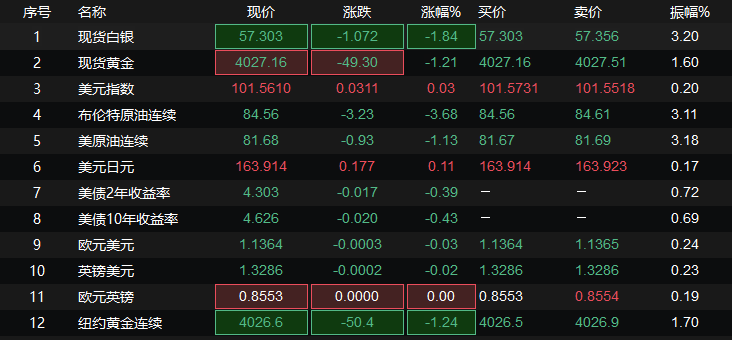
This article extracts the sources of volatility you care about most from publicly available information, deduces the shifts in sentiment and potential undercurrents in various assets, and helps you identify hidden tail risks beneath seemingly calm market conditions. Crude Oil Market: Supply Risk Premium Retreats Significantly
The extension of the ceasefire between the US and Iran, and Trump's public expression of willingness to negotiate, directly shook the long positions previously built up due to expectations of a Straits of Hormuz blockade. The Strait of Hormuz carries about 20% of global oil shipments daily; easing tensions mean that the supply disruption premium accumulated over the past few weeks is being rapidly squeezed out. Major foreign media reports indicate that oil prices have fallen continuously in the past few hours, with Brent crude retreating in tandem. However, this decline is essentially driven by sentiment, rather than a fundamental improvement in the supply and demand structure. If negotiations break down, Trump has warned of a possible "rapid resumption of military action," at which point the oil price reversal could be equally dramatic. In the short term, the oil market will closely monitor every headline regarding the progress of the negotiations; while volatility has temporarily subsided, it is far from disappearing.Gold and US Treasuries: A tug-of-war between interest rate expectations and safe-haven demand
The decline in oil prices has lowered long-term inflation expectations, putting direct pressure on gold. Meanwhile, surveys by major overseas institutions indicate that the market is raising its expectations for a Federal Reserve rate hike this week, US Treasury yields remain high, and the attractiveness of dollar assets is increasing, further weakening the short-term appeal of non-interest-bearing gold. However, gold prices have not collapsed and remain firmly supported in their recent high range. The underlying logic is clear: the root of the geopolitical standoff has not been eradicated, but merely temporarily obscured. Once negotiations falter or new unexpected events occur, safe-haven demand will push gold back into the spotlight. Therefore, the current gold market presents a typical game pattern of "upward pressure and limited downside."Foreign Exchange Market: Dollar Resilience Strengthens, Commodity Currencies Under Pressure
The expectation of interest rate hikes, coupled with easing risk sentiment, provided double support for the US dollar. Especially with the temporary easing of geopolitical tensions and renewed safe-haven demand triggered by concerns in the AI and semiconductor sectors, funds tended to flow back into the US dollar and Japanese yen. The British pound and the euro lacked new positive catalysts and weakened. Currencies heavily reliant on oil exports, such as the Canadian dollar and the Norwegian krone, suffered direct selling pressure due to declining oil prices. It's worth noting that this round of dollar strengthening was not a broad-based event, but rather a reflection of falling interest rates and oil prices. Its sustainability depends on the subsequent rhetoric of Federal Reserve officials and whether negotiations can achieve substantial progress.Shipping Market: War Risk Premium Temporarily Subsides
Previously, due to the situation in the Strait of Hormuz, freight rates on oil tankers and some dry bulk routes were pushed to abnormally high levels, and war risk surcharges soared. Negotiations hoped to marginally restore shipowners' and traders' confidence in transiting the Strait of Hormuz, leading to a short-term easing of freight rate indices. However, in reality, many vessels are still choosing to detour or wait for clearer signals, and actual freight volume recovery will take time. This means that shipping costs have only fallen from their panic peak, rather than returning to normal levels. If negotiations fail, surcharges are highly likely to rebound rapidly, highlighting the vulnerability of the energy transportation supply chain.Trend Outlook
In the short term, US-Iran talks are expected to maintain a dovish market sentiment, with oil prices and shipping costs potentially continuing to ease slightly. Gold's price fluctuations may shift slightly downward, while the US dollar remains moderately strong. However, any interpretation of easing tensions as a "permanent solution" is risky. While the probability of a breakdown in negotiations or new disruptions in the Strait of Hormuz is not high, it could still push oil prices up by more than 10% within hours and trigger a sharp safe-haven move in gold and currencies. From a longer-term perspective, the Fed's interest rate path remains the core of pricing. In a high-interest-rate environment, precious metals need clearer economic or geopolitical catalysts to break through previous highs. Traders should pay close attention to the shifting sentiment between negotiation details and speeches by interest rate officials, remain highly flexible, and avoid over-betting on a one-sided calm.Frequently Asked Questions
Is the drop in oil prices a trend reversal? The current decline is mainly driven by emotional venting triggered by the de-escalation of geopolitical concerns, not a change in global supply and demand fundamentals. If negotiations proceed smoothly, oil prices may have further room for a moderate decline; however, if the situation fluctuates, risk premiums will return sharply. Currently, it should be viewed as a short-term correction, not a decisive reversal. Why hasn't gold fallen sharply despite geopolitical easing? Gold's downward momentum is constrained by two factors: first, the US-Iran negotiations are highly susceptible to change, and tail risks provide protection for gold prices; second, long-term central bank gold purchases and safe-haven allocation demand remain. Therefore, the market has chosen to consolidate at high levels rather than sell off, indicating that traders have low confidence in geopolitical relations. Will the US dollar continue to strengthen? The US dollar is supported in the short term by expectations of interest rate hikes and the decline in oil prices, but a one-sided upward trend is unlikely to be achieved overnight. On the one hand, easing sentiment may also stimulate a rebound in risk appetite and weaken the dollar; on the other hand, once negotiations break down, selling pressure on commodity currencies and safe-haven demand will again disrupt the dollar's direction, more likely resulting in a volatile but upward-biased trend. Can shipping freight rates return to normal now? In the short term, it's highly likely that the price is simply falling from an extreme high, rather than normalizing. The actual return of shipping capacity to the Strait remains to be seen, with most ship owners still waiting for concrete safety assurances. Any new military or conflict news could cause surcharges to rise rapidly, as spot freight rates are highly sensitive to news. What is the biggest hidden risk at present? The biggest hidden risk is a sudden breakdown in US-Iran negotiations. The two sides have only suspended attacks, not signed a solid agreement, and Trump has reserved the military option. This "false period of security" is easily shattered by a sudden conflict, leading to a simultaneous and sharp reversal in oil prices, gold prices, and freight rates. This is the most pressing event to guard against in the current market.- Risk Warning and Disclaimer
- The market involves risk, and trading may not be suitable for all investors. This article is for reference only and does not constitute personal investment advice, nor does it take into account certain users’ specific investment objectives, financial situation, or other needs. Any investment decisions made based on this information are at your own risk.