July 29th Financial Breakfast: Gold prices fell to a one-week low under pressure after Iran attacked a US military base in Jordan; US oil prices surged by over 4%.
2026-07-29 06:54:03
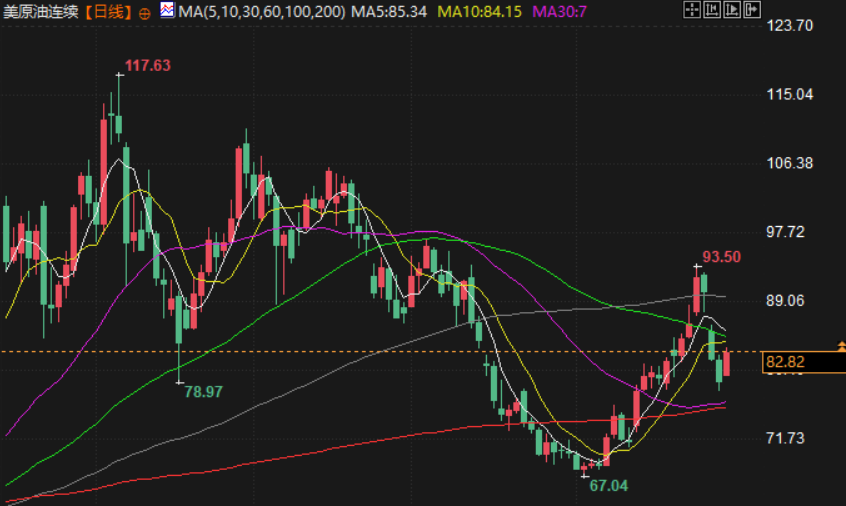
On Wednesday (July 29, Beijing time) in early Asian trading, spot gold was trading around $4,018 per ounce. Gold prices fell to a one-week low on Tuesday, weighed down by the dollar remaining near a one-month high, with investors remaining cautious ahead of the Federal Reserve's interest rate decision and Warsh's speech. US crude oil rose more than 4%, trading around $82.55 per barrel, despite Trump's statement that he would force Iran to sign an agreement to end the war. However, Iran launched multiple ballistic missiles at a US military base in Jordan, marking the first Iranian missile attack on a US base in the region since the US suspended military strikes against Iran last Friday, exacerbating geopolitical uncertainty. 
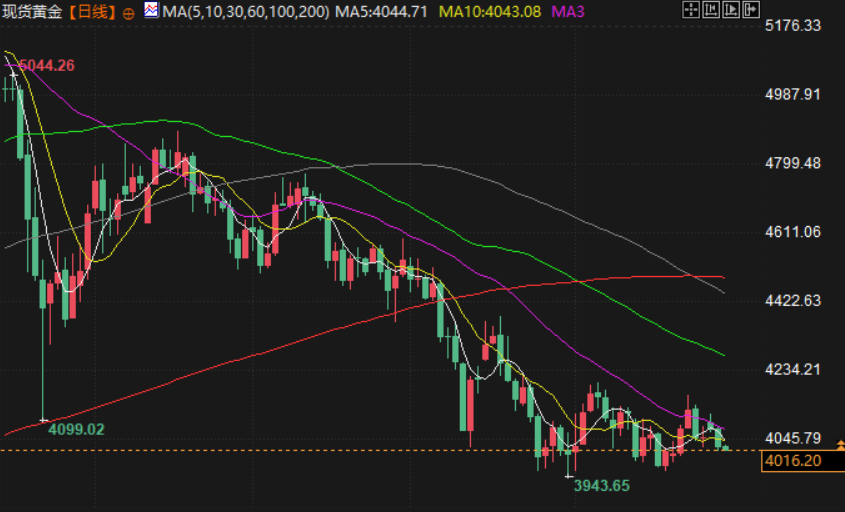 The market widely expects the Federal Reserve to maintain a hawkish stance, with traders predicting a 71% probability of keeping interest rates unchanged on Wednesday, but a 75% probability of a rate hike in September. This has boosted rate hike expectations and the dollar exchange rate, putting pressure on zero-yield gold. Since the outbreak of the war between the US and Israel and Iran at the end of February, gold prices have fallen by about 24% due to inflation and interest rate concerns. Meanwhile, the US June PCE data, scheduled for release on Thursday, will provide more clues about monetary policy. Commerzbank lowered its year-end gold price target by $300 to $4,500, believing that unless interest rate expectations reverse, gold ETF investors will find it difficult to return sustainably. Geopolitically, US President Trump stated that he is having "good talks" with Iran and that a solution is expected, but warned that military strikes would resume if negotiations fail. Iran has also made retaliatory statements. Other precious metals also weakened, with spot silver falling 2.21% to $57.08, platinum falling 1% to $1,605.80, and palladium falling 2.3% to $1,261.92.
 Mizuho Securities points out that the lack of further attacks between the US and Iran in recent days has contributed to the decline in oil prices, but shipping traffic in the Strait of Hormuz remains sluggish. The Red Sea region continues to be harassed by the Iranian-backed Houthi rebels in Yemen, who claimed on Tuesday that they fired a ballistic missile at a Saudi oil tanker. Meanwhile, Saudi Aramco shut down its Jizan refinery due to attacks over the weekend. Furthermore, Ukrainian President Zelensky stated that he discussed restarting Russia-Ukraine peace talks with Trump, and a reconciliation could lead to the lifting of some sanctions against Russia and an increase in Russian oil exports. On the supply side, sources indicate that OPEC+ is likely to suspend production increases for three months starting in October, after the organization has largely completed the replenishment of its voluntary production cuts.
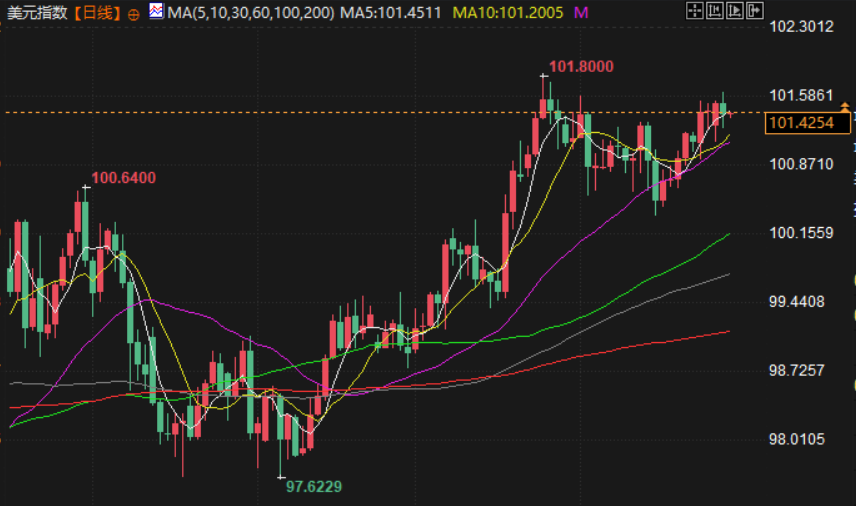 Data shows the probability of a 25 basis point rate hike by the Federal Reserve on Wednesday is close to 40%, up from about 20% a week ago, and the probability of a rate hike before September is close to 95%. The euro rose 0.2% to $1.1393, the pound edged up 0.1% to $1.3288, and the dollar was basically flat against the yen at 163.77 yen. Investors are simultaneously focused on the meetings of the Bank of England and the Bank of Japan this week – both are expected to keep interest rates unchanged but warn of inflation risks. The yen continues to weaken, approaching a 40-year low, and traders are wary of possible further intervention in the foreign exchange market by the Japanese Ministry of Finance. Finance Minister Satsuki Katayama reiterated that the stance of "responding to exchange rate fluctuations as needed" remains unchanged. Corpay analysts warned that speculative positions bullish on the dollar are already at high levels, and any dovish signals from the Fed could trigger large-scale liquidation.
Key Focus Today
stock market
U.S. stocks closed mixed on Tuesday, with the S&P 500 rising 0.21% to 7428.78, the Dow Jones Industrial Average gaining 1.03% to 52747.32, and the Nasdaq falling 0.22% to 24876.91. Gains in non-tech stocks like Boeing and Coca-Cola offset a continued plunge in chip stocks. Boeing surged 4.8% on progress in its turnaround plan and achieving positive free cash flow, while Coca-Cola jumped 5% after raising its annual revenue and profit forecasts. Healthcare and consumer staples sectors rose 2.4% and 2%, respectively. However, the Philadelphia Semiconductor Index fell another 4.5%, retreating about 25% from its June high, dragging down the technology sector by 1.4%, as investors remained cautious ahead of earnings reports from tech giants such as Apple, Microsoft, Amazon, and Meta later this week. Microsoft shares rose 1.1% ahead of Wednesday's earnings release, while Apple's market capitalization briefly touched $5 trillion intraday before closing up nearly 1% at $340.08. Amazon shares dipped slightly by 0.2%. The market is also focused on Wednesday's Federal Reserve interest rate decision, with traders expecting a 71% probability of keeping rates unchanged and a 29% probability of a 25 basis point rate hike. The sharp drop in oil prices eased some of the pressure, as the White House's hosting of the Israeli and Ukrainian leaders fueled expectations of easing tensions in the Middle East and Ukraine.Gold Market
Gold prices fell to a one-week low on Tuesday, with spot gold down 1.18% to $4,028.42 an ounce, mainly dragged down by the dollar holding near a one-month high as investors remained cautious ahead of the Federal Reserve’s interest rate decision on Wednesday and Chairman Warsh’s speech. The market widely expects the Federal Reserve to maintain a hawkish stance, with traders predicting a 71% probability of keeping interest rates unchanged on Wednesday, but a 75% probability of a rate hike in September. This has boosted rate hike expectations and the dollar exchange rate, putting pressure on zero-yield gold. Since the outbreak of the war between the US and Israel and Iran at the end of February, gold prices have fallen by about 24% due to inflation and interest rate concerns. Meanwhile, the US June PCE data, scheduled for release on Thursday, will provide more clues about monetary policy. Commerzbank lowered its year-end gold price target by $300 to $4,500, believing that unless interest rate expectations reverse, gold ETF investors will find it difficult to return sustainably. Geopolitically, US President Trump stated that he is having "good talks" with Iran and that a solution is expected, but warned that military strikes would resume if negotiations fail. Iran has also made retaliatory statements. Other precious metals also weakened, with spot silver falling 2.21% to $57.08, platinum falling 1% to $1,605.80, and palladium falling 2.3% to $1,261.92.oil market
Oil prices fell sharply on Tuesday, closing at a two-week low. Brent crude fell 6.85% to $81.77 a barrel, while WTI crude fell 3.39% to $79.13. The two major oil benchmarks have fallen by about 16% in the past three trading days, mainly due to market caution that a ceasefire between the United States and Iran could push for negotiations to end the war, despite Iran's denial of seeking to resume negotiations, contradicting US President Trump's claim of "good dialogue," and the unresolved dispute over the Strait of Hormuz—reportedly, Oman's proposal for strait management supported by Gulf states was rejected by Iran, which instead offered temporary arrangements allowing some shipping routes to pass through its waters. Mizuho Securities points out that the lack of further attacks between the US and Iran in recent days has contributed to the decline in oil prices, but shipping traffic in the Strait of Hormuz remains sluggish. The Red Sea region continues to be harassed by the Iranian-backed Houthi rebels in Yemen, who claimed on Tuesday that they fired a ballistic missile at a Saudi oil tanker. Meanwhile, Saudi Aramco shut down its Jizan refinery due to attacks over the weekend. Furthermore, Ukrainian President Zelensky stated that he discussed restarting Russia-Ukraine peace talks with Trump, and a reconciliation could lead to the lifting of some sanctions against Russia and an increase in Russian oil exports. On the supply side, sources indicate that OPEC+ is likely to suspend production increases for three months starting in October, after the organization has largely completed the replenishment of its voluntary production cuts.Foreign exchange market
The dollar index fell slightly by 0.12% to 101.41 on Tuesday, but remained near a one-month high as markets weighed the possibility of a rate hike ahead of the Federal Reserve’s interest rate decision on Wednesday. Although the decline in oil prices eased some inflation concerns, U.S. Treasury yields continued to climb due to inflationary worries stemming from the conflict and hawkish comments from Fed Chairman Warsh. Traders have increased their long dollar positions. Data shows the probability of a 25 basis point rate hike by the Federal Reserve on Wednesday is close to 40%, up from about 20% a week ago, and the probability of a rate hike before September is close to 95%. The euro rose 0.2% to $1.1393, the pound edged up 0.1% to $1.3288, and the dollar was basically flat against the yen at 163.77 yen. Investors are simultaneously focused on the meetings of the Bank of England and the Bank of Japan this week – both are expected to keep interest rates unchanged but warn of inflation risks. The yen continues to weaken, approaching a 40-year low, and traders are wary of possible further intervention in the foreign exchange market by the Japanese Ministry of Finance. Finance Minister Satsuki Katayama reiterated that the stance of "responding to exchange rate fluctuations as needed" remains unchanged. Corpay analysts warned that speculative positions bullish on the dollar are already at high levels, and any dovish signals from the Fed could trigger large-scale liquidation.International News
The probability of a Federal Reserve rate hike this week has slightly decreased to 30.5%, and the probability of a rate hike in September has slightly decreased to 76.6%. According to CME's "FedWatch": the probability of the Fed keeping rates unchanged in July is 69.5%, and the probability of a cumulative 25 basis point rate hike is 30.5%. The probability of the Fed keeping rates unchanged by September is 23.4%, the probability of a cumulative 25 basis point rate hike is 56.4%, and the probability of a cumulative 50 basis point rate hike is 20.2%. The probability of the Fed keeping rates unchanged by December is 8.9%, the probability of a cumulative 25 basis point rate hike is 32.9%, and the probability of at least a 50 basis point rate hike is 58.2%. The informal ceasefire has broken down, with Iran launching missile attacks on a US military base in Jordan. According to foreign media reports, US officials revealed that Iran launched multiple ballistic missiles at a US military base in Jordan. This is the first missile attack by Iran against a US base in the region since the US suspended military strikes against Iran last Friday. U.S. Central Command subsequently confirmed that the attack occurred at 5:45 p.m. Eastern Time on July 28 (5:45 a.m. Beijing Time on July 29). Iran attempted to launch a surprise attack on U.S. forces stationed in the Middle East, but all incoming missiles were successfully intercepted. Central Command stated that the U.S. military remained on high alert. The U.S.-Israeli leaders' meeting focused on the Iranian nuclear issue . On July 28 local time, U.S. President Trump met with visiting Israeli Prime Minister Netanyahu at the White House. Israeli sources reported that the meeting lasted approximately one hour. The White House subsequently issued a statement saying the talks were "positive and constructive." According to a senior official from the Israeli Prime Minister's Office, the meeting was well-organized, and the two leaders discussed a number of regional issues, with the Iranian nuclear issue being a core topic. After the meeting, both sides reaffirmed their shared commitment to "preventing Iran from acquiring nuclear weapons" and exchanged views on strengthening the U.S.-Israeli alliance and expanding cooperation opportunities in the Middle East. The Iranian military has warned against accepting US "compensation" using Iranian assets. According to Iranian sources on July 28, a spokesperson for the Khatnam Anbia Central Headquarters of the Iranian Armed Forces stated that any country or company accepting so-called compensation from the US using Iranian assets will have its vessels barred from passing through the Strait of Hormuz. The spokesperson said that US President Trump had previously announced that he would use frozen Iranian assets to compensate ships damaged during the Iran-US conflict. Iran believes these damages were caused by the US military creating regional insecurity and "illegally and unsafely entering the southern channel of the Strait of Hormuz." He warned that, effective immediately, any ships belonging to any country or company supporting Trump's proposal and using frozen Iranian assets will be prohibited from passing through the Strait of Hormuz. Oman proposes new mechanism for joint management of the Strait of Hormuz A Gulf source disclosed on the 28th that Oman has proposed a regional mechanism to Iran for joint management of shipping in the Strait of Hormuz, with ships passing through the strait allowed to make voluntary donations. Neither Omani nor Iranian officials have confirmed this news. The unnamed source stated that the new mechanism references the management methods of the Strait of Malacca, with users voluntarily contributing to a fund for maintaining the waterway, used for environmental protection and search and rescue operations. Oman's latest proposal has received support from some regional countries. It remains unclear how Iran will respond to this proposal. Iranian Foreign Minister Araghchi spoke separately with the foreign ministers of Oman and Saudi Arabia on the 27th to discuss the Strait of Hormuz. According to a statement issued by the Iranian Foreign Ministry, Araghchi emphasized the "necessity of strengthening cooperation" during the calls. An Omani diplomatic delegation arrived in Tehran, the Iranian capital, on the 24th. It is understood that Oman's visit aims to establish an appropriate mechanism for managing shipping in the Strait of Hormuz. According to Iranian sources on the 26th, Iranian Foreign Ministry spokesman Baghae stated that Iran and Oman discussed common principles and operational mechanisms for managing safe shipping in the Strait of Hormuz, and the talks were "productive and made some progress." He said the Omani delegation left Tehran on the 25th, but technical and political consultations between the two sides will continue. Data from international market services firm Keppler shows that despite the US and Iran suspending mutual attacks, daily cargo ship traffic in the Strait of Hormuz remained in the single digits from the 24th to the 26th. According to informed Iranian officials, in the early hours of the 27th, six ships with their navigation and positioning systems disabled attempted to navigate through an "illegal and unsafe" channel in the southern part of the Strait of Hormuz; one ship encountered an accident, and the rest were "guided" back to the Persian Gulf. (CCTV News) British Prime Minister Burnham Launches Social Care Reform, Funding Sources Become Focus British Prime Minister Andy Burnham will meet with opposition leaders on Wednesday to formally launch his comprehensive reform of the UK's social care system. According to his speech outline, he has invited Conservative Party leader Kemi Badenoch and Liberal Democrat leader Ed David to participate, urging all parties to "focus on solving the problem and finding a way out together." However, the preview of Burnham's speech did not specify the exact source of funding for the reform, a gap that has sparked widespread speculation that he may be considering a tax increase plan. Yemen's Houthi rebels claim to have struck a Saudi oil tanker. The Houthi rebels in Yemen issued a statement on the 28th, claiming that they had launched a military strike against a Saudi oil tanker that day, citing the ship's violation of their maritime ban on Saudi Arabia and its disregard for warnings. The statement said that multiple ballistic missiles were used in the operation, forcing the ship to turn back. (CCTV News)Domestic News
China's robotics industry chain is experiencing a surge in orders, with some robot companies receiving orders for tens of thousands of units in a single month . Currently, listed companies are releasing their semi-annual reports and earnings forecasts one after another, and the robotics sector is seeing a wave of positive earnings reports for the first half of this year. From core components to complete machine integration, from motion control to AI computing hardware, the robotics industry chain is transitioning from a phase of "concept-driven growth" to a new stage of "increased order volume and profit realization." Data from the Ministry of Industry and Information Technology shows that from January to May, the revenue of large-scale robotics enterprises in China exceeded 90 billion yuan, a year-on-year increase of 26.9%, with an average annual growth rate of over 20% in the past five years. CCTV Finance reporters learned that one robot company, which just released a new humanoid robot at the end of last month, has already received orders for tens of thousands of units in less than a month. The head of another company told reporters that their frameless motors are a core component for humanoid robot joint drives, and in the first half of this year, the company's order backlog has exceeded 1 million units, more than nine times that of last year. (CCTV Finance) At the end of the second quarter, the loan approval rate for technology-based SMEs in China reached 50.8% . Data released by the People's Bank of China on July 28 showed that at the end of the second quarter of 2026, 305,600 technology-based SMEs received loan support, with a loan approval rate of 50.8%, 0.6 percentage points higher than at the end of last year; the outstanding balance of RMB and foreign currency loans to technology-based SMEs was 4.15 trillion yuan, a year-on-year increase of 20.1%, 15 percentage points higher than the growth rate of all loans. The People's Bank of China's statistical report on loan allocation by financial institutions released on the same day showed that loan support for science and technology innovation enterprises has remained stable this year. At the end of the second quarter, 293,400 high-tech enterprises received loan support, with a loan approval rate of 58.3%, 1 percentage point higher than at the end of last year; the outstanding balance of RMB and foreign currency loans to high-tech enterprises was 21.53 trillion yuan, a year-on-year increase of 14.6%, 9.5 percentage points higher than the growth rate of all loans. Meanwhile, green loans steadily increased. At the end of the second quarter, the outstanding balance of RMB and foreign currency green loans was 48.63 trillion yuan, a year-on-year increase of 14.5%, with an increase of 3.82 trillion yuan in the first half of the year. In addition, inclusive micro and small enterprise loans maintained growth. At the end of the second quarter, the outstanding balance of RMB inclusive micro and small enterprise loans reached 38.52 trillion yuan, a year-on-year increase of 8.3%, 3.1 percentage points higher than the growth rate of all loans. This represents an increase of 1.95 trillion yuan in the first half of the year. (Xinhua News Agency)- Risk Warning and Disclaimer
- The market involves risk, and trading may not be suitable for all investors. This article is for reference only and does not constitute personal investment advice, nor does it take into account certain users’ specific investment objectives, financial situation, or other needs. Any investment decisions made based on this information are at your own risk.