Geopolitical risks are being repriced: Iranian attacks trigger oil price surges, and the question remains whether Oman's "Malacca solution" can break the stalemate in the Straits.
2026-07-29 08:28:04
Brent crude futures opened about 3% higher in early Asian trading on Wednesday (July 29), currently trading above $84 per barrel. Oil prices, which had previously fallen sharply due to expectations of a US-Iran ceasefire, are now repricing geopolitical risks. On Tuesday, Iran launched multiple ballistic missiles at a US military base in Jordan. This was Iran's first direct attack on US targets in the region since the US suspended its military strike plans against Iran last Friday, significantly escalating geopolitical tensions in the Middle East. Amid this sudden escalation of geopolitical risks, the management model of the Strait of Hormuz is also quietly undergoing a change – Oman is pushing a "Malacca-style" joint management plan to Iran. Gulf sources and Western diplomats revealed that Oman has submitted a proposal to Iran, supported by Gulf states, to jointly manage the Strait of Hormuz and collect voluntary passage fees for vessels using the waterway. This proposal aims to provide a basis for negotiations to end the trade disruption in the Strait of Hormuz caused by the US-Israel war against Iran. 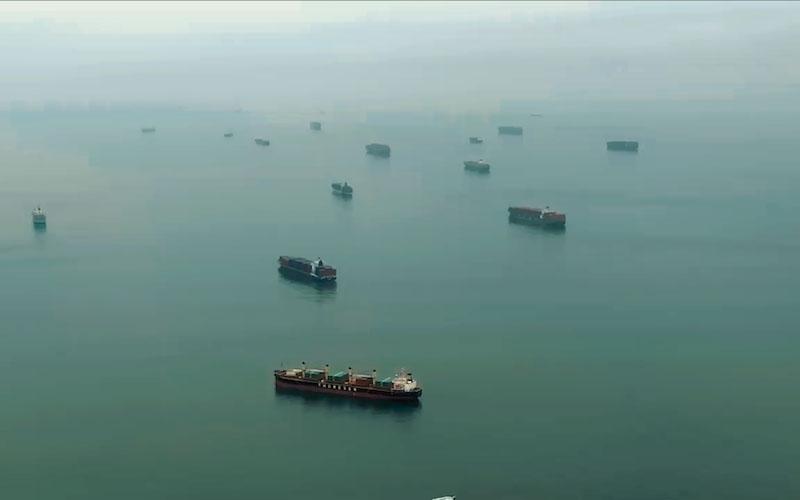
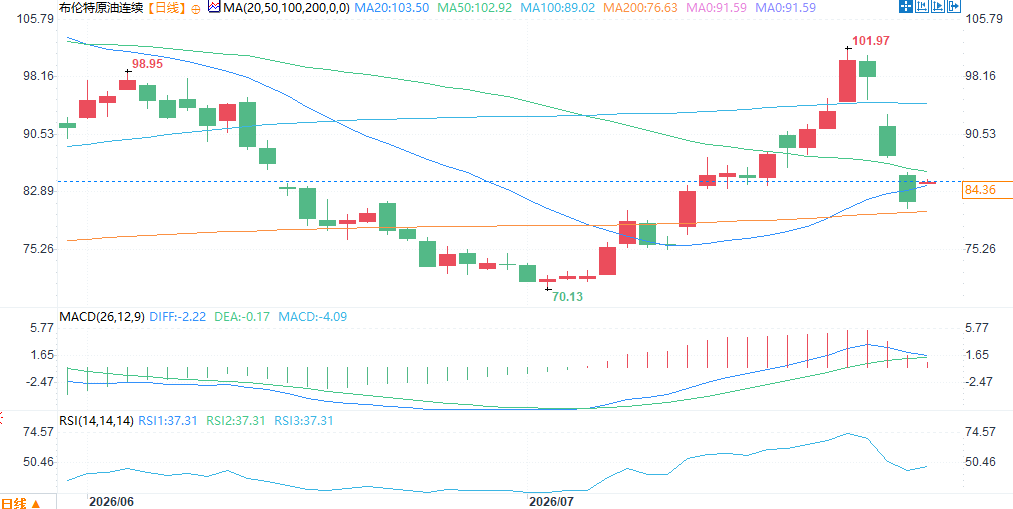 (Brent crude oil futures daily chart, source: EasyTrade) At 8:16 AM Beijing time on July 29, Brent crude oil futures were trading at $84.33 per barrel.
Can the Malacca model be replicated in Hormuz?
Sources familiar with the Gulf issue and Western diplomats indicate that under Oman's proposal, Iran would not have sole control, and related fees would be paid voluntarily. This mechanism is similar to the current system in the Strait of Malacca in Asia—Indonesia, Malaysia, and Singapore encourage ships to voluntarily pay fees to fund navigation safety, environmental protection, and search and rescue operations. Western diplomats have likened the proposal to a voluntary carbon tax mechanism for the aviation industry. Iranian Deputy Foreign Minister Gharibabadi stated that Tehran proposed that Iran be responsible for managing one-way shipping on its side, while Oman would be responsible for managing a portion of the reverse route. Iran had previously advocated for a "maritime service fee," but the US has explicitly opposed any form of mandatory charging. Oman's proposal attempts to strike a balance between respect for sovereignty and international freedom of navigation, defining the fee as voluntary service support. The Qatari Ministry of Foreign Affairs stated that the foreign ministers of the Gulf Cooperation Council held a video conference to discuss the latest situation and how to strengthen cooperation related to freedom and security of navigation.Iranian missile attack on US military base in Jordan
The informal ceasefire lasted only a few days before collapsing. US officials revealed that Iran launched multiple ballistic missiles at a US military base in Jordan. US Central Command confirmed the attack occurred at 5:45 PM Eastern Time on July 28th, with the Iranian Islamic Revolutionary Guard Corps attempting a surprise attack on US forces in the Middle East; however, all incoming missiles were successfully intercepted. Central Command stated that the US military remained on high alert. This was the first missile attack by Iran against US bases in the region since the US suspended military strikes against Iran last Friday. Following this unexpected event, international crude oil prices jumped sharply at the opening on Wednesday, as the geopolitical premium previously priced in due to ceasefire expectations was being re-increased.The toll issue became the crux of the problem, with Iran rejecting the Omani proposal.
The issue of transit fees has been a major sticking point in the US-Iran Straits dispute. Iran has expressed its desire to jointly manage the strait with Oman and charge service fees for passing ships, while the US advocates restoring the pre-war state of free navigation without fees and considers mandatory fees illegal. Iranian state media reported that the Iranian Joint Military Command again rejected Trump's plan to use frozen Iranian assets to compensate damaged ships and warned that countries and companies accepting compensation would be banned from passing through the Strait of Hormuz. An Iranian military spokesperson stated that any country or company accepting so-called compensation from the US using Iranian assets will have its ships barred from passing through the Strait of Hormuz, effective immediately.Trump warns of resuming airstrikes; Iran denies seeking negotiations.
Trump abruptly halted the two-week-long airstrikes last weekend, stating that "good negotiations" were underway with Iran, but warned that airstrikes would resume if the talks failed. In an interview before meeting with the Israeli prime minister, Trump said the US was in a favorable position and reiterated his readiness to strike more Iranian targets, including hardened facilities buried deep underground near Tehran's main nuclear facility, should an agreement not be reached. In a subsequent statement, Trump said Iran was eager for an agreement, adding, "We will force Iran to sign an agreement, and we will end this war." However, Iran denies seeking to resume negotiations with the US, contradicting Trump's claim of "good dialogue." Washington and Tehran had previously agreed to hold talks by the end of August to discuss key issues such as Iran's nuclear program, but the breakdown of the informal ceasefire has cast a shadow over the prospects for negotiations.Tensions continue to escalate in the Red Sea as Houthi rebels threaten Saudi ports.
Risks are also accumulating in the Red Sea. On July 20, the Houthi rebels in Yemen, allied with Iran, announced a blockade of Saudi Red Sea ports and claimed late Tuesday night to have fired a ballistic missile at a Saudi oil tanker, forcing it to turn back. This comes after the Houthis had previously announced a naval blockade of Saudi Arabia and launched several attacks on Saudi vessels recently, threatening Saudi Arabia with alternative Red Sea export routes that bypass the Strait of Hormuz.The Hormuz and Red Sea fronts are both in crisis, and the geopolitical premium for oil prices faces reassessment.
Oman's proposed joint administration plan offered a potential solution to the Strait of Hormuz stalemate, but the Iranian missile attack signaled the collapse of the informal ceasefire, casting a shadow over diplomatic prospects. With both the Strait of Hormuz and the Red Sea, two major energy chokepoints, under threat, the oil market is repricing geopolitical risk premiums. In the short term, geopolitical support for oil prices remains strong, but if the Omani proposal progresses or the US and Iran return to the negotiating table, the current extreme risk premium could be quickly reversed. Traders need to closely monitor US-Iran military developments, the progress of the Omani proposal negotiations, and actual passage data in the Strait of Hormuz—these three factors will jointly determine the next direction of oil prices. (Brent crude oil futures daily chart, source: EasyTrade) At 8:16 AM Beijing time on July 29, Brent crude oil futures were trading at $84.33 per barrel.
- Risk Warning and Disclaimer
- The market involves risk, and trading may not be suitable for all investors. This article is for reference only and does not constitute personal investment advice, nor does it take into account certain users’ specific investment objectives, financial situation, or other needs. Any investment decisions made based on this information are at your own risk.