July 30th Financial Breakfast: Markets ignore Warsh's hawkish remarks; interest rate hike expectations plummet, boosting gold prices; Trump pledges further action against Iran, causing US oil prices to surge nearly 7%.
2026-07-30 06:54:49
On Thursday (July 30, Beijing time) in early Asian trading, spot gold was trading around $4,080 per ounce. The Federal Reserve kept interest rates unchanged, while Warsh expressed a hawkish stance and reiterated the 2% inflation target. However, after the decision was announced, traders' expectations for a September rate hike fell from about 81% to 64%. US crude oil was trading around $84.42 per barrel. Oil prices rose nearly 7% on Wednesday, benefiting from increased supply concerns due to the resumption of airstrikes in the Middle East and US President Trump's promise to further strike Iran. 
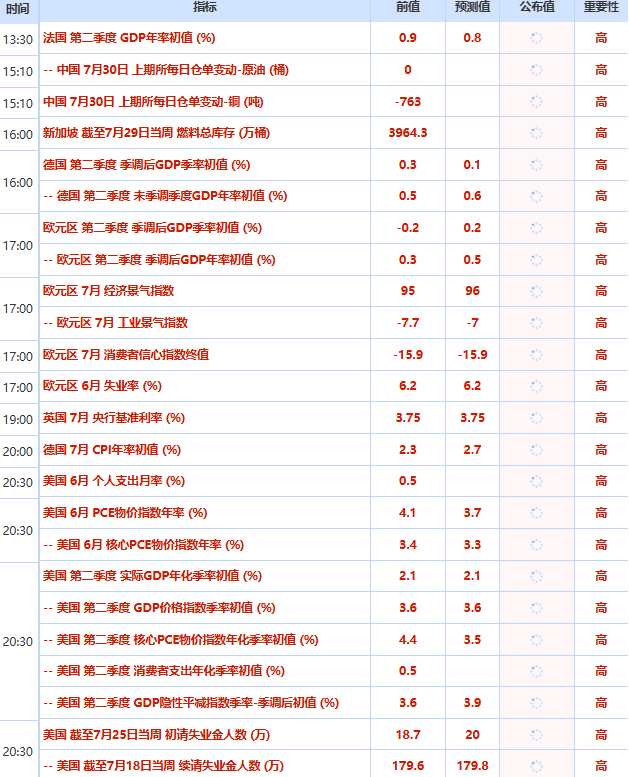
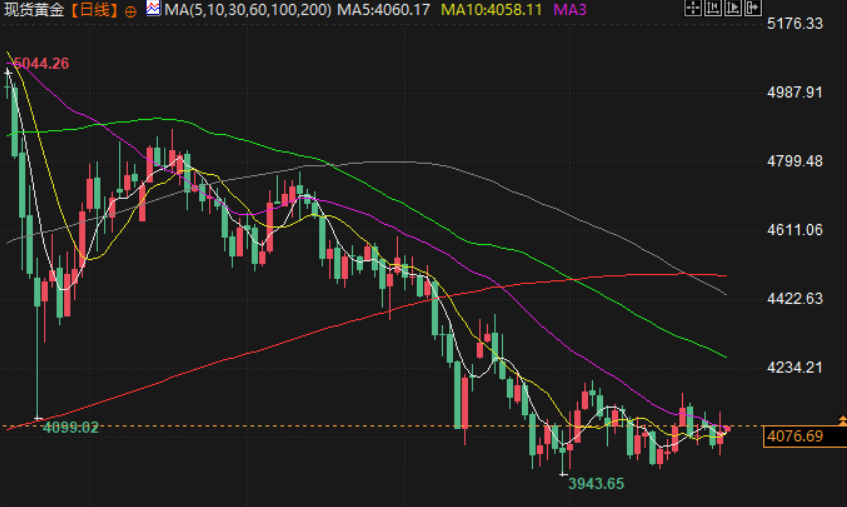 Despite Warsh's hawkish stance and reiteration of the 2% inflation target, traders' expectations for a September rate hike fell from approximately 81% to 64% after the policy decision was announced, triggering a relief rally in precious metals. Independent traders noted that panic selling at the long end of the bond market dragged down the stock market, while inflation concerns helped gold outperform. Investors are awaiting the release of the US June PCE data on Thursday for further clues, while the market widely expects the Bank of England and the Bank of Japan to keep interest rates unchanged this week and warn of inflationary pressures from the Middle East wars. In other precious metals, spot silver rose 0.9% to $57.59, platinum rose 1.9% to $1636.10, and palladium rose 1% to $1281.75.
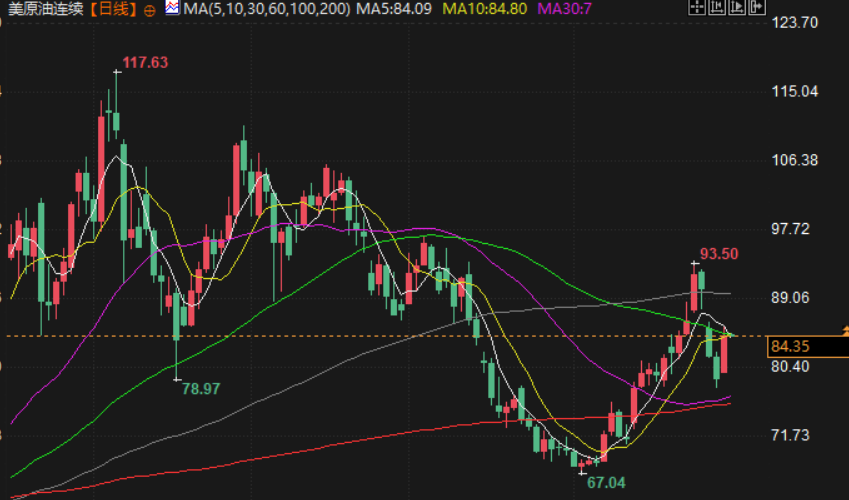 The US and Saudi Arabia launched attacks on Iranian-backed groups in Iraq, and Iran fired on ships in the Strait of Hormuz and US bases in Jordan. Trump pledged further strikes against Iran. Meanwhile, US EIA data showed that crude oil inventories fell by 7.2 million barrels to 404.5 million barrels last week, the lowest level since 2018, far exceeding the expected drop of 1.3 million barrels. Analysts predict that Brent crude oil will fluctuate wildly in the $80-$100 range in the near term.
 The euro rose 0.4% against the dollar to 1.14315, the pound gained 0.4% to 1.3342, while the dollar fell 0.26% against the yen to 163.40 but remained near a 40-year high, prompting traders to be wary of potential intervention by Japanese authorities. Meanwhile, tensions in the Middle East escalated again following the joint US-Saudi strikes against Iranian-backed groups in Iraq, pushing oil prices higher. The market expects the Bank of Japan to keep interest rates unchanged on Friday but may release hawkish signals to support the yen. Economists at Natixis believe that Warsh will remain vigilant but also acknowledge that recent moderate inflation data may justify the current policy. Scotiabank warned of significant upside risks for the yen before the end of the week.
Key Focus Today
stock market
U.S. stocks closed sharply lower on Wednesday, with the S&P 500 falling 1.52% to 7316.15, the Nasdaq down 1.74% to 24442.94, and the Dow Jones Industrial Average plunging 2.19% to 51594.14. The Federal Reserve kept interest rates unchanged at 3.50%-3.75%, in line with expectations, but three members favored a rate hike. Meanwhile, AI-related chip stocks continued their recent decline, with the Nasdaq 100 now down 11% from its June high. Investors were concerned about massive capital spending and sold off tech stocks. Meta fell 4% in after-hours trading due to an upward revision of its capital spending forecast, while Microsoft rose 0.6% in after-hours trading due to better-than-expected cloud business performance. With inflation exceeding the target for more than five consecutive years and the Middle East war pushing up fuel and food prices, the market is beginning to focus on the pressure of a September rate hike. The industrial sector led the decline, falling 3.24%, while the information technology sector fell 2.5%. Ford rose 2.1% due to an upward revision of its profit forecast, and Visa rose 0.6% boosted by travel demand.Gold Market
Gold prices reversed intraday losses on Wednesday, ultimately rising about 0.94%, with spot gold settling at $4,066.13 per ounce. It had earlier risen to $4,116.28, a new high since July 23, mainly due to the Federal Reserve keeping interest rates unchanged, which led to a weaker dollar against the euro and a reversal of earlier gains in the 10-year Treasury yield. The market was also digesting Chairman Warsh's speech. Despite Warsh's hawkish stance and reiteration of the 2% inflation target, traders' expectations for a September rate hike fell from approximately 81% to 64% after the policy decision was announced, triggering a relief rally in precious metals. Independent traders noted that panic selling at the long end of the bond market dragged down the stock market, while inflation concerns helped gold outperform. Investors are awaiting the release of the US June PCE data on Thursday for further clues, while the market widely expects the Bank of England and the Bank of Japan to keep interest rates unchanged this week and warn of inflationary pressures from the Middle East wars. In other precious metals, spot silver rose 0.9% to $57.59, platinum rose 1.9% to $1636.10, and palladium rose 1% to $1281.75.oil market
Oil prices jumped about 7% on Wednesday, with Brent crude rising 7.74% to $88.10 a barrel and WTI crude rising 6.91% to $84.60 a barrel, mainly due to renewed airstrikes in the Middle East exacerbating supply concerns. The US and Saudi Arabia launched attacks on Iranian-backed groups in Iraq, and Iran fired on ships in the Strait of Hormuz and US bases in Jordan. Trump pledged further strikes against Iran. Meanwhile, US EIA data showed that crude oil inventories fell by 7.2 million barrels to 404.5 million barrels last week, the lowest level since 2018, far exceeding the expected drop of 1.3 million barrels. Analysts predict that Brent crude oil will fluctuate wildly in the $80-$100 range in the near term.Foreign exchange market
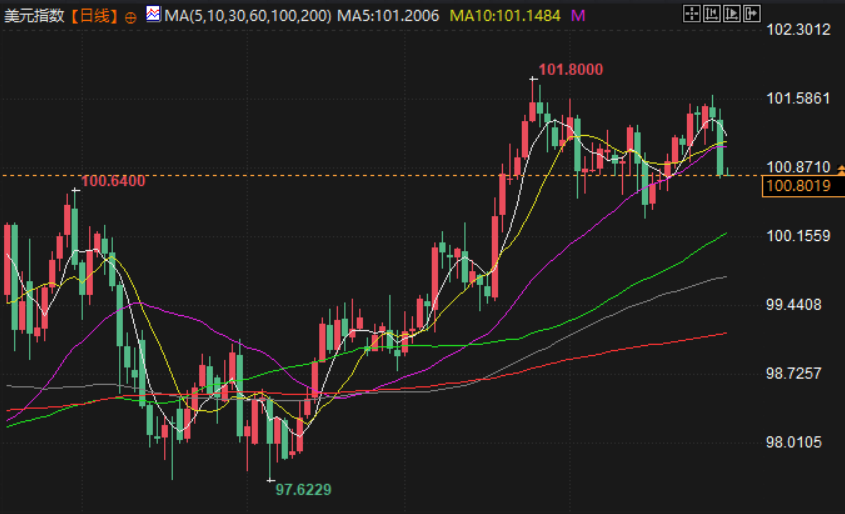
The dollar fell across the board on Wednesday, with the dollar index dropping 0.58% to 100.81, mainly due to the Federal Reserve keeping interest rates unchanged at 3.50%-3.75%. However, three policymakers voted to raise rates, highlighting internal disagreements about inflation risks and exacerbating market doubts about Chairman Warsh's ability to deliver on the 2% inflation target. The euro rose 0.4% against the dollar to 1.14315, the pound gained 0.4% to 1.3342, while the dollar fell 0.26% against the yen to 163.40 but remained near a 40-year high, prompting traders to be wary of potential intervention by Japanese authorities. Meanwhile, tensions in the Middle East escalated again following the joint US-Saudi strikes against Iranian-backed groups in Iraq, pushing oil prices higher. The market expects the Bank of Japan to keep interest rates unchanged on Friday but may release hawkish signals to support the yen. Economists at Natixis believe that Warsh will remain vigilant but also acknowledge that recent moderate inflation data may justify the current policy. Scotiabank warned of significant upside risks for the yen before the end of the week.International News
The probability of a September rate hike has fallen to 57.4%, and the probability of a 50 basis point rate hike this year has dropped to 43.2%, according to CME's "FedWatch". The probability of the Fed keeping rates unchanged by September is 42.6% (23.4% the previous day), and the probability of a rate hike of at least 25 basis points is 57.4% (76.6% the previous day). The probability of the Fed keeping rates unchanged by December is 16.8%, the probability of a cumulative 25 basis point rate hike is 43.2%, and the probability of a rate hike of at least 50 basis points is 40%. The US military's continued naval blockade of Iran has forced 20 merchant ships to change course. The US Central Command issued a statement on the 29th local time, stating that the US military is continuing its naval blockade of Iran. As of that day, the US military had changed the routes of 20 merchant ships, resulting in two ships becoming inoperable. In addition, the US military boarded and inspected two ships to ensure they complied with blockade regulations. This move indicates that US military pressure in the Gulf region remains ongoing, and tensions in the Strait of Hormuz and related shipping lanes show no signs of easing. Trump again threatens to attack Iran and seeks additional tariffs . On July 29th local time, US President Trump stated that the US would "deliver a heavy blow" to Iran for launching missiles at US forces in the Middle East, and plans to add provisions to relevant legislation authorizing the US to impose tariffs on Iran. Trump told the media at the White House that day that it was now "the US's turn to retaliate," adding that "Iran knows this blow is inevitable and has asked the US not to launch an attack," but the US will "teach them a lesson." He revealed that Iran launched five missiles last night, all of which were intercepted and shot down. Regarding whether an agreement can be reached in the future, he said he would wait and see, but the US would definitely deliver a "heavy blow." (CCTV News) Israeli media: Netanyahu outlines "three scenarios" regarding Iran to Trump. According to a report on the website of The Times of Israel on the 29th, Israeli Prime Minister Netanyahu recently presented "three scenarios" concerning the situation with US President Trump during a meeting, but did not mention any "specific strategy." Netanyahu also expressed his desire to gradually wean himself off US aid during a meeting with senior US officials. The report quoted a senior official as saying that Netanyahu's "three scenarios" included: first, a diplomatic agreement with Iran; second, a less clear situation where no agreement is reached and the US continues to pressure Iran through economic sanctions, but will not launch another war; and third, a renewed large-scale offensive against Iran. (Xinhua) The Federal Reserve Holds Rates Steady for the Fifth Consecutive Time, Three Officials Inclined Towards a Rate Hike The Federal Open Market Committee (FOMC) approved the following statement by a vote of 9 to 3: To support the Federal Reserve's dual mandate, the Committee decided to maintain the target range for the federal funds rate at 3.5%–3.75%. The Committee will continue its policy of maintaining ample reserves in the banking system. Despite high levels of uncertainty due to factors such as the Middle East conflict, US economic activity expanded at a solid pace. Productivity growth and capital investment were strong. Job creation kept pace with the expansion of the labor force, and the unemployment rate remained relatively unchanged. Inflation remains high relative to the Committee's 2% target, partly due to supply shocks driving up prices in certain sectors, including energy. The Committee will work toward price stability. Committee members opposing this monetary policy action included Beth M. Hammack, Neel Kashkari, and Lorie K. Logan. They favored raising the target range for the federal funds rate by 25 basis points at this meeting. The U.S. Department of Commerce is providing $874 million in support for semiconductor research and development. On July 29, the U.S. Department of Commerce announced that, under the Chip and Science Act, it had signed letters of intent with seven companies to provide $874 million in federal incentives to support semiconductor research and development in areas such as integrated photonics, computing architecture, advanced packaging, substrates, materials, and memory. US Media: US Weapon Stockpiles Continue to Shrink, Conflict with Iran Shows No Signs of Ending Three sources familiar with recent Pentagon data and a new research report indicate that US weapon stockpiles have continued to decline following the recent escalation of the conflict with Iran. Ammunition reserves, including key air defense missiles, have been significantly depleted, and the war with Iran shows no signs of a permanent end in the short term. A report released Monday by the Center for Strategic and International Studies (CSIS) states that the US currently has fewer than 827 Patriot interceptors and fewer than 278 THAAD interceptors. Sources say this estimate is largely consistent with internal US government data. CSIS warns that declining stockpiles could force the US and its allies to take on higher risks in missile interception operations. Currently, there is no ballistic missile defense system that can completely replace the Patriot and THAAD systems. US President Trump stated on Monday that he hopes to replenish "more advanced weaponry" as soon as possible, but emphasized that current stockpiles are "still in good condition." However, the Chairman of the Joint Chiefs of Staff stated last week that the Pentagon will be unable to procure the necessary ammunition without additional funding.Domestic News
Non-ferrous metal prices rose across the board in the first half of the year, with core minor metal prices soaring . On July 29, the China Nonferrous Metals Industry Association released the latest industry performance data for the first half of the year. In the first half of the year, many core indicators of China's non-ferrous metals industry achieved growth. According to a relevant official from the association, driven by the accelerated construction of global artificial intelligence computing infrastructure, demand for copper, aluminum, tin, tantalum, indium, and other related non-ferrous metals was concentrated in the first half of the year, leading to a significant price increase. From January to June this year, copper and aluminum prices rose by 31.4% and 18.8% respectively, while the prices of tin, tantalum, and indium, three core minor metals, increased by over 40%, 158%, and 60% respectively. Experts believe that current macroeconomic and geopolitical uncertainties make market sentiment highly sensitive. At the industry level, it is necessary to further improve product adaptability, strengthen upstream and downstream supply and demand connections, and diversify the industry layout. (CCTV Finance)- Risk Warning and Disclaimer
- The market involves risk, and trading may not be suitable for all investors. This article is for reference only and does not constitute personal investment advice, nor does it take into account certain users’ specific investment objectives, financial situation, or other needs. Any investment decisions made based on this information are at your own risk.