The Federal Reserve lowered its inflation tolerance level, and institutions predict that the rate will likely remain stable this year, but the risk of further rate hikes still exists.
2026-07-30 13:50:50
The Federal Reserve kept interest rates unchanged at its July meeting. Three dissenting votes highlighted internal hawkish divisions, and the overall decision leaned dovish, in line with market and institutional expectations. The core highlight of this meeting was not short-term interest rate adjustments, but rather the implicit shift in the Fed's policy framework under the Warsh era: the central bank may gradually abandon its past approach of tolerating inflation above 2%, and firmly anchor its 2% inflation target. Currently, core PCE inflation contains an overvalued component, and the fundamentals do not support continued rate hikes. Institutions predict that the Fed will likely remain on hold for the rest of the year . However, upside risks from Middle East geopolitical tensions and rising energy prices, coupled with the withdrawal of forward guidance, have significantly increased market interest rate volatility and policy uncertainty.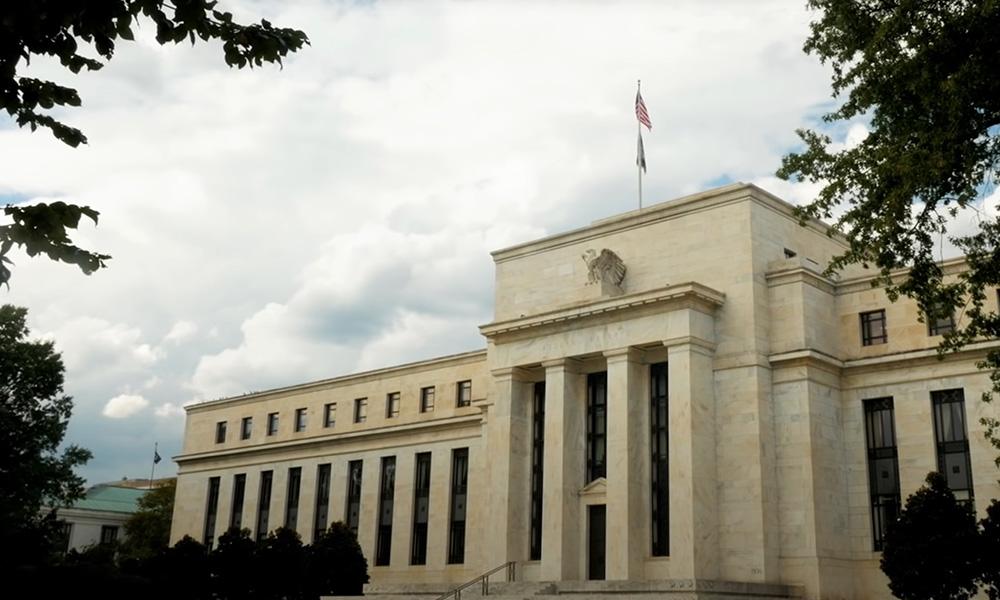
The core reason for pausing interest rate hikes in July
Previously, the Federal Reserve's economic projections in June showed a clear division among officials regarding whether to raise interest rates this year. However, economic data released since June has provided ample support for the Fed's wait-and-see approach. On the one hand, non-farm payroll growth has slowed, and labor force participation and unemployment data have fluctuated significantly, indicating a cooling job market. On the other hand, inflation data has unexpectedly weakened, suggesting a decline in overall economic activity. Several Fed officials had previously clarified that a prerequisite for raising interest rates was for inflation to maintain its high resilience from the first quarter. New York Fed President Williams even gave a specific threshold: if core inflation stabilizes at 0.2% month-on-month in the second half of the year, the Fed can maintain its current interest rate. This pause in rate hikes is based on the fundamental factor of marginally declining inflation, rather than on an unexpected rate hike driven by Warsh, as the market had feared.Inflation data is biased: Core PCE overstates actual inflationary pressures.
The core PCE inflation indicator closely watched by the market is significantly distorted, overestimating the current inflation level. As of May, the core PCE year-on-year growth rate was still as high as 3.4%, but broader indicators such as CPI, median PCE, and cut-off mean inflation have generally fallen to 2.5%-3.0%, closer to the 2% policy target. The deviation in indicators mainly stems from the asset management and software sub-categories, which have been passively driven up by the AI industry boom, the stock market rally, and rising technology costs. This represents a structural short-term disturbance, not a general rise in inflation. The U.S. Department of Commerce is about to optimize relevant statistical methods, and the adjusted PCE inflation is expected to fall by 0.2-0.3 percentage points. At the same time, wage growth and the labor market are stable, and there is no basis for a full-blown inflation restart.Key Change: The Federal Reserve's Inflation Tolerance Reaches a Turning Point
This meeting released significant medium- to long-term policy signals, indicating that the Federal Reserve's monetary policy response function is iterating. Previously, the Fed followed the "opportunistic inflation-control" approach of the 1990s, tolerating inflation slightly above 2% and waiting for the economic cycle to naturally cool down. Warsh explicitly stated that the 63-month period of excessive inflation was a hidden tax on businesses and individuals and must be completely ended, highlighting its stance of no longer tolerating inflation above 2% in the long term. At the same time, frequent geopolitical conflicts and the normalization of supply shocks have also made Fed officials realize that continuing to tolerate moderately high inflation will eventually push up market inflation expectations and undermine the foundation of price stability. This means that even if inflation subsequently stabilizes at the neutral level of 2.5%, it may still be judged as insufficient policy easing.Market Impact and Subsequent Risk Forecast
Following this rate stabilization measure, the market is still pricing in a 50 basis point rate hike this year, but the timing of such hikes is significantly more uncertain. Long-term US Treasury yields and the break-even inflation rate are rising in tandem, steepening the US Treasury yield curve. The reforms implemented by Warsh, which completely eliminated forward guidance, are continuing to take effect, reducing policy transparency and ensuring that interest rate market volatility remains high for an extended period. The probability of unexpected policy developments in both directions is increasing. The benchmark forecast from institutions is for the Fed to maintain interest rates unchanged this year, but the risk structure has reversed: the current market risk is biased towards rate hikes rather than cuts, with the Middle East situation and energy prices being the biggest short-term variables.Summarize
The Federal Reserve's decision to pause interest rate hikes in July was a data-driven and rational choice. Structurally inflated inflation and a cooling job market supported the central bank's wait-and-see approach. However, compared to short-term interest rates, the shift in the Fed's medium- to long-term policy logic is more crucial: a lowered tolerance for inflation and a strengthened commitment to the 2% target signify a new phase in monetary policy. Looking ahead, AI statistical corrections, the true trend of inflation, and geopolitical and energy risks will jointly determine the interest rate path. In a market environment lacking forward guidance, asset price volatility will continue to amplify.- Risk Warning and Disclaimer
- The market involves risk, and trading may not be suitable for all investors. This article is for reference only and does not constitute personal investment advice, nor does it take into account certain users’ specific investment objectives, financial situation, or other needs. Any investment decisions made based on this information are at your own risk.