The Federal Reserve's decision to keep interest rates unchanged put pressure on the dollar, which is expected to remain volatile at high levels in the short term.
2026-07-30 14:16:51
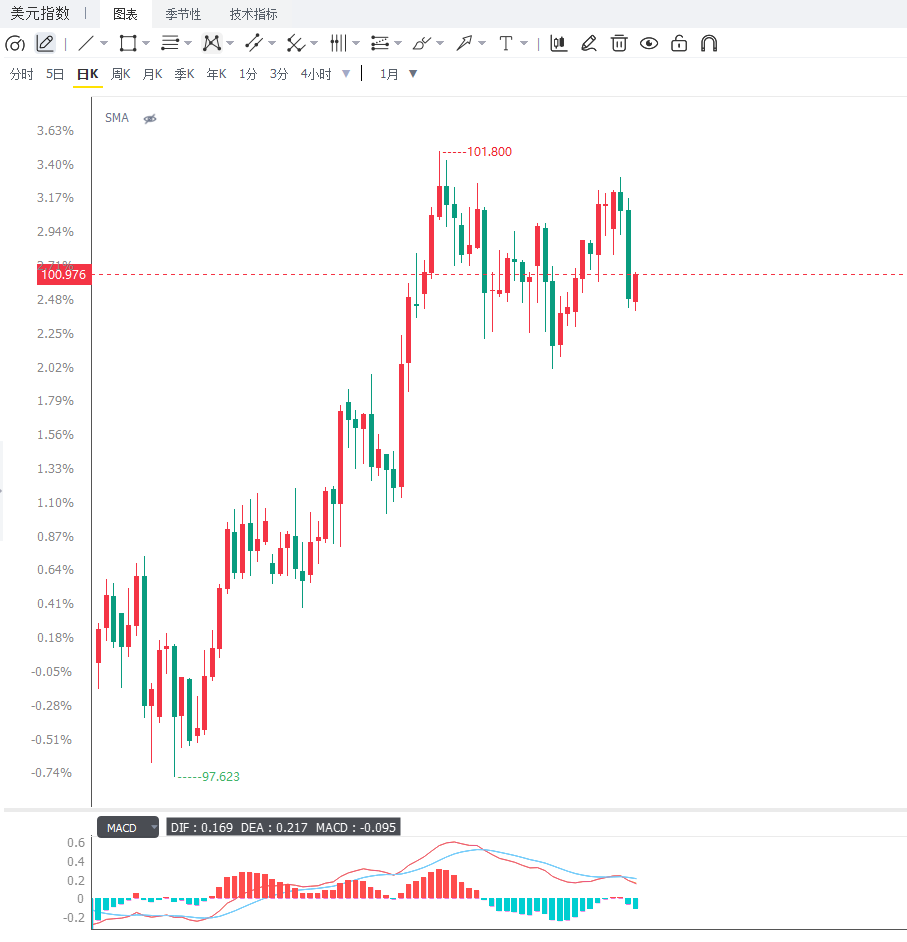
The dollar edged higher in Asian trading on Thursday, recovering technically after a sharp drop in the previous session. As of now, the dollar index (DXY), which measures the dollar's performance against six major currencies, is up about 0.12%, trading around 100.92. Market sentiment is rebalancing between signals from the Federal Reserve's policy and global safe-haven demand.  The dollar's previous significant decline was primarily influenced by the Federal Reserve's July monetary policy meeting. The Fed decided to maintain the target range for the federal funds rate at 3.50%-3.75%, marking the fifth consecutive meeting with policy stability. However, the market noted a clear division within the Fed. The voting results showed that three of the 12 Federal Open Market Committee (FOMC) members supported a 25-basis-point rate hike, including Cleveland Fed President Beth Hammark, Minneapolis Fed President Neal Kashkari, and Dallas Fed President Logan. This result indicates that some policymakers still believe inflation risks have not completely subsided. Fed Chairman Kevin Warsh emphasized at the press conference that the Fed remains highly vigilant about inflation above its target level and stated that the committee will firmly promote price stability. He pointed out that the Fed will not ease its policy stance if inflationary pressures persist and will take action if necessary. While this hawkish signal limited the dollar's decline in the short term, the market had already anticipated that the Fed would not immediately cut rates, resulting in a significant pullback in the dollar after the decision was announced. Investors had previously focused on whether the Federal Reserve would signal its future policy direction, but the meeting results offered no clear guidance. Meanwhile, safe-haven demand has once again become a significant driver of the dollar's rebound. Recent escalation of tensions in the Middle East has heightened market concerns about escalating regional conflict and increased energy supply risks. Safe-haven flows into the dollar have supported the dollar index from the previous trading day's lows. Market news indicates that increased military activity has prompted investors to reassess the global risk asset environment. During periods of heightened uncertainty, the dollar typically benefits from its status as a global reserve currency; even with changes in US interest rate expectations, safe-haven buying can still drive a temporary rise in the dollar. Looking at major currency performance, the dollar was generally stronger in Asian trading on Thursday, with a particularly noticeable performance against the British pound. The market is still awaiting more economic data to determine whether the Federal Reserve will continue its tightening policy. Going forward, market focus will be on US economic performance and inflation data. If the US economy remains resilient and inflation declines less than expected, the market may re-increase expectations that the Fed will maintain high interest rates or even further tighten policy, thus supporting a stronger dollar. However, if subsequent economic data shows a slowdown in growth and continued decline in inflation, the market may re-bet on a shift in monetary policy, and the dollar may face further downward pressure. Currently, the dollar market is in a phase of repricing policy expectations. On the one hand, hawkish forces within the Federal Reserve limit the dollar's downside; on the other hand, safe-haven demand provides short-term support for the dollar. Future trends will depend on US economic data, global risk events, and changes in the policy differences among major central banks. From a daily chart perspective, the dollar index fell rapidly after the Fed's decision but subsequently rebounded due to safe-haven buying, currently trading around 100.90. The overall structure remains in a consolidation phase, with resistance at the 101.30-101.80 area. A break above this area could lead to a further test of the resistance around 102.50. On the downside, the 100.00 level is a key support level; a break below this area could lead to a retest of the lows around 99.20. Market momentum has recovered somewhat, but a trend reversal still requires further fundamental confirmation. From a 4-hour chart perspective, the dollar index has formed a short-term rebound, and a recovery from the previous rapid decline is underway. Technical indicators suggest that short-term buying has strengthened, but prices still face resistance from moving averages. If the index breaks through 101.30, the short-term rebound may continue; however, if the rebound is capped and falls below 100.50, it may revert to a weak structure. Future trading will focus on speeches by Federal Reserve officials, US economic data, and changes in global risk aversion.
  Editor's Summary: The current trend of the US dollar is influenced by two major factors: "Federal Reserve policy divergence" and "safe-haven inflows." Although the Fed's decision to keep interest rates unchanged has put short-term pressure on the dollar, the support for rate hikes from three officials and the hawkish statements from Chairman Kevin Warsh indicate that US monetary policy has not yet fully shifted to easing. Meanwhile, escalating tensions in the Middle East have strengthened the dollar's safe-haven appeal, providing temporary support for the dollar index. The future direction of the dollar will depend on the speed of inflation decline, the resilience of the US economy, and future policy signals from the Fed. Overall, the dollar index remains in a short-term consolidation phase, with the support area around 100 being crucial. If risk sentiment continues to deteriorate, the dollar may receive further support; however, if the market re-emphasizes expectations of rate cuts, the dollar's upside potential may be limited. Investors should closely monitor changes in macroeconomic data and market opportunities arising from policy differences among major central banks.
The dollar's previous significant decline was primarily influenced by the Federal Reserve's July monetary policy meeting. The Fed decided to maintain the target range for the federal funds rate at 3.50%-3.75%, marking the fifth consecutive meeting with policy stability. However, the market noted a clear division within the Fed. The voting results showed that three of the 12 Federal Open Market Committee (FOMC) members supported a 25-basis-point rate hike, including Cleveland Fed President Beth Hammark, Minneapolis Fed President Neal Kashkari, and Dallas Fed President Logan. This result indicates that some policymakers still believe inflation risks have not completely subsided. Fed Chairman Kevin Warsh emphasized at the press conference that the Fed remains highly vigilant about inflation above its target level and stated that the committee will firmly promote price stability. He pointed out that the Fed will not ease its policy stance if inflationary pressures persist and will take action if necessary. While this hawkish signal limited the dollar's decline in the short term, the market had already anticipated that the Fed would not immediately cut rates, resulting in a significant pullback in the dollar after the decision was announced. Investors had previously focused on whether the Federal Reserve would signal its future policy direction, but the meeting results offered no clear guidance. Meanwhile, safe-haven demand has once again become a significant driver of the dollar's rebound. Recent escalation of tensions in the Middle East has heightened market concerns about escalating regional conflict and increased energy supply risks. Safe-haven flows into the dollar have supported the dollar index from the previous trading day's lows. Market news indicates that increased military activity has prompted investors to reassess the global risk asset environment. During periods of heightened uncertainty, the dollar typically benefits from its status as a global reserve currency; even with changes in US interest rate expectations, safe-haven buying can still drive a temporary rise in the dollar. Looking at major currency performance, the dollar was generally stronger in Asian trading on Thursday, with a particularly noticeable performance against the British pound. The market is still awaiting more economic data to determine whether the Federal Reserve will continue its tightening policy. Going forward, market focus will be on US economic performance and inflation data. If the US economy remains resilient and inflation declines less than expected, the market may re-increase expectations that the Fed will maintain high interest rates or even further tighten policy, thus supporting a stronger dollar. However, if subsequent economic data shows a slowdown in growth and continued decline in inflation, the market may re-bet on a shift in monetary policy, and the dollar may face further downward pressure. Currently, the dollar market is in a phase of repricing policy expectations. On the one hand, hawkish forces within the Federal Reserve limit the dollar's downside; on the other hand, safe-haven demand provides short-term support for the dollar. Future trends will depend on US economic data, global risk events, and changes in the policy differences among major central banks. From a daily chart perspective, the dollar index fell rapidly after the Fed's decision but subsequently rebounded due to safe-haven buying, currently trading around 100.90. The overall structure remains in a consolidation phase, with resistance at the 101.30-101.80 area. A break above this area could lead to a further test of the resistance around 102.50. On the downside, the 100.00 level is a key support level; a break below this area could lead to a retest of the lows around 99.20. Market momentum has recovered somewhat, but a trend reversal still requires further fundamental confirmation. From a 4-hour chart perspective, the dollar index has formed a short-term rebound, and a recovery from the previous rapid decline is underway. Technical indicators suggest that short-term buying has strengthened, but prices still face resistance from moving averages. If the index breaks through 101.30, the short-term rebound may continue; however, if the rebound is capped and falls below 100.50, it may revert to a weak structure. Future trading will focus on speeches by Federal Reserve officials, US economic data, and changes in global risk aversion. Editor's Summary: The current trend of the US dollar is influenced by two major factors: "Federal Reserve policy divergence" and "safe-haven inflows." Although the Fed's decision to keep interest rates unchanged has put short-term pressure on the dollar, the support for rate hikes from three officials and the hawkish statements from Chairman Kevin Warsh indicate that US monetary policy has not yet fully shifted to easing. Meanwhile, escalating tensions in the Middle East have strengthened the dollar's safe-haven appeal, providing temporary support for the dollar index. The future direction of the dollar will depend on the speed of inflation decline, the resilience of the US economy, and future policy signals from the Fed. Overall, the dollar index remains in a short-term consolidation phase, with the support area around 100 being crucial. If risk sentiment continues to deteriorate, the dollar may receive further support; however, if the market re-emphasizes expectations of rate cuts, the dollar's upside potential may be limited. Investors should closely monitor changes in macroeconomic data and market opportunities arising from policy differences among major central banks.
- Risk Warning and Disclaimer
- The market involves risk, and trading may not be suitable for all investors. This article is for reference only and does not constitute personal investment advice, nor does it take into account certain users’ specific investment objectives, financial situation, or other needs. Any investment decisions made based on this information are at your own risk.