The Bank of England's hawkish stance expands! The pound surges 15 points in the short term.
2026-07-30 19:18:52
On Thursday (July 30), the Bank of England announced its interest rate decision at 19:00 Beijing time, maintaining the bank's interest rate at 3.75%. The vote was 6-3, compared to an expected 7-2 split. Three members (Green, Peel, and Mann) supported a 25 basis point rate hike.  Following the announcement of the resolution, the pound rose by about 15 points against the dollar, reaching a high of 1.3401; the yield on UK 2-year government bonds fell slightly by 6 basis points to 4.39%; the FTSE 100 index rose by 0.18% in the short term; and the euro fell slightly against the pound to 0.8571.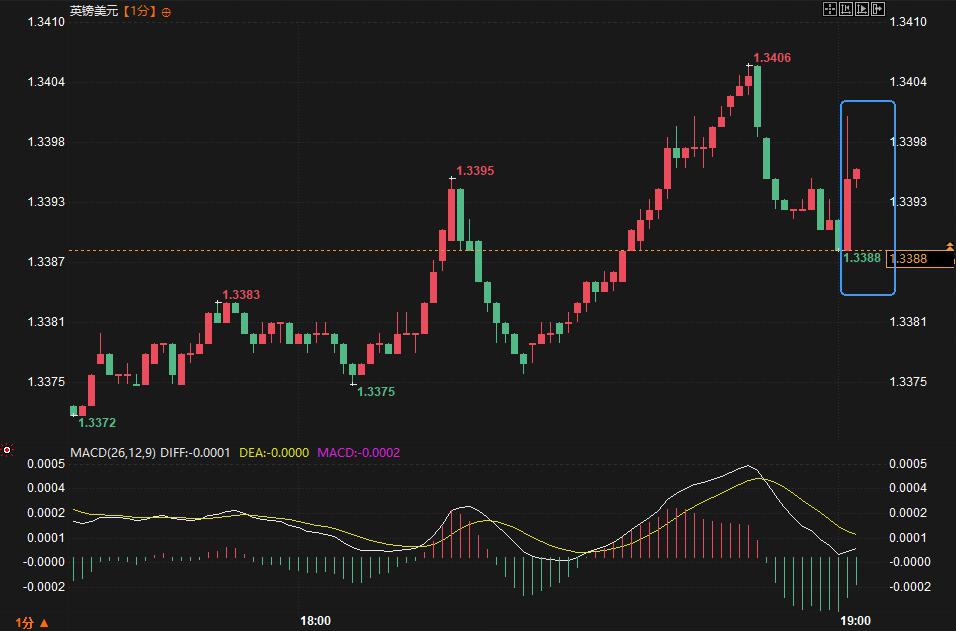
Following the announcement of the resolution, the pound rose by about 15 points against the dollar, reaching a high of 1.3401; the yield on UK 2-year government bonds fell slightly by 6 basis points to 4.39%; the FTSE 100 index rose by 0.18% in the short term; and the euro fell slightly against the pound to 0.8571. Market Background
Global markets remain volatile due to geopolitical factors, and fluctuations in energy prices pose uncertainty to the inflation path. With inflation having fallen to a low of 2.6%, the Bank of England chose to maintain its current policy stance in the face of potential upward pressure. Previously, the market generally expected stability, but the widening divergence in the vote reflects differing internal assessments of the risk of double-dip inflation. Prior to the decision, most institutions anticipated a cautious wait-and-see approach, while retail investors held more divided views, with some focusing on the potential appreciation of the pound.Deep interconnect analysis
Bank of England Governor Bailey emphasized that inflation has fallen faster than expected, but will rise again later this year, and the central bank will ensure that this rise is temporary. Central forecasts indicate that CPI may rise to 3.2% in the fourth quarter of 2026, fall below 3.2% in the first quarter of 2027, and remain below the 2% target in the first quarter of 2028. GDP growth is projected at 1.1% in both 2026 and 2027, with the unemployment rate averaging 5.0% in 2026. Compared to historical trends, the current decision continues the "data-dependent" framework of recent years, but the divergence has widened to 6-3, making it more hawkish than before. Latest quotes show that the pound has found short-term support, and bond yields have fallen slightly, reflecting a positive market interpretation of a "pause in tightening." On the fundamental front, the impact of the energy shock remains uncertain, and the committee stated it is prepared to act if necessary; it also noted signs of slowing demand, such as private sector wage growth slowing to its lowest level since 2020. Institutional perspectives have undergone a moderate adjustment before and after the decision. Prior to the decision, most institutions expected a 7-2 vote, believing domestic conditions to be relatively mild. After the announcement, some analysts pointed out that the 6-3 result was slightly hawkish, but Bailey's "wait and see" tone dominated, and the market did not experience a sharp repricing. Institutional accounts, such as economists, largely believed the result was in line with expectations, emphasizing that financial conditions had tightened, providing more time to observe inflation risks. Retail investors presented a more pronounced contrast. Before the decision, some retail investors expected a higher probability of an interest rate hike and held a cautious attitude towards the pound; after the announcement, real-time discussions shifted to focusing on a short-term rebound in the pound, believing that the decision to maintain stability eased the pressure on the new government to reduce the cost of living, while energy-related uncertainties still needed to be monitored. Overall, the expectation discrepancy was mainly reflected in the voting differences, rather than the policy direction itself. The pound's short-term bullish momentum has strengthened, but the impact of changes in global risk appetite on the long-term trend needs to be monitored.Trend Outlook
In the short term, the pound and UK assets are likely to remain relatively resilient, benefiting from increased policy certainty. Bond yield volatility may moderate. In the medium to long term, the policy path will still depend on the evolution of the situation in Iran, energy price transmission, and domestic demand data. If upside risks do not materialize, the market's anticipated potential adjustment at the end of 2026 may face revision; conversely, if a second-wave effect emerges, tightening expectations may rebound. Overall market movements will revolve around data verification and geopolitical dynamics; cautious monitoring is advised.Frequently Asked Questions
Q: The Bank of England's 6-3 vote was more hawkish than the expected 7-2. What was the actual impact on the market? Although the decision showed increased divergence, the core decision remained to maintain the current interest rate. The market's immediate reaction was mildly positive. The pound rose in the short term, and bond yields fell slightly, indicating that investors accepted the "wait and see" strategy as dominant, with short-term uncertainty decreasing rather than increasing. Q: What changes have been made to the inflation forecast, and how much support does this provide for the pound in the medium term? The central forecast shows an inflation path that is more moderate than in April, but still expects it to rise above the target later this year. The pound has received some support, but the long-term outlook depends on actual data and global energy dynamics. Current forecasts assume a market-implied path of one rate hike. Q: How will the energy shock and the situation in Iran affect the Bank of England's future decisions? The committee clearly stated that the policy stance will depend on the scale of the conflict and economic transmission. Currently, there is insufficient evidence of a second-degree effect, but vigilance is maintained, and policy can be adjusted quickly if the risks materialize. This constitutes the core driver of short-term market volatility. Q: What guidance does the decision provide for the short-term trend of the UK stock and bond markets? The FTSE 100 rose moderately in the short term, reflecting expectations of easing cost pressures; bond yields declined slightly, reflecting the positive impact of a temporary halt in tightening. Both are influenced by global risk sentiment and require monitoring of subsequent economic data for confirmation. Q: Is there coordination between the new government's policies and the central bank's stance? The new government's measures to reduce the cost of living (such as eliminating part of the electricity tax) are seen as helping to suppress inflation, and the central bank's stable decision provides it with policy space. Both sides focus on balancing growth and price stability, but the final effect still needs to be observed in actual transmission.- Risk Warning and Disclaimer
- The market involves risk, and trading may not be suitable for all investors. This article is for reference only and does not constitute personal investment advice, nor does it take into account certain users’ specific investment objectives, financial situation, or other needs. Any investment decisions made based on this information are at your own risk.