Crude Oil Trading Alert: Easing Supply Concerns Amid US-Iran Talks, WTI Oil Prices Continue Range-Bound Trading
2026-07-31 09:36:54
WTI crude oil prices continued to be under pressure during Asian trading hours on Friday, falling for the second consecutive session to a low of around $82.60 per barrel. The price adjustment was mainly influenced by signs of easing tensions between the US and Iran, with investors reassessing the risk of disruptions to Middle Eastern energy supplies, and some of the risk premium previously established due to geopolitical conflict beginning to decline.  The US and Iran are engaged in communications related to restoring regional stability. Pakistan's foreign ministry stated that the two sides are negotiating to ease tensions, including on the security of the Strait of Hormuz, a crucial global energy transport route. The market believes that if diplomatic efforts progress, the risk of future oil supply disruptions may decrease, thereby weakening the safe-haven demand that recently supported oil price increases. The Strait of Hormuz, as a vital node in global energy transport, has seen a resurgence in shipping activity, with the market closely watching its recovery. Recently, the number of oil tankers passing through this waterway has rebounded, and the US has stated that its navy has assisted several tankers in safely passing through the area. With the resumption of transport activities, millions of barrels of crude oil are flowing back into the international market through this key waterway , temporarily alleviating investor concerns about a sharp drop in supply. Meanwhile, regional shipping security measures are expanding towards the Red Sea. Saudi Arabia is holding discussions with representatives from 43 countries to explore establishing a maritime security cooperation mechanism to reduce the risk of attacks on important shipping routes. Previously, actions by the Iranian-backed Houthi rebels put pressure on commercial transport in the Red Sea, raising concerns about the stability of the global energy logistics chain. However, despite the short-term decline in oil prices, the overall supply risk in the market has not completely disappeared. WTI crude oil is still poised to record a monthly gain of over 18%, primarily due to the escalating conflict between the US and Iran, which has raised market concerns about potential further disruptions to Middle Eastern energy supplies. Recent US military actions against Iranian targets, coupled with Iran's actions against US facilities in the region, have kept the energy market highly sensitive. In addition to Middle Eastern factors, risks associated with oil transportation in the Black Sea region have also resurfaced. Kazakhstan's main crude oil export terminal recently suspended operations for the third time after a Ukrainian drone strike on two ships near the Russian port of Novorossiysk, temporarily halting loading activities. This export facility handles a significant portion of Kazakhstan's crude oil exports, and its disruption further increases uncertainty on the global supply side. Some financial institutions believe the current risk environment in the crude oil market continues to deteriorate. TD Securities points out that supply risks continue to accumulate, and even with short-term market focus on fund flows and investor positioning, increasing supply disruptions are reinforcing market expectations of a tightening of physical crude oil supply. Institutions believe that future oil price movements will remain highly dependent on changes in geopolitical risks and the stability of supply in major oil-producing regions. From a global market perspective, oil price volatility is impacting inflation expectations, central bank policy decisions, and the performance of risk assets. If oil supply risks continue to escalate, rising energy prices could reignite global inflationary pressures and influence the monetary policy paths of major economies. Conversely, if US-Iran negotiations make positive progress and major shipping routes stabilize, oil prices may face further downward pressure. Currently, investors are focusing on three key areas: first, whether US-Iran diplomatic communication can continue; second, whether shipping in the Strait of Hormuz and the Red Sea can remain stable; and third, whether Black Sea oil export facilities will be affected again. These factors will collectively determine the future direction of the oil price risk premium. Looking at the daily chart, WTI crude oil has recently entered a consolidation phase after a rapid rise. Although prices have fallen for two consecutive trading days, the overall trend remains bullish. Previously, oil prices were driven by supply risks to break through key areas and are currently trading above the medium-term moving average, indicating that the bullish trend has not been completely broken. The current support area is around $80.50 to $81.00. If this area holds, oil prices may retest the resistance area of $85.00 to $87.00. If the price breaks below $80, it may further retrace to the support level around $78. From a momentum perspective, the upward momentum on the daily chart has slowed, but due to the persistent geopolitical risk premium, it's difficult for the bears to establish a clear trend reversal in the short term. Looking at the 4-hour chart, WTI crude oil has entered a short-term correction phase. After the price broke below the short-term moving averages consecutively, market buying power has weakened. However, the current pullback is more of a technical correction after the rise, rather than a complete trend reversal. 4-hour technical indicators show signs of cooling in short-term momentum, but it remains in a relatively strong zone. If oil prices can regain a foothold around $83.50, a rebound test towards the $85 area is possible; if it continues to be pressured and breaks below $81, it may open up room for a correction towards the $79 to $80 area. Short-term trends will depend on changes in geopolitical news and whether shipping risks further ease.
 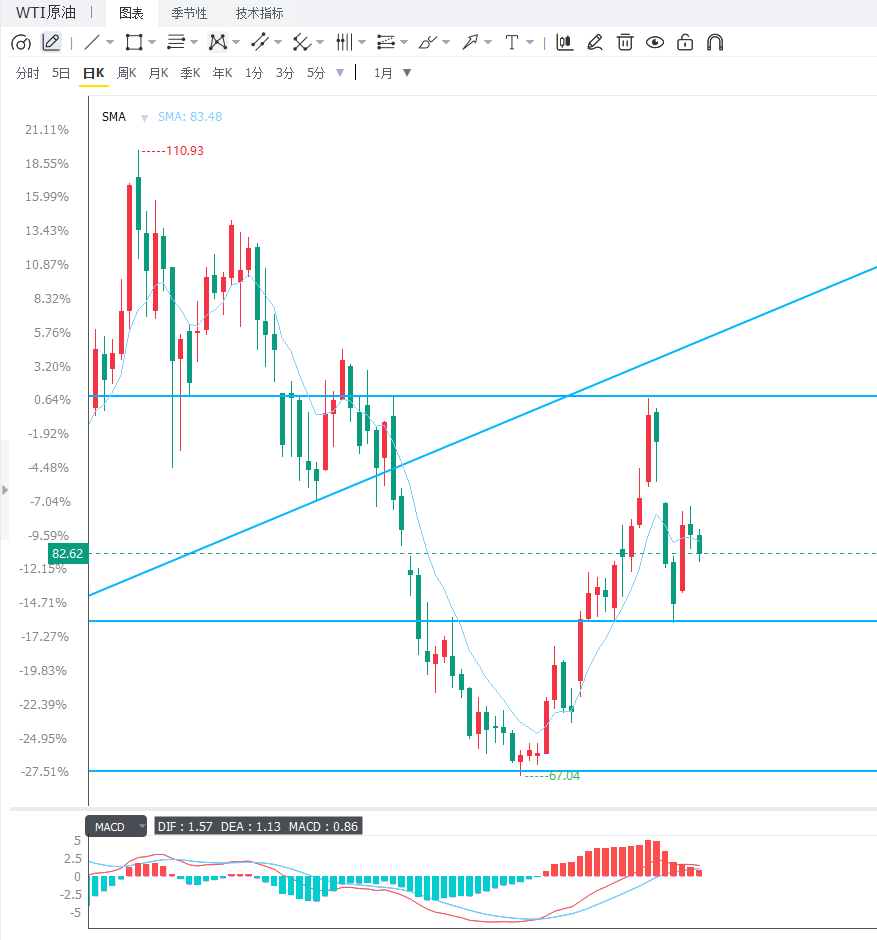 The recent correction in WTI crude oil reflects the market's repricing of the potential for reduced Middle East supply risks. However, current oil prices remain high, indicating that investors have not completely eliminated concerns about energy supply disruptions. The resumption of shipping in the Strait of Hormuz, anticipated US-Iran negotiations, and progress on the Red Sea security mechanism are expected to reduce short-term risk premiums, but disruptions to Black Sea exports and regional conflicts continue to support oil prices. The crude oil market is likely to maintain a high volatility pattern in the future. If diplomatic progress continues to improve, oil prices may further release previously accumulated risk premiums; however, if the supply chain is disrupted again, the market may quickly repric. Investors need to focus on geopolitical situations, global inventory changes, and the stability of exports from major oil-producing regions to find new trading opportunities in this volatile environment.
The US and Iran are engaged in communications related to restoring regional stability. Pakistan's foreign ministry stated that the two sides are negotiating to ease tensions, including on the security of the Strait of Hormuz, a crucial global energy transport route. The market believes that if diplomatic efforts progress, the risk of future oil supply disruptions may decrease, thereby weakening the safe-haven demand that recently supported oil price increases. The Strait of Hormuz, as a vital node in global energy transport, has seen a resurgence in shipping activity, with the market closely watching its recovery. Recently, the number of oil tankers passing through this waterway has rebounded, and the US has stated that its navy has assisted several tankers in safely passing through the area. With the resumption of transport activities, millions of barrels of crude oil are flowing back into the international market through this key waterway , temporarily alleviating investor concerns about a sharp drop in supply. Meanwhile, regional shipping security measures are expanding towards the Red Sea. Saudi Arabia is holding discussions with representatives from 43 countries to explore establishing a maritime security cooperation mechanism to reduce the risk of attacks on important shipping routes. Previously, actions by the Iranian-backed Houthi rebels put pressure on commercial transport in the Red Sea, raising concerns about the stability of the global energy logistics chain. However, despite the short-term decline in oil prices, the overall supply risk in the market has not completely disappeared. WTI crude oil is still poised to record a monthly gain of over 18%, primarily due to the escalating conflict between the US and Iran, which has raised market concerns about potential further disruptions to Middle Eastern energy supplies. Recent US military actions against Iranian targets, coupled with Iran's actions against US facilities in the region, have kept the energy market highly sensitive. In addition to Middle Eastern factors, risks associated with oil transportation in the Black Sea region have also resurfaced. Kazakhstan's main crude oil export terminal recently suspended operations for the third time after a Ukrainian drone strike on two ships near the Russian port of Novorossiysk, temporarily halting loading activities. This export facility handles a significant portion of Kazakhstan's crude oil exports, and its disruption further increases uncertainty on the global supply side. Some financial institutions believe the current risk environment in the crude oil market continues to deteriorate. TD Securities points out that supply risks continue to accumulate, and even with short-term market focus on fund flows and investor positioning, increasing supply disruptions are reinforcing market expectations of a tightening of physical crude oil supply. Institutions believe that future oil price movements will remain highly dependent on changes in geopolitical risks and the stability of supply in major oil-producing regions. From a global market perspective, oil price volatility is impacting inflation expectations, central bank policy decisions, and the performance of risk assets. If oil supply risks continue to escalate, rising energy prices could reignite global inflationary pressures and influence the monetary policy paths of major economies. Conversely, if US-Iran negotiations make positive progress and major shipping routes stabilize, oil prices may face further downward pressure. Currently, investors are focusing on three key areas: first, whether US-Iran diplomatic communication can continue; second, whether shipping in the Strait of Hormuz and the Red Sea can remain stable; and third, whether Black Sea oil export facilities will be affected again. These factors will collectively determine the future direction of the oil price risk premium. Looking at the daily chart, WTI crude oil has recently entered a consolidation phase after a rapid rise. Although prices have fallen for two consecutive trading days, the overall trend remains bullish. Previously, oil prices were driven by supply risks to break through key areas and are currently trading above the medium-term moving average, indicating that the bullish trend has not been completely broken. The current support area is around $80.50 to $81.00. If this area holds, oil prices may retest the resistance area of $85.00 to $87.00. If the price breaks below $80, it may further retrace to the support level around $78. From a momentum perspective, the upward momentum on the daily chart has slowed, but due to the persistent geopolitical risk premium, it's difficult for the bears to establish a clear trend reversal in the short term. Looking at the 4-hour chart, WTI crude oil has entered a short-term correction phase. After the price broke below the short-term moving averages consecutively, market buying power has weakened. However, the current pullback is more of a technical correction after the rise, rather than a complete trend reversal. 4-hour technical indicators show signs of cooling in short-term momentum, but it remains in a relatively strong zone. If oil prices can regain a foothold around $83.50, a rebound test towards the $85 area is possible; if it continues to be pressured and breaks below $81, it may open up room for a correction towards the $79 to $80 area. Short-term trends will depend on changes in geopolitical news and whether shipping risks further ease. The recent correction in WTI crude oil reflects the market's repricing of the potential for reduced Middle East supply risks. However, current oil prices remain high, indicating that investors have not completely eliminated concerns about energy supply disruptions. The resumption of shipping in the Strait of Hormuz, anticipated US-Iran negotiations, and progress on the Red Sea security mechanism are expected to reduce short-term risk premiums, but disruptions to Black Sea exports and regional conflicts continue to support oil prices. The crude oil market is likely to maintain a high volatility pattern in the future. If diplomatic progress continues to improve, oil prices may further release previously accumulated risk premiums; however, if the supply chain is disrupted again, the market may quickly repric. Investors need to focus on geopolitical situations, global inventory changes, and the stability of exports from major oil-producing regions to find new trading opportunities in this volatile environment.
- Risk Warning and Disclaimer
- The market involves risk, and trading may not be suitable for all investors. This article is for reference only and does not constitute personal investment advice, nor does it take into account certain users’ specific investment objectives, financial situation, or other needs. Any investment decisions made based on this information are at your own risk.