Expectations of intervention ahead of the Bank of Japan's decision intensify, causing wide fluctuations in the USD/JPY exchange rate.
2026-07-31 10:04:53
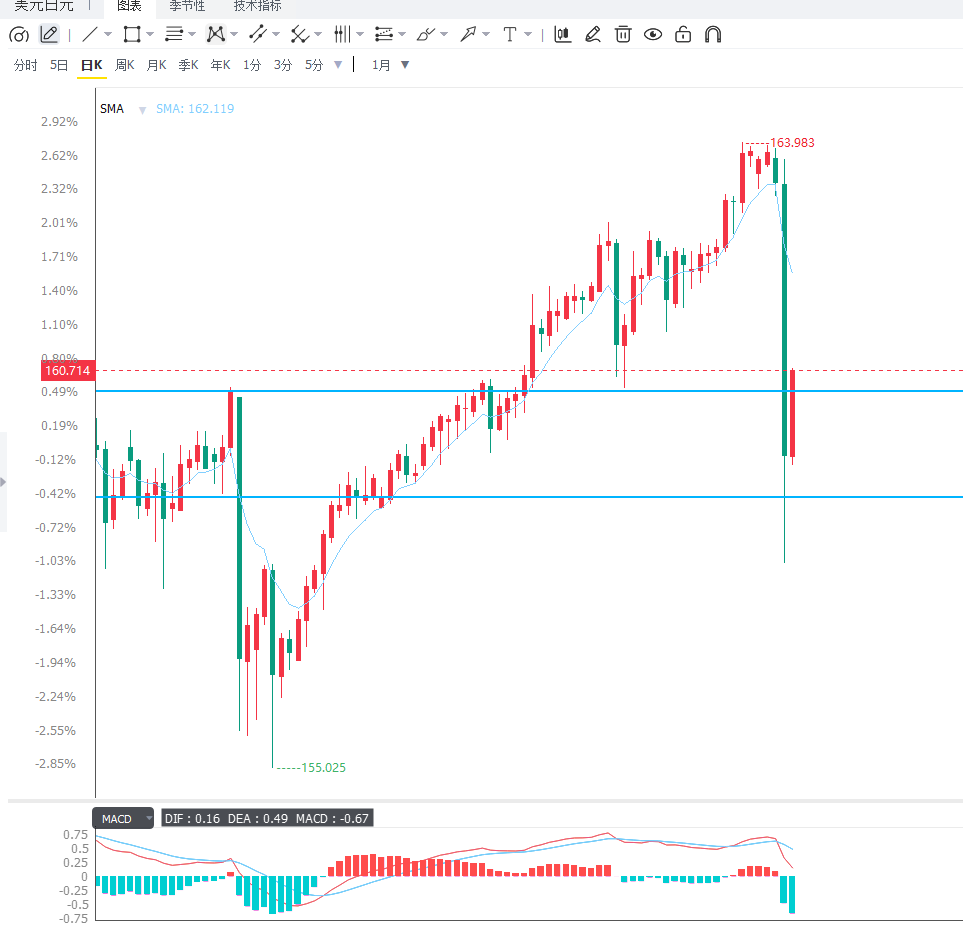
The USD/JPY pair remained range-bound in Asian trading on Friday, with market focus shifting to the Bank of Japan's monetary policy meeting. The previous trading day saw a rare, rapid rebound in the yen, with USD/JPY falling from above 163 to below 158 within minutes, sparking speculation that Japanese authorities might intervene in the foreign exchange market.  This sharp fluctuation has shifted the market's focus regarding the Bank of Japan's (BOJ) meeting. Previously, investors generally believed the BOJ would likely maintain its policy rate at this meeting, but the sudden strengthening of the yen has led the market to pay closer attention to the central bank's stance on exchange rate fluctuations, inflationary pressures, and the future path of interest rate hikes. The BOJ is expected to keep its policy rate unchanged at 1% after the meeting. The market believes that after the BOJ's June rate hike, it needs to observe the impact of tightening policies on economic activity, corporate investment, and consumer demand, thus limiting the possibility of another rate adjustment in the short term. However, investors still expect the BOJ to continue tightening policy this year, with the October and December meetings considered potential windows for rate hikes. The meeting will also release the latest quarterly economic outlook report, including economic growth and inflation forecasts. The market expects the BOJ to raise its economic growth forecast, mainly due to relatively stable domestic economic performance and increased demand for AI-related investments, supporting corporate capital expenditures. However, the BOJ may slightly lower its overall inflation forecast, due to factors including government subsidies and the impact of declining energy prices on consumer prices. But the market believes that even a downward revision of the inflation forecast does not necessarily indicate a dovish policy stance. The Bank of Japan (BOJ) is likely to reiterate that underlying inflationary pressures persist, particularly as rising import costs and producer prices gradually pass through to consumers. Corporate inflation expectations also provide justification for the BOJ to continue tightening policy. The latest corporate survey shows that Japanese companies expect inflation to remain above the BOJ's 2% target level for the next few years. Meanwhile, continued wage increases and resilient price pressures in the service sector give policymakers greater confidence that the Japanese economy is forming a more stable wage and price cycle. The persistent weakness of the yen is also a key factor of concern for the BOJ. A weak yen increases the cost of imported goods and energy, potentially further fueling domestic inflationary pressures. Although the market believes that the yen's short-term pressure has eased after the Japanese authorities' apparent intervention in the foreign exchange market, past experience shows that without monetary policy support, the yen's weakness could re-emerge. The BOJ does not directly use the exchange rate as a policy target, but Kazuo Ueda may emphasize that the central bank is closely monitoring the impact of exchange rate fluctuations on import prices and the inflation outlook. If the BOJ releases more hawkish signals, such as emphasizing wage growth, upside risks to inflation, or the impact of yen depreciation, the market may bet on an October rate hike. Conversely, if Kazuo Ueda focuses more on weak consumption and global economic growth risks, and avoids explicitly discussing the timing of the next rate hike, the market may postpone rate hike expectations to December, thus weakening the recent rebound momentum of the yen. Currently, the market believes that the future trend of USD/JPY will be influenced by both the Bank of Japan's policy signals and the US dollar's performance. The Federal Reserve previously kept interest rates unchanged for the fifth consecutive meeting, which was in line with market expectations. However, as investors reduced their bets on unexpected rate hikes, the dollar index was under pressure, providing some external support for the yen's rebound. If the Bank of Japan releases hawkish signals while the dollar continues to weaken, USD/JPY may further decline, as expectations of a narrowing interest rate differential between the two countries will strengthen. Conversely, if the Bank of Japan maintains a cautious stance and the market refocuses on US economic data, USD/JPY may experience a technical rebound. From a daily chart perspective, after a rapid decline, the short-term trend of USD/JPY has clearly weakened, currently trading around 160.80, with increased short-term bearish pressure. However, the medium-to-long-term upward structure has not been completely broken, and the current price is testing an important support area. The key support level to watch is around 158.00, which is also close to the 200-day moving average at 157.94 and the upward trend support line at 157.77. If this area holds, the exchange rate may rebound. If the daily close breaks below the support around 157.70, it means the previous upward trend may be entering a deeper correction phase. The first resistance level to watch is around 161, with stronger resistance at the previous high of 163.99. In terms of technical momentum, the RSI indicator is approaching 30, indicating the market has entered oversold territory in the short term, potentially limiting further downside. However, the trend remains cautious until it reclaims key moving averages. Looking at the 4-hour chart, USD/JPY has entered a consolidation phase after a rapid drop, with short-term selling pressure easing somewhat, but it remains within a downward channel. Technical indicators show that short-term momentum indicators have recovered from extremely weak territory, suggesting a potential rebound. If the exchange rate can break through the 161 area again, it may further test the 162.50 resistance in the short term; however, if the rebound fails to break through the key moving average resistance, the price may fall back to test the 158.00 support again. The future short-term direction will mainly depend on whether the Bank of Japan releases further tightening signals and the market's assessment of the sustainability of exchange rate intervention.
  Editor's Summary: The sharp decline in USD/JPY signals a renewed focus on Japan's policy shift and exchange rate risks. While the Bank of Japan (BOJ) is not expected to adjust interest rates immediately, the rapid appreciation of the yen has altered market expectations. Kazuo Ueda's statements regarding the future pace of interest rate hikes will be a crucial factor in determining the exchange rate's direction. In the short term, if the BOJ reinforces its assessment of inflation and wage growth while the US dollar continues to face pressure, USD/JPY may continue its downward trend. However, if the BOJ remains cautious and the market doubts the effectiveness of its intervention, the yen's gains may face a retracement. Going forward, investors need to pay close attention to the BOJ's policy rhetoric, US economic data, and yen exchange rate fluctuations. The market is currently shifting from simply focusing on carry trades to reassessing the normalization process of Japan's monetary policy, and USD/JPY may enter a period of high volatility.
This sharp fluctuation has shifted the market's focus regarding the Bank of Japan's (BOJ) meeting. Previously, investors generally believed the BOJ would likely maintain its policy rate at this meeting, but the sudden strengthening of the yen has led the market to pay closer attention to the central bank's stance on exchange rate fluctuations, inflationary pressures, and the future path of interest rate hikes. The BOJ is expected to keep its policy rate unchanged at 1% after the meeting. The market believes that after the BOJ's June rate hike, it needs to observe the impact of tightening policies on economic activity, corporate investment, and consumer demand, thus limiting the possibility of another rate adjustment in the short term. However, investors still expect the BOJ to continue tightening policy this year, with the October and December meetings considered potential windows for rate hikes. The meeting will also release the latest quarterly economic outlook report, including economic growth and inflation forecasts. The market expects the BOJ to raise its economic growth forecast, mainly due to relatively stable domestic economic performance and increased demand for AI-related investments, supporting corporate capital expenditures. However, the BOJ may slightly lower its overall inflation forecast, due to factors including government subsidies and the impact of declining energy prices on consumer prices. But the market believes that even a downward revision of the inflation forecast does not necessarily indicate a dovish policy stance. The Bank of Japan (BOJ) is likely to reiterate that underlying inflationary pressures persist, particularly as rising import costs and producer prices gradually pass through to consumers. Corporate inflation expectations also provide justification for the BOJ to continue tightening policy. The latest corporate survey shows that Japanese companies expect inflation to remain above the BOJ's 2% target level for the next few years. Meanwhile, continued wage increases and resilient price pressures in the service sector give policymakers greater confidence that the Japanese economy is forming a more stable wage and price cycle. The persistent weakness of the yen is also a key factor of concern for the BOJ. A weak yen increases the cost of imported goods and energy, potentially further fueling domestic inflationary pressures. Although the market believes that the yen's short-term pressure has eased after the Japanese authorities' apparent intervention in the foreign exchange market, past experience shows that without monetary policy support, the yen's weakness could re-emerge. The BOJ does not directly use the exchange rate as a policy target, but Kazuo Ueda may emphasize that the central bank is closely monitoring the impact of exchange rate fluctuations on import prices and the inflation outlook. If the BOJ releases more hawkish signals, such as emphasizing wage growth, upside risks to inflation, or the impact of yen depreciation, the market may bet on an October rate hike. Conversely, if Kazuo Ueda focuses more on weak consumption and global economic growth risks, and avoids explicitly discussing the timing of the next rate hike, the market may postpone rate hike expectations to December, thus weakening the recent rebound momentum of the yen. Currently, the market believes that the future trend of USD/JPY will be influenced by both the Bank of Japan's policy signals and the US dollar's performance. The Federal Reserve previously kept interest rates unchanged for the fifth consecutive meeting, which was in line with market expectations. However, as investors reduced their bets on unexpected rate hikes, the dollar index was under pressure, providing some external support for the yen's rebound. If the Bank of Japan releases hawkish signals while the dollar continues to weaken, USD/JPY may further decline, as expectations of a narrowing interest rate differential between the two countries will strengthen. Conversely, if the Bank of Japan maintains a cautious stance and the market refocuses on US economic data, USD/JPY may experience a technical rebound. From a daily chart perspective, after a rapid decline, the short-term trend of USD/JPY has clearly weakened, currently trading around 160.80, with increased short-term bearish pressure. However, the medium-to-long-term upward structure has not been completely broken, and the current price is testing an important support area. The key support level to watch is around 158.00, which is also close to the 200-day moving average at 157.94 and the upward trend support line at 157.77. If this area holds, the exchange rate may rebound. If the daily close breaks below the support around 157.70, it means the previous upward trend may be entering a deeper correction phase. The first resistance level to watch is around 161, with stronger resistance at the previous high of 163.99. In terms of technical momentum, the RSI indicator is approaching 30, indicating the market has entered oversold territory in the short term, potentially limiting further downside. However, the trend remains cautious until it reclaims key moving averages. Looking at the 4-hour chart, USD/JPY has entered a consolidation phase after a rapid drop, with short-term selling pressure easing somewhat, but it remains within a downward channel. Technical indicators show that short-term momentum indicators have recovered from extremely weak territory, suggesting a potential rebound. If the exchange rate can break through the 161 area again, it may further test the 162.50 resistance in the short term; however, if the rebound fails to break through the key moving average resistance, the price may fall back to test the 158.00 support again. The future short-term direction will mainly depend on whether the Bank of Japan releases further tightening signals and the market's assessment of the sustainability of exchange rate intervention. Editor's Summary: The sharp decline in USD/JPY signals a renewed focus on Japan's policy shift and exchange rate risks. While the Bank of Japan (BOJ) is not expected to adjust interest rates immediately, the rapid appreciation of the yen has altered market expectations. Kazuo Ueda's statements regarding the future pace of interest rate hikes will be a crucial factor in determining the exchange rate's direction. In the short term, if the BOJ reinforces its assessment of inflation and wage growth while the US dollar continues to face pressure, USD/JPY may continue its downward trend. However, if the BOJ remains cautious and the market doubts the effectiveness of its intervention, the yen's gains may face a retracement. Going forward, investors need to pay close attention to the BOJ's policy rhetoric, US economic data, and yen exchange rate fluctuations. The market is currently shifting from simply focusing on carry trades to reassessing the normalization process of Japan's monetary policy, and USD/JPY may enter a period of high volatility.
- Risk Warning and Disclaimer
- The market involves risk, and trading may not be suitable for all investors. This article is for reference only and does not constitute personal investment advice, nor does it take into account certain users’ specific investment objectives, financial situation, or other needs. Any investment decisions made based on this information are at your own risk.