The joint intervention by Japan and the United States, amounting to approximately $59 billion, has been confirmed, and the market has entered a wait-and-see mode following the intervention.
2026-08-03 08:26:51
On Monday (August 3), the USD/JPY pair traded in a volatile range in early Asian trading, currently hovering around 157.80. After surging from around 164 to below 158 last week, the pair is now facing a crucial policy confirmation. On Monday, Japan's Ministry of Finance confirmed a joint intervention with the US Treasury to buy yen, stating that it "would not hesitate to take further action." This marks the first time Japan and the US have jointly intervened in the exchange rate since the 2011 Great East Japan Earthquake, when they intervened to weaken the yen. Earlier on Sunday night, Trump stated that the US was helping Japan boost the yen "as a symbol of friendship and to help the global economy." The joint intervention aims to prevent the yen from falling further to a 40-year low and to prevent a spillover effect from a sell-off of yen and Japanese government bonds on global markets—for example, by putting further upward pressure on already rising US Treasury yields. 
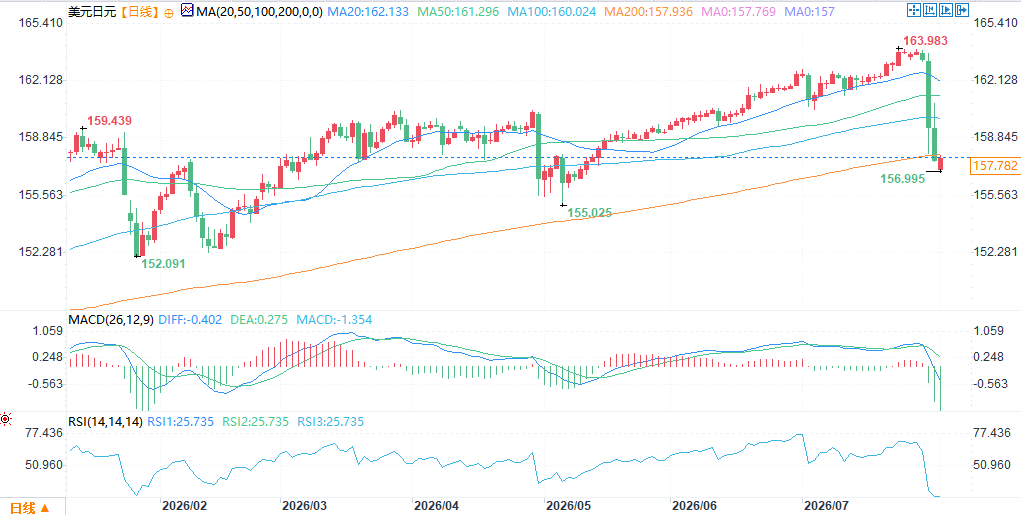 (USD/JPY daily chart, source: EasyForex) At 8:22 AM Beijing time on August 3, the USD/JPY exchange rate was 157.80/81.
Trump confirms US support for the Japanese yen
When asked by reporters why the U.S. was helping to support the yen, Trump said, "The yen is weakening, and they want a little help. We always support Japan." Following this statement, the dollar fell 0.2% against the yen to 157.07, well below the 40-year high of around 164 reached at the end of last month, but rebounded to 157.70 after a statement from Japan's Ministry of Finance. Japan has previously struggled to curb the yen's continued decline—a weaker yen pushes up import prices, exacerbates inflationary pressures, and hurts household wallets and Prime Minister Sanae Takaichi's public approval ratings.This marks the first joint intervention since 2011, amounting to approximately $59 billion.
In a statement, Japan's Ministry of Finance said Friday's joint intervention with the U.S. Treasury Department "was aimed at addressing the excessive volatility and disorderly movement of the yen in recent months." The statement added, "The Ministry of Finance remains vigilant and in close contact with the U.S. Treasury Department, and will not hesitate to take further joint intervention measures." This was the first joint intervention since 2011. Bank of Japan data showed that Japan likely sold approximately $58.97 billion to buy yen during Thursday's intervention in the New York market, followed by confirmation of the joint action with the U.S. on Friday.US Treasury Secretary Bessant calls on Japan to raise interest rates further.
U.S. Treasury Secretary Bessant also confirmed Friday's joint action, stating that Washington "would not hesitate to participate in further joint intervention." He stated on social media, "We strongly support Japan's decisive market and monetary policy measures to correct the yen's significant undervaluation," and reiterated his call for the Bank of Japan to raise interest rates further. Bessant also indicated that the U.S. would consider expanding the size of the Federal Reserve's repurchase facility in the coming months to provide temporary dollar liquidity, calling the tool an "important safety net." This statement came after the Japanese Ministry of Finance issued a rare statement on Saturday stating that it possessed "a wide range of tools to address market liquidity needs."The Bank of Japan's hawkish signals strengthen policy coordination.
In response to Bessant's repeated calls for a Japanese interest rate hike, the Bank of Japan on Friday, while maintaining its monetary policy unchanged, sent its clearest signal yet of an early rate increase. South Korea also intervened on Thursday, buying won in conjunction with this action. Japan had previously intervened by buying yen in April and May, but this only resulted in brief rebounds. The Bank of Japan's June rate hike to 1% (a 31-year high) also failed to provide a lasting boost to the yen.Joint intervention signifies strengthened policy coordination, but the medium-term direction of the yen still depends on interest rates.
The joint intervention by Japan and the US signifies a significant strengthening of coordination between the two countries on exchange rate policies. Combined with the US Treasury Secretary's call for further interest rate hikes in Japan, the Bank of Japan's clearest early signal of a rate hike, and South Korea's synchronized intervention, this indicates an escalation in regional policy coordination. In the short term, these measures have provided support for the yen, with the USD/JPY pair falling from around 164 to the 157-158 range. However, the history of interventions in April suggests that interventions without sustained policy support have limited effectiveness—the yen's true turning point still depends on the pace of the Bank of Japan's rate hikes and changes in expectations of a Federal Reserve rate cut. If the market continues to anticipate further rate hikes by the Bank of Japan before the end of the year, the yen is likely to receive medium-term support. (USD/JPY daily chart, source: EasyForex) At 8:22 AM Beijing time on August 3, the USD/JPY exchange rate was 157.80/81.
- Risk Warning and Disclaimer
- The market involves risk, and trading may not be suitable for all investors. This article is for reference only and does not constitute personal investment advice, nor does it take into account certain users’ specific investment objectives, financial situation, or other needs. Any investment decisions made based on this information are at your own risk.