The Fed's internal strife has become public: three hawkish leaders have jointly pressured him to resign, and why is Warsh's interest rate decision-making in a dilemma?
2026-08-03 09:38:51
Last Wednesday (July 31), the Federal Reserve concluded its highly anticipated policy meeting, ultimately deciding by a 9-3 vote to maintain the short-term lending rate at 3.50% to 3.75%. This seemingly stable decision, however, sparked considerable controversy afterward—as three officials who voted against the rate hike spoke out publicly in a rare move, providing detailed defenses of their positions. Simultaneously, a fourth regional Fed president, who participated in the discussion but had no voting rights, expressed a similar inclination, suggesting that a wait-and-see approach might be appropriate at this time. These statements brought to light, for the first time, the "family debate" that occurred during the closed-door meeting in Washington, revealing a deep rift within the Fed regarding its inflation response strategy. 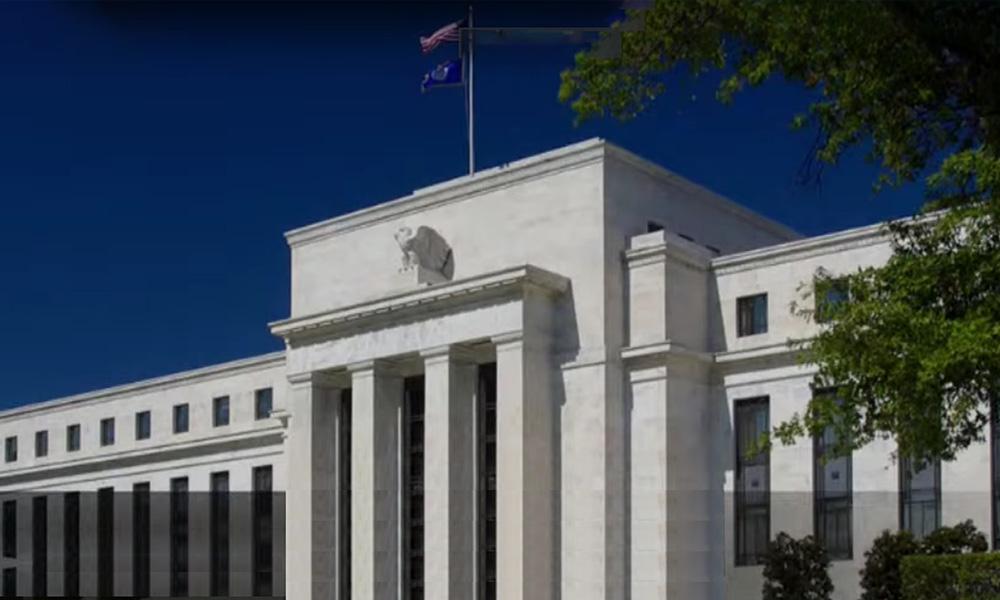
The hawkish camp's collective cry: Without action, inflation may "take root."
Hamak: Current Policy Lacks Sufficient Restraint In her post-meeting statement, Cleveland Fed President Hamak bluntly stated that U.S. inflation has stubbornly remained above the 2% policy target for over five years, and she personally has no confidence that prices will return to normal on their own. She emphasized that a higher federal funds rate would effectively curb economic activity, thereby alleviating persistent inflationary pressures. Hamak further explained that given the current robust job market, the U.S. economy is fully resilient to higher interest rates, and therefore she favored immediate action at this meeting because she judged that the current policy stance had not yet reached an "appropriately restraining level" sufficient to curb prices. Kashkari: Gradual Rate Hikes Better Than Passive Waiting Minneapolis Fed President Kashkari expressed almost identical concerns in a separate written statement. He believes that to prevent high inflation expectations from solidifying in the economic system, the Fed should have initiated the first step in a series of rate hikes on Wednesday. Kashkari argues that a gradual tightening of monetary policy, as more data on inflation and employment trends are gradually obtained, would be a more prudent strategy. He specifically warned that if inflation data remains persistently high, proactive measures through a series of small adjustments are far better than remaining inactive and ultimately being forced to take drastic and aggressive action—the latter often brings greater shocks and uncertainty to the market. Logan: Cannot Rely on "Unexpected Shocks" to Save the Day Dallas Fed President Logan also supports raising the benchmark interest rate by 25 basis points this week. She believes that current monetary policy has not exerted any substantial downward pressure on inflation. In her statement, Logan pointedly noted that without any policy constraints, inflation is likely to continue above target levels until some unforeseen unexpected shock (such as an economic recession or external crisis) forcibly interrupts this trend. However, she emphasized that the Federal Open Market Committee (FOMC) should never rely on such disruptive events to achieve its policy goals; on the contrary, if an unexpected shock does occur in the future, the Fed has ample tools and space to adjust its direction at any time. Similar to Kashkari, Logan also firmly believes that taking moderate action in the near term can significantly reduce the likelihood of being forced to take more aggressive tightening measures in the future.The cautious considerations of the wait-and-see faction: Barkin's "wait is justified"
In an interview with the Wall Street Journal, Richmond Fed President Barkin added a third dimension to the debate. He admitted that he fully understood the logic of his three colleagues and acknowledged that "there are indeed good reasons to further restrict the economy." However, Barkin then shifted his focus, offering another equally valid argument: given the signs of cooling inflation data in June, policymakers still have ample time to assess more economic indicators before the next meeting in September to determine whether additional rate hikes are truly necessary. Although Barkin does not have a vote on the FOMC this year, his remarks clearly reflect that the committee is not monolithic but rather exhibits significant strategic disagreements.Market reaction: Long-term US Treasury yields surge, credit gap looms.
The Federal Reserve's decision to hold rates steady, coupled with Chairman Warsh's ambiguous remarks at the press conference suggesting a possible adjustment to the inflation target framework, quickly triggered a sharp reaction in the bond market. The yield on the 30-year U.S. Treasury note broke through the 5.2% mark, reaching its highest level in 19 years, and this upward trend continued on Thursday and Friday of last week. Financial analysts generally believe that the sharp rise in long-term yields directly reflects a significant "credibility gap" between the market's confidence in Chairman Warsh's statement that "price stability will eventually be achieved" and the central bank's actual refusal to take tightening action. Meanwhile, trading data in the short-term Treasury and interest rate futures markets also shows that investors' confidence in whether the Fed will actually raise interest rates in the future is waning. However, on Monday (August 3), U.S. Treasury yields weakened slightly as Trump canceled plans for further large-scale supply to Iran over the weekend, causing a sharp drop in oil prices and slightly easing inflation concerns.The deep-seated causes of persistent inflation: supply-side shocks and policy dilemmas
Although overall inflation has fallen significantly from its extreme highs during the pandemic, the latest data shows that the Personal Consumption Expenditures (PCE) price index, which the Federal Reserve relies on most heavily, still rose 3.7% year-on-year in June. While lower than May's 4.1%, it remains significantly above the long-term target of 2%. This persistent price pressure is mainly attributed to the confluence of multiple supply-side factors: the Trump administration's tariff policies have continued to raise the cost of imported goods, ongoing conflicts in the Middle East have pushed up energy prices, and the investment boom in artificial intelligence has led to a surge in demand for some raw materials and chips. For the Federal Reserve, supply-driven inflation is particularly challenging, as central banks traditionally tend to delay action in the face of supply shocks to avoid excessively suppressing demand and exacerbating the risk of economic recession. Kashkari acknowledged that while monetary policy involves trade-offs in the face of supply shocks, he is increasingly convinced that monetary policy can and should play a crucial regulatory role in the face of a series of successive and potentially entrenched supply shocks.Overview: Walsh's Dilemma and Future Path
The vote showed that a quarter of the FOMC members voted against the decision, undoubtedly putting immense pressure on Chairman Warsh, appointed by Trump. Trump initially chose Warsh hoping he would implement a relatively loose monetary policy to reduce the government's debt burden and boost the economy. However, the open pressure from internal hawks has put Warsh in a dilemma: continuing to hold rates steady could allow inflation to rise and damage the central bank's credibility; aligning with the hawks and tightening policy could go against the president's wishes and hinder economic growth. Warsh told reporters after the meeting that the dissenting votes reflected a "very intense and thorough household debate" within the decision-making body, which is the healthy debate expected by the system's design. However, he also emphasized that there was still broad majority support in the meeting room for the final decision to maintain interest rates. The next Fed meeting is scheduled for September 15-16, followed by two more policy meetings in October and December. Current financial market pricing indicates a 65% probability of a rate hike in September, but the final outcome will depend on the actual performance of inflation and employment data over the next two months.Frequently Asked Questions
Question 1: Why has the Federal Reserve chosen not to raise interest rates despite inflation exceeding 2% for over five years? Answer: The Fed's decision to maintain interest rates this time is primarily based on the majority view, led by Chairman Warsh. They believe the current interest rate range of 3.50%-3.75% is already somewhat limiting, and June's inflation data showed a moderate decline, suggesting a few more months of observation to confirm the trend. Furthermore, Warsh also considered that excessive tightening could suppress economic growth and employment, and that the Trump administration favors looser policies to alleviate debt pressure. Therefore, most members believed that holding rates steady for now was a risk-controlled balancing act. Question 2: What is the core logic behind the three hawkish officials' calls for a rate hike? Answer: Hamak, Kashkari, and Logan share a highly consistent core logic: inflation has been exceeding the target for a long time, and current interest rates have not reached a "limiting level" sufficient to suppress demand. Without proactive tightening, prices will only continue to remain high. They all emphasize that "gradual action" is better than "passive waiting," because the longer they wait, the higher the probability of being forced to raise rates significantly in the future, which would have a greater impact on the economy and markets. Meanwhile, they believe a robust job market provides a sufficient safety net for interest rate hikes. Question 3: Why is the market questioning the Fed's credibility? What does the surge in long-term yields mean? Answer: The root of market skepticism lies in "inconsistency between words and deeds"—Wash verbally pledged to achieve price stability, but in practice refused to raise interest rates. Investors believe the central bank lacks genuine determination to curb inflation. The surge in long-term yields is bond traders expressing this distrust with real money; they are demanding higher term premiums to compensate for the risk of future runaway inflation. Furthermore, Warsh's hints at a possible adjustment to the inflation targeting framework have been interpreted as a tacit tolerance of higher inflation, further shaking market confidence in the Fed's 2% target. Question 4: Why is current inflation so stubborn? How do supply-side factors affect the Fed's decisions? Answer: Current inflation is not primarily driven by overheated demand, but rather by supply-side shocks such as tariff policies, rising energy prices, and a technology investment boom. These shocks directly increase production costs and import prices, while central bank interest rate hikes mainly suppress demand, having limited effect on the supply side. Therefore, the Fed faces a dilemma: raising interest rates too aggressively could exacerbate the economic downturn, while not raising rates will make inflation difficult to eliminate. Traditionally, central banks have been patient with supply shocks, but hawkish officials worry that uninterrupted supply shocks could lead to high inflation expectations being "embedded" in wages and pricing behavior, ultimately evolving into long-term inertial inflation. Question 5: What are the prospects for future interest rate hikes? Will there be a rate hike at the September meeting? Answer: Currently, financial markets are betting on a 65% probability of a September rate hike, but the final decision depends entirely on economic data from the next two months. If PCE inflation continues to decline in July and August and the job market shows signs of slowing, most committee members may prefer to continue to wait and see; conversely, if inflation rebounds or the overheated job market worsens, the three hawkish officials may gain more support, thus pushing for a rate hike. Furthermore, Warsh's political pressure and market credibility crisis are also important variables—if long-term yields continue to soar, it may force him to compromise and appease the market with a symbolic rate hike. Overall, a September rate hike remains highly probable, but it is not a certainty.- Risk Warning and Disclaimer
- The market involves risk, and trading may not be suitable for all investors. This article is for reference only and does not constitute personal investment advice, nor does it take into account certain users’ specific investment objectives, financial situation, or other needs. Any investment decisions made based on this information are at your own risk.