The "mini-nonfarm payrolls" report was halved compared to the previous value! Gold surged to $4,200.
2026-08-05 20:26:52
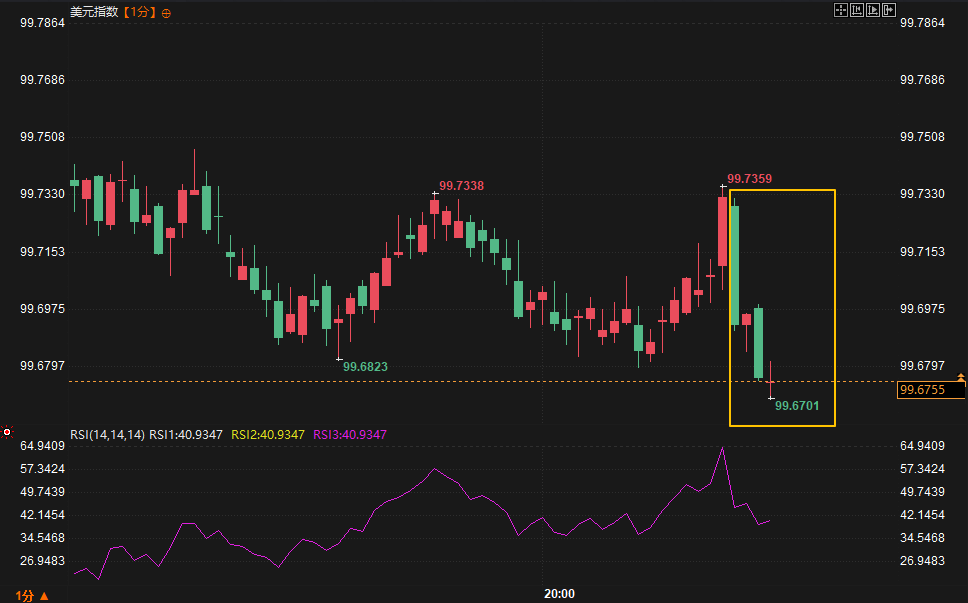
On Wednesday (August 5th) at 8:15 PM Beijing time, the US ADP private sector employment report was officially released. Data showed that private sector employment increased by 44,000 in July, significantly lower than the moderate growth widely expected by the market, while the June figure was slightly revised down to 95,000. Wages for retained employees remained at 4.4% year-over-year, while wage growth for those changing jobs accelerated to 7%, the fastest pace since August 2025. The service sector added 47,000 jobs, while goods-producing industries lost 3,000.  Following the data release, the US dollar index briefly fell by about 5 points, hitting a low of 99.68; spot gold quickly broke through the $4,200/ounce mark, reaching $4,200.54, with its daily gain expanding to 3.02%, and COMEX gold futures also strengthened in tandem.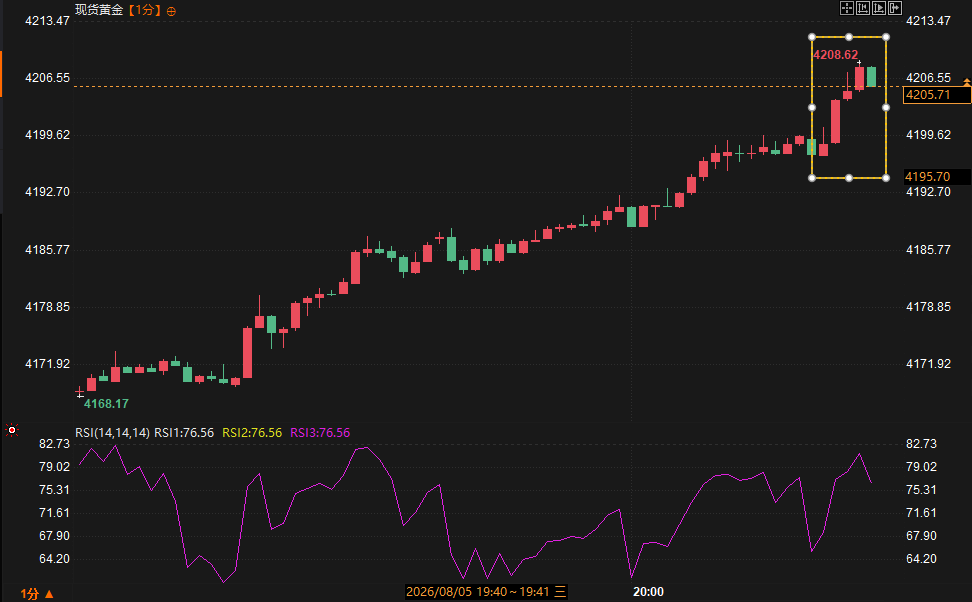
 The key characteristic of this ADP employment data is a significant cooling in hiring momentum, coupled with a divergence in salary structures. Salary growth for retained employees remained stable, while the growth rate for those changing jobs accelerated, indicating continued supply constraints in some experienced positions. ADP Chief Economist Nela Richardson pointed out that job seekers are highly sensitive to real-time economic conditions; rapid salary growth suggests limited supply in some labor markets, and employers' hiring patterns are adjusting in response to the macroeconomic environment. In terms of industry distribution, growth was mainly concentrated in the service sector, with a slight decline in goods production. Financial services and professional and business services continued to see new additions, while trade, transportation, and utilities experienced decreases. The downward revision of the June data further reinforced recent signs of cooling in private sector employment. Compared to historical trends, ADP data in previous months mostly remained in the upper-middle range, but this year's increase of 44,000 was significantly smaller. Regarding the latest quotes, the US dollar index fell below the 100 mark, while gold broke through the key technical level of $4,200, with a significant increase in intraday gains. Gold had already risen before the data release, and the momentum was further released afterward, showing that the market is quite sensitive to the immediate pricing of a slowdown in employment. Before the data release, the market was generally in a wait-and-see state. Gold had already risen by about 1%, reflecting some funds' anticipation of a slowdown in employment; the US dollar remained relatively stable. Institutional views largely emphasized that wage stickiness might still limit policy space, while retail investor discussions focused more on the potential support for precious metals from slower employment growth. Well-known institutions generally expected a moderate but still resilient slowdown in employment growth, with a focus on whether wages would cool in tandem; retail investors generally discussed that lower-than-expected data could boost demand for gold as a safe haven. After the release, institutional commentary quickly shifted to emphasizing the accelerating pace of job transitions and the service sector-led structural characteristics, believing this reflected internal differentiation within the labor market; retail sentiment clearly shifted to an optimistic interpretation of the gold breakout, believing the employment data provided a direct catalyst for precious metals. The expectation discrepancy mainly manifested in the unexpected slowdown in total employment, while wages still showed localized pressure. Fundamentals and technicals corroborated each other: cooling employment put short-term pressure on the US dollar, while gold benefited from the increased room for adjustment in interest rate expectations. In related commodities, a typical correlation was formed between a weakening US dollar and a strengthening gold price.
Following the data release, the US dollar index briefly fell by about 5 points, hitting a low of 99.68; spot gold quickly broke through the $4,200/ounce mark, reaching $4,200.54, with its daily gain expanding to 3.02%, and COMEX gold futures also strengthened in tandem. The key characteristic of this ADP employment data is a significant cooling in hiring momentum, coupled with a divergence in salary structures. Salary growth for retained employees remained stable, while the growth rate for those changing jobs accelerated, indicating continued supply constraints in some experienced positions. ADP Chief Economist Nela Richardson pointed out that job seekers are highly sensitive to real-time economic conditions; rapid salary growth suggests limited supply in some labor markets, and employers' hiring patterns are adjusting in response to the macroeconomic environment. In terms of industry distribution, growth was mainly concentrated in the service sector, with a slight decline in goods production. Financial services and professional and business services continued to see new additions, while trade, transportation, and utilities experienced decreases. The downward revision of the June data further reinforced recent signs of cooling in private sector employment. Compared to historical trends, ADP data in previous months mostly remained in the upper-middle range, but this year's increase of 44,000 was significantly smaller. Regarding the latest quotes, the US dollar index fell below the 100 mark, while gold broke through the key technical level of $4,200, with a significant increase in intraday gains. Gold had already risen before the data release, and the momentum was further released afterward, showing that the market is quite sensitive to the immediate pricing of a slowdown in employment. Before the data release, the market was generally in a wait-and-see state. Gold had already risen by about 1%, reflecting some funds' anticipation of a slowdown in employment; the US dollar remained relatively stable. Institutional views largely emphasized that wage stickiness might still limit policy space, while retail investor discussions focused more on the potential support for precious metals from slower employment growth. Well-known institutions generally expected a moderate but still resilient slowdown in employment growth, with a focus on whether wages would cool in tandem; retail investors generally discussed that lower-than-expected data could boost demand for gold as a safe haven. After the release, institutional commentary quickly shifted to emphasizing the accelerating pace of job transitions and the service sector-led structural characteristics, believing this reflected internal differentiation within the labor market; retail sentiment clearly shifted to an optimistic interpretation of the gold breakout, believing the employment data provided a direct catalyst for precious metals. The expectation discrepancy mainly manifested in the unexpected slowdown in total employment, while wages still showed localized pressure. Fundamentals and technicals corroborated each other: cooling employment put short-term pressure on the US dollar, while gold benefited from the increased room for adjustment in interest rate expectations. In related commodities, a typical correlation was formed between a weakening US dollar and a strengthening gold price.Trend Outlook
Extrapolating from the market logic, the US dollar index may continue to seek support below 100 after the slowdown in employment data, potentially leading to increased volatility. Gold, after breaking through $4200, maintains strong short-term momentum, but its performance depends on whether subsequent wage-related data can sustain this support. The service sector-led employment structure and accelerating salary transitions mean that market pricing will focus more on localized tight balances in labor supply and demand, rather than a single aggregate indicator. Future price movements will depend more on the cross-validation of overall macroeconomic clues, and the market may continue to react differently to interest rate-sensitive assets. Overall, this data reinforced the trend of cooling private sector hiring while retaining structural characteristics at the wage level, and the market's immediate reaction has been reflected in the inverse fluctuations of the US dollar and gold.Frequently Asked Questions
Q: What are the main discrepancies between this ADP data and previous market expectations? The total employment growth was significantly lower than the generally expected moderate growth. The downward revision of the June data further confirmed the cooling trend, while the accelerated wage growth of job seekers exceeded some expectations of a comprehensive wage slowdown. Q: What are the differences in opinions between institutions and retail investors before and after the data release? Before the release, institutions focused on wage stickiness and policy space, while retail investors were more concerned about potential opportunities in gold. After the release, institutions emphasized structural differentiation and supply constraints, while retail investors focused on the immediate catalytic effect of a gold breakout. Q: What does the difference in employment between the service sector and goods production indicate? Growth is concentrated in the service sector, while goods production has slightly decreased, indicating that current private sector employment momentum relies more on the service sector, and the overall expansion base has narrowed. Q: What does the divergence in wage growth between retained and job-seeking employees mean for the market? Stable growth in retained employees indicates that overall wage pressure is manageable, while accelerated job-seeking suggests that there is still a localized shortage of experienced positions, which may affect companies' cost expectations for highly skilled labor. Q: How does the immediate correlation between gold and the US dollar reflect the impact of the data? The short-term pullback in the US dollar index, coupled with gold's breakthrough of a key level, reflects the market's rapid pricing of a slowdown in employment through interest rate-sensitive assets, with the two showing a typical inverse relationship.- Risk Warning and Disclaimer
- The market involves risk, and trading may not be suitable for all investors. This article is for reference only and does not constitute personal investment advice, nor does it take into account certain users’ specific investment objectives, financial situation, or other needs. Any investment decisions made based on this information are at your own risk.