The yen's fluctuations are impacting global capital flows; let's analyze how the yen affects gold.
2026-08-06 14:54:53
On July 23, the USD/JPY exchange rate briefly touched nearly 164, a near 40-year high since 1986, with the yen falling to a historic low. On July 30, Japanese authorities intervened, pushing the exchange rate quickly back down to around 158. The US Treasury, through the Federal Reserve Bank of New York, coordinated its intervention, selling euros and buying yen – the first time since 1998 that the US and Japan had jointly supported the yen. After the US officially confirmed the intervention in early August, market sentiment recovered significantly, with the USD/JPY briefly dipping to around 155 before rebounding and recovering some of its losses. This rare intervention was not merely a simple exchange rate adjustment; it had far-reaching implications for the global financing system, US Treasury pricing, and gold prices, with profound consequences for asset markets.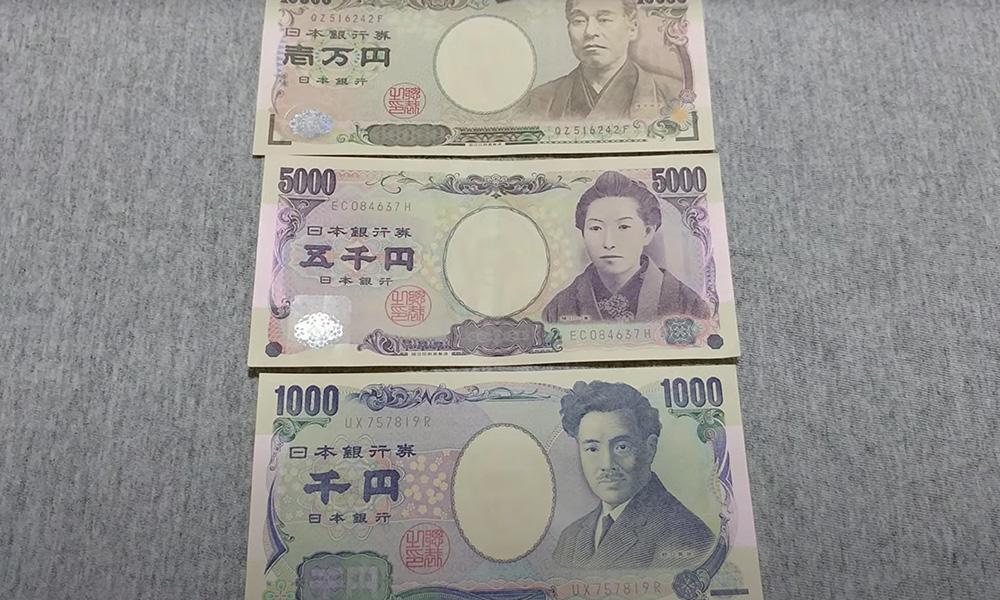
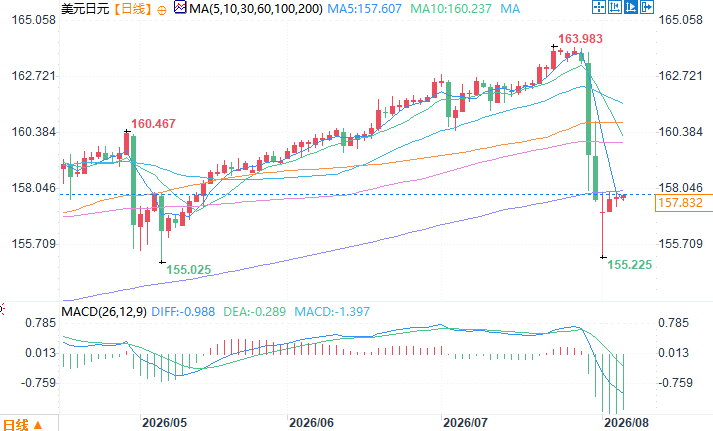 USD/JPY Daily Chart Source: FX678 At 14:52 Beijing time on August 6, USD/JPY was trading at 157.81/83.
I. Japanese Yen: A core global low-cost funding currency
The Japanese yen's profound influence on global markets stems primarily from Japan's long-term loose monetary policy. Following the bursting of the asset bubble in the 1990s, the Japanese economy was mired in a prolonged period of low growth and low inflation. The Bank of Japan continuously implemented easing measures such as zero interest rates, quantitative easing, and negative interest rates, locking in extremely low global financing costs for an extended period. Even after Japan exits its negative interest rate policy and begins monetary normalization in 2024, the policy rate is projected to remain at only 1% in 2026, creating a significant interest rate differential of over 2.5 percentage points compared to the US benchmark interest rate of 3.5%-3.75%. Leveraging its advantages of low interest rates, a stable exchange rate, and a mature market, the yen has become a mainstream global carry trade currency. Investors borrow yen at low cost, exchange it for US dollars, and invest in assets such as US Treasury bonds and stocks, earning stable interest rate differentials and asset premiums. The core reason for the yen's long-term depreciation is precisely the large-scale borrowing and selling of yen by global capital, which gives the weak yen a consistently strong global market influence, distinguishing it from other weak currencies.II. The Paradox of the Yen's Rise and Fall: Its Safe-Haven Characteristics Under its Weakness
The Japanese yen's long-term depreciation, coupled with its ability to rapidly strengthen during periods of market risk, stems primarily from the two-way flow of carry trades. During periods of market stability, investors borrow and sell yen to invest in overseas assets, suppressing the yen's exchange rate. Once risks escalate, capital flows reverse completely, with investors concentrating on selling overseas assets and buying yen to repay debts. This passive buying drives the yen's rapid appreciation, shaping its safe-haven currency characteristics. The market volatility of August 2024 is a prime example, with global yen carry trade deleveraging, coupled with a US stock market correction, triggering severe turmoil in global capital markets. This establishes a key market pattern: yen appreciation does not necessarily indicate a decline in risk; large-scale carry trade unwinding can actually signal the start of a global deleveraging trend, a crucial signal that gold investors must pay close attention to.III. Profits and Core Risks of Carry Trades
A complete yen carry trade profit consists of returns from overseas assets, the US-Japan interest rate differential, exchange rate fluctuations, and hedging costs. The biggest risk of this trade is not a slight interest rate hike, but rather a rapid short-term appreciation of the yen. Data calculations show that a 4% weekly increase in the yen can wipe out the entire year's interest rate differential profit from a carry trade, and significant volatility can lead to huge losses. Highly leveraged traders are easily forced to liquidate their positions under the dual pressure of a surging yen and falling assets. Because carry trades are dispersed across various financial derivatives and cross-border financing, their true scale is difficult to quantify. Once market expectations resonate, it can easily trigger a chain reaction of liquidations, disrupting global liquidity.IV. Japan's Policy Dilemma: Interest Rate Hikes Limited, Intervention Becomes the Optimal Option
The high interest rate differential between the US and Japan is the core factor driving the yen's depreciation, but Japan cannot stabilize its exchange rate through aggressive interest rate hikes. Data from 2026 shows that Japan's government debt-to-GDP ratio will far exceed 200%, ranking first among developed economies. Coupled with a slow growth rate of 0.6%, the room for interest rate hikes is severely compressed. Aggressive interest rate hikes would increase the cost of government bond payments, impact financial institutions' assets, increase social financing pressure, and severely damage the real economy; while maintaining low interest rates would continue to widen the interest rate differential, exacerbating the yen's depreciation and imported inflation. Constrained by multiple fiscal and economic factors, the Bank of Japan, although possessing monetary policy independence, cannot freely raise interest rates. Therefore, relying on foreign exchange intervention to stabilize the exchange rate becomes the optimal choice after weighing the pros and cons.V. The Deeper Interests of the United States in Coordinated Intervention
The US's rare intervention in the yen is primarily aimed at maintaining its own financial stability. Japan is the largest foreign holder of US Treasury bonds, with holdings in the hundreds of billions of dollars, enough to influence market expectations. If Japan were to continue raising interest rates or deplete its foreign exchange reserves to stabilize the exchange rate, it would trigger the unwinding of carry trades and a return of Japanese capital to Japan, significantly reducing marginal demand for US Treasury bonds. Given the massive issuance of US debt and high financing costs, an imbalance between supply and demand for US Treasury bonds would directly impact the US financial system. Simultaneously, the US does not want to see the yen experience a disorderly plunge or surge, as extreme yen volatility could cause global liquidity disruptions and impact dollar assets. This joint intervention is essentially risk management; by stabilizing the yen, it aims to prevent a loss of control over the global financing system and safeguard the pricing of US Treasury bonds and the stability of dollar assets.VI. The Three-Tier Transmission Mechanism of the Japanese Yen to Gold
The Japanese yen does not directly determine gold prices; its price movement is influenced by three core variables: the US dollar, US Treasury yields, and liquidity. Firstly, regarding the US dollar, a widening interest rate differential and a weaker yen benefit the dollar, suppressing gold prices. Conversely, a stronger yen due to Fed rate cuts and a weaker dollar benefits gold. A yen appreciation driven solely by currency intervention is unlikely to drive a long-term rise in gold prices. Secondly, regarding yields, Japanese capital inflows push up US Treasury yields. If the rise in yields stems from weakening demand in the bond market rather than an improving economy, gold can break free from traditional constraints and maintain its strength. Finally, regarding liquidity, a rapid yen appreciation triggering concentrated liquidation can lead to a short-term sell-off in gold due to liquidity constraints. Only after policy intervention to release liquidity and the market stabilizes will gold resume its safe-haven upward trend.Conclusion
The joint US-Japan intervention stabilized the yen in the short term and mitigated systemic deleveraging risks. Gold lacks a direct catalyst for a price surge and is likely to remain range-bound. However, this event exposed the structural fragility of the global financing system; the contradictions between the US and Japan regarding exchange rates, bond markets, and funding have not been resolved. For gold investors, there is no need to blindly predict gold price movements based on short-term yen fluctuations. The key is to use yen volatility to assess the tightness of the global low-cost funding chain. Exchange rate fluctuations affect short-term prices, but the global financing environment is the core factor determining the medium- to long-term trend of gold. USD/JPY Daily Chart Source: FX678 At 14:52 Beijing time on August 6, USD/JPY was trading at 157.81/83.
- Risk Warning and Disclaimer
- The market involves risk, and trading may not be suitable for all investors. This article is for reference only and does not constitute personal investment advice, nor does it take into account certain users’ specific investment objectives, financial situation, or other needs. Any investment decisions made based on this information are at your own risk.